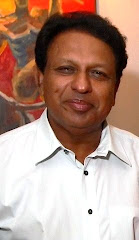
Remarks by Former Ambassador T.P.Sreenivasan at the Brookings
Institution on July 15, 2009
Thank you, Steve, for your generous remarks. Let me thank you also for
inviting me to spend a delightful two months at the Brookings and for
mentoring me. Five years after retiring from the Indian Foreign
Service, I felt the need for some education and that prompted me to
seek this opportunity and it has been a marvelous experience. I am
grateful to the entire Brookings community, particularly President
Strobe Talbott, for the many courtesies extended to me. A special word
of gratitude to Dhruva Jaishankar, who has been most helpful. He
constantly reminded me of his father, Ambassador Jaishankar, who was a
young recruit to the Indian Foreign Service when I met him many years
ago.
I should also place on record my gratitude to Mr. Sreedhar Menon and
Mr. Tushar Kothari for joining hands with Brookings to make my
Fellowship possible.
The purpose of this presentation is not to give you any dramatic
findings from my study of India –US nuclear cooperation in the last
two months. I shall reserve them for my book. Today, I would rather
seek to elicit insights from you into the subject of India-US nuclear
cooperation, particularly the prospects for such cooperation in the
new setting in the US and in India.
I had noticed a certain nuclear deal fatigue in Washington, though
many of its architects and its opponents gave me their time quite
liberally. The forthcoming visit of the Secretary of State to India
and a G-8 decision on reprocessing and enrichment has, however,
generated new interest in the subject, at least in India.
The US voted for change, drastic change, while India voted for no
change. Of course, neither of the electorates had India- US relations
on their mind when they voted. But the advent of new governments in
the US and India cannot but have a major impact on India-US relations,
more so on nuclear cooperation.
In India, the Manmohan Singh Government received a new mandate, but
with a significant difference in its composition . The new coalition
is more cohesive, with the Congress Party in a commanding position.
Even more significantly, the leftist parties are not a part of the
coalition. The left parties had left the coalition on the issue of the
strategic partnership with the United States and, more specifically,
the nuclear deal and fought the election on that issue. Therefore, the
victory of the Congress party is a vindication of its policy of
seeking a closer relationship with the US and it will not be
constrained by the reservations of the leftists. In the US, the new
administration is committed to a strategic relationship with India,
but it includes individuals, who have held the view that the nuclear
deal does not contribute to the non-proliferation objectives of the
US. The priorities of the new administration also seem to have changed
on account of the global economic crisis and the developments in the
Afpak region. Ironically, the coyness of the former Government of
India has now shifted to the new administration in the US, making it
still difficult for them to become embracing democracies.
To explore whether the nuclear deal has any chance of being
implemented by the present administration, we need to go into the
reasons why the Bush administration made the policies necessary to
sign a 123 agreement with India. The conventional wisdom is that
development of a strategic relationship with India to balance China,
gaining access to the emerging market in India and bringing India into
the non-proliferation regime are among the reasons. These reasons
still hold good today, though Democrats have traditionally been
comfortable with China. Against the background of global recession,
the US is likely to be more sensitive to Chinese views, which include
opposition to the nuclear agreement. But the proclaimed commitment of
the Obama administration to implement the nuclear agreement could be
attributed to the continuing validity of some of the original reasons.
No one doubts the desire of the new administration to strengthen and
diversify India-US relations, an idea, which the Bush administration
had inherited from the Clinton administration.
Perhaps, it is the adherence of the Obama administration to the
non-proliferation regime, which will create roadblocks in the
implementation of the agreement. It is far from clear whether the Bush
administration meant the agreement with India to be the beginning of
the end of the NPT regime. Possibly, it did not love NPT less, but
loved India more. If, in the process of shaping a new arrangement with
India, the NPT regime suffered, it did not seem to be of concern. A
moratorium, rather than ratification of the CTBT, was sufficient to
bring India into the nuclear mainstream. Similarly, a commitment to
negotiate an FMCT in good faith and to sign it, when ready, was
adequate and no interim measure was necessary to cease production of
fissile materials. More than anything else, India’s possession of
nuclear weapons and absence of comprehensive safeguards did not stand
in the way of India having the same rights and privileges as other
responsible states like the US. These might all be anathema to some of
the
Non-proliferation champions in the new administration.
Although President Obama’s vision of a world without nuclear weapons
is welcome to India, the path he has chosen to reach there is strewn
with dangers that may upstage the nuclear agreement. If the US Senate
ratifies the CTBT and the pressure is mounted on India to sign the
it, the two countries are likely to be on a collision course. Indian
public opinion was seen to be strongly in favor of an option to test
and one of the virtues of the agreement is that it does not expressly
prohibit testing. “We have the right to test and they have the right
to react” is the grand compromise that sold the agreement to the
Indian public. How long do the two countries have before a crisis
arises on this issue? FMCT is at some distance, but much depends on
how soon and in what form the FMCT will present itself. The
possibility of difficulties arising on this cannot be ruled out,
depending on the timing of the finalization of the FMCT.
As for the issues that the previous administration left unresolved
such as reprocessing and perpetuity of supplies, the situation is even
grimmer. A decision by G-8 to refrain from transferring enrichment and
reprocessing technologies to non-NPT countries has already set the
Ganges on fire. The fear is that the G-8 countries in the NSG will try
to reopen the clean waiver given to India, following the latest
decision. It has been pointed out that the G-8 decisions are not
binding; the NSG waiver cannot be reopened except by consensus and
that ENR material transfers, according to the 123 Agreement, were
“subject to the Parties’ respective applicable laws, regulations and
license policies”. It is also a fact that President Obama is not
enthusiastic about reprocessing even within the US, On June 29,
2009,he quietly cancelled a lengthy environmental review that was the
first step in allowing the resumption of commercial nuclear
reprocessing in the US. But anything that affects full civilian
nuclear cooperation is seen as detrimental to the spirit of the
agreement.
Another concern is that the agreed dialogue on reprocessing may itself
run into rough weather as the Indian position is that it cannot buy
anything
from the US till this as well as the perpetuity of supplies issue are
resolved. The US, on the other hand, attaches importance to India
signing the Convention on Nuclear Damages and earmarking two sites for
American nuclear parks. Some experts have suggested that these issues
are not so urgent, because India can merrily go on purchasing material
from other countries, leaving the US out. This approach can hardly
please the Americans, including the architects of the agreement.
Another aspect of the nuclear cooperation I would like to explore is
the linkage between the talks between Jaswant Singh and
Strobe Talbott and the 123 agreement. I had seen it as a logical
outcome of the marathon talks as the five benchmarks that Talbott had
put forward figure in one form or the other in the Joint Statement.
Headway was made in the talks on CTBT, FMCT, export controls and India
had no problem in working for the normalization of relations with
Pakistan. The only issue on which there was no progress was the
so-called strategic restraint, which had to do with the nuclear
weapons India has developed. When the US decided to exclude the
military installations from the purview of the agreement, a meeting
point suddenly emerged and an agreement became possible. In effect, it
was a change in the US insistence on strategic restraint that led to
the new understanding.
But there are others, who believe that that the agreement was a new
idea, invented by the Bush administration and that the previous talks
and the NSSP discussions were useful only in creating the atmospherics
for the
agreement. “Clinton created the atmospherics, we created policy”, an
architect of the agreement told me. This lets the BJP off the hook for
disowning an agreement they had initiated. But this is a point worth
investigating. I know for a fact that the BJP Government had mooted
the idea of inspection of additional nuclear facilities in return for
relaxation of the technology denial regime.
Today, there are a number of proposals for the globe to move towards
nuclear disarmament. Even some of the cold warriors are moving away
from the deterrence doctrine to recommend not only reduction, but also
elimination of nuclear weapons. The US and Russia are in the process
of taking the initial steps in that direction. Some cynics are of the
view that these proposals are designed merely to avoid a breakdown of
the NPT Review Conference in 2010. Some movement towards nuclear
disarmament may prompt non-nuclear weapon states to recommit
themselves to their nuclear virginity. The India-US nuclear agreement
is likely to get some attention in this context. It remains to be seen
whether the US would go slow on the implementation of the agreement to
avoid criticism on that account.
The relationship between defense and nuclear cooperation has been a
matter of discussion in India. The leftist parties had alleged that
massive acquisition of weapons from the US was a precondition for the
nuclear agreement. It is to be explored whether defense cooperation
will provide sufficient incentive for the US to maintain nuclear
cooperation even if there is delay in nuclear trade.
.
These issues I have raised are by no means exhaustive. Since the
agreement is unprecedented, it is not easy to anticipate every problem
that is likely to arise. I would very much encourage a discussion on
these and other aspects. I am sure that I will greatly benefit from
your views and advice. On that will depend the nature of the study I
am planning to produce.
Thank you.
Wednesday, July 15, 2009


Hillary's Passage to India
By T.P. Sreenivasan
India adored Edmund Hillary, a New Zealander who conquered Mount Everest in 1953 long before Hillary Clinton came on the scene. That name recognition may have contributed to Hillary Clinton being referred to as “(D-Punjab)” in a memo from Barack Obama’s campaign during their fight for the nomination. As she sets out on her journey to India today in her new capacity as secretary of state, she has as much a hazardous climb ahead of her as Sir Hillary had in the previous century.
The recent elections in India and the United States will have a profound impact on the ties between the two countries. The Bush Administration was ready for a tight embrace of India, but India shied away because of the hesitation of the leftists, who were part of the ruling coalition. But today, when India is ready to move forward with a popular mandate, it appears that it is the turn of the U.S. to backtrack. Priorities seem to have changed on the Potomac. Short-term concerns may well have overtaken the logic for building a long term relationship.
Mr. Obama and Mrs. Clinton have set the right tone with India, but it is on policy that trouble may arise. The contours of the nuclear agreement with India, in particular, do not fit neatly into the policy framework of the Democrats. In the eyes of some Obama advisers, the nuclear deal was a sellout to India and, given a choice, they would retrieve much of what was negotiated by Bush. But the Obama Administration is committed to the implementation of the deal in a way that it does not hurt the nonproliferation objectives of the U.S. India, on the other hand, wishes to consolidate the gains of the Bush era and build on them.
The next steps that each country has in mind do not coincide. The U.S. side wants India to adhere to the Convention on Supplementary Compensation for Nuclear Damages to provide liability protection to U.S. companies and announce two nuclear reactor park sites for U.S. firms. The Indians would rather tackle the modalities of reprocessing and tie up perpetuity of supplies. The latest G-8 decision to ban the transfer of enrichment and reprocessing items to non-NPT countries strikes at the very root of full civil nuclear cooperation. This move might jeopardize the talks scheduled for modalities of reprocessing. What would happen to the spent fuel from Tarapur if reprocessing is not facilitated? This partnership may end up looking like a three-legged race in which two athletes are tethered together but incapable of deploying their collective strength.
The path to a world without nuclear weapons that Mr. Obama delineates is also different from the Indian vision. He sees the nuclear Non-Proliferation Treaty (NPT), Comprehensive Test Ban Treaty and the Fissile Material Cutoff Treaty as the major milestones in this journey. India can hardly afford to embrace these as it has to preserve and protect its minimum deterrent against real and immediate threats.
Other tensions are brewing as well: Indian industry has anxieties over Mr. Obama’s emphasis on moving jobs from Bangalore to Buffalo, when the market forces dictate movement in the opposite direction. Skills developed in India and facilities set up exclusively for the U.S. market should not become monuments of failed theories of globalization.
War on terror is a common responsibility for the U.S. and India and a primary area of cooperation. But the biggest perpetrator of terror on India is also the chief fighter of terrorism for the U.S. The U.S will not talk to terrorists, but it wants India to keep talking to Pakistan even after the horror in Mumbai. Moreover, the U.S. persists with old solutions for new problems such as propping up regimes with dollar infusions. Mrs. Clinton will face questions in India as to what guarantees the U.S. has extracted about the end use of the lethal weapons that are gifted to Pakistan.
At the G-8 summit earlier this month, India once again called for the reform of the Security Council as an imperative for equity in the new international matrix. As though in anticipation, Mrs. Clinton made the tantalizing offer “to cooperate with New Delhi as it shoulders the responsibilities that accompany its new position of global leadership.” She should know that nothing short of a commitment to expand the permanent membership of the Security Council on objective criteria such as population and constructive contributions will meet the aspirations of New Delhi. If she can make that commitment, she needs to do nothing else to make the visit historic. Signing some agreements or setting up commissions will not have the same impact.
Sir Hillary did not climb Everest by himself. He shared his moment of glory with an Indian, Tenzing Norgay, whose contribution may well have been as significant. Mrs. Clinton will have the same support if she is willing to share the view from the summit with her Indian counterpart, S.M. Krishna, by no means a novice in statesmanship.
Mr. Sreenivasan is a visiting fellow at the Brookings Istitution in Washington. He was India’s deputy ambassador to the U.S. from 1997 to 2000 and permanent representative to the United Nations from 2000 to 2004.
By T.P. Sreenivasan
India adored Edmund Hillary, a New Zealander who conquered Mount Everest in 1953 long before Hillary Clinton came on the scene. That name recognition may have contributed to Hillary Clinton being referred to as “(D-Punjab)” in a memo from Barack Obama’s campaign during their fight for the nomination. As she sets out on her journey to India today in her new capacity as secretary of state, she has as much a hazardous climb ahead of her as Sir Hillary had in the previous century.
The recent elections in India and the United States will have a profound impact on the ties between the two countries. The Bush Administration was ready for a tight embrace of India, but India shied away because of the hesitation of the leftists, who were part of the ruling coalition. But today, when India is ready to move forward with a popular mandate, it appears that it is the turn of the U.S. to backtrack. Priorities seem to have changed on the Potomac. Short-term concerns may well have overtaken the logic for building a long term relationship.
Mr. Obama and Mrs. Clinton have set the right tone with India, but it is on policy that trouble may arise. The contours of the nuclear agreement with India, in particular, do not fit neatly into the policy framework of the Democrats. In the eyes of some Obama advisers, the nuclear deal was a sellout to India and, given a choice, they would retrieve much of what was negotiated by Bush. But the Obama Administration is committed to the implementation of the deal in a way that it does not hurt the nonproliferation objectives of the U.S. India, on the other hand, wishes to consolidate the gains of the Bush era and build on them.
The next steps that each country has in mind do not coincide. The U.S. side wants India to adhere to the Convention on Supplementary Compensation for Nuclear Damages to provide liability protection to U.S. companies and announce two nuclear reactor park sites for U.S. firms. The Indians would rather tackle the modalities of reprocessing and tie up perpetuity of supplies. The latest G-8 decision to ban the transfer of enrichment and reprocessing items to non-NPT countries strikes at the very root of full civil nuclear cooperation. This move might jeopardize the talks scheduled for modalities of reprocessing. What would happen to the spent fuel from Tarapur if reprocessing is not facilitated? This partnership may end up looking like a three-legged race in which two athletes are tethered together but incapable of deploying their collective strength.
The path to a world without nuclear weapons that Mr. Obama delineates is also different from the Indian vision. He sees the nuclear Non-Proliferation Treaty (NPT), Comprehensive Test Ban Treaty and the Fissile Material Cutoff Treaty as the major milestones in this journey. India can hardly afford to embrace these as it has to preserve and protect its minimum deterrent against real and immediate threats.
Other tensions are brewing as well: Indian industry has anxieties over Mr. Obama’s emphasis on moving jobs from Bangalore to Buffalo, when the market forces dictate movement in the opposite direction. Skills developed in India and facilities set up exclusively for the U.S. market should not become monuments of failed theories of globalization.
War on terror is a common responsibility for the U.S. and India and a primary area of cooperation. But the biggest perpetrator of terror on India is also the chief fighter of terrorism for the U.S. The U.S will not talk to terrorists, but it wants India to keep talking to Pakistan even after the horror in Mumbai. Moreover, the U.S. persists with old solutions for new problems such as propping up regimes with dollar infusions. Mrs. Clinton will face questions in India as to what guarantees the U.S. has extracted about the end use of the lethal weapons that are gifted to Pakistan.
At the G-8 summit earlier this month, India once again called for the reform of the Security Council as an imperative for equity in the new international matrix. As though in anticipation, Mrs. Clinton made the tantalizing offer “to cooperate with New Delhi as it shoulders the responsibilities that accompany its new position of global leadership.” She should know that nothing short of a commitment to expand the permanent membership of the Security Council on objective criteria such as population and constructive contributions will meet the aspirations of New Delhi. If she can make that commitment, she needs to do nothing else to make the visit historic. Signing some agreements or setting up commissions will not have the same impact.
Sir Hillary did not climb Everest by himself. He shared his moment of glory with an Indian, Tenzing Norgay, whose contribution may well have been as significant. Mrs. Clinton will have the same support if she is willing to share the view from the summit with her Indian counterpart, S.M. Krishna, by no means a novice in statesmanship.
Mr. Sreenivasan is a visiting fellow at the Brookings Istitution in Washington. He was India’s deputy ambassador to the U.S. from 1997 to 2000 and permanent representative to the United Nations from 2000 to 2004.
Sunday, July 12, 2009
Remarks by former Ambassador T.P.Sreenivasan at the Amma Satsang in Washington
July 12, 2009
I am greatly privileged to be invited to say a few words in the
presence of the highly revered, respected and loved Amma. Like all of
you, I am here to pay my respects to her, to hear her, to pray with
her and to seek solace in her divine embrace
.
I have been given this privilege perhaps because I had the great
honour to represent India abroad, including in the United States, for
many years. India is a land hallowed by a galaxy of saints
and seers like Amma, who have enriched the spiritual life of humanity.
I have also had other blessings. I was born and
brought up in a village not far from the place, where Amma grew up.
All of you understand Amma’s language of love, but I am one of those
who can also understand her mother tongue. And most of all, my wife
and I had the privilege of receiving Amma in our humble home in
Maryland ten years ago. We still cherish her visit and the love and
affection she showered on us.
I do not need to speak to you, who are devotees of Amma about her uniqueness and greatness.
You know more than me about her
boundless love for all of us and to humanity itself. The uniqueness of
Amma, as I said in my book, which includes a chapter on her, is that
her message is simple and direct. Unconditional love for God and for
humanity. And that love finds expression in her embrace, in her
comforting words and in her tireless efforts to wipe every tear from
every eye. Her work for the rehabilitation of the poor, to give them
comfort and dignity is legendary. What strikes me is that she is not
just the inspiration for the work being done by her devotees; she is
actually involved in every aspect of her labour of love. She once told
me that she had learnt enough engineering to decide how deep the
foundation should be for the homes she built for the tsunami victims.
She had a say, she said, even in the amount of salt put into the
"sambar" served to her devotees.
We are blessed that we live in the same age that Amma does. We are
blessed that she is here to guide us. We are blessed that we can feel
her motherly love and divine touch. Future generations will scarcely
believe, as Albert Einstein said about Mahatma Gandhi, that "such a one as this walked the earth in flesh and blood".
Thank you.
--
July 12, 2009
I am greatly privileged to be invited to say a few words in the
presence of the highly revered, respected and loved Amma. Like all of
you, I am here to pay my respects to her, to hear her, to pray with
her and to seek solace in her divine embrace
.
I have been given this privilege perhaps because I had the great
honour to represent India abroad, including in the United States, for
many years. India is a land hallowed by a galaxy of saints
and seers like Amma, who have enriched the spiritual life of humanity.
I have also had other blessings. I was born and
brought up in a village not far from the place, where Amma grew up.
All of you understand Amma’s language of love, but I am one of those
who can also understand her mother tongue. And most of all, my wife
and I had the privilege of receiving Amma in our humble home in
Maryland ten years ago. We still cherish her visit and the love and
affection she showered on us.
I do not need to speak to you, who are devotees of Amma about her uniqueness and greatness.
You know more than me about her
boundless love for all of us and to humanity itself. The uniqueness of
Amma, as I said in my book, which includes a chapter on her, is that
her message is simple and direct. Unconditional love for God and for
humanity. And that love finds expression in her embrace, in her
comforting words and in her tireless efforts to wipe every tear from
every eye. Her work for the rehabilitation of the poor, to give them
comfort and dignity is legendary. What strikes me is that she is not
just the inspiration for the work being done by her devotees; she is
actually involved in every aspect of her labour of love. She once told
me that she had learnt enough engineering to decide how deep the
foundation should be for the homes she built for the tsunami victims.
She had a say, she said, even in the amount of salt put into the
"sambar" served to her devotees.
We are blessed that we live in the same age that Amma does. We are
blessed that she is here to guide us. We are blessed that we can feel
her motherly love and divine touch. Future generations will scarcely
believe, as Albert Einstein said about Mahatma Gandhi, that "such a one as this walked the earth in flesh and blood".
Thank you.
--
Tuesday, July 07, 2009
Victory for the Watchdog
The long drawn out election process for the next occupant of the 28th
floor of the A block of the Vienna International Centre to succeed Dr.
Mohamed ElBaradei was not a clash of personalities, but an extension
of the perennial search for the soul of the Agency, the eternal quest
for balance between the promotional and regulatory mandates of the
International Atomic Energy Agency (IAEA). The victory of Yukia Amano
of Japan over its nearest rival, South Africa’s Abdul Minty is clearly
a victory for the “watchdog” role of the IAEA. The resistance to him
till July 2, 2009 by the developing countries stemmed from the fear
that he, representing as he does the only country in the world which
became a victim of a nuclear attack, would turn the Agency into a
ferocious watchdog rather than a benevolent advocate of atoms for
peace.
Amano, being aware of this perception, was careful enough to order his
agenda in a way that might reassure those who opposed him: “I will
dedicate my efforts to the acceleration and enlargement of the
contribution of atomic energy to peace, health and prosperity
throughout the world. I will work towards the enhancement of technical
cooperation and its related activities, the prevention of the spread
of nuclear weapons, and the overall management of the Agency.” But
nobody doubts that his agenda will be reversed in actual practice.
Prevention of the spread of nuclear weapons will be his highest
priority and the IAEA’s “other job” will recede further in the
background.
Dr. Homi Bhabha, who chaired the preparatory meetings of the IAEA, had
shaped a carefully balanced mandate for the IAEA in 1956. The
objective of the IAEA is “to accelerate and enlarge the contribution
of atomic energy to peace, health and prosperity throughout the world”
and to “ensure, as far as it is able, that assistance provided by it
or at its request or under its supervision or control is not used in
such a way as to further any military purpose.” But this delicate
balance began to get eroded as the Agency was given the additional
responsibility to monitor the implementation of the Nuclear
Non-Proliferation Treaty (NPT). Today, it is hard to remain focused on
the promotional aspects of the Agency’s work because it is perceived
as the instrument of non-proliferation. Even the budget of the Agency
becomes lopsided as voluntary contributions pour into the safeguards
budget, while the pledged contributions for technical cooperation get
dwindled every year. The original idea was that the Agency should give
equal importance to its three pillars—nuclear power, safety and
non-proliferation.
The IAEA is at the cross roads today because demands for technical
assistance to developing countries, who want to develop nuclear energy
for peaceful purposes are as pressing as the demand for measures to
deal with proliferation and nuclear terrorism. An eminent persons
group convened by the Director General to look at the prospects of the
IAEA in 2020 could not strike a balance because the group tended to
engage, to a large extent, on issues beyond the mandate of the Agency,
such as disarmament. The new Director General has the responsibility
to guide the Agency in the right direction, keeping as close as
possible to the mandate of the Agency. The developing world did not
believe that a Japanese non-proliferation expert will be the person
for the job at this time.
No statistics are available to see the percentage of success that
Japanese or Korean candidates have registered when they contest for UN
positions. Very few of them lose because they select the positions
after much thought and once candidates are put up; their Governments
go all out to support them. It was, therefore, a foregone conclusion
that Amano would win. As a candidate, he had impeccable credentials as
a specialist in non-proliferation and disarmament and had also served
as the Chairman of the IAEA Board of Governors. As the resident
ambassador to the IAEA, he knew his colleagues, who had to cast the
votes. In spite of these advantages, Amano had to struggle to get the
required number of votes to make it. Till the very end, there was some
expectation that the impasse would continue and the present incumbent
would be persuaded to stay till a consensus candidate was found.
Directors General have been elected by secret ballot in the past, but
the polarization between developed and developing countries was never
so acute or persistent as it happened this time. Amano was referring
to this when he said: “The tasks awaiting us will be tremendous, but I
am confident that a Director General who is trusted fully and actively
supported by all Member States will not fail to achieve the goals
enshrined in the Statute.” It will take the new Director General time
to get universal support, given the bitterness of the election.
The towering personality of ElBaradei and the unanimous support he
received during his three terms, crowned by the Nobel Prize for Peace
has set high standards for the Agency and its head. IAEA is, perhaps,
the only UN Agency, which has never been plagued by charges of
incompetence or corruption. The same integrity was evident in the
manner in which he handled sensitive and crucial matters throughout
his term. His steadfast opposition to the second Iraq war on the
ground that there was no evidence to show that it still had nuclear
weapons was a shining example of his impartiality, transparency and
wisdom. His single-minded pursuit of truth in the case of Iran was
subject of criticism by both sides in the dispute. While he was
considered soft on Iran by the United States, Iran made no secret of
its irritation over its persistence. His commitment to
non-proliferation was unshakeable, but he had no hesitation to support
and facilitate the India-US nuclear agreement. He gave great attention
to the development dimension of the IAEA and maintained its balance.
He leaves the Agency with an impeccable reputation, which will be a
hard task to follow by his successor.
The IAEA, with the global responsibility for promoting the peaceful
uses of nuclear energy, needs to reorder its priorities, considering
that its budget is less than that of the Vienna police force. Much of
its resources is spent in the safeguards area, leaving aside its
primary purpose of promoting nuclear energy in such crucial areas as
power generation, health and water. As the world moves towards “global
zero”, the IAEA should focus more on development. By the time the
General Conference formally appoints him in September, the new
Director General should win the confidence of the developing world.
The world has a major stake in his success.
July 4, 2009
--
The long drawn out election process for the next occupant of the 28th
floor of the A block of the Vienna International Centre to succeed Dr.
Mohamed ElBaradei was not a clash of personalities, but an extension
of the perennial search for the soul of the Agency, the eternal quest
for balance between the promotional and regulatory mandates of the
International Atomic Energy Agency (IAEA). The victory of Yukia Amano
of Japan over its nearest rival, South Africa’s Abdul Minty is clearly
a victory for the “watchdog” role of the IAEA. The resistance to him
till July 2, 2009 by the developing countries stemmed from the fear
that he, representing as he does the only country in the world which
became a victim of a nuclear attack, would turn the Agency into a
ferocious watchdog rather than a benevolent advocate of atoms for
peace.
Amano, being aware of this perception, was careful enough to order his
agenda in a way that might reassure those who opposed him: “I will
dedicate my efforts to the acceleration and enlargement of the
contribution of atomic energy to peace, health and prosperity
throughout the world. I will work towards the enhancement of technical
cooperation and its related activities, the prevention of the spread
of nuclear weapons, and the overall management of the Agency.” But
nobody doubts that his agenda will be reversed in actual practice.
Prevention of the spread of nuclear weapons will be his highest
priority and the IAEA’s “other job” will recede further in the
background.
Dr. Homi Bhabha, who chaired the preparatory meetings of the IAEA, had
shaped a carefully balanced mandate for the IAEA in 1956. The
objective of the IAEA is “to accelerate and enlarge the contribution
of atomic energy to peace, health and prosperity throughout the world”
and to “ensure, as far as it is able, that assistance provided by it
or at its request or under its supervision or control is not used in
such a way as to further any military purpose.” But this delicate
balance began to get eroded as the Agency was given the additional
responsibility to monitor the implementation of the Nuclear
Non-Proliferation Treaty (NPT). Today, it is hard to remain focused on
the promotional aspects of the Agency’s work because it is perceived
as the instrument of non-proliferation. Even the budget of the Agency
becomes lopsided as voluntary contributions pour into the safeguards
budget, while the pledged contributions for technical cooperation get
dwindled every year. The original idea was that the Agency should give
equal importance to its three pillars—nuclear power, safety and
non-proliferation.
The IAEA is at the cross roads today because demands for technical
assistance to developing countries, who want to develop nuclear energy
for peaceful purposes are as pressing as the demand for measures to
deal with proliferation and nuclear terrorism. An eminent persons
group convened by the Director General to look at the prospects of the
IAEA in 2020 could not strike a balance because the group tended to
engage, to a large extent, on issues beyond the mandate of the Agency,
such as disarmament. The new Director General has the responsibility
to guide the Agency in the right direction, keeping as close as
possible to the mandate of the Agency. The developing world did not
believe that a Japanese non-proliferation expert will be the person
for the job at this time.
No statistics are available to see the percentage of success that
Japanese or Korean candidates have registered when they contest for UN
positions. Very few of them lose because they select the positions
after much thought and once candidates are put up; their Governments
go all out to support them. It was, therefore, a foregone conclusion
that Amano would win. As a candidate, he had impeccable credentials as
a specialist in non-proliferation and disarmament and had also served
as the Chairman of the IAEA Board of Governors. As the resident
ambassador to the IAEA, he knew his colleagues, who had to cast the
votes. In spite of these advantages, Amano had to struggle to get the
required number of votes to make it. Till the very end, there was some
expectation that the impasse would continue and the present incumbent
would be persuaded to stay till a consensus candidate was found.
Directors General have been elected by secret ballot in the past, but
the polarization between developed and developing countries was never
so acute or persistent as it happened this time. Amano was referring
to this when he said: “The tasks awaiting us will be tremendous, but I
am confident that a Director General who is trusted fully and actively
supported by all Member States will not fail to achieve the goals
enshrined in the Statute.” It will take the new Director General time
to get universal support, given the bitterness of the election.
The towering personality of ElBaradei and the unanimous support he
received during his three terms, crowned by the Nobel Prize for Peace
has set high standards for the Agency and its head. IAEA is, perhaps,
the only UN Agency, which has never been plagued by charges of
incompetence or corruption. The same integrity was evident in the
manner in which he handled sensitive and crucial matters throughout
his term. His steadfast opposition to the second Iraq war on the
ground that there was no evidence to show that it still had nuclear
weapons was a shining example of his impartiality, transparency and
wisdom. His single-minded pursuit of truth in the case of Iran was
subject of criticism by both sides in the dispute. While he was
considered soft on Iran by the United States, Iran made no secret of
its irritation over its persistence. His commitment to
non-proliferation was unshakeable, but he had no hesitation to support
and facilitate the India-US nuclear agreement. He gave great attention
to the development dimension of the IAEA and maintained its balance.
He leaves the Agency with an impeccable reputation, which will be a
hard task to follow by his successor.
The IAEA, with the global responsibility for promoting the peaceful
uses of nuclear energy, needs to reorder its priorities, considering
that its budget is less than that of the Vienna police force. Much of
its resources is spent in the safeguards area, leaving aside its
primary purpose of promoting nuclear energy in such crucial areas as
power generation, health and water. As the world moves towards “global
zero”, the IAEA should focus more on development. By the time the
General Conference formally appoints him in September, the new
Director General should win the confidence of the developing world.
The world has a major stake in his success.
July 4, 2009
--
Tuesday, June 30, 2009
Obama and the Fly
From the Tribune, Chandigarh
“Cruelty to animals”, cried the SPCA. “How do flies get into the White
House?”asked the health authorities. “With such skills, he should be
in Afpak, hunting Osama bin Laden”, said the terror warriors.”The
President should have the freedom at least to kill flies”, said the
apologists. “We always knew there were flies on the walls of the White
House”, said the Republicans. “He is not the Buddha (or Mahavira) to
waste his time saving pests”, said the rationalists. “He should be
cloned for every home to be a human fly swat”, said the super
marketers. “This is the change we have been looking for’, said the
Democrats. “Yes, we can”, said President Obama. The cacophony
continues.
The affair was simple. President Obama was in the White House, sitting
for a chit chat with a CNN editor, exchanging ideas on how to bring
about change in this world. There appeared a tiny fly, much like the
one that sat on Shakuntala’s nose, giving an opportunity to Dushyanta
to make a dramatic appearance with a sword in hand to save a damsel in
distress, and began to hover around the President much to his
annoyance. The CNN camera whirred on, though the editor stopped
questioning the President and began following the fly. The President
did what any one else would do in such dire circumstances and began to
wave the fly away. But the fly, like a disguised demon, determined to
seek salvation by dying at the hands of the Lord himself, settled on
his suit sleeve. Then it happened. With a swift karate chop, which
would be the envy of Bruce Lee, the President struck the fly, and
wonder of wonders, got it. He threw the carcass on to the White House
carpet and resumed his dialogue as though nothing had happened.
The scene was played on TV screens a million times, as though the
President had accomplished one of his many feats. It was as though he
made a brilliant speech without the teleprompter. He deserved all the
praise, because it is not easy to kill a fly with bare hands. The fly
is very swift in movement and you have to be swifter than the fly. And
to do it in one shot in front of the cameras is nothing short of a
miracle. But in a free country, there is no dearth of opinions and
hence the flood of commentaries ranging from high praise for his
courage to condemnation for taking the life of an innocent being.
For me, the event was evocative. I once served with an ambassador,
whose forte was karate; he was indeed a black belt, pretty high in the
karate hierarchy. He liked demonstrating martial arts to his admiring
colleagues, though there was a rumour in town that diplomats came in
the expectation of a demonstration of “marital” arts by the youthful
ambassador. He took pride in the fact that he could kill flies by the
dozens with his serviette on the dining table and he demonstrated the
art every time he had guests for lunch or dinner. The city was not
Washington and flies were a perennially present everywhere. He would
challenge his guests to beat him in the game, but most of them shied
away even from trying. My not joining the younger colleagues in
cheering him was seen as part of the inevitable squabbles between the
number one and the number two. But once I had to speak up, but only in
his ear in Hindi that it was not polite to engage in his pastime at
the dinner table of a pious Buddhist former Prime Minister of the
country! I reminded him that India too is a non-violent nation, though
in his own part of the country, chopping of heads was a part of the
sporting tradition.
I wished I had the skills of the venerable ambassador when I was
confronted with a fly when I was trying to record a conversation in a
studio. Every time I came to make an important point, a fly came and
settled on my nose. The cameraman cut off the shoot and chased the fly
around in the room and I myself joined in the hunt. The fly
disappeared till we resumed the recording and came to the same point.
Since it was targeting my nose and not my suit sleeve, there was no
way we could even try to kill it. Nor could we record the programme
for the week. I smiled when the anchor announced that the week’s
analysis of world events could not be brought to the viewers for
technical reasons. She should have said that there was a fly in the
ointment!
As we go to the press, public opinion in the United States has not
determined whether the President was justified in his action. It will
be left to the Presidential historians to pass the verdict. But the
fly must have been preserved for a pride of place in the Obama library
in Chicago.
From the Tribune, Chandigarh
“Cruelty to animals”, cried the SPCA. “How do flies get into the White
House?”asked the health authorities. “With such skills, he should be
in Afpak, hunting Osama bin Laden”, said the terror warriors.”The
President should have the freedom at least to kill flies”, said the
apologists. “We always knew there were flies on the walls of the White
House”, said the Republicans. “He is not the Buddha (or Mahavira) to
waste his time saving pests”, said the rationalists. “He should be
cloned for every home to be a human fly swat”, said the super
marketers. “This is the change we have been looking for’, said the
Democrats. “Yes, we can”, said President Obama. The cacophony
continues.
The affair was simple. President Obama was in the White House, sitting
for a chit chat with a CNN editor, exchanging ideas on how to bring
about change in this world. There appeared a tiny fly, much like the
one that sat on Shakuntala’s nose, giving an opportunity to Dushyanta
to make a dramatic appearance with a sword in hand to save a damsel in
distress, and began to hover around the President much to his
annoyance. The CNN camera whirred on, though the editor stopped
questioning the President and began following the fly. The President
did what any one else would do in such dire circumstances and began to
wave the fly away. But the fly, like a disguised demon, determined to
seek salvation by dying at the hands of the Lord himself, settled on
his suit sleeve. Then it happened. With a swift karate chop, which
would be the envy of Bruce Lee, the President struck the fly, and
wonder of wonders, got it. He threw the carcass on to the White House
carpet and resumed his dialogue as though nothing had happened.
The scene was played on TV screens a million times, as though the
President had accomplished one of his many feats. It was as though he
made a brilliant speech without the teleprompter. He deserved all the
praise, because it is not easy to kill a fly with bare hands. The fly
is very swift in movement and you have to be swifter than the fly. And
to do it in one shot in front of the cameras is nothing short of a
miracle. But in a free country, there is no dearth of opinions and
hence the flood of commentaries ranging from high praise for his
courage to condemnation for taking the life of an innocent being.
For me, the event was evocative. I once served with an ambassador,
whose forte was karate; he was indeed a black belt, pretty high in the
karate hierarchy. He liked demonstrating martial arts to his admiring
colleagues, though there was a rumour in town that diplomats came in
the expectation of a demonstration of “marital” arts by the youthful
ambassador. He took pride in the fact that he could kill flies by the
dozens with his serviette on the dining table and he demonstrated the
art every time he had guests for lunch or dinner. The city was not
Washington and flies were a perennially present everywhere. He would
challenge his guests to beat him in the game, but most of them shied
away even from trying. My not joining the younger colleagues in
cheering him was seen as part of the inevitable squabbles between the
number one and the number two. But once I had to speak up, but only in
his ear in Hindi that it was not polite to engage in his pastime at
the dinner table of a pious Buddhist former Prime Minister of the
country! I reminded him that India too is a non-violent nation, though
in his own part of the country, chopping of heads was a part of the
sporting tradition.
I wished I had the skills of the venerable ambassador when I was
confronted with a fly when I was trying to record a conversation in a
studio. Every time I came to make an important point, a fly came and
settled on my nose. The cameraman cut off the shoot and chased the fly
around in the room and I myself joined in the hunt. The fly
disappeared till we resumed the recording and came to the same point.
Since it was targeting my nose and not my suit sleeve, there was no
way we could even try to kill it. Nor could we record the programme
for the week. I smiled when the anchor announced that the week’s
analysis of world events could not be brought to the viewers for
technical reasons. She should have said that there was a fly in the
ointment!
As we go to the press, public opinion in the United States has not
determined whether the President was justified in his action. It will
be left to the Presidential historians to pass the verdict. But the
fly must have been preserved for a pride of place in the Obama library
in Chicago.
Creativity and Connectivity
(A review of ‘Clueless in California’ by B.S.Prakash. Konark Publishers
Foreign Service officers, by definition, are people with a flair for words, whether in print or in speech. They also have the opportunity to have a variety of extraordinary experiences worthy of sharing. No wonder, therefore, many of them turn writers of imagination and talent. But their writings are mostly consigned to the archives of the Ministry of External Affairs, sometimes even unread. Many a gem of unimaginable worth must lie buried in the dusty cupboards of South Block, Akbar Bhavan, Shastri Bhavan and even Patiala House. Some, of course, find the freedom of retirement conducive to creative writing for a wider audience. Of late, several people find time and leisure to write fiction or essays on non-political matters, which do not attract the provisions of the official secrets act. One of them, Vikas Swarup, has not only produced a sensational novel, but also reached, with its movie adaptation, the red carpet at the Oscars. With the standards set so high, it is difficult for others to measure up to expectations.
B.S.Prakash, presently ambassador in Brazil, was the right man in the right place at the right time in California as the Indian Consul General, with a parish bigger and more important than those of many ambassadors. Even while doing a splendid job there as the representative of a resurgent India, Prakash was dazzled by the technology and the lifestyle of the new breed of multitasking youngsters, including those from South Asia. They spoke a different language, worked differently and even dreamt differently. The American setting and the entrepreneurial atmosphere added more mystery to them. His curiosity was aroused more than the call of duty required him to do and he began to delve into the phenomenon and, what is more, began recording his observations in highly readable essays for Rediff.com, India’s premiere web portal. ‘Clueless in California-America in Bits and Bytes’ is a collection of those essays, brought out imaginatively by Konark Publishers, Delhi. The book is undoubtedly a valuable contribution to the body of literature on the dot com world in Silicon Valley and beyond. It also tells the saga of thousands of Indian immigrants, who chased their dreams to California and either made their millions or eked out a living by driving taxis. Prakash treats them all with objectivity, sympathy and good humour.
The fascinating tale of an enigmatic American, imploring the author to be wary of a chip being put under the skin to make him an agent of the devil, right in the beginning of the book sets the tone. It is a world full of people and ideas, bewildering in its variety and reach. The strange shopping habits of the Americans are equally fascinating. Even millionaires carefully clip shopping coupons from newspapers and use them to get discounts in cents. The art of availing of sale in stylish shops is something to master. Things are purchased to save money, not to spend it, but you may never see them again till you have your own garage sale, when one man’s trash becomes another man’s treasure. Even the author is tempted to stop writing to rush to buy a digital camera at half the price.
The gun culture in America puzzles Prakash, but he is assured that guns do not kill people, only people do. The similarities and differences between cricket and base ball lead to the conclusion that each is crazy as the other and equally addictive to players and spectators alike. The burger culture convinces him of George Santayana’s theory that the special character of the American is to “apply mind to matter”. In America, mind is being applied continuously, rigorously and systematically to produce solutions to every problem. The book has its own fairy tales like an arranged marriage taking place after a chance meeting on a plane leading to romance and wedding of total strangers. Well, authors of essays should be permitted some flights of fancy. But Prakash swears that such things do happen in Silicon Valley.
California was, after all, the birthplace of the United Nations and Californians are as interested as the Ghanaians about the future of the UN. But they have long considered the UN as a useless body, which has not stopped any war, not even the Bush war on Iraq. Passports and visas are perennial subjects of conversation among the Indian immigrants till they finally get their green cards, or, even better, US nationality.
The heart of the book, of course, is the life and culture of the computer geeks and dot com millionaires and the way India has finally captured the imagination of the Americans. Prakash quotes Tom Friedman, recalling his mother telling him to think of the hungry millions of India before wasting food. Today’s mothers are telling American children to finish their maths homework for fear that the bright kids of India would come and make them starve. The whole transformation is beautifully described. By listening “silently and respectfully to the paeans sung for technology”, he has discovered “the speed, the ease, the efficacy, the joys of the toys, the quantum transformation, in short, how the ungadgetted world is indeed not worth living.”
Away from the tumultuous world of California, Prakash must be either enjoying the relative calm in Brasilia or having severe withdrawal symptoms. But write, he must, not just for the archives but also for his admirers he has won through his first book. The creativity must continue despite less connectivity. “Clueless in California could not be more clued up”, declares the new IFS icon, Vikas Swarup, enthusiastically.
(A review of ‘Clueless in California’ by B.S.Prakash. Konark Publishers
Foreign Service officers, by definition, are people with a flair for words, whether in print or in speech. They also have the opportunity to have a variety of extraordinary experiences worthy of sharing. No wonder, therefore, many of them turn writers of imagination and talent. But their writings are mostly consigned to the archives of the Ministry of External Affairs, sometimes even unread. Many a gem of unimaginable worth must lie buried in the dusty cupboards of South Block, Akbar Bhavan, Shastri Bhavan and even Patiala House. Some, of course, find the freedom of retirement conducive to creative writing for a wider audience. Of late, several people find time and leisure to write fiction or essays on non-political matters, which do not attract the provisions of the official secrets act. One of them, Vikas Swarup, has not only produced a sensational novel, but also reached, with its movie adaptation, the red carpet at the Oscars. With the standards set so high, it is difficult for others to measure up to expectations.
B.S.Prakash, presently ambassador in Brazil, was the right man in the right place at the right time in California as the Indian Consul General, with a parish bigger and more important than those of many ambassadors. Even while doing a splendid job there as the representative of a resurgent India, Prakash was dazzled by the technology and the lifestyle of the new breed of multitasking youngsters, including those from South Asia. They spoke a different language, worked differently and even dreamt differently. The American setting and the entrepreneurial atmosphere added more mystery to them. His curiosity was aroused more than the call of duty required him to do and he began to delve into the phenomenon and, what is more, began recording his observations in highly readable essays for Rediff.com, India’s premiere web portal. ‘Clueless in California-America in Bits and Bytes’ is a collection of those essays, brought out imaginatively by Konark Publishers, Delhi. The book is undoubtedly a valuable contribution to the body of literature on the dot com world in Silicon Valley and beyond. It also tells the saga of thousands of Indian immigrants, who chased their dreams to California and either made their millions or eked out a living by driving taxis. Prakash treats them all with objectivity, sympathy and good humour.
The fascinating tale of an enigmatic American, imploring the author to be wary of a chip being put under the skin to make him an agent of the devil, right in the beginning of the book sets the tone. It is a world full of people and ideas, bewildering in its variety and reach. The strange shopping habits of the Americans are equally fascinating. Even millionaires carefully clip shopping coupons from newspapers and use them to get discounts in cents. The art of availing of sale in stylish shops is something to master. Things are purchased to save money, not to spend it, but you may never see them again till you have your own garage sale, when one man’s trash becomes another man’s treasure. Even the author is tempted to stop writing to rush to buy a digital camera at half the price.
The gun culture in America puzzles Prakash, but he is assured that guns do not kill people, only people do. The similarities and differences between cricket and base ball lead to the conclusion that each is crazy as the other and equally addictive to players and spectators alike. The burger culture convinces him of George Santayana’s theory that the special character of the American is to “apply mind to matter”. In America, mind is being applied continuously, rigorously and systematically to produce solutions to every problem. The book has its own fairy tales like an arranged marriage taking place after a chance meeting on a plane leading to romance and wedding of total strangers. Well, authors of essays should be permitted some flights of fancy. But Prakash swears that such things do happen in Silicon Valley.
California was, after all, the birthplace of the United Nations and Californians are as interested as the Ghanaians about the future of the UN. But they have long considered the UN as a useless body, which has not stopped any war, not even the Bush war on Iraq. Passports and visas are perennial subjects of conversation among the Indian immigrants till they finally get their green cards, or, even better, US nationality.
The heart of the book, of course, is the life and culture of the computer geeks and dot com millionaires and the way India has finally captured the imagination of the Americans. Prakash quotes Tom Friedman, recalling his mother telling him to think of the hungry millions of India before wasting food. Today’s mothers are telling American children to finish their maths homework for fear that the bright kids of India would come and make them starve. The whole transformation is beautifully described. By listening “silently and respectfully to the paeans sung for technology”, he has discovered “the speed, the ease, the efficacy, the joys of the toys, the quantum transformation, in short, how the ungadgetted world is indeed not worth living.”
Away from the tumultuous world of California, Prakash must be either enjoying the relative calm in Brasilia or having severe withdrawal symptoms. But write, he must, not just for the archives but also for his admirers he has won through his first book. The creativity must continue despite less connectivity. “Clueless in California could not be more clued up”, declares the new IFS icon, Vikas Swarup, enthusiastically.
Friday, June 26, 2009
Remarks by Ambassador T.P.Sreenivasan
Luncheon Meeting of the US-India Security Forum.
June 25, 2009.
The canvas given to me is very wide: US-India Security Relations in
the context of the nuclear deal, the elections and the appointment of
the first NRI Minister. There is no way I can cover all these in a
short time. Thank you for coming. I know you are here to renew old
friendships rather than to be educated by me on these issues. I shall
speak in that spirit.
When you say security relations, I do not think that you mean only
military cooperation. Security is comprehensive covering safeguarding
national integrity, energy, environment, combating terrorism and
fighting the pandemics. These issues cannot be resolved by any one
country by itself. Cooperation rather than confrontation is the order
of the day. US-India cooperation is imperative in resolving these
issues and we are fully engaged. The cooperation between us will go
forward, regardless of changes in Governments in either country.
The US voted for change, big change, and India voted for no change.
But there has been change in India too in the sense that the Manmohan
Singh Government has been elected with added strength, not held
hostage any longer to the whims and fancies of coalition partners.
Among the many reasons for the victory of the Congress Party, Ashis
Nandy lists out the essential decency of Dr. Manmohan Singh, the
desire of the people to bring down the temperature in politics and to
teach humility to the arrogant leaders of certain parties, who
imagined themselves as Prime Ministers and the support to national
rather than regional causes, such as secularism and pluralism.
I would add two more factors: acceptance of the nuclear deal and a
strategic alliance with the US and a sense that the nation needs a
strong and stable Government to battle terrorism of the Mumbai
variety. If Dr. Manmohan Singh stood up for something in the last five
years, it was for his foreign policy and the credibility of his
Government in dealing with foreign Governments. He would not have been
brought back if there was no acceptance of his foreign policy.
Similarly, his firm diplomatic stand against Pakistan after 26/11 was
broadly approved by the people. The nation felt that a firm, stable
and wise leadership was necessary to deal with such contingencies. The
restrained liberalization policies of the Government and popular
measures like employment schemes and loan waiver for farmers also
played their role.
It must be remembered, however, that the second Manmohan Singh
Government would not go either for a closer embrace with the US or for
unbridled liberalization of the economy. The Government will be more
confident, but will remain in the present path. Suspicion of the
United States and socialism is a part of the psyche of the Congress
leaders also.
India-US relations will be pursued vigorously by both Governments as
its logic is unquestioned, but ironically, at a time when India is in
a position to give priority to them, the US has other priorities and
preoccupations, which have made it less receptive to Indian
sensitivities. The international economic situation has brought
US-China relations to the forefront and there is talk of a “G-2” to
resolve global problems. If the US and China divide the world between
themselves and relegate India to a secondary position in Asia,
India-US relations cannot have the vigour of the Bush era. Similarly,
the nuclear deal will be implemented, but at a slower pace if the US
agenda on non-proliferation stresses the NPT regime as the preferred
route to nuclear disarmament, making India a target rather than a
partner again in non-proliferation. Unless there is agreement on the
sequencing of follow-up measures, the implementation of the nuclear
deal is likely to run into rough weather. Both sides have to steer
clear of hazards and move with determination. As for defence
arrangements, things are likely to move on, as envisaged during the
Bush Administration.
The new Afpak policy of the Obama Administration may also cause
certain discomfort in India if the focus is on what India can do to
make Pakistan feel comfortable enough to fight the Taliban,
Suggestions for concessions on Kashmir to achieve this end have not
been received well in India. The important thing is for the two
countries to engage in a serious discussion to prevent irritants from
emerging in the relationship. We cannot expect President Obama to take
bold initiatives in the first term, but he has pledged continuity in
the recent statements from his Government, notably the speech by
Secretary of State Hillary Clinton at the US-India Business Council.
You also wanted to hear about the significance of the appointment of a
NRI Minister in the Ministry of External Affairs. Shashi Tharoor lived
abroad most of his life but he remained an Indian citizen throughout.
His appointment is in recognition of his distinction as well as his
impressive victory at the elections. He crossed the hurdles of
dynasty, party hierarchy and election funding on his own and mounted a
successful campaign. His success shows that you do not have to serve
the country in a particular capacity to win recognition. Indian
passport holders have the choice of returning to the country and
entering public life. To that extent, his election and elevation give
reasons for NRIs to feel reassured. As he is a talented and
experienced person, he will do well in any assignment.
Thank you, Rajesh and others for hosting the lunch.
Luncheon Meeting of the US-India Security Forum.
June 25, 2009.
The canvas given to me is very wide: US-India Security Relations in
the context of the nuclear deal, the elections and the appointment of
the first NRI Minister. There is no way I can cover all these in a
short time. Thank you for coming. I know you are here to renew old
friendships rather than to be educated by me on these issues. I shall
speak in that spirit.
When you say security relations, I do not think that you mean only
military cooperation. Security is comprehensive covering safeguarding
national integrity, energy, environment, combating terrorism and
fighting the pandemics. These issues cannot be resolved by any one
country by itself. Cooperation rather than confrontation is the order
of the day. US-India cooperation is imperative in resolving these
issues and we are fully engaged. The cooperation between us will go
forward, regardless of changes in Governments in either country.
The US voted for change, big change, and India voted for no change.
But there has been change in India too in the sense that the Manmohan
Singh Government has been elected with added strength, not held
hostage any longer to the whims and fancies of coalition partners.
Among the many reasons for the victory of the Congress Party, Ashis
Nandy lists out the essential decency of Dr. Manmohan Singh, the
desire of the people to bring down the temperature in politics and to
teach humility to the arrogant leaders of certain parties, who
imagined themselves as Prime Ministers and the support to national
rather than regional causes, such as secularism and pluralism.
I would add two more factors: acceptance of the nuclear deal and a
strategic alliance with the US and a sense that the nation needs a
strong and stable Government to battle terrorism of the Mumbai
variety. If Dr. Manmohan Singh stood up for something in the last five
years, it was for his foreign policy and the credibility of his
Government in dealing with foreign Governments. He would not have been
brought back if there was no acceptance of his foreign policy.
Similarly, his firm diplomatic stand against Pakistan after 26/11 was
broadly approved by the people. The nation felt that a firm, stable
and wise leadership was necessary to deal with such contingencies. The
restrained liberalization policies of the Government and popular
measures like employment schemes and loan waiver for farmers also
played their role.
It must be remembered, however, that the second Manmohan Singh
Government would not go either for a closer embrace with the US or for
unbridled liberalization of the economy. The Government will be more
confident, but will remain in the present path. Suspicion of the
United States and socialism is a part of the psyche of the Congress
leaders also.
India-US relations will be pursued vigorously by both Governments as
its logic is unquestioned, but ironically, at a time when India is in
a position to give priority to them, the US has other priorities and
preoccupations, which have made it less receptive to Indian
sensitivities. The international economic situation has brought
US-China relations to the forefront and there is talk of a “G-2” to
resolve global problems. If the US and China divide the world between
themselves and relegate India to a secondary position in Asia,
India-US relations cannot have the vigour of the Bush era. Similarly,
the nuclear deal will be implemented, but at a slower pace if the US
agenda on non-proliferation stresses the NPT regime as the preferred
route to nuclear disarmament, making India a target rather than a
partner again in non-proliferation. Unless there is agreement on the
sequencing of follow-up measures, the implementation of the nuclear
deal is likely to run into rough weather. Both sides have to steer
clear of hazards and move with determination. As for defence
arrangements, things are likely to move on, as envisaged during the
Bush Administration.
The new Afpak policy of the Obama Administration may also cause
certain discomfort in India if the focus is on what India can do to
make Pakistan feel comfortable enough to fight the Taliban,
Suggestions for concessions on Kashmir to achieve this end have not
been received well in India. The important thing is for the two
countries to engage in a serious discussion to prevent irritants from
emerging in the relationship. We cannot expect President Obama to take
bold initiatives in the first term, but he has pledged continuity in
the recent statements from his Government, notably the speech by
Secretary of State Hillary Clinton at the US-India Business Council.
You also wanted to hear about the significance of the appointment of a
NRI Minister in the Ministry of External Affairs. Shashi Tharoor lived
abroad most of his life but he remained an Indian citizen throughout.
His appointment is in recognition of his distinction as well as his
impressive victory at the elections. He crossed the hurdles of
dynasty, party hierarchy and election funding on his own and mounted a
successful campaign. His success shows that you do not have to serve
the country in a particular capacity to win recognition. Indian
passport holders have the choice of returning to the country and
entering public life. To that extent, his election and elevation give
reasons for NRIs to feel reassured. As he is a talented and
experienced person, he will do well in any assignment.
Thank you, Rajesh and others for hosting the lunch.
Saturday, June 20, 2009
India can pursue independent foreign policy
by T. P. Sreenivasan
An assertion heard in the context of the foreign policy of the first Manmohan Singh Government was that it abandoned India’s independent foreign policy, or was in the process of abandoning it, had it not been for the pressures of its leftist partners. Now that Winston Churchill’s “little man walking into the little booth with a little pencil, making a little cross on a little bit of paper” has rejected that assertion, at least in the sense that his little cross has led to the advent of a second Manmohan Singh Government, time has come to examine how independent or otherwise was the foreign policy of India in the last five years. The critics of that policy have not been vindicated, though they will say that foreign policy was not an issue at the elections.
Foreign policy, by its very definition, has to relate to the world realities and it has to be reshaped constantly on the basis of the response it gets from its “consumers”, who are the foreign countries, whose actions we aim to influence by our foreign policy moves. An independent foreign policy, in that sense, is a myth. It must have, as its basis, a solid sense of the world around us and must be adjusted to derive the most from it.
The other question is who should foreign policy be independent of? Once it is established that we should hear every one in the process of formulating and implementing foreign policy, the argument that policy should be independent of external influences does not hold. The only consideration has to be whether or not the foreign policy benefits India. The impression created during the first Manmohan Singh Government was that somehow the government could not be trusted to have a sound judgment about India’s interests. Or worse, there could be ulterior motives in pursuing a particular policy. The net result was the creation of a veil of suspicion and an atmosphere of pressure, making it difficult for the government to act decisively. The world watched in consternation when other countries had to deal not with one Government of India, but also with its different factions. The government, it looked, lacked independence to pursue a foreign policy. When the government was being criticised inside the country for lacking an independent foreign policy, it was being perceived abroad as being unable to be independent enough to keep its commitments.
The independence of Indian foreign policy has been questioned before both internally and externally. Freedom of thought and independence of action were at the heart of the nonaligned movement, but the movement itself was seen as a natural ally of one of the power blocs. While India took its decisions independently, on the basis of its own judgment, it was seen as tilting to the Soviet Union, more so after the Indo-Soviet Treaty of 1971 and the Bangladesh war. History will testify that India did not succumb to pressure from the Soviet Union on issues such as Asian Collective Security and some of the other strategic moves of the Soviet Union. India proved that it was too big and too independent a country to be subservient to any other country.
The events of 2004 to 2009 did not make India any less independent, just as the events of 1970 to 1977 did not make it any more dependent on any foreign power. In 2004, the UPA Government inherited the shattered theory of “India Shining”, shattered not by the rest of the world, but by the Indian electorate itself. The rest of the world was dazzled by India’s growth, the nuclear tests and the way India coped with their aftermath. They had abandoned their attempts at isolating India and had come round to working with a nuclear India despite apprehensions about India’s nuclear posture. The most remarkable achievement of the UPA Government was the way it went about bringing India into the nuclear mainstream, an effort, which was seen as surrendering our independence. Suffice it to say here that the much criticised shift in policy took place in Washington than in New Delhi. The NDA Government left off the talks with the United States, accepting four of the five benchmarks the US set for normalising relations. The fifth, strategic restraint, a euphemism for restricting India’s nuclear arsenal, was as unacceptable to UPA as it was to NDA. It was the change of heart in Washington that it could work with the other bench marks that led to the nuclear deal. In achieving it, there was give and take, but those decisions were taken with India’s interests kept intact. Even if the elections were not fought on this issue, Dr Manmohan Singh, identified as he was with the deal, would not have become Prime Minister again without wide acceptance of his stand on this issue.
India’s Pakistan policy is another matter in which the charge of dependence was made. It was alleged that Washington had its hold on our responses to Pakistan. The truth is that India has been ferociously independent in conducting our relations with Pakistan. The most innovative ideas reported to have been put forward in the back channel negotiations on Kashmir were not conjured up outside India. The sketchy details that have emerged have been received well in the West, but no one outside could claim any credit for them. For the rest, India was basically watching the chaos in Pakistan and encouraging the advent of democracy. We did not need anyone’s advice to respond to President Zardari’s overtures. The Bush Administration, mercifully, took no interest in Kashmir at any time. The charge of external influence came up in the post 26/11 situation due to American activism. But today, there is recognition that the Indian response was prudent, logical and inevitable. The rest of the world may have wished that there would be no conflagration, but our decision not to take that route was dictated only by our judgment.
Our vote on Iran at the IAEA is another issue on which there were charges of external pressure. But long before the Iranian situation became a contentious issue, India had taken the position that Iran should abide by its commitments under the treaties that it had signed and that should remove the fears of the international community by answering the questions raised by the IAEA. We had a sense, right from the beginning, that Iran had something to hide and that it was important to have a full disclosure of their peaceful intentions.
On neighbourhood policy, the charges were not about independence, but about ineffectiveness of our policy to turn things around in our favour. Some have the perception that we have unlimited influence on our neighbours and if we do not have it, we should force our way there. Some feel that it is India’s duty to solve all the problems of our neighbours. The test of a good neighbourhood policy is whether it protects our political and economic interests in the neighbourhood. Goodwill from small nations towards their big neighbours is limited and any evidence of interference will be resented. Neither unilateral concessions nor strong arm tactics will help us to deal with our neighbours. In Sri Lanka, the eventual outcome has suited us, while in Nepal, we would have desired a different outcome. But our policies of restraint and helpful posturing have enabled us to retain our influence and to be able to play a role in the eventual dispensation.
Our links with China, Russia, Japan and the European Union have also won approbation of the public in India, though none of these was smooth sailing or without hazards. Our nonaligned links were preserved and nurtured and new partnerships with Brazil and South Africa have prospered. We are no nearer to becoming a permanent member of the Security Council and the chances are bleak not because we have not tried, but because the world is not ready for it yet. We should appear unattached on this issue as permanent membership without veto will be a liability rather than an asset. We should remain ready and willing, but we should not do any deals for it or make our bilateral relations hostage to the support we get on this issue.
No one will claim that the election results are a vindication of India’s foreign policy in the last five years. But the truth is that foreign policy was thoroughly examined in an unprecedented manner and it found favour with a majority of the people. We should not forget that it was on foreign policy issues that Dr. Manmohan Singh staked the very existence of his Government. He is now fully equipped to follow a foreign policy free of extraneous factors and his enhanced prestige around the world will be good for the nation.
The writer, a former Indian Ambassador, is a Visiting Fellow at the Brookings Institution, Washington.
by T. P. Sreenivasan
An assertion heard in the context of the foreign policy of the first Manmohan Singh Government was that it abandoned India’s independent foreign policy, or was in the process of abandoning it, had it not been for the pressures of its leftist partners. Now that Winston Churchill’s “little man walking into the little booth with a little pencil, making a little cross on a little bit of paper” has rejected that assertion, at least in the sense that his little cross has led to the advent of a second Manmohan Singh Government, time has come to examine how independent or otherwise was the foreign policy of India in the last five years. The critics of that policy have not been vindicated, though they will say that foreign policy was not an issue at the elections.
Foreign policy, by its very definition, has to relate to the world realities and it has to be reshaped constantly on the basis of the response it gets from its “consumers”, who are the foreign countries, whose actions we aim to influence by our foreign policy moves. An independent foreign policy, in that sense, is a myth. It must have, as its basis, a solid sense of the world around us and must be adjusted to derive the most from it.
The other question is who should foreign policy be independent of? Once it is established that we should hear every one in the process of formulating and implementing foreign policy, the argument that policy should be independent of external influences does not hold. The only consideration has to be whether or not the foreign policy benefits India. The impression created during the first Manmohan Singh Government was that somehow the government could not be trusted to have a sound judgment about India’s interests. Or worse, there could be ulterior motives in pursuing a particular policy. The net result was the creation of a veil of suspicion and an atmosphere of pressure, making it difficult for the government to act decisively. The world watched in consternation when other countries had to deal not with one Government of India, but also with its different factions. The government, it looked, lacked independence to pursue a foreign policy. When the government was being criticised inside the country for lacking an independent foreign policy, it was being perceived abroad as being unable to be independent enough to keep its commitments.
The independence of Indian foreign policy has been questioned before both internally and externally. Freedom of thought and independence of action were at the heart of the nonaligned movement, but the movement itself was seen as a natural ally of one of the power blocs. While India took its decisions independently, on the basis of its own judgment, it was seen as tilting to the Soviet Union, more so after the Indo-Soviet Treaty of 1971 and the Bangladesh war. History will testify that India did not succumb to pressure from the Soviet Union on issues such as Asian Collective Security and some of the other strategic moves of the Soviet Union. India proved that it was too big and too independent a country to be subservient to any other country.
The events of 2004 to 2009 did not make India any less independent, just as the events of 1970 to 1977 did not make it any more dependent on any foreign power. In 2004, the UPA Government inherited the shattered theory of “India Shining”, shattered not by the rest of the world, but by the Indian electorate itself. The rest of the world was dazzled by India’s growth, the nuclear tests and the way India coped with their aftermath. They had abandoned their attempts at isolating India and had come round to working with a nuclear India despite apprehensions about India’s nuclear posture. The most remarkable achievement of the UPA Government was the way it went about bringing India into the nuclear mainstream, an effort, which was seen as surrendering our independence. Suffice it to say here that the much criticised shift in policy took place in Washington than in New Delhi. The NDA Government left off the talks with the United States, accepting four of the five benchmarks the US set for normalising relations. The fifth, strategic restraint, a euphemism for restricting India’s nuclear arsenal, was as unacceptable to UPA as it was to NDA. It was the change of heart in Washington that it could work with the other bench marks that led to the nuclear deal. In achieving it, there was give and take, but those decisions were taken with India’s interests kept intact. Even if the elections were not fought on this issue, Dr Manmohan Singh, identified as he was with the deal, would not have become Prime Minister again without wide acceptance of his stand on this issue.
India’s Pakistan policy is another matter in which the charge of dependence was made. It was alleged that Washington had its hold on our responses to Pakistan. The truth is that India has been ferociously independent in conducting our relations with Pakistan. The most innovative ideas reported to have been put forward in the back channel negotiations on Kashmir were not conjured up outside India. The sketchy details that have emerged have been received well in the West, but no one outside could claim any credit for them. For the rest, India was basically watching the chaos in Pakistan and encouraging the advent of democracy. We did not need anyone’s advice to respond to President Zardari’s overtures. The Bush Administration, mercifully, took no interest in Kashmir at any time. The charge of external influence came up in the post 26/11 situation due to American activism. But today, there is recognition that the Indian response was prudent, logical and inevitable. The rest of the world may have wished that there would be no conflagration, but our decision not to take that route was dictated only by our judgment.
Our vote on Iran at the IAEA is another issue on which there were charges of external pressure. But long before the Iranian situation became a contentious issue, India had taken the position that Iran should abide by its commitments under the treaties that it had signed and that should remove the fears of the international community by answering the questions raised by the IAEA. We had a sense, right from the beginning, that Iran had something to hide and that it was important to have a full disclosure of their peaceful intentions.
On neighbourhood policy, the charges were not about independence, but about ineffectiveness of our policy to turn things around in our favour. Some have the perception that we have unlimited influence on our neighbours and if we do not have it, we should force our way there. Some feel that it is India’s duty to solve all the problems of our neighbours. The test of a good neighbourhood policy is whether it protects our political and economic interests in the neighbourhood. Goodwill from small nations towards their big neighbours is limited and any evidence of interference will be resented. Neither unilateral concessions nor strong arm tactics will help us to deal with our neighbours. In Sri Lanka, the eventual outcome has suited us, while in Nepal, we would have desired a different outcome. But our policies of restraint and helpful posturing have enabled us to retain our influence and to be able to play a role in the eventual dispensation.
Our links with China, Russia, Japan and the European Union have also won approbation of the public in India, though none of these was smooth sailing or without hazards. Our nonaligned links were preserved and nurtured and new partnerships with Brazil and South Africa have prospered. We are no nearer to becoming a permanent member of the Security Council and the chances are bleak not because we have not tried, but because the world is not ready for it yet. We should appear unattached on this issue as permanent membership without veto will be a liability rather than an asset. We should remain ready and willing, but we should not do any deals for it or make our bilateral relations hostage to the support we get on this issue.
No one will claim that the election results are a vindication of India’s foreign policy in the last five years. But the truth is that foreign policy was thoroughly examined in an unprecedented manner and it found favour with a majority of the people. We should not forget that it was on foreign policy issues that Dr. Manmohan Singh staked the very existence of his Government. He is now fully equipped to follow a foreign policy free of extraneous factors and his enhanced prestige around the world will be good for the nation.
The writer, a former Indian Ambassador, is a Visiting Fellow at the Brookings Institution, Washington.
June 17, 2009
'Pakistan will project it as a diplomatic victory'
I saw several smiling faces in Washington as news came from far away
Yekaterinburg (till 1991 Sverdlovsk, named after the Bolshevik leader,
Yakov Sverdlov) the city over which Gary Powers' U2 spy plane was shot
down, that India had agreed to resume the dialogue with Pakistan.
Several of them, think tankers, had advocated resumption of the
dialogue between India and Pakistan as an important ingredient in
President Obama's [ Images ] Afpak policy.
It did not matter if India insisted only on discussing terrorism or if
Prime Minister Manmohan Singh [ Images ] reprimanded President Zardari
in front of the cameras. Resumption of dialogue it was for the US
State Department and Pakistan, a gain after the dialogue had derailed
following the Mumbai [ Images ] attacks. They did not want any credit
for the new development, but they clearly relished it.
"How can Pakistan accept the fact that the dialogue was only about
terrorism against India?" I asked one of them.
"That is not a problem. Pakistan will claim that the dialogue is on
Kashmir because terrorism is an issue related to Kashmir. They can
advance the argument that they are simply supporting the liberation
struggle in Kashmir. As far as they are concerned, the resumption of
dialogue lets them off the hook as far as Mumbai is concerned.
Pakistan will project it as a diplomatic victory," he said.
That is precisely what Pakistan Foreign Minister Shah Mehmood Qureshi
did in his statement to the press:
'The two foreign secretaries will meet at mutually convenient dates to
discuss the steps taken on either side to deal with extremism and
terrorism. From those discussions, the political leadership will
re-engage at Sharm-el-Sheikh (the Egypt [ Images ] town where the next
Non Aligned Summit will be held).'
He went on to talk about India and Pakistan being victims of terrorism
and about the joint anti-terror mechanism that was set up in Havana,
ironically, at another Non Aligned Summit venue. He did not give in
even on the question of the release of the terrorist, who masterminded
the Mumbai attacks.
'We could not interfere in the lawful release of Jamaaut Dawa chief
Hafeez Mohammed Saeed. The provincial government is contemplating
appealing the court decision,' was his comment.
In other words, the highly sophisticated construction that Foreign
Secretary Menon placed on the decision to talk about terrorism without
resuming the dialogue was deliberately drowned out by Pakistan and the
United States. Under Secretary William Burns must have reported
'Mission accomplished!' within days after his recent visit.
He had openly advocated resumption of the dialogue and Pakistan too
had echoed it. It is also a moment of minor victory for Richard
Holbrooke. After all, disengaging Pakistan from the Indian border and
committing its might to combat Taliban [ Images ] forces is part of
his strategy and it is important for him to relax the stand-off
between India and Pakistan. He would like to put Mumbai behind him and
move ahead.
The beginning of the dialogue, the terms, the scope and objectives of
which were left to India and Pakistan to decide on, was also necessary
for the United States to push India and Pakistan gently to move
towards the formula reported to have been identified in the back
channel talks.
An old Kashmir hand, Ambassador [ Images ] Howard Schaffer, has just
published a book entitled Limits of Influence, tracing the history of
US efforts to solve the Kashmir issue. Although the title reflects
American exasperation over the limits of its influence on the issue,
Schaffer says in the introduction to the book that the time has, in
fact, come for a more active role for the US in Kashmir.
He argues that the improved relations between India and the United
States and the progress made in back channel talks make it the right
moment to push for a solution. No wonder William Burns pulled out the
old formula of a solution acceptable to the Kashmiri people.
We had heard this before, as Foreign Secretary Menon notes, but part
of the reason for improvement in India-US relations was the fact that
President Bush and his men did not use the K word. He would not even
buy a cashmere shawl for his wife for fear of irritating his Indian
friends, according to Washington sources.
Indian diplomats have made sure in the Yekaterinburg deal that all of
India's concerns were taken care of. But Pakistan and the United
States will claim a minor victory while India highlights the small
print with luminous markers.
The test, of course, is whether Pakistan will do more to punish the
guilty men of Mumbai before the peace process really commences.
Pakistan is in no position to take decisions of substance for some
more time to come and there is no reason why we should give comfort to
anyone that, as on previous occasions, India will engage in the peace
process, regardless of the heinous terrorist attacks against India.
T P Sreenivasan, a former Indian diplomat, is presently a Visiting
Fellow at the Brookings Institution, Washington, DC.
'Pakistan will project it as a diplomatic victory'
I saw several smiling faces in Washington as news came from far away
Yekaterinburg (till 1991 Sverdlovsk, named after the Bolshevik leader,
Yakov Sverdlov) the city over which Gary Powers' U2 spy plane was shot
down, that India had agreed to resume the dialogue with Pakistan.
Several of them, think tankers, had advocated resumption of the
dialogue between India and Pakistan as an important ingredient in
President Obama's [ Images ] Afpak policy.
It did not matter if India insisted only on discussing terrorism or if
Prime Minister Manmohan Singh [ Images ] reprimanded President Zardari
in front of the cameras. Resumption of dialogue it was for the US
State Department and Pakistan, a gain after the dialogue had derailed
following the Mumbai [ Images ] attacks. They did not want any credit
for the new development, but they clearly relished it.
"How can Pakistan accept the fact that the dialogue was only about
terrorism against India?" I asked one of them.
"That is not a problem. Pakistan will claim that the dialogue is on
Kashmir because terrorism is an issue related to Kashmir. They can
advance the argument that they are simply supporting the liberation
struggle in Kashmir. As far as they are concerned, the resumption of
dialogue lets them off the hook as far as Mumbai is concerned.
Pakistan will project it as a diplomatic victory," he said.
That is precisely what Pakistan Foreign Minister Shah Mehmood Qureshi
did in his statement to the press:
'The two foreign secretaries will meet at mutually convenient dates to
discuss the steps taken on either side to deal with extremism and
terrorism. From those discussions, the political leadership will
re-engage at Sharm-el-Sheikh (the Egypt [ Images ] town where the next
Non Aligned Summit will be held).'
He went on to talk about India and Pakistan being victims of terrorism
and about the joint anti-terror mechanism that was set up in Havana,
ironically, at another Non Aligned Summit venue. He did not give in
even on the question of the release of the terrorist, who masterminded
the Mumbai attacks.
'We could not interfere in the lawful release of Jamaaut Dawa chief
Hafeez Mohammed Saeed. The provincial government is contemplating
appealing the court decision,' was his comment.
In other words, the highly sophisticated construction that Foreign
Secretary Menon placed on the decision to talk about terrorism without
resuming the dialogue was deliberately drowned out by Pakistan and the
United States. Under Secretary William Burns must have reported
'Mission accomplished!' within days after his recent visit.
He had openly advocated resumption of the dialogue and Pakistan too
had echoed it. It is also a moment of minor victory for Richard
Holbrooke. After all, disengaging Pakistan from the Indian border and
committing its might to combat Taliban [ Images ] forces is part of
his strategy and it is important for him to relax the stand-off
between India and Pakistan. He would like to put Mumbai behind him and
move ahead.
The beginning of the dialogue, the terms, the scope and objectives of
which were left to India and Pakistan to decide on, was also necessary
for the United States to push India and Pakistan gently to move
towards the formula reported to have been identified in the back
channel talks.
An old Kashmir hand, Ambassador [ Images ] Howard Schaffer, has just
published a book entitled Limits of Influence, tracing the history of
US efforts to solve the Kashmir issue. Although the title reflects
American exasperation over the limits of its influence on the issue,
Schaffer says in the introduction to the book that the time has, in
fact, come for a more active role for the US in Kashmir.
He argues that the improved relations between India and the United
States and the progress made in back channel talks make it the right
moment to push for a solution. No wonder William Burns pulled out the
old formula of a solution acceptable to the Kashmiri people.
We had heard this before, as Foreign Secretary Menon notes, but part
of the reason for improvement in India-US relations was the fact that
President Bush and his men did not use the K word. He would not even
buy a cashmere shawl for his wife for fear of irritating his Indian
friends, according to Washington sources.
Indian diplomats have made sure in the Yekaterinburg deal that all of
India's concerns were taken care of. But Pakistan and the United
States will claim a minor victory while India highlights the small
print with luminous markers.
The test, of course, is whether Pakistan will do more to punish the
guilty men of Mumbai before the peace process really commences.
Pakistan is in no position to take decisions of substance for some
more time to come and there is no reason why we should give comfort to
anyone that, as on previous occasions, India will engage in the peace
process, regardless of the heinous terrorist attacks against India.
T P Sreenivasan, a former Indian diplomat, is presently a Visiting
Fellow at the Brookings Institution, Washington, DC.
Wednesday, June 10, 2009
A Five Day Rip Van Winkle
By T.P.Sreenivasan
A cruise is an expensive way of doing nothing. It also is imprisonment with constant fear of drowning. And yet, people of all hues, shapes and sizes spend their or their children’s hard earned money on the cruises that go nowhere. In my own case, the trip was to Bermuda, a bit of the last vestige of British imperialism and right back to New Jersey. For lack of anything better to do, we participated in various activities, ranging from mini golf to rock climbing. But eating and drinking were the main activities.
For me, a five day vacation, after many years, from the newspaper, the internet, the phone and the fax was an experiment in itself. The world, I knew, would take care of itself without my being a participant in its affairs. And it did. But I was bewildered by all that happened in the five days, during which I just watched the sea go by, most of the time deceptively placidly, but occasionally shaking the massive metallic marvel and carrying us off our feet. I felt like Rip Van Winkle, who could not recognise the world he had woken up into.
The making of a brand new Indian cabinet was perhaps the most interesting event of the week. As we sailed off, some Minsters were already sworn in, but Delhi appeared like a huge bazaar, where newly elected representatives of the people were haggling for the best deals for themselves. People must have been on live television, visiting 10, Jan Path and 7, Race Course Road to make their claims. Even with a massive mandate, the Prime Minister was not able to resist the pressure of his allies. Karunanidhi had withdrawn to his den in Chennai, threatening not to join the cabinet, unless his son, daughter, nephew and other cronies were taken in. The Prime Minister could not get rid of even masters of corruption in his old cabinet, I discovered. Politics is the art of the impossible, we should say.
The biggest surprise was the allocation of External Affairs to SMKrishna, though his name was on many lips even before Prnab Mukherjee was appointed Minister of External Affairs (EAM). The appointment was reminiscent of the appointment of PVNarasimha Rao as External Affairs Minister in 1980. Rao himself could not find the logic and he shared his surprise with GKReddy, the veteran journalist. He would have preferred an economic Ministry, Rao said to Reddy. Reddy was ready with his advice. He said that Rao should not ask for a change, because Indira Gandhi would immediately conclude that Rao was out to make money! Rao took the advice and did not ask for a change. The rest is history. But a similar experiment with Madhav Sinh Solanki was an unmitigated disaster. The “scholarly” Minister had not heard of the NPT when he took over as the External Affairs Minister of India! Krishna is sure to be a success with his US education and flair for public speaking and zest for life even at 77. His tennis prowess is known, but many may not know that one of his hobbies is designing of clothes. I remember discussing this hobby with him when he came to the UN as a delegate in the eighties. He may well turn out to be the best dressed External Affairs Minister we ever had.
Shashi Tharoor as one of the junior Ministers in the Foreign Office was logical, but for that very reason, there were doubts whether it would happen. Neither Natwar Singh nor KRNarayanan was given the External Affairs portfolio when they first became Ministers. One was in Chemicals and the other in Science and Technology before they eventually moved into External Affairs. For Tharoor, it will be a new experience as he was never part of the Indian establishment before. But his experience of dealing with conflicting interests and finding a consensus at the UN will stand him in good stead when he deals with policy. Ministers of State in the External Affairs Ministry end up doing protocol duties and undertaking goodwill visits, while policy is made elsewhere. Tharoor should be an exception because of his special skills. The IFS tends to gravitate towards the EAM because postings and promotions are with the Foreign Secretary and the EAM.
Another nuclear test by North Korea did not surprise me. They have been testing the waters ever since President Obama took charge. He was by no means soft with words when North Korea carried out a missile test, but there was nothing in his reaction which indicated zero tolerance. Another resolution from the Security Council, duly moderated by China, was not going to deter North Korea. The day is not far when Japan and South Korea break their nuclear virginity. For India, the North Korean test is a direct threat because of its linkages to Pakistan and China. We have been treating the North Korean case as a distant phenomenon, leaving it to the Americans and others to deal with North Korea. I remember asking Bob Einhorn, the US disarmament wizard back in 1998 why the US came down on India like a ton of bricks and rushed to North Korea with incentive packages. He said each case was different, but did not elaborate. We abstained on the North Korea issue at the IAEA on the ground that we were not members of the NPT and it was not for us to sit in judgment over NPT violations. Now that we are in the mainstream in the IAEA, time has come for us to take a more aggressive stand on North Korea.
President Obama made two significant appointments while I was at sea. Sonia Sotomayor is no stranger to the judicial system in the US and she has enjoyed bipartisan support in the past. But there is suspicion that the President Obama is overplaying the minority card in choosing the first Hispanic to serve on the Supreme Court. Obviously, President Obama anticipates trouble in her confirmation and hence the emphasis on her humble background and stellar reputation. Some utterances by her of the role of the judiciary have been dug out to bury her in the confirmation process. But President Obama has high stakes in her confirmation and he will do what he can to get the nomination through in the Senate.
The appointment of Congressman Tim Roamer of Indiana as the next ambassador to India was a surprise when it was first reported. President Obama could well have chosen an old India hand, who is universally respected in India, Karl Inderfurth. Perhaps Roamer got the job because he supported Obama in the early stages against Hillary Clinton, while Inderfurth was seen as a Clinton protégé. Old wounds seem to remain open even after the grand reconciliation. But Inderfurth is too good a diplomat to remain a Professor at George Washington.
I am glad I am back in the world of Twitter and Facebook, because, without them, one remains lonely in the most crowded of places. Social interaction is no more confined to cocktail parties and dinners, certainly not on cruises at this time of recession. But I must say there was no sign of recession on the ‘Explorer of the Seas’. All the available 3500 seats were taken and there was no dearth of food or wine. People readily signed up for expensive activities and indulged in luxuries without looking at the stock market. And as we stepped out, there were more signs of recovery, at least in India.
By T.P.Sreenivasan
A cruise is an expensive way of doing nothing. It also is imprisonment with constant fear of drowning. And yet, people of all hues, shapes and sizes spend their or their children’s hard earned money on the cruises that go nowhere. In my own case, the trip was to Bermuda, a bit of the last vestige of British imperialism and right back to New Jersey. For lack of anything better to do, we participated in various activities, ranging from mini golf to rock climbing. But eating and drinking were the main activities.
For me, a five day vacation, after many years, from the newspaper, the internet, the phone and the fax was an experiment in itself. The world, I knew, would take care of itself without my being a participant in its affairs. And it did. But I was bewildered by all that happened in the five days, during which I just watched the sea go by, most of the time deceptively placidly, but occasionally shaking the massive metallic marvel and carrying us off our feet. I felt like Rip Van Winkle, who could not recognise the world he had woken up into.
The making of a brand new Indian cabinet was perhaps the most interesting event of the week. As we sailed off, some Minsters were already sworn in, but Delhi appeared like a huge bazaar, where newly elected representatives of the people were haggling for the best deals for themselves. People must have been on live television, visiting 10, Jan Path and 7, Race Course Road to make their claims. Even with a massive mandate, the Prime Minister was not able to resist the pressure of his allies. Karunanidhi had withdrawn to his den in Chennai, threatening not to join the cabinet, unless his son, daughter, nephew and other cronies were taken in. The Prime Minister could not get rid of even masters of corruption in his old cabinet, I discovered. Politics is the art of the impossible, we should say.
The biggest surprise was the allocation of External Affairs to SMKrishna, though his name was on many lips even before Prnab Mukherjee was appointed Minister of External Affairs (EAM). The appointment was reminiscent of the appointment of PVNarasimha Rao as External Affairs Minister in 1980. Rao himself could not find the logic and he shared his surprise with GKReddy, the veteran journalist. He would have preferred an economic Ministry, Rao said to Reddy. Reddy was ready with his advice. He said that Rao should not ask for a change, because Indira Gandhi would immediately conclude that Rao was out to make money! Rao took the advice and did not ask for a change. The rest is history. But a similar experiment with Madhav Sinh Solanki was an unmitigated disaster. The “scholarly” Minister had not heard of the NPT when he took over as the External Affairs Minister of India! Krishna is sure to be a success with his US education and flair for public speaking and zest for life even at 77. His tennis prowess is known, but many may not know that one of his hobbies is designing of clothes. I remember discussing this hobby with him when he came to the UN as a delegate in the eighties. He may well turn out to be the best dressed External Affairs Minister we ever had.
Shashi Tharoor as one of the junior Ministers in the Foreign Office was logical, but for that very reason, there were doubts whether it would happen. Neither Natwar Singh nor KRNarayanan was given the External Affairs portfolio when they first became Ministers. One was in Chemicals and the other in Science and Technology before they eventually moved into External Affairs. For Tharoor, it will be a new experience as he was never part of the Indian establishment before. But his experience of dealing with conflicting interests and finding a consensus at the UN will stand him in good stead when he deals with policy. Ministers of State in the External Affairs Ministry end up doing protocol duties and undertaking goodwill visits, while policy is made elsewhere. Tharoor should be an exception because of his special skills. The IFS tends to gravitate towards the EAM because postings and promotions are with the Foreign Secretary and the EAM.
Another nuclear test by North Korea did not surprise me. They have been testing the waters ever since President Obama took charge. He was by no means soft with words when North Korea carried out a missile test, but there was nothing in his reaction which indicated zero tolerance. Another resolution from the Security Council, duly moderated by China, was not going to deter North Korea. The day is not far when Japan and South Korea break their nuclear virginity. For India, the North Korean test is a direct threat because of its linkages to Pakistan and China. We have been treating the North Korean case as a distant phenomenon, leaving it to the Americans and others to deal with North Korea. I remember asking Bob Einhorn, the US disarmament wizard back in 1998 why the US came down on India like a ton of bricks and rushed to North Korea with incentive packages. He said each case was different, but did not elaborate. We abstained on the North Korea issue at the IAEA on the ground that we were not members of the NPT and it was not for us to sit in judgment over NPT violations. Now that we are in the mainstream in the IAEA, time has come for us to take a more aggressive stand on North Korea.
President Obama made two significant appointments while I was at sea. Sonia Sotomayor is no stranger to the judicial system in the US and she has enjoyed bipartisan support in the past. But there is suspicion that the President Obama is overplaying the minority card in choosing the first Hispanic to serve on the Supreme Court. Obviously, President Obama anticipates trouble in her confirmation and hence the emphasis on her humble background and stellar reputation. Some utterances by her of the role of the judiciary have been dug out to bury her in the confirmation process. But President Obama has high stakes in her confirmation and he will do what he can to get the nomination through in the Senate.
The appointment of Congressman Tim Roamer of Indiana as the next ambassador to India was a surprise when it was first reported. President Obama could well have chosen an old India hand, who is universally respected in India, Karl Inderfurth. Perhaps Roamer got the job because he supported Obama in the early stages against Hillary Clinton, while Inderfurth was seen as a Clinton protégé. Old wounds seem to remain open even after the grand reconciliation. But Inderfurth is too good a diplomat to remain a Professor at George Washington.
I am glad I am back in the world of Twitter and Facebook, because, without them, one remains lonely in the most crowded of places. Social interaction is no more confined to cocktail parties and dinners, certainly not on cruises at this time of recession. But I must say there was no sign of recession on the ‘Explorer of the Seas’. All the available 3500 seats were taken and there was no dearth of food or wine. People readily signed up for expensive activities and indulged in luxuries without looking at the stock market. And as we stepped out, there were more signs of recovery, at least in India.
Friday, June 05, 2009
If only a fine speech could help!
After listening to President Obama's [ Images ] Cairo speech, I turned
to twitter (www.twitter.com/sreeniv) and tweeted, 'If only speeches,
good speeches, could resolve the problems of the world!'
My next tweet was an after thought, 'Obama and Osama have spoken at
the same time.'
I think I have said it all.
As is expected of a president who spoke his way to the White House, he
made a speech, which any speech writer would be proud of. I am sure
there are many in Washington who will claim paternity of one turn of
phrase or one quotation in it. And it was delivered with perfection
and a masterly use of the teleprompter.
But felicity of expression or even well intentioned articulation does
not suffice, particularly if the effort is to change a centuries old
mindset, marked by fear and mistrust. But as every commentator, Jew or
Muslim, black or white, American or Arab, has said, it is a welcome
first step.
At least, President Obama has made his position clear and there is
nothing in his speech, which is offensive or unacceptable. If policies
follow principles, we are in for exciting times.
Here at the Brookings Institution, which houses a special centre for
the Middle East, the Obama speech has been a matter of speculation
long before it was delivered. And now it is a matter of analysis by
experts, who may have contributed ideas. But one need not be an expert
to see that Obama has stated the American position in the best
possible light.
Uncharacteristically, the theme of the speech was not change, but
continuity, not blaming the past, but taking of responsibility.
Why was Egypt [ Images ] chosen as the venue for this historic speech?
President Obama stopped in Saudi Arabia and probably gave a copy of
the speech in Arabic to his host, but he did not deliver it there.
The reasons are not far to seek. Relations with Egypt are valued
highly in the United States as a model, which should be replicated in
other Islamic States. Perhaps, that is the model that President Obama
is contemplating for Pakistan and Afghanistan.
When he mentioned the billions that the US is pouring into Pakistan
and Afghanistan, he had precisely the Egyptian model in mind, by which
friendship is bought by massive assistance and stability is provided
by a leader, whose faith in democracy is not absolute.
After all, it was the Camp David accords that set in motion the long
process of the recognition of Israel by the Arab states.
The new beginning that President Obama has sought, he claims, is
rooted in history and traditions, strengthened by his own Islamic
experience. The idea is to trash the conflict between the US and Islam
in the modern era as the result of colonialism and Cold War.
He wants to remove the negative stereotypes that each has created for
the other and move back to religious tolerance and racial equality,
stressed by the Western and Islamic civilisations alike.
In principle, there is nothing questionable in this approach, but
there is nothing in the speech that holds the key to open that door.
Every leader in the world has said some time or another that we should
follow our traditions, but we should not be prisoners of the past.
The problem lies in the interpretation of what tradition should entail
and what it expects the faithful to do. If self sacrifice for the sake
of that tradition gets currency, violence becomes legal tender.
Among specific issues, Afghanistan and Pakistan and Iraq come before
Israel and Palestine. No US president would have followed that
sequence a couple of years ago. For President Obama, the priorities
are clear. As he says, his first duty as president is to protect
theAmerican people, which include the soldiers in Afghanistan and
Iraq.
Moreover, the fountains of terrorism are in the Afpak region. The
troops cannot remain in Afghanistan and power alone will not do. The
battle in Afghanistan is legitimate, but there are doubts as to
whether war was the most effective way to deal with Iraq.
His defence of the war in Iraq is only that 9/11 led the US to act
contrary to its traditions and ideals and that the people of Iraq are
better off without the tyranny of Saddam Hussein [ Images ]. By
reiterating his schedule of withdrawal from Iraq, he seeks to remove
the dark Iraq blot from the face of America.
Anyone who looks for clues of what President Obama proposes to do in
the Middle East will be sorely disappointed with the speech. In the
scale of support to Israel and Palestine, it is obvious that blood is
thicker than water. It is one thing to say that the strong bonds with
Israel are unbreakable and it is another thing to say America will not
turn its back on Palestinian aspiration for dignity and opportunity.
Asking Palestinians to abjure violence at any cost and simply
restating that there is no legitimacy to settlements is not an even
handed approach. The basis of the final settlement is still the Road
Map and nothing else.
If President Obama's claim that he will, from now on, say publicly,
what he says in private is true, he could not have anything new to
tell Israeli Prime Minister Binyamin Netanyahu or King Abdullah of
Saudi Arabia. No statesman can ever practice the Obama formula that he
will be conscious of God and speak always the truth, as dictated by
the Koran.
If he has nothing to offer beyond what he has said in Cairo on the
Palestine issue, making peace with Islam will remain a distant dream.
I very much hope that he has something else up his sleeve.
On Iran, President Obama has broken new ground by scaling down the
rhetoric and affirming that the US is willing to talk without
preconditions and by conceding that Iran can develop nuclear energy
for peaceful purposes under the provisions of the NPT.
Enrichment of uranium is not prohibited under the NPT and it was
demanded only as a confidence building measure. It is unfair to ask
Iran to abide by the NPT and also say in the next breath that
enrichment should be halted to generate confidence in the West.
Sincerity of purpose is evident in seeking an accommodation with Iran
in the larger context of seeking peace with Islam. It is here that the
speech seems to have the potential to open new doors. Iran, after all,
has a very important place in the Islamic world and the US cannot make
up with Islam, while threatening to go to war with Iran.
Long sections of the speech on democracy (not necessary to insist on
the Western style), women's rights, development and tradition, science
and technology are there to establish that the West and Islam have
much in common and the diversity can be an asset rather than a
liability.
They match with the initial sections of the speech in which the
President seeks to identify harmony rather than predict a clash of
civilizations. Here he seeks to reassure the Islamic world of a
certain flexibility of ideology, which should be welcome to the Muslim
world.
It may have been no accident that yet another audio tape of Osama bin
Laden [ Images ] has emerged on the eve of the Cairo speech. The time
and context of the tape and its authenticity have not been determined,
but it anticipates the conciliatory approach in the Cairo speech and
dismisses it as of no consequence.
But the purpose of President Obama's diplomacy is to move away from
extremist fringes on both sides and prepare for an eventual meeting of
minds. But, as he asserts, no single speech can change much and all
questions cannot be answered on one occasion.
President Obama has struck the right note both in Ankara and Cairo and
set the Islamic world thinking about a world in which the US and Islam
can coexist.
What he expects in return is a scaling down of the terrorist threat to
the United States. Palestine is at the centre of any improvement in
relations, but the President has brought up a number of other issues
to establish certain complementarities between civilisations.
As the speech resonates well in the corners of the globe, the current
scepticism about any American pronouncement may well give way to hope
and optimism.
Former Indian diplomat T P Sreenivasan is currently a Visiting Fellow
at the Brookings Institution, Washington, working on a book on
India-US nuclear cooperation.
After listening to President Obama's [ Images ] Cairo speech, I turned
to twitter (www.twitter.com/sreeniv) and tweeted, 'If only speeches,
good speeches, could resolve the problems of the world!'
My next tweet was an after thought, 'Obama and Osama have spoken at
the same time.'
I think I have said it all.
As is expected of a president who spoke his way to the White House, he
made a speech, which any speech writer would be proud of. I am sure
there are many in Washington who will claim paternity of one turn of
phrase or one quotation in it. And it was delivered with perfection
and a masterly use of the teleprompter.
But felicity of expression or even well intentioned articulation does
not suffice, particularly if the effort is to change a centuries old
mindset, marked by fear and mistrust. But as every commentator, Jew or
Muslim, black or white, American or Arab, has said, it is a welcome
first step.
At least, President Obama has made his position clear and there is
nothing in his speech, which is offensive or unacceptable. If policies
follow principles, we are in for exciting times.
Here at the Brookings Institution, which houses a special centre for
the Middle East, the Obama speech has been a matter of speculation
long before it was delivered. And now it is a matter of analysis by
experts, who may have contributed ideas. But one need not be an expert
to see that Obama has stated the American position in the best
possible light.
Uncharacteristically, the theme of the speech was not change, but
continuity, not blaming the past, but taking of responsibility.
Why was Egypt [ Images ] chosen as the venue for this historic speech?
President Obama stopped in Saudi Arabia and probably gave a copy of
the speech in Arabic to his host, but he did not deliver it there.
The reasons are not far to seek. Relations with Egypt are valued
highly in the United States as a model, which should be replicated in
other Islamic States. Perhaps, that is the model that President Obama
is contemplating for Pakistan and Afghanistan.
When he mentioned the billions that the US is pouring into Pakistan
and Afghanistan, he had precisely the Egyptian model in mind, by which
friendship is bought by massive assistance and stability is provided
by a leader, whose faith in democracy is not absolute.
After all, it was the Camp David accords that set in motion the long
process of the recognition of Israel by the Arab states.
The new beginning that President Obama has sought, he claims, is
rooted in history and traditions, strengthened by his own Islamic
experience. The idea is to trash the conflict between the US and Islam
in the modern era as the result of colonialism and Cold War.
He wants to remove the negative stereotypes that each has created for
the other and move back to religious tolerance and racial equality,
stressed by the Western and Islamic civilisations alike.
In principle, there is nothing questionable in this approach, but
there is nothing in the speech that holds the key to open that door.
Every leader in the world has said some time or another that we should
follow our traditions, but we should not be prisoners of the past.
The problem lies in the interpretation of what tradition should entail
and what it expects the faithful to do. If self sacrifice for the sake
of that tradition gets currency, violence becomes legal tender.
Among specific issues, Afghanistan and Pakistan and Iraq come before
Israel and Palestine. No US president would have followed that
sequence a couple of years ago. For President Obama, the priorities
are clear. As he says, his first duty as president is to protect
theAmerican people, which include the soldiers in Afghanistan and
Iraq.
Moreover, the fountains of terrorism are in the Afpak region. The
troops cannot remain in Afghanistan and power alone will not do. The
battle in Afghanistan is legitimate, but there are doubts as to
whether war was the most effective way to deal with Iraq.
His defence of the war in Iraq is only that 9/11 led the US to act
contrary to its traditions and ideals and that the people of Iraq are
better off without the tyranny of Saddam Hussein [ Images ]. By
reiterating his schedule of withdrawal from Iraq, he seeks to remove
the dark Iraq blot from the face of America.
Anyone who looks for clues of what President Obama proposes to do in
the Middle East will be sorely disappointed with the speech. In the
scale of support to Israel and Palestine, it is obvious that blood is
thicker than water. It is one thing to say that the strong bonds with
Israel are unbreakable and it is another thing to say America will not
turn its back on Palestinian aspiration for dignity and opportunity.
Asking Palestinians to abjure violence at any cost and simply
restating that there is no legitimacy to settlements is not an even
handed approach. The basis of the final settlement is still the Road
Map and nothing else.
If President Obama's claim that he will, from now on, say publicly,
what he says in private is true, he could not have anything new to
tell Israeli Prime Minister Binyamin Netanyahu or King Abdullah of
Saudi Arabia. No statesman can ever practice the Obama formula that he
will be conscious of God and speak always the truth, as dictated by
the Koran.
If he has nothing to offer beyond what he has said in Cairo on the
Palestine issue, making peace with Islam will remain a distant dream.
I very much hope that he has something else up his sleeve.
On Iran, President Obama has broken new ground by scaling down the
rhetoric and affirming that the US is willing to talk without
preconditions and by conceding that Iran can develop nuclear energy
for peaceful purposes under the provisions of the NPT.
Enrichment of uranium is not prohibited under the NPT and it was
demanded only as a confidence building measure. It is unfair to ask
Iran to abide by the NPT and also say in the next breath that
enrichment should be halted to generate confidence in the West.
Sincerity of purpose is evident in seeking an accommodation with Iran
in the larger context of seeking peace with Islam. It is here that the
speech seems to have the potential to open new doors. Iran, after all,
has a very important place in the Islamic world and the US cannot make
up with Islam, while threatening to go to war with Iran.
Long sections of the speech on democracy (not necessary to insist on
the Western style), women's rights, development and tradition, science
and technology are there to establish that the West and Islam have
much in common and the diversity can be an asset rather than a
liability.
They match with the initial sections of the speech in which the
President seeks to identify harmony rather than predict a clash of
civilizations. Here he seeks to reassure the Islamic world of a
certain flexibility of ideology, which should be welcome to the Muslim
world.
It may have been no accident that yet another audio tape of Osama bin
Laden [ Images ] has emerged on the eve of the Cairo speech. The time
and context of the tape and its authenticity have not been determined,
but it anticipates the conciliatory approach in the Cairo speech and
dismisses it as of no consequence.
But the purpose of President Obama's diplomacy is to move away from
extremist fringes on both sides and prepare for an eventual meeting of
minds. But, as he asserts, no single speech can change much and all
questions cannot be answered on one occasion.
President Obama has struck the right note both in Ankara and Cairo and
set the Islamic world thinking about a world in which the US and Islam
can coexist.
What he expects in return is a scaling down of the terrorist threat to
the United States. Palestine is at the centre of any improvement in
relations, but the President has brought up a number of other issues
to establish certain complementarities between civilisations.
As the speech resonates well in the corners of the globe, the current
scepticism about any American pronouncement may well give way to hope
and optimism.
Former Indian diplomat T P Sreenivasan is currently a Visiting Fellow
at the Brookings Institution, Washington, working on a book on
India-US nuclear cooperation.
Saturday, May 30, 2009
India-US : Hazardous Days Ahead from Rediff.com May 28,2009
A strange polarisation is taking place in India. Whenever President Obama [ Images ] says or does something prejudicial to India's interests, the anti-US lobby attacks the UPA government for misreading the Americans.
Instead of giving Prime Minister Manmohan Singh [ Images ] credit for gaining ground for India by skillful diplomacy during the Bush administration, they blame him for not anticipating the reversal of trends during the next presidency.
This happened when a State Department official restated the position that India should sign the NPT and when President Obama opposed outsourcing. Why did India reach agreements with the US when it was possible that a future government in the US would disown them?
If this is indeed the case, no agreements should be reached with any country. In the case of the US, the new administration is now constrained to work around the existing agreements even if it has to distance itself from the commitments made by President Bush.
The fact is that President Obama himself was taken by surprise by the kind of issues he faced in his first hundred days. 'Keep your hands washed; cover your mouth when you cough!' President Obama would never have thought that he would have to utter these words at his press conference to mark his first hundred days in office.
Nothing would surprise him any more as he has seen many issues he had not thought of coming to him all at once. He has also learnt not only that change in Washington comes slowly, but also that posturing is par for the course there. He has not taken long to know that the state is an ocean liner and not a speed boat and it cannot change course in a desperate hurry. His responses in this bewildering situation has to be necessarily tentative and subject to adjustments in the future.
The world misunderstood President Obama when he promised change. He has begun to say since his inauguration that many things that he wants to change cannot be done in a single term, a single presidency or in a single lifetime.
The time horizon he has in mind is much longer than the rest of the world had imagined. He can only start the journey and it may end only with a different president or a different generation. Continuity is part of the change.
The global economic crisis played a role in Obama's election, but he had not anticipated it when he initially offered his candidature. Iraq was the issue then and the economy had appeared robust. But he found that the economy was built on shifting sand. He lost no time in taking the bull by the horns, but the surprise was that he did not get bipartisan support, which was expected at a time of national and global crisis.
The world was aghast that business was as usual on the Hill when the stimulus package was being piloted there. President Obama is proud of his accomplishments in the economy, but not content.
In foreign policy, the shift from Iraq to Afghanistan and then to Pakistan was warranted by the threat from Taliban [ Images ], which diminished even the importance of capturing Osama bin Laden [ Images ]. The war on terror returned to the theatre of terror, but a weakened and resource starved civilian government in Pakistan did not seem willing even to provide a front line for the war.
President Zardari had no qualms about signing an agreement with the Taliban to introduce Shariat law in Swat. Though the Taliban was nothing but a foreign force, the Pakistan army [ Images ] had to be forced into action by the United States. The very creation of an Afpak region for special attention and the designation of Richard Holbrooke as the special representative signaled the importance in US policy towards Afghanistan and Pakistan.
The likelihood of a takeover by the Taliban and fall of Pakistan nuclear weapons in the hands of the militants was used as a cover to enhance assistance to Pakistan.
President Obama has, at the same time, allayed fears about Pakistan's nuclear assets by saying that the military to military cooperation between the two countries will guarantee the protection of nuclear command and control mechanism. He has indirectly confirmed that the United States has a say in the management of Pakistan's nuclear weapons.
This was instituted when the A Q Khan scandal broke out and it came to be known that Khan had hurt non-proliferation more than Saddam Hussein [ Images ] had done. If A Q Khan and Pakistan had to be let off, they had to pay a price.
President Obama has not been very innovative in his Afpak policy. The three way summit in Washington was an instant success in the sense that Prime Minister Gilani declared an all out war on the Taliban even before the summit ended. President Zardari was handsomely rewarded with an aid package, which should convey a message that he still has the support of the Americans.
India was an unseen presence at the summit as Pakistan's world view could not be divorced from its paranoia with India.
Depending on Pakistani rulers and the army and pandering to their military and financial needs is an old American habit. If Pakistan has to fight the Taliban, it needs training in guerrilla warfare, not F-16s and warships. But the US Congress is again on the old track of handing over cash to Pakistan.
President Obama has thrown in an assertion that Pakistans obsession with India as the mortal threat to Pakistan is misguided. But there is no insistence that no assistance that could be used against India would be supplied to Pakistan.
Even excluding India from Holbrooke's mandate was only to accommodate Indian sensitivity. Holbrooke routinely halts in Delhi [ Images ] and gives gentle hints to India. India was conspicuously absent from Hillary Clinton's [ Images ] Asian itinerary. President Obama thinks that India can be satisfied by pious warm words about India and its prime minister.
The Prague speech outlined President Obama's new vision on nuclear disarmament, but there was hardly any change there. The commitment to move towards nuclear disarmament is nothing but a reaffirmation of the grand bargain in the NPT and the further steps he has suggested are old wine in new bottle.
He has no quarrel with the India-US nuclear deal, but he is in no mood to make it a part of the new dispensation. By treating the deal as a one time exception will not guarantee its faithful implementation. The appointment of the new czar of nonproliferation in the State Department does not augur well for the deal.
As far as India is concerned, the nuclear deal has already had its benefits in terms of the NSG exemption, leading to the agreements with France [ Images ] and Russia [ Images ].
China, rather than India is President Obama's focus in Asia. The old Bush view of India as a balancing factor in Asia is a thing of the past. The talk of a G-2 to run the world is getting more frequent in the light of the economic crisis. This is a gigantic mistake the US is making.
The US and China cannot partition the world between themselves as the victors of the World War II did in 1945. President Obama appears oblivious of Chinese perfidy and ambition to dominate the world. Walking into a Chinese embrace will endanger the US itself in the long term.
Say no to Bangalore, yes to Buffalo is the new slogan President Obama has coined in the context of outsourcing. He must know that business will go wherever there is profit and there is little that the government can do except in terms of denying tax benefits.
The president has to create jobs in Buffalo, but to suggest that Bangalore is taboo is to hurt globalisation, which has brought immense benefits to the United States.
President Obama has reappointed veteran negotiator, George Mitchell, for the Middle East, but he is yet to make his agenda clear. If he allows domestic politics and Israeli influence determine his Middle East policy, justice will be denied to Palestine again.
Getting close to Turkey may be a great idea, but the key to winning the hearts of the Muslim world lies in establishing the Palestine state and insisting that Israel should abide by international law.
In the rest of his foreign policy postures and pronouncements, President Obama has demonstrated candour and vision. Gestures to Iran and Cuba, new signals to Russia and Europe and a smile and hand shake for Venezuelas Hugo Chavez mark a change in style, if not substance.
He has neither overreacted nor made concessions to DPRK's nuclear and missile antics. It may be true that he has not yet moved from campaign mode to governing mode, but the directions are clear and consistent with his promise of change.
India has much to be apprehensive about President Obama's Afpak policy, nuclear agenda and outsourcing. Part of the reason for this could be the feeling in the new Administration that India got away with too many diplomatic victories during the Bush era.
India's diplomatic efforts should be directed towards getting those victories consolidated in the days to come. We should build on our accomplishments rather than undermine the gains of the last five years. The hazards ahead are formidable, but not insurmountable.
A strange polarisation is taking place in India. Whenever President Obama [ Images ] says or does something prejudicial to India's interests, the anti-US lobby attacks the UPA government for misreading the Americans.
Instead of giving Prime Minister Manmohan Singh [ Images ] credit for gaining ground for India by skillful diplomacy during the Bush administration, they blame him for not anticipating the reversal of trends during the next presidency.
This happened when a State Department official restated the position that India should sign the NPT and when President Obama opposed outsourcing. Why did India reach agreements with the US when it was possible that a future government in the US would disown them?
If this is indeed the case, no agreements should be reached with any country. In the case of the US, the new administration is now constrained to work around the existing agreements even if it has to distance itself from the commitments made by President Bush.
The fact is that President Obama himself was taken by surprise by the kind of issues he faced in his first hundred days. 'Keep your hands washed; cover your mouth when you cough!' President Obama would never have thought that he would have to utter these words at his press conference to mark his first hundred days in office.
Nothing would surprise him any more as he has seen many issues he had not thought of coming to him all at once. He has also learnt not only that change in Washington comes slowly, but also that posturing is par for the course there. He has not taken long to know that the state is an ocean liner and not a speed boat and it cannot change course in a desperate hurry. His responses in this bewildering situation has to be necessarily tentative and subject to adjustments in the future.
The world misunderstood President Obama when he promised change. He has begun to say since his inauguration that many things that he wants to change cannot be done in a single term, a single presidency or in a single lifetime.
The time horizon he has in mind is much longer than the rest of the world had imagined. He can only start the journey and it may end only with a different president or a different generation. Continuity is part of the change.
The global economic crisis played a role in Obama's election, but he had not anticipated it when he initially offered his candidature. Iraq was the issue then and the economy had appeared robust. But he found that the economy was built on shifting sand. He lost no time in taking the bull by the horns, but the surprise was that he did not get bipartisan support, which was expected at a time of national and global crisis.
The world was aghast that business was as usual on the Hill when the stimulus package was being piloted there. President Obama is proud of his accomplishments in the economy, but not content.
In foreign policy, the shift from Iraq to Afghanistan and then to Pakistan was warranted by the threat from Taliban [ Images ], which diminished even the importance of capturing Osama bin Laden [ Images ]. The war on terror returned to the theatre of terror, but a weakened and resource starved civilian government in Pakistan did not seem willing even to provide a front line for the war.
President Zardari had no qualms about signing an agreement with the Taliban to introduce Shariat law in Swat. Though the Taliban was nothing but a foreign force, the Pakistan army [ Images ] had to be forced into action by the United States. The very creation of an Afpak region for special attention and the designation of Richard Holbrooke as the special representative signaled the importance in US policy towards Afghanistan and Pakistan.
The likelihood of a takeover by the Taliban and fall of Pakistan nuclear weapons in the hands of the militants was used as a cover to enhance assistance to Pakistan.
President Obama has, at the same time, allayed fears about Pakistan's nuclear assets by saying that the military to military cooperation between the two countries will guarantee the protection of nuclear command and control mechanism. He has indirectly confirmed that the United States has a say in the management of Pakistan's nuclear weapons.
This was instituted when the A Q Khan scandal broke out and it came to be known that Khan had hurt non-proliferation more than Saddam Hussein [ Images ] had done. If A Q Khan and Pakistan had to be let off, they had to pay a price.
President Obama has not been very innovative in his Afpak policy. The three way summit in Washington was an instant success in the sense that Prime Minister Gilani declared an all out war on the Taliban even before the summit ended. President Zardari was handsomely rewarded with an aid package, which should convey a message that he still has the support of the Americans.
India was an unseen presence at the summit as Pakistan's world view could not be divorced from its paranoia with India.
Depending on Pakistani rulers and the army and pandering to their military and financial needs is an old American habit. If Pakistan has to fight the Taliban, it needs training in guerrilla warfare, not F-16s and warships. But the US Congress is again on the old track of handing over cash to Pakistan.
President Obama has thrown in an assertion that Pakistans obsession with India as the mortal threat to Pakistan is misguided. But there is no insistence that no assistance that could be used against India would be supplied to Pakistan.
Even excluding India from Holbrooke's mandate was only to accommodate Indian sensitivity. Holbrooke routinely halts in Delhi [ Images ] and gives gentle hints to India. India was conspicuously absent from Hillary Clinton's [ Images ] Asian itinerary. President Obama thinks that India can be satisfied by pious warm words about India and its prime minister.
The Prague speech outlined President Obama's new vision on nuclear disarmament, but there was hardly any change there. The commitment to move towards nuclear disarmament is nothing but a reaffirmation of the grand bargain in the NPT and the further steps he has suggested are old wine in new bottle.
He has no quarrel with the India-US nuclear deal, but he is in no mood to make it a part of the new dispensation. By treating the deal as a one time exception will not guarantee its faithful implementation. The appointment of the new czar of nonproliferation in the State Department does not augur well for the deal.
As far as India is concerned, the nuclear deal has already had its benefits in terms of the NSG exemption, leading to the agreements with France [ Images ] and Russia [ Images ].
China, rather than India is President Obama's focus in Asia. The old Bush view of India as a balancing factor in Asia is a thing of the past. The talk of a G-2 to run the world is getting more frequent in the light of the economic crisis. This is a gigantic mistake the US is making.
The US and China cannot partition the world between themselves as the victors of the World War II did in 1945. President Obama appears oblivious of Chinese perfidy and ambition to dominate the world. Walking into a Chinese embrace will endanger the US itself in the long term.
Say no to Bangalore, yes to Buffalo is the new slogan President Obama has coined in the context of outsourcing. He must know that business will go wherever there is profit and there is little that the government can do except in terms of denying tax benefits.
The president has to create jobs in Buffalo, but to suggest that Bangalore is taboo is to hurt globalisation, which has brought immense benefits to the United States.
President Obama has reappointed veteran negotiator, George Mitchell, for the Middle East, but he is yet to make his agenda clear. If he allows domestic politics and Israeli influence determine his Middle East policy, justice will be denied to Palestine again.
Getting close to Turkey may be a great idea, but the key to winning the hearts of the Muslim world lies in establishing the Palestine state and insisting that Israel should abide by international law.
In the rest of his foreign policy postures and pronouncements, President Obama has demonstrated candour and vision. Gestures to Iran and Cuba, new signals to Russia and Europe and a smile and hand shake for Venezuelas Hugo Chavez mark a change in style, if not substance.
He has neither overreacted nor made concessions to DPRK's nuclear and missile antics. It may be true that he has not yet moved from campaign mode to governing mode, but the directions are clear and consistent with his promise of change.
India has much to be apprehensive about President Obama's Afpak policy, nuclear agenda and outsourcing. Part of the reason for this could be the feeling in the new Administration that India got away with too many diplomatic victories during the Bush era.
India's diplomatic efforts should be directed towards getting those victories consolidated in the days to come. We should build on our accomplishments rather than undermine the gains of the last five years. The hazards ahead are formidable, but not insurmountable.
Friday, May 22, 2009
Visiting Fellow at Brookings Institution
I joined the Brookings Institution as a Visiting Fellow on May 21,2009. In a welcome message, Mr. Strobe Talbott,President of Brookings said: "Your tenure here reflects Brookings serious commitment to work on South Asia.....We greatly value your association with Brookings." I expect to do research for my book on the India-US Nuclear Agreement and other nuclear matters till end July.
I have an office at the Brookings (Room 524) a telephone (202-797-6294)and an email ID (tsreenivasan@brookings.edu)
I shall be working with Mr. Carlos Pascaul, Director of Foreign Policy and Prof. Stephen Cohen, Senior Fellow.
The Fellowship has been made possible by generous contributions made to Brookings by Mr. Sreedhar Menon and Mr.Tushar Kothari.
I joined the Brookings Institution as a Visiting Fellow on May 21,2009. In a welcome message, Mr. Strobe Talbott,President of Brookings said: "Your tenure here reflects Brookings serious commitment to work on South Asia.....We greatly value your association with Brookings." I expect to do research for my book on the India-US Nuclear Agreement and other nuclear matters till end July.
I have an office at the Brookings (Room 524) a telephone (202-797-6294)and an email ID (tsreenivasan@brookings.edu)
I shall be working with Mr. Carlos Pascaul, Director of Foreign Policy and Prof. Stephen Cohen, Senior Fellow.
The Fellowship has been made possible by generous contributions made to Brookings by Mr. Sreedhar Menon and Mr.Tushar Kothari.
Saturday, May 16, 2009
Slumdog: Exploiting India
Slumdog Millionaire? I hate that film!" said a much decorated, liberal and well-travelled former submariner.
"It is poverty porn at its worst. The Mumbai [Images] marauders are supposed to have done their deed to hurt India, to challenge its success, to expose its soft underbelly. But this movie has done the job better"
He did not say it, but suggested that the movie was cinematic terror against India. But he had not seen the movie or read the novel. "What kind of diplomat is he, who does the job of a drain inspector? Isn't he supposed to project India in a positive light?" he said of my former colleague, Vikas Swarup.
I teased my friend, "You are like the Soviet citizens of yore, who used to say they hated Dr Zhivago though they had never read the novel." We were both in Moscow [Images] in the seventies.
I too had not seen the movie or read the novel, Q&A, now christened Slumdog Millionaire [Images] with an eye on the bestseller list, and I too had heard horrible things about the shit pit, the blinding of children with acid and such other horrors of Dharavi slum that the movie presents graphically.
I had also heard that the movie was nominated for the Oscars and A R Rahman had already won the Golden Globe [Images]. But I said I would read the novel, see the movie and judge whether the artistic excellence of the film absolves it of its obscenity.
Having read the novel and seen the film, I cannot say that it has done more good than harm to India. This is not a matter of my wanting to shove the reality under the carpet. Vikas Swarup, or any other diplomat, cannot lie abroad for his country anymore.
But the film is exploitation of the novel, of Dharavi, of poverty, of Rahman, of India itself to titillate foreign audiences. It is the exploitation of the new curiosity about India's success. The curiosity today is not about maharajas and snake charmers, magic or rope trick, but about the market and the malls, the computers and the cell phones.
The question is whether India is a boom or a bubble. It seeks to reassure the world, as Jamal says to an American tourist couple, when he rolls on the ground after a brutal beating by the police, 'You want to see the real India? Here it is!'
Vikas Swarup can explain his novel away, as he has done, by saying that he merely held up a mirror to nature and made a hero of a boy from the slums in celebration of his keen eye and keener brain. Even the word 'slumdog' was not his creation. He found a clever story line and wrote a readable novel, though replete with horrible scenes and unpalatable descriptions of his country.
His book would have raised some eyebrows, but passed to obscurity, like some other creations of diplomatic wordsmiths. But he walked into a trap and sold his rights, without caring to insist that the movie should at least be faithful to his novel. The screenplay has very little to do with the novel itself, except the theme of a millionaire rising from a slum to win a fortune by sheer luck.
Even the questions in the book are different from those in the movie. So are the events that helped Jamal (not Ram Mohammad Thomas) to win his millions. Vikas Swarup, the Indian diplomat, became a willing instrument in the hands of his exploiters. 'I am not a millionaire as yet,' lamented Swarup in an interview!
Take the opening scenes of torture. An idiotic policeman carries out the orders of his cleverer and sympathetic boss in the expectation that Jamal would confess to even graver crimes at the end of it. But Jamal did not cheat. The reason he won was that 'it was written.'
Torture is internationally banned and the director of the film knew that India had not joined the global consensus against torture. He also knew that India is obsessed with Amnesty International raising issues of human rights when they hear about torture. The police officer mentions Amnesty as the disaster, not the possible death of the victim of torture. The police man appears to enjoy torturing and even insulting the victim. He provokes Jamal by referring to Latika as the 'bitch of the slum.' The torture scenes do not add much to the story, but denigrates India even more than the slums do.
As though the depiction of squalor, crime and cruelty is not enough, the film challenges India's success. In a relatively harmless scene, in which Jamal and Salim look with pride at the skyscrapers, which had come up where their slums flourished during their younger days, Salim says: 'Today India is in the centre of the world.'
As I heave a sigh of relief that there is at least one line in praise of India, he goes on to say: 'And I am in the centre of it.' He then goes on to say that he is with a gangster. Well, the movie was taken before the revelations about Satyam [Get Quote]. Who then are the gangsters in the centre of India as it emerges as the centre of the world?
Consider a question that Jamal could not answer. The quiz master asks what is written below the Ashoka lions on the Indian national crest. Is it truth alone triumphs or lies alone triumph? You don't need to be a rocket scientist to know that this is an insult, particularly as Jamal does not seem to know the answer.
The champions of the film, including my own sons, one, a journalism professor at Columbia University in New York and the other, a young manager and a music and movie enthusiast, say that Slumdog is a cinematographic wonder with excellent acting, soulful music, perfect direction and amazing photography.
'Exuberant, exciting, gaudy, and gritty in a way that can only be called Dickensian, Slumdog Millionaire brings contemporary Mumbai to life from the seamy side up, and it does so with compassion and all-around cinematic excellence,' exults Shashi Tharoor.
Many say that the film will do India proud if Rahman picks up three Oscars. In fact, the music is a redeeming feature of the movie. Even the redlight district scene comes to life with the melody of the anklets on dancing feet. But the celebrated song at the end of the movie sounds like a parody of the national anthem with the use of the phrase, Jai ho!
It was not necessary to rake up the dirt in India to create a film to bring Oscars to India. India rejoiced at the Gandhi Oscars, but Slumdog Oscars, if any, will only highlight how India became a victim of exploitation.
Eminent writer Chitra Banerjee Divakurni claims that the movie is, after all, fiction and it should not hurt anyone. Could this not be dealt with by an inscription that any similarity with reality is pure coincidence? But the makers of the film took special care to shoot on location and document every detail. The purpose was obviously to make the movie as authentic as possible and make an impact. The adverse reaction to the movie in India is precisely because of its authenticity.
The fact remains, however, that the novelist and the makers of the movie have brought to light the horrors of Dharavi. If the passion it has aroused could be directed towards a mass movement to combat the evils of the slum and to eliminate the slums altogether in stages, that would be an appropriate response to the movie.
If those involved in the movie would offer their profits from the film to that movement, they would elevate themselves from exploiters to benefactors.
T P Sreenivasan is a former ambassador of India to the United Nations, Vienna [Images], and a former Governor for India at the International Atomic Energy Agency, Vienna. He is currently the Director General, Kerala [Images] International Centre, Thiruvananthapuram and a Member of the National Security Advisory Board.
Slumdog Millionaire? I hate that film!" said a much decorated, liberal and well-travelled former submariner.
"It is poverty porn at its worst. The Mumbai [Images] marauders are supposed to have done their deed to hurt India, to challenge its success, to expose its soft underbelly. But this movie has done the job better"
He did not say it, but suggested that the movie was cinematic terror against India. But he had not seen the movie or read the novel. "What kind of diplomat is he, who does the job of a drain inspector? Isn't he supposed to project India in a positive light?" he said of my former colleague, Vikas Swarup.
I teased my friend, "You are like the Soviet citizens of yore, who used to say they hated Dr Zhivago though they had never read the novel." We were both in Moscow [Images] in the seventies.
I too had not seen the movie or read the novel, Q&A, now christened Slumdog Millionaire [Images] with an eye on the bestseller list, and I too had heard horrible things about the shit pit, the blinding of children with acid and such other horrors of Dharavi slum that the movie presents graphically.
I had also heard that the movie was nominated for the Oscars and A R Rahman had already won the Golden Globe [Images]. But I said I would read the novel, see the movie and judge whether the artistic excellence of the film absolves it of its obscenity.
Having read the novel and seen the film, I cannot say that it has done more good than harm to India. This is not a matter of my wanting to shove the reality under the carpet. Vikas Swarup, or any other diplomat, cannot lie abroad for his country anymore.
But the film is exploitation of the novel, of Dharavi, of poverty, of Rahman, of India itself to titillate foreign audiences. It is the exploitation of the new curiosity about India's success. The curiosity today is not about maharajas and snake charmers, magic or rope trick, but about the market and the malls, the computers and the cell phones.
The question is whether India is a boom or a bubble. It seeks to reassure the world, as Jamal says to an American tourist couple, when he rolls on the ground after a brutal beating by the police, 'You want to see the real India? Here it is!'
Vikas Swarup can explain his novel away, as he has done, by saying that he merely held up a mirror to nature and made a hero of a boy from the slums in celebration of his keen eye and keener brain. Even the word 'slumdog' was not his creation. He found a clever story line and wrote a readable novel, though replete with horrible scenes and unpalatable descriptions of his country.
His book would have raised some eyebrows, but passed to obscurity, like some other creations of diplomatic wordsmiths. But he walked into a trap and sold his rights, without caring to insist that the movie should at least be faithful to his novel. The screenplay has very little to do with the novel itself, except the theme of a millionaire rising from a slum to win a fortune by sheer luck.
Even the questions in the book are different from those in the movie. So are the events that helped Jamal (not Ram Mohammad Thomas) to win his millions. Vikas Swarup, the Indian diplomat, became a willing instrument in the hands of his exploiters. 'I am not a millionaire as yet,' lamented Swarup in an interview!
Take the opening scenes of torture. An idiotic policeman carries out the orders of his cleverer and sympathetic boss in the expectation that Jamal would confess to even graver crimes at the end of it. But Jamal did not cheat. The reason he won was that 'it was written.'
Torture is internationally banned and the director of the film knew that India had not joined the global consensus against torture. He also knew that India is obsessed with Amnesty International raising issues of human rights when they hear about torture. The police officer mentions Amnesty as the disaster, not the possible death of the victim of torture. The police man appears to enjoy torturing and even insulting the victim. He provokes Jamal by referring to Latika as the 'bitch of the slum.' The torture scenes do not add much to the story, but denigrates India even more than the slums do.
As though the depiction of squalor, crime and cruelty is not enough, the film challenges India's success. In a relatively harmless scene, in which Jamal and Salim look with pride at the skyscrapers, which had come up where their slums flourished during their younger days, Salim says: 'Today India is in the centre of the world.'
As I heave a sigh of relief that there is at least one line in praise of India, he goes on to say: 'And I am in the centre of it.' He then goes on to say that he is with a gangster. Well, the movie was taken before the revelations about Satyam [Get Quote]. Who then are the gangsters in the centre of India as it emerges as the centre of the world?
Consider a question that Jamal could not answer. The quiz master asks what is written below the Ashoka lions on the Indian national crest. Is it truth alone triumphs or lies alone triumph? You don't need to be a rocket scientist to know that this is an insult, particularly as Jamal does not seem to know the answer.
The champions of the film, including my own sons, one, a journalism professor at Columbia University in New York and the other, a young manager and a music and movie enthusiast, say that Slumdog is a cinematographic wonder with excellent acting, soulful music, perfect direction and amazing photography.
'Exuberant, exciting, gaudy, and gritty in a way that can only be called Dickensian, Slumdog Millionaire brings contemporary Mumbai to life from the seamy side up, and it does so with compassion and all-around cinematic excellence,' exults Shashi Tharoor.
Many say that the film will do India proud if Rahman picks up three Oscars. In fact, the music is a redeeming feature of the movie. Even the redlight district scene comes to life with the melody of the anklets on dancing feet. But the celebrated song at the end of the movie sounds like a parody of the national anthem with the use of the phrase, Jai ho!
It was not necessary to rake up the dirt in India to create a film to bring Oscars to India. India rejoiced at the Gandhi Oscars, but Slumdog Oscars, if any, will only highlight how India became a victim of exploitation.
Eminent writer Chitra Banerjee Divakurni claims that the movie is, after all, fiction and it should not hurt anyone. Could this not be dealt with by an inscription that any similarity with reality is pure coincidence? But the makers of the film took special care to shoot on location and document every detail. The purpose was obviously to make the movie as authentic as possible and make an impact. The adverse reaction to the movie in India is precisely because of its authenticity.
The fact remains, however, that the novelist and the makers of the movie have brought to light the horrors of Dharavi. If the passion it has aroused could be directed towards a mass movement to combat the evils of the slum and to eliminate the slums altogether in stages, that would be an appropriate response to the movie.
If those involved in the movie would offer their profits from the film to that movement, they would elevate themselves from exploiters to benefactors.
T P Sreenivasan is a former ambassador of India to the United Nations, Vienna [Images], and a former Governor for India at the International Atomic Energy Agency, Vienna. He is currently the Director General, Kerala [Images] International Centre, Thiruvananthapuram and a Member of the National Security Advisory Board.
Shashi Tharoor creates history
Shashi Tharoor has created history by winning the Lok Sabha seat from the Kerala capital, Thiruvanathapuram, by an unprecedented margin. Never before has any one not born in Kerala or not educated here or not proficient in Malayalam registered an electoral victory in the state.
V K Krishna Menon and K R Narayanan claimed victories on the basis of their accomplishments abroad, but they had their places of birth and educational institutions in Kerala to speak of and they spoke reasonable Malayalam.
More significantly, Tharoor has never worked for India or represented India at any international forum. He came, he saw, he conquered.
I was not surprised when Shashi told me more than a year ago that he intended to seek the Congress ticket for Thiruvanathapuram. I knew from his various moves since his leaving the United Nations that he would seek political fortunes in India in one way or another.
He visited Kerala many times, held meetings with political leaders, set up an academy of communications and was generally seen and heard. He had said long ago that India always mattered to him and that he hoped that one day he would matter to India.
But I had many doubts as to whether his quest for a political role would be successful. I told him that he had to overcome several hurdles, which had been built by vested interests in the political system to prevent new entrants.
Dynasty, party hierarchy and money power were powerful deterrents, I said. I told him that it would be an uphill task even to get nominated by the Congress party and the fact remained also that no Congress candidate had won in Thiruvanathapuram for several years.
Shashi had no ready answers, but he seemed well aware of those challenges and determined to meet them as they came. He had a sense of mission and nothing would stop him.
In the days that followed, I saw closely how he tackled each issue and overcame his many opponents. Several Congress leaders were sceptical about his chances of success on account of his lack of experience and past record of disapproval of Congress icons.
Efforts were made to get him to contest in a Communist stronghold, Palakkad, which eventually went to the Left Front. At one stage, Shashi himself seemed to be reconciled to contesting from his ancestral constituency.
In the end, it was the strong position taken by the Congress high command that clinched the Congress seat for him. Once he got the Congress ticket, his transformation was complete and he became a professional politician with gusto. He dressed himself in the Congress uniform of white khadi, merged into the Congress mainstream and conducted himself as a traditional Congress candidate, including hugging babies and throwing garlands to the crowds.
He followed the directives of the local Congress leadership, even though he was aware of the murmurs of protest among them and went about charming the electorate. Not many knew who he was or what his achievements were, but even in the poorest localities, he was welcomed like a new messiah, untainted by corruption or nepotism.
He turned his lack of proficiency in Malayalam into an advantage by using a few words with electrifying effect. "If you elect me, I shall work for you wholeheartedly. I shall try and turn Thiruvanathapuram into a city of international standards," was his refrain. He did not have to say more and his transparency and sincerity of purpose won him an army of admirers, among them many young people, who were attracted by his pleasing personality.
The Left Front strategy was to discredit Shashi in every possible way rather than counter his message of change in Indian politics and his vision for his constituency and his country.
A former diplomat, currently a leftist commentator on international affairs, was brought in to hatch one theory after another to paint him as pro-US, pro-Israel and anti-Muslim. Shashi's writings over the years were dissected to demolish his image. A 700-word article about Israel, in which Shashi had argued that India could not emulate Israel in dealing with Pakistan, was shown as evidence of his love for Israel.
Of course, the article was not publicised, but its many interpretations were given by ministers and 'intellectuals.' At the same time, Shashi's admiration for M F Husain was projected as anti-Hindu.
Shashi was not shaken by any of these; he simply brought out the facts of his position without disowning what he wrote in the past. He had his record at the United Nations and his many articles on contemporary events to show his objectivity and convictions. His campaign team merely had to invite attention to those to prove the Left Front wrong.
Perhaps, Thiruvanathapuram was the only constituency in India where the nuclear deal and policy towards the US were made into election issues. I was amused that I had to debate foreign policy with a former colleague on a Thiruvanathapuram beach with bewildered fishermen watching us!
Shashi, having declared his wealth, did not seek campaign contributions from the public and found the money for the campaign himself. This made a remarkable impression on the public mind and assured them that he will not serve the rich campaign contributors. He had his supporters around the globe, some of whom camped in Kerala to work quietly for him. They kept away from the party campaign, but worked away on their laptops through night and day to spread the word around in favour of Shashi Tharoor.
The NRI excitement over Shashi's candidature resulted in their relatives back home extending support to him. The cyber space was agog with campaign slogans. Facebook, Orkut, Twitter and other modern means of communications among young people must have helped him in various ways.
Shashi Tharoor and the Congress party coming together was a recipe for success. If Shashi had chosen to contest on his own on the basis of his personal accomplishments, he could have presented an agenda for change and made a splash, but like some of the other Independent stars, he would have made a point, but not gone any further.
But once he made the necessary changes in his perspectives to come to terms with the Congress ideology, the way was clear for him to claim victory. In the ultimate analysis, he can take the credit for taking the right decisions at the right moments in the last few months.
No one has played a more decisive role in his victory than himself.
In giving a massive mandate to Shashi, Thiruvanathapuram has not only elected a Member of Parliament, but also a minister. There is a clear expectation that his talents in foreign affairs and his contacts around the globe will be put to productive use by the prime minister.
The fact that the Congress will not have too many pressures on Cabinet formation in the present scenario has raised these hopes further. But whether this happens or not, Shashi is sure to make an impact in New Delhi.
Shashi did not overplay the 'change' card as Barrack Obama did, because he was seeking to get elected on the ticket of the grand old party of India. But he does represent the urge for change -- change from an old generation to the new, from corruption to cleanliness in politics and from inefficiency to effective action.
He has already created history; he should now proceed to prove that change is possible.
Shashi Tharoor has created history by winning the Lok Sabha seat from the Kerala capital, Thiruvanathapuram, by an unprecedented margin. Never before has any one not born in Kerala or not educated here or not proficient in Malayalam registered an electoral victory in the state.
V K Krishna Menon and K R Narayanan claimed victories on the basis of their accomplishments abroad, but they had their places of birth and educational institutions in Kerala to speak of and they spoke reasonable Malayalam.
More significantly, Tharoor has never worked for India or represented India at any international forum. He came, he saw, he conquered.
I was not surprised when Shashi told me more than a year ago that he intended to seek the Congress ticket for Thiruvanathapuram. I knew from his various moves since his leaving the United Nations that he would seek political fortunes in India in one way or another.
He visited Kerala many times, held meetings with political leaders, set up an academy of communications and was generally seen and heard. He had said long ago that India always mattered to him and that he hoped that one day he would matter to India.
But I had many doubts as to whether his quest for a political role would be successful. I told him that he had to overcome several hurdles, which had been built by vested interests in the political system to prevent new entrants.
Dynasty, party hierarchy and money power were powerful deterrents, I said. I told him that it would be an uphill task even to get nominated by the Congress party and the fact remained also that no Congress candidate had won in Thiruvanathapuram for several years.
Shashi had no ready answers, but he seemed well aware of those challenges and determined to meet them as they came. He had a sense of mission and nothing would stop him.
In the days that followed, I saw closely how he tackled each issue and overcame his many opponents. Several Congress leaders were sceptical about his chances of success on account of his lack of experience and past record of disapproval of Congress icons.
Efforts were made to get him to contest in a Communist stronghold, Palakkad, which eventually went to the Left Front. At one stage, Shashi himself seemed to be reconciled to contesting from his ancestral constituency.
In the end, it was the strong position taken by the Congress high command that clinched the Congress seat for him. Once he got the Congress ticket, his transformation was complete and he became a professional politician with gusto. He dressed himself in the Congress uniform of white khadi, merged into the Congress mainstream and conducted himself as a traditional Congress candidate, including hugging babies and throwing garlands to the crowds.
He followed the directives of the local Congress leadership, even though he was aware of the murmurs of protest among them and went about charming the electorate. Not many knew who he was or what his achievements were, but even in the poorest localities, he was welcomed like a new messiah, untainted by corruption or nepotism.
He turned his lack of proficiency in Malayalam into an advantage by using a few words with electrifying effect. "If you elect me, I shall work for you wholeheartedly. I shall try and turn Thiruvanathapuram into a city of international standards," was his refrain. He did not have to say more and his transparency and sincerity of purpose won him an army of admirers, among them many young people, who were attracted by his pleasing personality.
The Left Front strategy was to discredit Shashi in every possible way rather than counter his message of change in Indian politics and his vision for his constituency and his country.
A former diplomat, currently a leftist commentator on international affairs, was brought in to hatch one theory after another to paint him as pro-US, pro-Israel and anti-Muslim. Shashi's writings over the years were dissected to demolish his image. A 700-word article about Israel, in which Shashi had argued that India could not emulate Israel in dealing with Pakistan, was shown as evidence of his love for Israel.
Of course, the article was not publicised, but its many interpretations were given by ministers and 'intellectuals.' At the same time, Shashi's admiration for M F Husain was projected as anti-Hindu.
Shashi was not shaken by any of these; he simply brought out the facts of his position without disowning what he wrote in the past. He had his record at the United Nations and his many articles on contemporary events to show his objectivity and convictions. His campaign team merely had to invite attention to those to prove the Left Front wrong.
Perhaps, Thiruvanathapuram was the only constituency in India where the nuclear deal and policy towards the US were made into election issues. I was amused that I had to debate foreign policy with a former colleague on a Thiruvanathapuram beach with bewildered fishermen watching us!
Shashi, having declared his wealth, did not seek campaign contributions from the public and found the money for the campaign himself. This made a remarkable impression on the public mind and assured them that he will not serve the rich campaign contributors. He had his supporters around the globe, some of whom camped in Kerala to work quietly for him. They kept away from the party campaign, but worked away on their laptops through night and day to spread the word around in favour of Shashi Tharoor.
The NRI excitement over Shashi's candidature resulted in their relatives back home extending support to him. The cyber space was agog with campaign slogans. Facebook, Orkut, Twitter and other modern means of communications among young people must have helped him in various ways.
Shashi Tharoor and the Congress party coming together was a recipe for success. If Shashi had chosen to contest on his own on the basis of his personal accomplishments, he could have presented an agenda for change and made a splash, but like some of the other Independent stars, he would have made a point, but not gone any further.
But once he made the necessary changes in his perspectives to come to terms with the Congress ideology, the way was clear for him to claim victory. In the ultimate analysis, he can take the credit for taking the right decisions at the right moments in the last few months.
No one has played a more decisive role in his victory than himself.
In giving a massive mandate to Shashi, Thiruvanathapuram has not only elected a Member of Parliament, but also a minister. There is a clear expectation that his talents in foreign affairs and his contacts around the globe will be put to productive use by the prime minister.
The fact that the Congress will not have too many pressures on Cabinet formation in the present scenario has raised these hopes further. But whether this happens or not, Shashi is sure to make an impact in New Delhi.
Shashi did not overplay the 'change' card as Barrack Obama did, because he was seeking to get elected on the ticket of the grand old party of India. But he does represent the urge for change -- change from an old generation to the new, from corruption to cleanliness in politics and from inefficiency to effective action.
He has already created history; he should now proceed to prove that change is possible.
Subscribe to:
Posts (Atom)