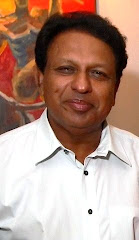
Remarks by T.P.Sreenivasan at a function to release Gautaman Bhaskaran's Book on Adoor Gopalakrishnan November 30, 2010
‘Adoor Gopalakrishnan- A Life in Cinema’ is an extraordinary book on an exceptional film maker. I have been an ardent admirer of Adoor for a long time. I am now an admirer also of Gautaman Bhaskaran for elevating the genre of biography to an artistically higher level, close to a novel for readability and felicity of language. Adoor and his movies come out of this book as a composite whole, inseparable and indistinguishable from each other. The man and the movies are one. Adoor hopes that the book will throw some light on his life and work. Gautaman Bhaskaran does more than that- he shows Adoor and his work in a new light.
For practicing diplomats like me, India’s icons, whether they are writers, artists, poets or film personalities constitute the soft power of India, which has been an instrument of our foreign policy. Different film personalities captivated the imagination of people in different countries-Raj Kapoor and Nargis in the Soviet Union, Amitabh Bachan and Sharukh Khan in West and East Asia and Satyajit Ray in earlier years and Adoor more recently in the US and Europe. Adoor retrospectives were common in the US as well as in Austria, where I was invited to share the honour with the film maker and India. I was glad to see that connoisseurs in these and other countries related to the art films of India more than to the mélange of dance and music of Bollywood.
It is difficult to capture in a few minutes the doors that Gautaman Bhaskaran has opened to Adoor and his cinema in his book. All of us knew well that Adoor made films about real people and real situations and that there was nothing artificial or superficial in them. But the author takes us through Adoor’s background, upbringing, interest in Kathakali and theatre, the profound influence of Gandhi on him and the expertise he acquired in Krishnanattam and Koodiyattam and shows us how each of these facets comes through in his work. Whether the author is narrating the events of Adoor’s early life, as a biographer should or whether he is reviewing each of his films as a critic should, his focus is on the unique features of the Adoor cinema. The two sections of the book, the first on Adoor’s life and the second on his movies, merge into each other to reveal the genius of Adoor and its manifestation on the screen. His accomplishment is in persuading Adoor, a reluctant conversationalist, to talk and weave his insights into a remarkable biography.
Gautaman Bhaskaran deals with some of the misconceptions about Adoor’s work. For instance, many people place Adoor in the Satyajit Rray School of movie-making. The criticism that Ray exploited Indian poverty has been hurled at Adoor also. Adoor may have been attracted to Ray’s cinema, but the very fact that Ray considered Adoor his most favourite Indian director shows that his work is far different from Ray’s own. “Had my work resembled Ray’s, he would have had nothing but disdain for me”, the author quotes Adoor as saying, although Adoor considered Ray a constant source of creative energy and inspiration.
Gautaman Bhaskaran also examines the unease that spectators feel when there is silence on the screen, a feature of Adoor’s work. Adoor’s sparing use of background music has also been criticized. In Kodiyettam, Adoor did not use background score at all. The author explores the world of other sounds that Adoor uses and the great lengths to which he goes to record the commonest of sounds to be used with great effect to accomplish the right balance of sound and silence. People with the ear for these sounds will not miss the musical score in Adoor’s movies. Adoor believes that silence exists with sound, between sounds. Sometimes, silence accentuates sound.
An amusing section of the book is on the non-human actors, the birds, the animals and the fish which make Adoor’s films richer with their presence and histrionics. The rat becomes an actor in Elipathayam, crows and mynahs come to life in Mathilukal. The story of how a Swiss- bred cow, masquerading as a nadan pasu, made Adoor rewrite the scene in Kathapurushan is amusing indeed.
The last few days since Kurien Sabarigiri invited me to this event have been Adoor Gopalakrishnan days for me. After I began reading the book, I heard Adoor speaking on Koodiyattam, saw him at the Hay Festival and watched three of his latest movies, starting with Nizhalkkuthu, my all time favourite among Adoor’s movies. As I conclude this brief comment on the book on Adoor Gopalakrishnan, the thought that occurs to me is one of gratitude that we, in Thiruvananthapuram, are blessed that we are Adoor’s contemporaries and we have the privilege of seeing this great film maker not only on celluloid, but also in flesh and blood. I am glad that Gautaman Bhaskaran has given us a glimpse of the genius of this great son of Kerala. When we see Kodiyettam, Elippathayam, Nizhalkkuthu or a new creation by Adoor, we will enjoy these creations even more, thanks to this brilliant biography.
Tuesday, November 30, 2010


Saturday, November 06, 2010
Welcome, President Obama
By T.P.Sreenivasan
Mr.President,
Welcome to India. We are excited about the prospect of receiving a man of destiny not just for the people of the United States, but also for people around the world, who see you as a messiah of change and hope. We have a stake in your success because, on it depends the advent of a just, equitable and non-racist world. On this Diwali day, when you arrive in India, the brightest light that we see in the horizon is the one you lit in Washington that cold January night in 2008. Our welcome is spontaneous and unconditional. Your arrival in India itself is historic, regardless of whatever you may or may not accomplish here in the next four days.
We know that you will arrive in India before recovering from the mid-term shock of losing the House and reducing your majority in the Senate. The fact that your predecessors too had to face such defeats may be no consolation for you. In your case, the amazing fact is that you never received bipartisan support even in your struggle to tackle the national economic crisis or crucial health reform issues. There appears to be a conspiracy by vested interests to reverse the historic process that brought you to the White House. The trends you have set in foreign policy from Cairo and Prague break new ground for global peace and prosperity and you should have the time to bring them to fruition. We see hope in your initiatives and we wish you well.
Though the loss of the House is a blow to the Democratic Party and your own Congressional agenda, you will find that the new leaders of the various Congressional bodies will be supportive of your efforts to build a strategic partnership with India. Some leaders of the Republican party, who shaped President Bush's pro-India policies will be back in influential positions and this is a silver lining from the point of view of beneficial India-US relations.A new bipartisan approach to India may well be in the offing.
Strategic thinkers on both sides have debated every Issue that is likely to come up during your visit and we hope that your mind is not muddled by the prophesies of doom or high expectations contained in those masterpieces. As one of our former Foreign Ministers famously said, the visit should be seen in "directional" and not "transactional" terms. As long as you are able to have a frank exchange of views with our Prime Minister, whom you consider your guru, on strategic issues and reach an understanding on China, Pakistan, and Afghanistan, your visit will be of infinite value.
There is a certain inevitability of success in these areas as neither of us is guided by any desire to subvert or dominate the region. We desire nothing but prosperity and stability for our neighbours as long as they do not work either to inflict a "thousand cuts" on us or to create a "string of pearls" to suffocate us. You are fighting a war not to conquer territory, but to ensure that never again will terrorism engendered in this region threaten lives in the United States. We have been engaged in that battle for more than twenty years and we know the pain and loss, which that struggle entails. When we urge you to complete the task of eliminating terrorism, we are not suggesting that we are ready to fight the battle to the Last American. Indians, Americans and humanity itself have a stake in ridding the world of the scourge of terrorism. There should be no more Headleys to perpetrate terrorism.
One of the ironies of history is that Pakistan, which has adopted terrorism as a state policy, is your front-line state in your combat against terrorism. The evidence of Pakistan's double game has come from reliable sources in Washington itself. You yourself have spoken about the danger of American equipment and money being used by Pakistan against India. In these circumstances, blind support to Pakistan for fear of the emergence of rulers in uniform or Taliban outfits will not serve American interests. For India, it poses grave dangers. A stable, free and democratic Afghanistan is in the best interests of both our countries. A regional rather than an Af-Pak solution should be sought in Afghanistan.
China's assertiveness in the wake of its rise is ominous for both our countries. India still has a vision of global partnership with China as a key element in it. But as long as the festering boundary issue is not resolved, the possibility exists of aggression in the guise of confusion arising out of different lines in different maps. it was the height of absurdity that China protested when our Prime Minister visited Arunachal Pradesh. No less serious is the policy to treat Indian citizens from Jammu and Kashmir as though they are from Mars, not entitled to normal consular access. You have your interests in China, but your visit should demonstrate in some way that the world will expect China to match its power with responsibilities. We are sure that you will benefit from Prime Minister's assessment of China as he will from your own analysis.
Unfortunately, the outcome of your strategic understanding with India will not be known either to your people or ours for a long time to come. They are likely to judge your visit on the basis of the transactional aspects of the visit. Your people need jobs and nuclear and defence contracts are very important from their point of view. You are aware that India is not averse either to nuclear trade or purchase of defence equipment. The liability law was put in place and the Convention on Supplementary Compensation was signed precisely to facilitate nuclear trade with the US and others. We have clarified that the language of our law has not changed the situation on the ground with regard to liability and that it is consistent with the Convention. It should not be beyond the lawyers on both sides to find a way to begin nuclear trade. On defence agreements too, the differences seem to be in form and not in substance. But any suggestion of surrender of sovereignty on the use of defence purchases is anathema to the Indian public.You should be able to carry with you good news on both these fronts even if everything is not signed and sealed before Nov 9.
The Indian wish list is quite realistic and achievable. No one disputes that sanctions are an anachronism between strategic partners. How can the entity black list be justified when the same entities are engaged in strategic cooperation with the United States? You say it is complicated, but is it not necessary to remove such anomalies, however complicated they may be? We are glad that you do not have the power to stop outsourcing, though you prefer to create jobs in Buffalo, not Bangaluru. It is a win-win situation and why not allow market forces to determine the future of outsourcing?
The third wish on the Indian side is to see you declaring from the floor of the Indian Parliament that you will support India's wish to be a permanent member of the Security Council. We know that it will not immediately open up the door of the Council for us. The process is long and arduous. But the perception in this country is that the US is an obstacle to Indian aspirations in this regard. You acknowledge the need for reform of the Security Council in the interest of making it representative and reflective of current realities. There is no better way for you to affirm your faith in India as a partner in global governance than by expressing support to India in suitable terms. India's involvement in international organisations should reflect its role and importance. More than anything else, you will be an instant hit with the Indian public.
On the same logic, in view of India's new role as a partner in disarmament and non-proliferation, India should be invited to join such bodies as the Nuclear Suppliers Group (NSG) and Missile Technology Control Regime (MTCR) The world will benefit from India's participation in these bodies rather than just abide by their guidelines from outside.
The very fact that you have come to India at this juncture is significant in itself and even if our respective wish lists remain on paper for some more time, the directional significance of your visit will not be lost on anyone. But leaders meet to do what bureaucracies cannot do and however complicated these issues are, it should not be beyond the two of you to find ways to deal with them. Success is within your grasp.
The symbolism of your programme is not lost on us. Your stay at the Taj in Mumbai, your visits to the places associated with Mahatma Gandhi, your visit to Humayun's tomb and your address to the Parliament will make an indelible impression on India. No one who visits India is not transformed by the experience and you will be no exception.
Long before your historic election victory, I was asked who I would vote for if I had a vote. "My heart is with Obama, but my head is with McCain." Perhaps, a McCain administration would have been more sensitive to India's concerns. But it is the Obama phenomenon that captured my heart. My heart is still with you. And so are the hearts of many others in India.
Thank you, Mr. President.
By T.P.Sreenivasan
Mr.President,
Welcome to India. We are excited about the prospect of receiving a man of destiny not just for the people of the United States, but also for people around the world, who see you as a messiah of change and hope. We have a stake in your success because, on it depends the advent of a just, equitable and non-racist world. On this Diwali day, when you arrive in India, the brightest light that we see in the horizon is the one you lit in Washington that cold January night in 2008. Our welcome is spontaneous and unconditional. Your arrival in India itself is historic, regardless of whatever you may or may not accomplish here in the next four days.
We know that you will arrive in India before recovering from the mid-term shock of losing the House and reducing your majority in the Senate. The fact that your predecessors too had to face such defeats may be no consolation for you. In your case, the amazing fact is that you never received bipartisan support even in your struggle to tackle the national economic crisis or crucial health reform issues. There appears to be a conspiracy by vested interests to reverse the historic process that brought you to the White House. The trends you have set in foreign policy from Cairo and Prague break new ground for global peace and prosperity and you should have the time to bring them to fruition. We see hope in your initiatives and we wish you well.
Though the loss of the House is a blow to the Democratic Party and your own Congressional agenda, you will find that the new leaders of the various Congressional bodies will be supportive of your efforts to build a strategic partnership with India. Some leaders of the Republican party, who shaped President Bush's pro-India policies will be back in influential positions and this is a silver lining from the point of view of beneficial India-US relations.A new bipartisan approach to India may well be in the offing.
Strategic thinkers on both sides have debated every Issue that is likely to come up during your visit and we hope that your mind is not muddled by the prophesies of doom or high expectations contained in those masterpieces. As one of our former Foreign Ministers famously said, the visit should be seen in "directional" and not "transactional" terms. As long as you are able to have a frank exchange of views with our Prime Minister, whom you consider your guru, on strategic issues and reach an understanding on China, Pakistan, and Afghanistan, your visit will be of infinite value.
There is a certain inevitability of success in these areas as neither of us is guided by any desire to subvert or dominate the region. We desire nothing but prosperity and stability for our neighbours as long as they do not work either to inflict a "thousand cuts" on us or to create a "string of pearls" to suffocate us. You are fighting a war not to conquer territory, but to ensure that never again will terrorism engendered in this region threaten lives in the United States. We have been engaged in that battle for more than twenty years and we know the pain and loss, which that struggle entails. When we urge you to complete the task of eliminating terrorism, we are not suggesting that we are ready to fight the battle to the Last American. Indians, Americans and humanity itself have a stake in ridding the world of the scourge of terrorism. There should be no more Headleys to perpetrate terrorism.
One of the ironies of history is that Pakistan, which has adopted terrorism as a state policy, is your front-line state in your combat against terrorism. The evidence of Pakistan's double game has come from reliable sources in Washington itself. You yourself have spoken about the danger of American equipment and money being used by Pakistan against India. In these circumstances, blind support to Pakistan for fear of the emergence of rulers in uniform or Taliban outfits will not serve American interests. For India, it poses grave dangers. A stable, free and democratic Afghanistan is in the best interests of both our countries. A regional rather than an Af-Pak solution should be sought in Afghanistan.
China's assertiveness in the wake of its rise is ominous for both our countries. India still has a vision of global partnership with China as a key element in it. But as long as the festering boundary issue is not resolved, the possibility exists of aggression in the guise of confusion arising out of different lines in different maps. it was the height of absurdity that China protested when our Prime Minister visited Arunachal Pradesh. No less serious is the policy to treat Indian citizens from Jammu and Kashmir as though they are from Mars, not entitled to normal consular access. You have your interests in China, but your visit should demonstrate in some way that the world will expect China to match its power with responsibilities. We are sure that you will benefit from Prime Minister's assessment of China as he will from your own analysis.
Unfortunately, the outcome of your strategic understanding with India will not be known either to your people or ours for a long time to come. They are likely to judge your visit on the basis of the transactional aspects of the visit. Your people need jobs and nuclear and defence contracts are very important from their point of view. You are aware that India is not averse either to nuclear trade or purchase of defence equipment. The liability law was put in place and the Convention on Supplementary Compensation was signed precisely to facilitate nuclear trade with the US and others. We have clarified that the language of our law has not changed the situation on the ground with regard to liability and that it is consistent with the Convention. It should not be beyond the lawyers on both sides to find a way to begin nuclear trade. On defence agreements too, the differences seem to be in form and not in substance. But any suggestion of surrender of sovereignty on the use of defence purchases is anathema to the Indian public.You should be able to carry with you good news on both these fronts even if everything is not signed and sealed before Nov 9.
The Indian wish list is quite realistic and achievable. No one disputes that sanctions are an anachronism between strategic partners. How can the entity black list be justified when the same entities are engaged in strategic cooperation with the United States? You say it is complicated, but is it not necessary to remove such anomalies, however complicated they may be? We are glad that you do not have the power to stop outsourcing, though you prefer to create jobs in Buffalo, not Bangaluru. It is a win-win situation and why not allow market forces to determine the future of outsourcing?
The third wish on the Indian side is to see you declaring from the floor of the Indian Parliament that you will support India's wish to be a permanent member of the Security Council. We know that it will not immediately open up the door of the Council for us. The process is long and arduous. But the perception in this country is that the US is an obstacle to Indian aspirations in this regard. You acknowledge the need for reform of the Security Council in the interest of making it representative and reflective of current realities. There is no better way for you to affirm your faith in India as a partner in global governance than by expressing support to India in suitable terms. India's involvement in international organisations should reflect its role and importance. More than anything else, you will be an instant hit with the Indian public.
On the same logic, in view of India's new role as a partner in disarmament and non-proliferation, India should be invited to join such bodies as the Nuclear Suppliers Group (NSG) and Missile Technology Control Regime (MTCR) The world will benefit from India's participation in these bodies rather than just abide by their guidelines from outside.
The very fact that you have come to India at this juncture is significant in itself and even if our respective wish lists remain on paper for some more time, the directional significance of your visit will not be lost on anyone. But leaders meet to do what bureaucracies cannot do and however complicated these issues are, it should not be beyond the two of you to find ways to deal with them. Success is within your grasp.
The symbolism of your programme is not lost on us. Your stay at the Taj in Mumbai, your visits to the places associated with Mahatma Gandhi, your visit to Humayun's tomb and your address to the Parliament will make an indelible impression on India. No one who visits India is not transformed by the experience and you will be no exception.
Long before your historic election victory, I was asked who I would vote for if I had a vote. "My heart is with Obama, but my head is with McCain." Perhaps, a McCain administration would have been more sensitive to India's concerns. But it is the Obama phenomenon that captured my heart. My heart is still with you. And so are the hearts of many others in India.
Thank you, Mr. President.
Welcome, President Obama
By T.P.Sreenivasan
Mr.President,
Welcome to India. We are excited about the prospect of receiving a man of destiny not just for the people of the United States, but also for people around the world, who see you as a messiah of change and hope. We have a stake in your success because, on it depends the advent of a just, equitable and non-racist world. On this Diwali day, when you arrive in India, the brightest light that we see in the horizon is the one you lit in Washington that cold January night in 2008. Our welcome is spontaneous and unconditional. Your arrival in India itself is historic, regardless of whatever you may or may not accomplish here in the next four days.
We know that you will arrive in India before recovering from the mid-term shock of losing the House and reducing your majority in the Senate. The fact that your predecessors too had to face such defeats may be no consolation for you. In your case, the amazing fact is that you never received bipartisan support even in your struggle to tackle the national economic crisis or crucial health reform issues. There appears to be a conspiracy by vested interests to reverse the historic process that brought you to the White House. The trends you have set in foreign policy from Cairo and Prague break new ground for global peace and prosperity and you should have the time to bring them to fruition. We see hope in your initiatives and we wish you well.
Though the loss of the House is a blow to the Democratic Party and your own Congressional agenda, you will find that the new leaders of the various Congressional bodies will be supportive of your efforts to build a strategic partnership with India. Some leaders of the Republican party, who shaped President Bush's pro-India policies will be back in influential positions and this is a silver lining from the point of view of beneficial India-US relations.A new bipartisan approach to India may well be in the offing.
Strategic thinkers on both sides have debated every Issue that is likely to come up during your visit and we hope that your mind is not muddled by the prophesies of doom or high expectations contained in those masterpieces. As one of our former Foreign Ministers famously said, the visit should be seen in "directional" and not "transactional" terms. As long as you are able to have a frank exchange of views with our Prime Minister, whom you consider your guru, on strategic issues and reach an understanding on China, Pakistan, and Afghanistan, your visit will be of infinite value.
There is a certain inevitability of success in these areas as neither of us is guided by any desire to subvert or dominate the region. We desire nothing but prosperity and stability for our neighbours as long as they do not work either to inflict a "thousand cuts" on us or to create a "string of pearls" to suffocate us. You are fighting a war not to conquer territory, but to ensure that never again will terrorism engendered in this region threaten lives in the United States. We have been engaged in that battle for more than twenty years and we know the pain and loss, which that struggle entails. When we urge you to complete the task of eliminating terrorism, we are not suggesting that we are ready to fight the battle to the Last American. Indians, Americans and humanity itself have a stake in ridding the world of the scourge of terrorism. There should be no more Headleys to perpetrate terrorism.
One of the ironies of history is that Pakistan, which has adopted terrorism as a state policy, is your front-line state in your combat against terrorism. The evidence of Pakistan's double game has come from reliable sources in Washington itself. You yourself have spoken about the danger of American equipment and money being used by Pakistan against India. In these circumstances, blind support to Pakistan for fear of the emergence of rulers in uniform or Taliban outfits will not serve American interests. For India, it poses grave dangers. A stable, free and democratic Afghanistan is in the best interests of both our countries. A regional rather than an Af-Pak solution should be sought in Afghanistan.
China's assertiveness in the wake of its rise is ominous for both our countries. India still has a vision of global partnership with China as a key element in it. But as long as the festering boundary issue is not resolved, the possibility exists of aggression in the guise of confusion arising out of different lines in different maps. it was the height of absurdity that China protested when our Prime Minister visited Arunachal Pradesh. No less serious is the policy to treat Indian citizens from Jammu and Kashmir as though they are from Mars, not entitled to normal consular access. You have your interests in China, but your visit should demonstrate in some way that the world will expect China to match its power with responsibilities. We are sure that you will benefit from Prime Minister's assessment of China as he will from your own analysis.
Unfortunately, the outcome of your strategic understanding with India will not be known either to your people or ours for a long time to come. They are likely to judge your visit on the basis of the transactional aspects of the visit. Your people need jobs and nuclear and defence contracts are very important from their point of view. You are aware that India is not averse either to nuclear trade or purchase of defence equipment. The liability law was put in place and the Convention on Supplementary Compensation was signed precisely to facilitate nuclear trade with the US and others. We have clarified that the language of our law has not changed the situation on the ground with regard to liability and that it is consistent with the Convention. It should not be beyond the lawyers on both sides to find a way to begin nuclear trade. On defence agreements too, the differences seem to be in form and not in substance. But any suggestion of surrender of sovereignty on the use of defence purchases is anathema to the Indian public.You should be able to carry with you good news on both these fronts even if everything is not signed and sealed before Nov 9.
The Indian wish list is quite realistic and achievable. No one disputes that sanctions are an anachronism between strategic partners. How can the entity black list be justified when the same entities are engaged in strategic cooperation with the United States? You say it is complicated, but is it not necessary to remove such anomalies, however complicated they may be? We are glad that you do not have the power to stop outsourcing, though you prefer to create jobs in Buffalo, not Bangaluru. It is a win-win situation and why not allow market forces to determine the future of outsourcing?
The third wish on the Indian side is to see you declaring from the floor of the Indian Parliament that you will support India's wish to be a permanent member of the Security Council. We know that it will not immediately open up the door of the Council for us. The process is long and arduous. But the perception in this country is that the US is an obstacle to Indian aspirations in this regard. You acknowledge the need for reform of the Security Council in the interest of making it representative and reflective of current realities. There is no better way for you to affirm your faith in India as a partner in global governance than by expressing support to India in suitable terms. India's involvement in international organisations should reflect its role and importance. More than anything else, you will be an instant hit with the Indian public.
On the same logic, in view of India's new role as a partner in disarmament and non-proliferation, India should be invited to join such bodies as the Nuclear Suppliers Group (NSG) and Missile Technology Control Regime (MTCR) The world will benefit from India's participation in these bodies rather than just abide by their guidelines from outside.
The very fact that you have come to India at this juncture is significant in itself and even if our respective wish lists remain on paper for some more time, the directional significance of your visit will not be lost on anyone. But leaders meet to do what bureaucracies cannot do and however complicated these issues are, it should not be beyond the two of you to find ways to deal with them. Success is within your grasp.
The symbolism of your programme is not lost on us. Your stay at the Taj in Mumbai, your visits to the places associated with Mahatma Gandhi, your visit to Humayun's tomb and your address to the Parliament will make an indelible impression on India. No one who visits India is not transformed by the experience and you will be no exception.
Long before your historic election victory, I was asked who I would vote for if I had a vote. "My heart is with Obama, but my head is with McCain." Perhaps, a McCain administration would have been more sensitive to India's concerns. But it is the Obama phenomenon that captured my heart. My heart is still with you. And so are the hearts of many others in India.
Thank you, Mr. President.
By T.P.Sreenivasan
Mr.President,
Welcome to India. We are excited about the prospect of receiving a man of destiny not just for the people of the United States, but also for people around the world, who see you as a messiah of change and hope. We have a stake in your success because, on it depends the advent of a just, equitable and non-racist world. On this Diwali day, when you arrive in India, the brightest light that we see in the horizon is the one you lit in Washington that cold January night in 2008. Our welcome is spontaneous and unconditional. Your arrival in India itself is historic, regardless of whatever you may or may not accomplish here in the next four days.
We know that you will arrive in India before recovering from the mid-term shock of losing the House and reducing your majority in the Senate. The fact that your predecessors too had to face such defeats may be no consolation for you. In your case, the amazing fact is that you never received bipartisan support even in your struggle to tackle the national economic crisis or crucial health reform issues. There appears to be a conspiracy by vested interests to reverse the historic process that brought you to the White House. The trends you have set in foreign policy from Cairo and Prague break new ground for global peace and prosperity and you should have the time to bring them to fruition. We see hope in your initiatives and we wish you well.
Though the loss of the House is a blow to the Democratic Party and your own Congressional agenda, you will find that the new leaders of the various Congressional bodies will be supportive of your efforts to build a strategic partnership with India. Some leaders of the Republican party, who shaped President Bush's pro-India policies will be back in influential positions and this is a silver lining from the point of view of beneficial India-US relations.A new bipartisan approach to India may well be in the offing.
Strategic thinkers on both sides have debated every Issue that is likely to come up during your visit and we hope that your mind is not muddled by the prophesies of doom or high expectations contained in those masterpieces. As one of our former Foreign Ministers famously said, the visit should be seen in "directional" and not "transactional" terms. As long as you are able to have a frank exchange of views with our Prime Minister, whom you consider your guru, on strategic issues and reach an understanding on China, Pakistan, and Afghanistan, your visit will be of infinite value.
There is a certain inevitability of success in these areas as neither of us is guided by any desire to subvert or dominate the region. We desire nothing but prosperity and stability for our neighbours as long as they do not work either to inflict a "thousand cuts" on us or to create a "string of pearls" to suffocate us. You are fighting a war not to conquer territory, but to ensure that never again will terrorism engendered in this region threaten lives in the United States. We have been engaged in that battle for more than twenty years and we know the pain and loss, which that struggle entails. When we urge you to complete the task of eliminating terrorism, we are not suggesting that we are ready to fight the battle to the Last American. Indians, Americans and humanity itself have a stake in ridding the world of the scourge of terrorism. There should be no more Headleys to perpetrate terrorism.
One of the ironies of history is that Pakistan, which has adopted terrorism as a state policy, is your front-line state in your combat against terrorism. The evidence of Pakistan's double game has come from reliable sources in Washington itself. You yourself have spoken about the danger of American equipment and money being used by Pakistan against India. In these circumstances, blind support to Pakistan for fear of the emergence of rulers in uniform or Taliban outfits will not serve American interests. For India, it poses grave dangers. A stable, free and democratic Afghanistan is in the best interests of both our countries. A regional rather than an Af-Pak solution should be sought in Afghanistan.
China's assertiveness in the wake of its rise is ominous for both our countries. India still has a vision of global partnership with China as a key element in it. But as long as the festering boundary issue is not resolved, the possibility exists of aggression in the guise of confusion arising out of different lines in different maps. it was the height of absurdity that China protested when our Prime Minister visited Arunachal Pradesh. No less serious is the policy to treat Indian citizens from Jammu and Kashmir as though they are from Mars, not entitled to normal consular access. You have your interests in China, but your visit should demonstrate in some way that the world will expect China to match its power with responsibilities. We are sure that you will benefit from Prime Minister's assessment of China as he will from your own analysis.
Unfortunately, the outcome of your strategic understanding with India will not be known either to your people or ours for a long time to come. They are likely to judge your visit on the basis of the transactional aspects of the visit. Your people need jobs and nuclear and defence contracts are very important from their point of view. You are aware that India is not averse either to nuclear trade or purchase of defence equipment. The liability law was put in place and the Convention on Supplementary Compensation was signed precisely to facilitate nuclear trade with the US and others. We have clarified that the language of our law has not changed the situation on the ground with regard to liability and that it is consistent with the Convention. It should not be beyond the lawyers on both sides to find a way to begin nuclear trade. On defence agreements too, the differences seem to be in form and not in substance. But any suggestion of surrender of sovereignty on the use of defence purchases is anathema to the Indian public.You should be able to carry with you good news on both these fronts even if everything is not signed and sealed before Nov 9.
The Indian wish list is quite realistic and achievable. No one disputes that sanctions are an anachronism between strategic partners. How can the entity black list be justified when the same entities are engaged in strategic cooperation with the United States? You say it is complicated, but is it not necessary to remove such anomalies, however complicated they may be? We are glad that you do not have the power to stop outsourcing, though you prefer to create jobs in Buffalo, not Bangaluru. It is a win-win situation and why not allow market forces to determine the future of outsourcing?
The third wish on the Indian side is to see you declaring from the floor of the Indian Parliament that you will support India's wish to be a permanent member of the Security Council. We know that it will not immediately open up the door of the Council for us. The process is long and arduous. But the perception in this country is that the US is an obstacle to Indian aspirations in this regard. You acknowledge the need for reform of the Security Council in the interest of making it representative and reflective of current realities. There is no better way for you to affirm your faith in India as a partner in global governance than by expressing support to India in suitable terms. India's involvement in international organisations should reflect its role and importance. More than anything else, you will be an instant hit with the Indian public.
On the same logic, in view of India's new role as a partner in disarmament and non-proliferation, India should be invited to join such bodies as the Nuclear Suppliers Group (NSG) and Missile Technology Control Regime (MTCR) The world will benefit from India's participation in these bodies rather than just abide by their guidelines from outside.
The very fact that you have come to India at this juncture is significant in itself and even if our respective wish lists remain on paper for some more time, the directional significance of your visit will not be lost on anyone. But leaders meet to do what bureaucracies cannot do and however complicated these issues are, it should not be beyond the two of you to find ways to deal with them. Success is within your grasp.
The symbolism of your programme is not lost on us. Your stay at the Taj in Mumbai, your visits to the places associated with Mahatma Gandhi, your visit to Humayun's tomb and your address to the Parliament will make an indelible impression on India. No one who visits India is not transformed by the experience and you will be no exception.
Long before your historic election victory, I was asked who I would vote for if I had a vote. "My heart is with Obama, but my head is with McCain." Perhaps, a McCain administration would have been more sensitive to India's concerns. But it is the Obama phenomenon that captured my heart. My heart is still with you. And so are the hearts of many others in India.
Thank you, Mr. President.
Tuesday, October 05, 2010
Diaspora Diplomacy
Need for MEA and MOIA to work in unison
By T.P.Sreenivasan
The conclave of Indian envoys in New Delhi, which has become an annual feature, focuses on issues of current importance in foreign policy. Its agenda will show the priorities of the Ministry of External Affairs (MEA). Terrorism, Pakistan and China are recurring themes, but economic and cultural diplomacy also receive attention. The concerned Ministers are invited to interact with the envoys. Conspicuous by his absence this year was the Minister for Overseas Indian Affairs (MOIA), Vayalar Ravi. Not that he was unavailable or unwilling; he was simply not invited.
Among the Cabinet Ministers, who work closely with the Indian missions abroad is the Minister, who looks after the diaspora, as there is hardly any country in the world without an Indian community. The MOIA is practically an extension of the MEA because the only instrument it has in dealing with the diaspora is our mission network. Defence, Commerce and Education Ministries have their own officers stationed in the relevant missions, but MOIA has officers only in two or three missions and, therefore, the MOIA has to necessarily bank on MEA personnel. Minister Ravi, who is not only a hands- on Minister, but also a person, who makes it a point to remain in touch with the heads of mission and the diaspora itself from Africa to the Americas, would have shared his vision and strategy with the envoys. Not inviting the Minister to address the envoys was, therefore, a serious omission, which reflects the low priority accorded by MEA to diaspora diplomacy.
At the political level, there is recognition of the utility of the diaspora as an instrument of diplomacy, ever since Rajiv Gandhi changed the traditional diaspora policy of only “being alive to their welfare and interests” to active engagement with the objective of securing investment, technology and political influence for India. He demonstrated the new policy at the time of the first coup in Fiji by sanctioning the country and taking upon himself the task of getting Fiji expelled from the Commonwealth as it practiced discrimination against Fiji citizens of Indian origin. He raised expectations around the world that India will stand by the diaspora , whether in prosperity or in adversity.
Successive Governments, regardless of party affiliations, have tried to meet the demands of the diaspora in a progressive manner. The Persons of Indian Origin (PIO) card, the Overseas Citizen of India (OCI) card, the annual Pravasi Bharatiya Divas PBD) in Delhi and the regional PBDs in different parts of the globe, the Pravasi Bharatiya Samman and the MOIA itself, with its subsidiary outfits are devices established from time to time for the purpose. They may not have fulfilled the aspirations of the diaspora in full, but have gone a long way in impelling them to be the advocates of Indian causes in their countries of adoption.
The missions, which are required to administer these facilities abroad, do perform their job, but often half heartedly, because diaspora diplomacy has not assumed the same importance as political, economic and cultural diplomacy, though it encompasses all these areas in countries like the US and the UK. In countries like Mauritius, Fiji, Surinam and Guyana and recently in the Gulf countries, diplomats go with the realization that they have to deal with the diaspora, but in the high profile missions, there is a tendency to relegate the diaspora work to secondary importance.
Years of practice and prejudice cannot be erased in a day. In the olden days, diplomats considered demands of the diaspora as distractions at best and the interactions did not go beyond social and cultural contacts. Invitations were sent to the Indian community twice a year to celebrate national days, but there was no strategy to utilize it for any diplomatic purposes. Today, there is a resolve to use the community as a resource for attaining foreign policy goals, but no defined strategy on which there is a consensus. It is left to the individual heads of mission to resort to their own devices to deal with the diaspora.
The Indian diaspora is as diverse as India itself. The challenges in Fiji are different from those in the United States or the United Kingdom. However, an occasion like the conclave of heads of mission is an opportunity to compare notes with the MOIA and to evolve a strategy. MEA must accord a higher level of priority to diaspora diplomacy if the Government’s objectives in this regard are to be reached. Creation of a separate Ministry does not absolve the IFS of the responsibility to implement the decisions of the Government.
In practice, however, the two Ministries are becoming more and more alienated. It would have been ideal if an IFS officer was deputed as Secretary, MOIA to make the shaping of our diaspora diplomacy coherent. But today, even the practice of having an IFS officer at the Joint Secretary level in that Ministry has been discontinued. Could not the MEA provide a suitable officer to head a division of the MOIA? The two Ministries should work in unison, not in competition as they tend to do.
A regional Pravasi Bharatiya Divas for Africa has just been concluded in Durban, South Africa. The South African Government made it a great celebration of the ties with India, coming as it did on the birthday of Mahatma Gandhi and the 150th anniversary of arrival of the first batch of indentured labourers. President Zuma himself attended the closing ceremony and made a memorable speech on what South Africa owes to India. He urged India to use the tremendous goodwill it has in Africa for the good of Indians and Africans. The Natal State Premiere and the King were also there. But the representation from India was confined to the Minister for MOIA and a Minister of State from the Ministry of Human Resource Development. Of course, the High Commissioner to South Africa and the Consul General in Durban played a major role. But there was hardly any representation from the rest of Africa in what was a regional conference. Did our missions in the rest of Africa carry the message to the communities in those countries? How many of them were invited?
The Durban Conference was a splendid occasion to showcase India’s links with Africa. The Africa Division should have given greater attention to the conference, particularly since it is in the process of evolving a strategy to counter the efforts of other countries to replace the Indian influence in Africa. This is the time for us to convert the image of the Indian diaspora in Africa into a benign one. It does not consist of labourers, petty traders and money lenders anymore. There are skilled workers, businessmen and bankers. They have risen to the challenges of globalization and they should be seen as nation builders and not exploiters. The change of image is necessary and India needs to be a catalyst. We missed a splendid opportunity to do this in Durban.
It is not long since India and its diapora discovered each other and realized that each has to gain from the other. Our diaspora diplomacy is still in its infancy. The facilities that have been put in place have their teething troubles. Holders of Overseas Indian Citizens cards are bewildered that they still need a visa to enter India. Prejudices remain about investing in India and setting up businesses. Our missions are not yet diaspora friendly, except where individual officers accord priority for this work. The mindset of some that Indians abroad is being pampered unnecessarily has to change. Unless the MEA and MOIA work together, not to speak of the Ministry of Home Affairs (MHA), many of the problems cannot be ironed out. The Government and the diaspora also need to reorient themselves to working together if the diaspora diplomacy initiated by Rajiv Gandhi and nurtured by successive Prime Ministers should succeed.
Need for MEA and MOIA to work in unison
By T.P.Sreenivasan
The conclave of Indian envoys in New Delhi, which has become an annual feature, focuses on issues of current importance in foreign policy. Its agenda will show the priorities of the Ministry of External Affairs (MEA). Terrorism, Pakistan and China are recurring themes, but economic and cultural diplomacy also receive attention. The concerned Ministers are invited to interact with the envoys. Conspicuous by his absence this year was the Minister for Overseas Indian Affairs (MOIA), Vayalar Ravi. Not that he was unavailable or unwilling; he was simply not invited.
Among the Cabinet Ministers, who work closely with the Indian missions abroad is the Minister, who looks after the diaspora, as there is hardly any country in the world without an Indian community. The MOIA is practically an extension of the MEA because the only instrument it has in dealing with the diaspora is our mission network. Defence, Commerce and Education Ministries have their own officers stationed in the relevant missions, but MOIA has officers only in two or three missions and, therefore, the MOIA has to necessarily bank on MEA personnel. Minister Ravi, who is not only a hands- on Minister, but also a person, who makes it a point to remain in touch with the heads of mission and the diaspora itself from Africa to the Americas, would have shared his vision and strategy with the envoys. Not inviting the Minister to address the envoys was, therefore, a serious omission, which reflects the low priority accorded by MEA to diaspora diplomacy.
At the political level, there is recognition of the utility of the diaspora as an instrument of diplomacy, ever since Rajiv Gandhi changed the traditional diaspora policy of only “being alive to their welfare and interests” to active engagement with the objective of securing investment, technology and political influence for India. He demonstrated the new policy at the time of the first coup in Fiji by sanctioning the country and taking upon himself the task of getting Fiji expelled from the Commonwealth as it practiced discrimination against Fiji citizens of Indian origin. He raised expectations around the world that India will stand by the diaspora , whether in prosperity or in adversity.
Successive Governments, regardless of party affiliations, have tried to meet the demands of the diaspora in a progressive manner. The Persons of Indian Origin (PIO) card, the Overseas Citizen of India (OCI) card, the annual Pravasi Bharatiya Divas PBD) in Delhi and the regional PBDs in different parts of the globe, the Pravasi Bharatiya Samman and the MOIA itself, with its subsidiary outfits are devices established from time to time for the purpose. They may not have fulfilled the aspirations of the diaspora in full, but have gone a long way in impelling them to be the advocates of Indian causes in their countries of adoption.
The missions, which are required to administer these facilities abroad, do perform their job, but often half heartedly, because diaspora diplomacy has not assumed the same importance as political, economic and cultural diplomacy, though it encompasses all these areas in countries like the US and the UK. In countries like Mauritius, Fiji, Surinam and Guyana and recently in the Gulf countries, diplomats go with the realization that they have to deal with the diaspora, but in the high profile missions, there is a tendency to relegate the diaspora work to secondary importance.
Years of practice and prejudice cannot be erased in a day. In the olden days, diplomats considered demands of the diaspora as distractions at best and the interactions did not go beyond social and cultural contacts. Invitations were sent to the Indian community twice a year to celebrate national days, but there was no strategy to utilize it for any diplomatic purposes. Today, there is a resolve to use the community as a resource for attaining foreign policy goals, but no defined strategy on which there is a consensus. It is left to the individual heads of mission to resort to their own devices to deal with the diaspora.
The Indian diaspora is as diverse as India itself. The challenges in Fiji are different from those in the United States or the United Kingdom. However, an occasion like the conclave of heads of mission is an opportunity to compare notes with the MOIA and to evolve a strategy. MEA must accord a higher level of priority to diaspora diplomacy if the Government’s objectives in this regard are to be reached. Creation of a separate Ministry does not absolve the IFS of the responsibility to implement the decisions of the Government.
In practice, however, the two Ministries are becoming more and more alienated. It would have been ideal if an IFS officer was deputed as Secretary, MOIA to make the shaping of our diaspora diplomacy coherent. But today, even the practice of having an IFS officer at the Joint Secretary level in that Ministry has been discontinued. Could not the MEA provide a suitable officer to head a division of the MOIA? The two Ministries should work in unison, not in competition as they tend to do.
A regional Pravasi Bharatiya Divas for Africa has just been concluded in Durban, South Africa. The South African Government made it a great celebration of the ties with India, coming as it did on the birthday of Mahatma Gandhi and the 150th anniversary of arrival of the first batch of indentured labourers. President Zuma himself attended the closing ceremony and made a memorable speech on what South Africa owes to India. He urged India to use the tremendous goodwill it has in Africa for the good of Indians and Africans. The Natal State Premiere and the King were also there. But the representation from India was confined to the Minister for MOIA and a Minister of State from the Ministry of Human Resource Development. Of course, the High Commissioner to South Africa and the Consul General in Durban played a major role. But there was hardly any representation from the rest of Africa in what was a regional conference. Did our missions in the rest of Africa carry the message to the communities in those countries? How many of them were invited?
The Durban Conference was a splendid occasion to showcase India’s links with Africa. The Africa Division should have given greater attention to the conference, particularly since it is in the process of evolving a strategy to counter the efforts of other countries to replace the Indian influence in Africa. This is the time for us to convert the image of the Indian diaspora in Africa into a benign one. It does not consist of labourers, petty traders and money lenders anymore. There are skilled workers, businessmen and bankers. They have risen to the challenges of globalization and they should be seen as nation builders and not exploiters. The change of image is necessary and India needs to be a catalyst. We missed a splendid opportunity to do this in Durban.
It is not long since India and its diapora discovered each other and realized that each has to gain from the other. Our diaspora diplomacy is still in its infancy. The facilities that have been put in place have their teething troubles. Holders of Overseas Indian Citizens cards are bewildered that they still need a visa to enter India. Prejudices remain about investing in India and setting up businesses. Our missions are not yet diaspora friendly, except where individual officers accord priority for this work. The mindset of some that Indians abroad is being pampered unnecessarily has to change. Unless the MEA and MOIA work together, not to speak of the Ministry of Home Affairs (MHA), many of the problems cannot be ironed out. The Government and the diaspora also need to reorient themselves to working together if the diaspora diplomacy initiated by Rajiv Gandhi and nurtured by successive Prime Ministers should succeed.
Friday, October 01, 2010
Mr. Obama's Passage to India
The president's trip may not accomplish very much of note.
By T.P. SREENIVASAN
Many American presidents have made passages to India, from Dwight Eisenhower to George W. Bush. In early November, President Obama will follow in their footsteps when he attends a major summit between the two partners in Delhi. Whether it will be a successful trip however, is still very much an open question.
President Obama set the bar high in June 2010, when he declared the U.S.-India partnership a "defining relationship of the century." In that, he was simply echoing the logic of his two predecessors, who realized that democratic India could serve as a useful counterpoint to the rise of China. India, too, has gravitated toward Washington for similar reasons.
Yet the strategic partnership envisaged in June, when the White House announced the summit, has not yet taken off, as the wish lists on the two sides differ substantially. For starters, the U.S. would like India to sign several pending agreements to facilitate the sale of American defense equipment, but India would like to move cautiously precisely because of the strategic nature of the agreements, which will cover communications and information security, geospatial cooperation and logistics sharing. Defense Minister A.K. Antony visited Washington this week to push these deals forward.
India's civil nuclear program is, still, another big sticking point. President Obama backed a reprocessing agreement in June—a major gesture, considering the conservative position he holds on enrichment and reprocessing technologies. But India has not been able to reciprocate by enacting liability legislation consistent with the relevant international regime, in which liability for nuclear damage is only for the operators, not the suppliers. The U.S. business community, eager to sell nuclear wares to India, is disappointed. It's unlikely that Mr. Obama can budge Delhi, however, given the Indian position that the new law does not, in reality, create new supplier liabilities and is consistent with the Vienna Convention on Supplementary Compensation.
On foreign affairs, the U.S. strategy for Afghanistan will loom large. President Obama's commitment to withdraw troops by next year has created concern in Delhi that the U.S. will leave before the country is fully stabilized. Delhi has also been dissatisfied with how little it's been consulted over strategic matters. To top it all off, the Wikileaks scandal earlier this year confirmed something many analysts already suspected: that Islamabad is working in collusion with the very Taliban it was supposedly fighting. The U.S. pooh-poohed the scandal publicly, but Delhi took note. Pakistan has also, in the meantime, stirred up trouble in the state of Jammu and Kashmir.
Then there's Iran, with which India has long had political and cultural ties. The U.S. would like India to be more forthright in its opposition to Iran's nuclear weapons program, but India has larger interests to protect in its neighborhood. In the event of a U.S. withdrawal from Afghanistan, Iran may be the only country that can help India stabilize the war-torn country. India will implement the United Nations sanctions against Iran, but it will not join the U.S. inspired publicity campaign against Iran's nuclear plans.
Mr. Obama hasn't made the relationship with Delhi any easier by pandering to his domestic constituents at India's expense. He was silent on the virtues of India's large outsourcing industry for some time for fear of creating an irritant in bilateral relations. But when the campaign against Indian companies like Infosys gathered momentum, leading to enhanced visa fees and Ohio outlawing outsourcing, the president has begun to harp on the importance of creating jobs on the U.S. soil. Outsourcing is an emotional issue among job seekers in the U.S., but it is equally sensitive in India, as many businesses are meant exclusively to cater to U.S. outsourcing.
The president's trip may still yield some positive results. The U.S may abolish a black list of Indian firms, euphemistically called the "entity list," which would allow American companies to transfer dual-use technologies to India. President Obama may also support India's bid for permanent membership of the U.N. Security Council and advocate the inclusion of the country into nonproliferation groups like the Nuclear Suppliers Group. The U.S. has nothing to lose by supporting India's aspirations. If other countries block the Security Council bid, for instance, it won't be America's fault, and Mr. Obama will win hearts in India.
Underlining all of this, and complicating matters, is China. Asia's other rising power threatens Indian and U.S. interests through its support for Pakistan's nuclear program, among other things. China continues to provoke India by asserting the disputed status of Kashmir and stepping up activities on Pakistan side of the Line of Control. This puts India in a dilemma: On one hand, Delhi wants to be militarily prepared in the context of China, which suggests a closer relationship with the U.S. But neither does Delhi want to be seen as provoking China by cozying up to the Americans.
President Obama's passage to India may not be as smooth as his predecessors' journeys, but that doesn't mean it has to be devoid of achievement. It's in both countries' interests that he succeeds. The flurry of activities on both sides continues unabated for this purpose.
Mr. Sreenivasan is director general of the Kerala International Centre in Trivandrum and a member of the National Security Advisory Board in New Delhi.
The president's trip may not accomplish very much of note.
By T.P. SREENIVASAN
Many American presidents have made passages to India, from Dwight Eisenhower to George W. Bush. In early November, President Obama will follow in their footsteps when he attends a major summit between the two partners in Delhi. Whether it will be a successful trip however, is still very much an open question.
President Obama set the bar high in June 2010, when he declared the U.S.-India partnership a "defining relationship of the century." In that, he was simply echoing the logic of his two predecessors, who realized that democratic India could serve as a useful counterpoint to the rise of China. India, too, has gravitated toward Washington for similar reasons.
Yet the strategic partnership envisaged in June, when the White House announced the summit, has not yet taken off, as the wish lists on the two sides differ substantially. For starters, the U.S. would like India to sign several pending agreements to facilitate the sale of American defense equipment, but India would like to move cautiously precisely because of the strategic nature of the agreements, which will cover communications and information security, geospatial cooperation and logistics sharing. Defense Minister A.K. Antony visited Washington this week to push these deals forward.
India's civil nuclear program is, still, another big sticking point. President Obama backed a reprocessing agreement in June—a major gesture, considering the conservative position he holds on enrichment and reprocessing technologies. But India has not been able to reciprocate by enacting liability legislation consistent with the relevant international regime, in which liability for nuclear damage is only for the operators, not the suppliers. The U.S. business community, eager to sell nuclear wares to India, is disappointed. It's unlikely that Mr. Obama can budge Delhi, however, given the Indian position that the new law does not, in reality, create new supplier liabilities and is consistent with the Vienna Convention on Supplementary Compensation.
On foreign affairs, the U.S. strategy for Afghanistan will loom large. President Obama's commitment to withdraw troops by next year has created concern in Delhi that the U.S. will leave before the country is fully stabilized. Delhi has also been dissatisfied with how little it's been consulted over strategic matters. To top it all off, the Wikileaks scandal earlier this year confirmed something many analysts already suspected: that Islamabad is working in collusion with the very Taliban it was supposedly fighting. The U.S. pooh-poohed the scandal publicly, but Delhi took note. Pakistan has also, in the meantime, stirred up trouble in the state of Jammu and Kashmir.
Then there's Iran, with which India has long had political and cultural ties. The U.S. would like India to be more forthright in its opposition to Iran's nuclear weapons program, but India has larger interests to protect in its neighborhood. In the event of a U.S. withdrawal from Afghanistan, Iran may be the only country that can help India stabilize the war-torn country. India will implement the United Nations sanctions against Iran, but it will not join the U.S. inspired publicity campaign against Iran's nuclear plans.
Mr. Obama hasn't made the relationship with Delhi any easier by pandering to his domestic constituents at India's expense. He was silent on the virtues of India's large outsourcing industry for some time for fear of creating an irritant in bilateral relations. But when the campaign against Indian companies like Infosys gathered momentum, leading to enhanced visa fees and Ohio outlawing outsourcing, the president has begun to harp on the importance of creating jobs on the U.S. soil. Outsourcing is an emotional issue among job seekers in the U.S., but it is equally sensitive in India, as many businesses are meant exclusively to cater to U.S. outsourcing.
The president's trip may still yield some positive results. The U.S may abolish a black list of Indian firms, euphemistically called the "entity list," which would allow American companies to transfer dual-use technologies to India. President Obama may also support India's bid for permanent membership of the U.N. Security Council and advocate the inclusion of the country into nonproliferation groups like the Nuclear Suppliers Group. The U.S. has nothing to lose by supporting India's aspirations. If other countries block the Security Council bid, for instance, it won't be America's fault, and Mr. Obama will win hearts in India.
Underlining all of this, and complicating matters, is China. Asia's other rising power threatens Indian and U.S. interests through its support for Pakistan's nuclear program, among other things. China continues to provoke India by asserting the disputed status of Kashmir and stepping up activities on Pakistan side of the Line of Control. This puts India in a dilemma: On one hand, Delhi wants to be militarily prepared in the context of China, which suggests a closer relationship with the U.S. But neither does Delhi want to be seen as provoking China by cozying up to the Americans.
President Obama's passage to India may not be as smooth as his predecessors' journeys, but that doesn't mean it has to be devoid of achievement. It's in both countries' interests that he succeeds. The flurry of activities on both sides continues unabated for this purpose.
Mr. Sreenivasan is director general of the Kerala International Centre in Trivandrum and a member of the National Security Advisory Board in New Delhi.
Monday, July 19, 2010
The Wall Street Journal July 20, 2010
Empty Talks, Fragile Peace
By T.P.Sreenivasan
A dialogue that began between India and Pakistan with the purpose of removing the trust deficit between them has ended up sowing greater distrust. Mystery remains as to why the two sides went ahead with talks last week when the preparatory meetings had not shown any sign of success. The theory that any dialogue will bring some incremental benefits has been proven wrong.
Sparks flew right, left and center when Foreign Ministers S.M. Krishna and Shah Mahmood Qureshi of India and Pakistan, respectively, gave an account of the “cordial and positive” talks they held in Islamabad on July 15. On every issue that came up in the final press conference, the positions of the two countries remained far apart. No advance was made on investigations into the November 2008 Mumbai terrorist attack; no respite was indicated on infiltrations or ceasefire violations across the Line of Control separating Indian- and Pakistani-controlled areas of Kashmir; and Pakistan continues to allege that India is stirring up trouble in Baluchistan. If there was any good news on other issues, nothing was heard about it.
The timing was a big part of the problem. India had just received evidence from its questioning of the architect of the Mumbai terrorist attack, David Headley, suggesting that Pakistan’s intelligence agency was involved in the attack, a charge Pakistan denies. That was good enough reason for the talks to be suspended until the cobwebs in the case were cleared.
Instead, Pakistan rebuffed the allegation from Indian Home Secretary G.K. Pillai, repeated on the eve of the summit. Pakistan’s foreign minister equated Mr. Pillai’s comment to remarks made by one of the prime suspects in the attacks, Hafeez Sayeed, by saying that both were equally unhelpful. This cast further doubt on Pakistan’s commitment to bringing the perpetrators to book. Without that determination, no progress was possible on other issues as far as India was concerned.
Meanwhile, even as Pakistan’s army was firing a salute for the Indian foreign minister, guns were booming across the line of control in Kashmir. On July 13, a major of the Indian army was killed and a colonel wounded by the firing from across the line. Mr. Krishna also told Mr. Qureshi that there was a 40% increase in the infiltration of Pakistan terrorists into Jammu and Kashmir. The sound of guns on the border cannot provide background music to talks on peace.
Complicating matters, Pakistani President Asif Ali Zardari had just returned from his fifth visit to China since he became president. The president brought back with him not just the two nuclear reactors China had agreed to build in defiance of world opinion and Nuclear Suppliers Group guidelines, but also additional infrastructure to be built on what India considers its own territory in Jammu and Kashmir. The message was one of eternal friendship between Pakistan and China, clearly aimed at keeping India in check. Pakistan believes it can afford a bit of distrust with India if it has a surfeit of trust with China.
India may have calculated that some progress with Pakistan would help bolster India’s own reputation in the forthcoming international conference on Afghanistan, which both India and Pakistan are scheduled to attend. Pakistan, already concerned about the U.S. position that India has a legitimate role in Afghanistan, may not have wanted any change in the equations in Afghanistan at this stage. Letting this round of dialogue go without results may have been part of Pakistan’s calculation.
In a similar vein, U.S. National Security Adviser Jim Jones arrived in India a day before the Islamabad parleys to prepare for President Barack Obama’s scheduled November visit. His outright condemnation of terrorism and the blunt message he conveyed to Pakistan about harboring terrorists within its own territory may have made alarm bells ring in Islamabad. Any admission of Mumbai guilt at this time could have undermined Pakistan’s credibility with the United States.
Such a configuration of events and trends provided a sure recipe for disaster at the Islamabad talks. Perhaps the two countries felt they had gone too far along in the preparations to postpone the summit without losing face. But it’s far worse for peace talks to end in a war of words. Mr. Qureshi rubbed salt in the wound by criticizing Mr. Krishna personally when he was still on Pakistan soil.
Hope remains alive. The two sides will reconvene in November, and when they do, they could usefully remember the experience of this round: Talking for talking’s sake, without a clear path toward results, risks adding a war of recriminations in addition to all the countries’ other troubles.
Mr. Sreenivasan is director general of the Kerala International Centre in Trivandrum and a member of the National Security Advisory Board in New Delhi
Empty Talks, Fragile Peace
By T.P.Sreenivasan
A dialogue that began between India and Pakistan with the purpose of removing the trust deficit between them has ended up sowing greater distrust. Mystery remains as to why the two sides went ahead with talks last week when the preparatory meetings had not shown any sign of success. The theory that any dialogue will bring some incremental benefits has been proven wrong.
Sparks flew right, left and center when Foreign Ministers S.M. Krishna and Shah Mahmood Qureshi of India and Pakistan, respectively, gave an account of the “cordial and positive” talks they held in Islamabad on July 15. On every issue that came up in the final press conference, the positions of the two countries remained far apart. No advance was made on investigations into the November 2008 Mumbai terrorist attack; no respite was indicated on infiltrations or ceasefire violations across the Line of Control separating Indian- and Pakistani-controlled areas of Kashmir; and Pakistan continues to allege that India is stirring up trouble in Baluchistan. If there was any good news on other issues, nothing was heard about it.
The timing was a big part of the problem. India had just received evidence from its questioning of the architect of the Mumbai terrorist attack, David Headley, suggesting that Pakistan’s intelligence agency was involved in the attack, a charge Pakistan denies. That was good enough reason for the talks to be suspended until the cobwebs in the case were cleared.
Instead, Pakistan rebuffed the allegation from Indian Home Secretary G.K. Pillai, repeated on the eve of the summit. Pakistan’s foreign minister equated Mr. Pillai’s comment to remarks made by one of the prime suspects in the attacks, Hafeez Sayeed, by saying that both were equally unhelpful. This cast further doubt on Pakistan’s commitment to bringing the perpetrators to book. Without that determination, no progress was possible on other issues as far as India was concerned.
Meanwhile, even as Pakistan’s army was firing a salute for the Indian foreign minister, guns were booming across the line of control in Kashmir. On July 13, a major of the Indian army was killed and a colonel wounded by the firing from across the line. Mr. Krishna also told Mr. Qureshi that there was a 40% increase in the infiltration of Pakistan terrorists into Jammu and Kashmir. The sound of guns on the border cannot provide background music to talks on peace.
Complicating matters, Pakistani President Asif Ali Zardari had just returned from his fifth visit to China since he became president. The president brought back with him not just the two nuclear reactors China had agreed to build in defiance of world opinion and Nuclear Suppliers Group guidelines, but also additional infrastructure to be built on what India considers its own territory in Jammu and Kashmir. The message was one of eternal friendship between Pakistan and China, clearly aimed at keeping India in check. Pakistan believes it can afford a bit of distrust with India if it has a surfeit of trust with China.
India may have calculated that some progress with Pakistan would help bolster India’s own reputation in the forthcoming international conference on Afghanistan, which both India and Pakistan are scheduled to attend. Pakistan, already concerned about the U.S. position that India has a legitimate role in Afghanistan, may not have wanted any change in the equations in Afghanistan at this stage. Letting this round of dialogue go without results may have been part of Pakistan’s calculation.
In a similar vein, U.S. National Security Adviser Jim Jones arrived in India a day before the Islamabad parleys to prepare for President Barack Obama’s scheduled November visit. His outright condemnation of terrorism and the blunt message he conveyed to Pakistan about harboring terrorists within its own territory may have made alarm bells ring in Islamabad. Any admission of Mumbai guilt at this time could have undermined Pakistan’s credibility with the United States.
Such a configuration of events and trends provided a sure recipe for disaster at the Islamabad talks. Perhaps the two countries felt they had gone too far along in the preparations to postpone the summit without losing face. But it’s far worse for peace talks to end in a war of words. Mr. Qureshi rubbed salt in the wound by criticizing Mr. Krishna personally when he was still on Pakistan soil.
Hope remains alive. The two sides will reconvene in November, and when they do, they could usefully remember the experience of this round: Talking for talking’s sake, without a clear path toward results, risks adding a war of recriminations in addition to all the countries’ other troubles.
Mr. Sreenivasan is director general of the Kerala International Centre in Trivandrum and a member of the National Security Advisory Board in New Delhi
Friday, June 04, 2010
Shashi Tharoor without Twitter, OSD and IPL----
A Successful Minister of State of External Affairs
By T.P.Sreenivasan
Shakespearean tragic heroes are known more for their tragic flaws than for their magic qualities. Hamlet was indecisive, Macbeth was ambitious, Othello was jealous and King Lear was vane. But Hamlet was a thoughtful and loyal son, Macbeth was a heroic warrior, Othello was a loving husband and King Lear was a doting father. The evil that men do lives after them; the good is oft interred with their bones, as the bard himself has said
Being a Minister of State in the Ministry of External Affairs (MOS) must be very frustrating for any politician. The MOS has nothing to do with the sexy subjects the Ministry deals with—Pakistan, China, the United States, the other big powers and the United Nations. Moreover, any one, who has no role in the posting and promotion of IFS officers directly or indirectly, has any clout in South Block. But there is so much to do in other areas and, given the right attitude and hard work, any MOS can make a mark and use the position as a stepping stone to climb greater heights. Among the Ministers of State that I have worked with between 1977 and 2004, the two who made the biggest impact were Natwar Singh, on account of his direct access to the Prime Minister and Salman Khurshid, by sheer brilliance and hard work. More recently, Anand Sharma and E. Ahamed have proved their mettle and moved on to other positions. Many others have fallen by the wayside as they were misfits in the South Block. One of them read ‘Namibia’ as ‘Nambiar’ and the other pronounced “nodules” as “noodles”. Covering their meetings with their counterparts was often embarrassing for professional diplomats. They held their breath in the hope that the Minister would not say anything improper or undiplomatic.
Shashi Tharoor would have been a highly successful MOS in every respect, had he just focused on the work of his Ministry. A senior official of the Ministry of External Affairs told me what a delight it was to work with Tharoor. He would read a brief once and understand all the nuances of the issues he had to deal with. After that, he would handle any meeting with aplomb because he understood the intricacies of international relations, with his long experience at the United Nations. He had no problem dealing with unexpected issues raised by his interlocutors and he was never lost for words. “It was a pleasure watching him at work”, he said. This view was shared by many in the Ministry of External Affairs.
Those who miss him sorely in the South Block are the Ambassadors from the Gulf, Africa and Latin America, who are orphans once again as no Minister, not even the concerned Secretary has any time for them. They are often at the mercy of the concerned Joint Secretaries, who would condescend to give them time only if there was some urgent business to do. Ambassadors would like to send cables home about conversations at the highest level possible and it is rarely that they get chances to go beyond the level of the territorial Joint Secretaries. Tharoor knew many of these Ambassadors, who had served at the United Nations and made it a point to meet all of them and even accepted their invitations to visit their embassies.
A delegation of Latin American Ambassadors, who visited Trivandrum when Tharoor was the MOS were all praise for Tharoor for the attention he gave them, particularly to facilitate their visit to his own constituency. Now, with only one MOS in the Ministry, the Ambassadors from Africa, Latin America and the Gulf have no chance of meeting the MOS. By his exit, Tharoor has left a wide gulf in the Ministry.
Ironically, the longest speech Tharoor ever made in the Lok Sabha was after he resigned. But he had once an opportunity to handle a question on Afghanistan in the absence of the External Affairs Minister. Even senior Cabinet Ministers were greatly impressed with his performance. He was well briefed, inventive and articulate.
It was during his visits abroad that he proved his mettle, whether in bilateral discussions or in conferences. He certainly had drafts and briefs prepared for him by the bright officers of the Ministry of External affairs, but he made them his own because of his familiarity with the issues, his perception of Indian interests and his general geniality and oratorical skills. He breathed new life into the Indian Ocean Rim Association for Regional Cooperation (IOR-ARC) with his speech at the Plenary Meeting of the Ninth Council of Ministers in Yemen in June 2009. The association was largely an Indian creation and it had become imperative for India to give more substantive support to it. He gave a shot in the arm to another body, the Community of Democracies, set up with much fanfare during the Clinton era, when he addressed its Fifth Ministerial Conference in Lisbon in July 2009. He also delivered several speeches in different parts of India on foreign policy in general and different regions in particular. In the course of his short stint as MOS in the Ministry of External Affairs, he has built up an impressive repertoire of valuable pronouncements on foreign policy. His speeches on foreign policy at his own alma mater, St. Stephen’s College and at the Aligarh Muslim University were a clarion call for inclusive foreign policy making, with the cooperation of Universities, think tanks and strategic thinkers. His point that foreign policy is too important to be left to the foreign office alone must have struck a sympathetic chord across the nation.
Tharoor followed up his idea of inclusive foreign policy making by reviving the Policy Planning Division in the Ministry with the participation of expertise from outside South Block. The Policy Planning Division was just a parking place most of the time, but it was a powerful force at the time when G.Parthasarathy and A.K.Damodaran turned it into a policy making body. Heads of territorial divisions in the Ministry never conceded space for the Policy Planning Division except when the leadership in the Ministry made use of it. Tharoor had made a good beginning by stressing the importance of policy planning. Planning for the future is as hazardous in foreign policy as in other areas, but planning with the best available data is the surest way to expect the unexpected.
Among his many purposeful visits abroad, the most important was his timely visit to Haiti soon after the devastating earthquake there. It must have been a sad moment for him to see many of his friends in the United Nations gone in the earthquake, but his visit, the first Ministerial visit to the island, brought much solace and comfort to the victims, specially to the Indian community.
Back home, Tharoor also attended to the needs of passport offices and Haj pilgrims to the extent possible. Both these operations of the Ministry have perennial problems and they will never be perfect, regardless of the efforts put in by successive teams. The outsourcing experiment in providing consular services has made them less personalized and less efficient. But a ministerial touch does energise matters and Tharoor has made an important contribution.
As MOS in the Ministry of External Affairs, Tharoor had more attributes than were considered necessary for the job in the past. Had it not been for twitter, his OSD and IPL, he may well have done well and qualified for higher responsibilities.
May 25, 2010
--
A Successful Minister of State of External Affairs
By T.P.Sreenivasan
Shakespearean tragic heroes are known more for their tragic flaws than for their magic qualities. Hamlet was indecisive, Macbeth was ambitious, Othello was jealous and King Lear was vane. But Hamlet was a thoughtful and loyal son, Macbeth was a heroic warrior, Othello was a loving husband and King Lear was a doting father. The evil that men do lives after them; the good is oft interred with their bones, as the bard himself has said
Being a Minister of State in the Ministry of External Affairs (MOS) must be very frustrating for any politician. The MOS has nothing to do with the sexy subjects the Ministry deals with—Pakistan, China, the United States, the other big powers and the United Nations. Moreover, any one, who has no role in the posting and promotion of IFS officers directly or indirectly, has any clout in South Block. But there is so much to do in other areas and, given the right attitude and hard work, any MOS can make a mark and use the position as a stepping stone to climb greater heights. Among the Ministers of State that I have worked with between 1977 and 2004, the two who made the biggest impact were Natwar Singh, on account of his direct access to the Prime Minister and Salman Khurshid, by sheer brilliance and hard work. More recently, Anand Sharma and E. Ahamed have proved their mettle and moved on to other positions. Many others have fallen by the wayside as they were misfits in the South Block. One of them read ‘Namibia’ as ‘Nambiar’ and the other pronounced “nodules” as “noodles”. Covering their meetings with their counterparts was often embarrassing for professional diplomats. They held their breath in the hope that the Minister would not say anything improper or undiplomatic.
Shashi Tharoor would have been a highly successful MOS in every respect, had he just focused on the work of his Ministry. A senior official of the Ministry of External Affairs told me what a delight it was to work with Tharoor. He would read a brief once and understand all the nuances of the issues he had to deal with. After that, he would handle any meeting with aplomb because he understood the intricacies of international relations, with his long experience at the United Nations. He had no problem dealing with unexpected issues raised by his interlocutors and he was never lost for words. “It was a pleasure watching him at work”, he said. This view was shared by many in the Ministry of External Affairs.
Those who miss him sorely in the South Block are the Ambassadors from the Gulf, Africa and Latin America, who are orphans once again as no Minister, not even the concerned Secretary has any time for them. They are often at the mercy of the concerned Joint Secretaries, who would condescend to give them time only if there was some urgent business to do. Ambassadors would like to send cables home about conversations at the highest level possible and it is rarely that they get chances to go beyond the level of the territorial Joint Secretaries. Tharoor knew many of these Ambassadors, who had served at the United Nations and made it a point to meet all of them and even accepted their invitations to visit their embassies.
A delegation of Latin American Ambassadors, who visited Trivandrum when Tharoor was the MOS were all praise for Tharoor for the attention he gave them, particularly to facilitate their visit to his own constituency. Now, with only one MOS in the Ministry, the Ambassadors from Africa, Latin America and the Gulf have no chance of meeting the MOS. By his exit, Tharoor has left a wide gulf in the Ministry.
Ironically, the longest speech Tharoor ever made in the Lok Sabha was after he resigned. But he had once an opportunity to handle a question on Afghanistan in the absence of the External Affairs Minister. Even senior Cabinet Ministers were greatly impressed with his performance. He was well briefed, inventive and articulate.
It was during his visits abroad that he proved his mettle, whether in bilateral discussions or in conferences. He certainly had drafts and briefs prepared for him by the bright officers of the Ministry of External affairs, but he made them his own because of his familiarity with the issues, his perception of Indian interests and his general geniality and oratorical skills. He breathed new life into the Indian Ocean Rim Association for Regional Cooperation (IOR-ARC) with his speech at the Plenary Meeting of the Ninth Council of Ministers in Yemen in June 2009. The association was largely an Indian creation and it had become imperative for India to give more substantive support to it. He gave a shot in the arm to another body, the Community of Democracies, set up with much fanfare during the Clinton era, when he addressed its Fifth Ministerial Conference in Lisbon in July 2009. He also delivered several speeches in different parts of India on foreign policy in general and different regions in particular. In the course of his short stint as MOS in the Ministry of External Affairs, he has built up an impressive repertoire of valuable pronouncements on foreign policy. His speeches on foreign policy at his own alma mater, St. Stephen’s College and at the Aligarh Muslim University were a clarion call for inclusive foreign policy making, with the cooperation of Universities, think tanks and strategic thinkers. His point that foreign policy is too important to be left to the foreign office alone must have struck a sympathetic chord across the nation.
Tharoor followed up his idea of inclusive foreign policy making by reviving the Policy Planning Division in the Ministry with the participation of expertise from outside South Block. The Policy Planning Division was just a parking place most of the time, but it was a powerful force at the time when G.Parthasarathy and A.K.Damodaran turned it into a policy making body. Heads of territorial divisions in the Ministry never conceded space for the Policy Planning Division except when the leadership in the Ministry made use of it. Tharoor had made a good beginning by stressing the importance of policy planning. Planning for the future is as hazardous in foreign policy as in other areas, but planning with the best available data is the surest way to expect the unexpected.
Among his many purposeful visits abroad, the most important was his timely visit to Haiti soon after the devastating earthquake there. It must have been a sad moment for him to see many of his friends in the United Nations gone in the earthquake, but his visit, the first Ministerial visit to the island, brought much solace and comfort to the victims, specially to the Indian community.
Back home, Tharoor also attended to the needs of passport offices and Haj pilgrims to the extent possible. Both these operations of the Ministry have perennial problems and they will never be perfect, regardless of the efforts put in by successive teams. The outsourcing experiment in providing consular services has made them less personalized and less efficient. But a ministerial touch does energise matters and Tharoor has made an important contribution.
As MOS in the Ministry of External Affairs, Tharoor had more attributes than were considered necessary for the job in the past. Had it not been for twitter, his OSD and IPL, he may well have done well and qualified for higher responsibilities.
May 25, 2010
--
Iran-Brazil-Turkey----Hazards of Mediation.
By T.P.Sreenivasan
I was in Brasilia last month, together with twenty others from around the globe, to discuss “Emerging Structures of Global Governance” at the initiative of the Government of Brazil. Our man in Brasilia, Ambassador B.S.Prakash, pleased with a highly successful visit of Prime Minister Manmohan Singh, who participated in two summits (Brazil-Russia-India-China (BRIC) and India-Brazil-South Africa(IBSA) in one day, was all praise for the new initiatives of Brazil in the international arena. Al Jazeera had a story at the same time about the emergence of Brazil on the centre stage of the world. President Lula’s domestic success and heightened status in South America had encouraged him to play a global role. The seminar on global governance itself, where the best minds of Brazil asserted that there was a turning point in the international system, was aimed at providing leadership for change.
Turkey too was poised for a new role on the global scene. Foreign Minister Ahmet Davuloglu, in spelling out the new directions in Turkish foreign policy, had stated, “Today, Turkey has a great deal of say in the international arena. More importantly, there is a critical group of countries that lends a careful ear to Turkey’s stance on a myriad of regional and international issues. At this point, the world expects great things from Turkey and we are fully aware of our responsibility to carry out a careful foreign policy.”
Given their non-permanent membership of the UN Security Council and their willingness to wade into international waters, it was no wonder that the two countries took on the most pressing of the international problems of the day, the face-off between the United States and Iran. Though it looked like an initiative taken on by them at the instance of Iran, the United States had obviously encouraged them to strike a bargain, though Hillary Clinton had predicted that they would fail. The skilful diplomats of Brazil and Turkey revived an old deal of swapping of Low Enriched Uranium in exchange for fuel rods, from which Iran had reneged ostensibly on account of the trust deficit between Iran and its western interlocutors. The idea that the Iranian uranium will be in the trusted hands of Turkey and the fuel rods will come from the same source as indicated before made the deal possible.
The ten article agreement is fairly simple and straightforward. The commitment to nonproliferation and respect to the rights of states to nuclear energy, research and fuel cycle have been asserted at the outset. In the most important part of the agreement, Turkey is to keep 1200 kilogram of Low Enriched Uranium fuel (3.5%) owned by Iran with monitoring by the International Atomic Energy Agency (IAEA) and Iran itself. In exchange, the Vienna Group (France, Russia, the US and the IAEA) will deliver 120 kilogram of nuclear fuel with 20% purity) to Iran for use in its research reactor in Teheran. By and large, the agreement is very similar to an earlier proposal, which was made by the IAEA in consultation with the US and others. Iran did not agree at that time as it was not sure that the western countries would honour their part of the agreement.
Both Turkey and Brazil were in direct contact with the US right from the Washington Nuclear Security Summit on this issue and they had reason to believe that the new deal would be acceptable to the US. The Turkish Foreign Minister was confident that the sanctions were no more necessary. “This agreement should be regarded positively and there is no need for sanctions, now that we have made guarantees and the low enriched uranium will remain in Turkey”, he said. India too voiced cautious optimism about the deal brokered by Turkey and Brazil. But Israel was quick in rejecting the deal by stating that Iran had “manipulated” Turkey and Brazil. Israel felt that Iran would not honour the agreement and the involvement of rising powers such as Brazil and Turkey would radically complicate matters. “The Iranian nuclear installations are going to continue working and Teheran will pursue its efforts to obtain a military nuclear programme while developing long-range missiles”, said an Israeli official.
Predictably, the US too rejected the deal and moved forward with the sanctions resolution, which apparently has the acquiescence of both Russia and China. The US has pointed out that the new deal does not say anything about the cessation of enrichment of uranium by Iran. The European Union has also taken the position that the deal is not enough to stop work on tougher sanctions. “If Iran has now accepted the IAEA proposal, this is welcome, but it does not solve the fundamental problem, which is that the international community has serious concerns about the peaceful intention of the Iran nuclear programme”, said a spokesperson of the European Union. The reasons for the rejection of the deal were not clear immediately, but the main reason is that considerable time has passed since the west had made a similar proposal. At that time, the transfer of 1200 kilogram of Low Enriched Uranium would have left Teheran with much less than the 1000 kilogram of LEU required to make a bomb. But in the interim period, Teheran has enriched more uranium and even after the transfer, it will have sufficient stocks to move towards weaponisation. Today, Iran is estimated to have nearly 2500 kilogram of LEU. But why this fact was not pointed out to Turkey and Brazil at the time of the negotiations remains a mystery.
Iran, Turkey and Brazil have, however, continued to press the world to accept the deal and delay the imposition of sanctions. Turkey has written to 26 countries saying that the deal would resolve the nuclear standoff with Iran by way of diplomacy and negotiations. The activism of Turkey and Brazil as the mediators is likely to embarrass the United States and its partners.
On the larger geopolitical context, the involvement of Turkey and Brazil in what was essentially a tussle between Iran and the west, appeared to mark the beginnings of a new world order. Iranian acceptance of a deal which was originally proposed by the west with new guarantors, one of them a regional Islamic country and the other outside the region, seemed like the rejection of the west as a partner and the discovery of an alternative, with broader international implications. Iran did not trust France and Russia, but it had no problems with Turkey and Brazil.
There must be red faces in Turkey and Brazil on account of the rejection of their deal by the west, which had encouraged them to enter into negotiations with Iran. The jubilation of Iran will also be an embarrassment for them. They must have discovered the hazards of mediation in an issue, which has assumed innumerable dimensions. Their zest for playing a new role in international relations may well have suffered a setback by the Iran experience.
By T.P.Sreenivasan
I was in Brasilia last month, together with twenty others from around the globe, to discuss “Emerging Structures of Global Governance” at the initiative of the Government of Brazil. Our man in Brasilia, Ambassador B.S.Prakash, pleased with a highly successful visit of Prime Minister Manmohan Singh, who participated in two summits (Brazil-Russia-India-China (BRIC) and India-Brazil-South Africa(IBSA) in one day, was all praise for the new initiatives of Brazil in the international arena. Al Jazeera had a story at the same time about the emergence of Brazil on the centre stage of the world. President Lula’s domestic success and heightened status in South America had encouraged him to play a global role. The seminar on global governance itself, where the best minds of Brazil asserted that there was a turning point in the international system, was aimed at providing leadership for change.
Turkey too was poised for a new role on the global scene. Foreign Minister Ahmet Davuloglu, in spelling out the new directions in Turkish foreign policy, had stated, “Today, Turkey has a great deal of say in the international arena. More importantly, there is a critical group of countries that lends a careful ear to Turkey’s stance on a myriad of regional and international issues. At this point, the world expects great things from Turkey and we are fully aware of our responsibility to carry out a careful foreign policy.”
Given their non-permanent membership of the UN Security Council and their willingness to wade into international waters, it was no wonder that the two countries took on the most pressing of the international problems of the day, the face-off between the United States and Iran. Though it looked like an initiative taken on by them at the instance of Iran, the United States had obviously encouraged them to strike a bargain, though Hillary Clinton had predicted that they would fail. The skilful diplomats of Brazil and Turkey revived an old deal of swapping of Low Enriched Uranium in exchange for fuel rods, from which Iran had reneged ostensibly on account of the trust deficit between Iran and its western interlocutors. The idea that the Iranian uranium will be in the trusted hands of Turkey and the fuel rods will come from the same source as indicated before made the deal possible.
The ten article agreement is fairly simple and straightforward. The commitment to nonproliferation and respect to the rights of states to nuclear energy, research and fuel cycle have been asserted at the outset. In the most important part of the agreement, Turkey is to keep 1200 kilogram of Low Enriched Uranium fuel (3.5%) owned by Iran with monitoring by the International Atomic Energy Agency (IAEA) and Iran itself. In exchange, the Vienna Group (France, Russia, the US and the IAEA) will deliver 120 kilogram of nuclear fuel with 20% purity) to Iran for use in its research reactor in Teheran. By and large, the agreement is very similar to an earlier proposal, which was made by the IAEA in consultation with the US and others. Iran did not agree at that time as it was not sure that the western countries would honour their part of the agreement.
Both Turkey and Brazil were in direct contact with the US right from the Washington Nuclear Security Summit on this issue and they had reason to believe that the new deal would be acceptable to the US. The Turkish Foreign Minister was confident that the sanctions were no more necessary. “This agreement should be regarded positively and there is no need for sanctions, now that we have made guarantees and the low enriched uranium will remain in Turkey”, he said. India too voiced cautious optimism about the deal brokered by Turkey and Brazil. But Israel was quick in rejecting the deal by stating that Iran had “manipulated” Turkey and Brazil. Israel felt that Iran would not honour the agreement and the involvement of rising powers such as Brazil and Turkey would radically complicate matters. “The Iranian nuclear installations are going to continue working and Teheran will pursue its efforts to obtain a military nuclear programme while developing long-range missiles”, said an Israeli official.
Predictably, the US too rejected the deal and moved forward with the sanctions resolution, which apparently has the acquiescence of both Russia and China. The US has pointed out that the new deal does not say anything about the cessation of enrichment of uranium by Iran. The European Union has also taken the position that the deal is not enough to stop work on tougher sanctions. “If Iran has now accepted the IAEA proposal, this is welcome, but it does not solve the fundamental problem, which is that the international community has serious concerns about the peaceful intention of the Iran nuclear programme”, said a spokesperson of the European Union. The reasons for the rejection of the deal were not clear immediately, but the main reason is that considerable time has passed since the west had made a similar proposal. At that time, the transfer of 1200 kilogram of Low Enriched Uranium would have left Teheran with much less than the 1000 kilogram of LEU required to make a bomb. But in the interim period, Teheran has enriched more uranium and even after the transfer, it will have sufficient stocks to move towards weaponisation. Today, Iran is estimated to have nearly 2500 kilogram of LEU. But why this fact was not pointed out to Turkey and Brazil at the time of the negotiations remains a mystery.
Iran, Turkey and Brazil have, however, continued to press the world to accept the deal and delay the imposition of sanctions. Turkey has written to 26 countries saying that the deal would resolve the nuclear standoff with Iran by way of diplomacy and negotiations. The activism of Turkey and Brazil as the mediators is likely to embarrass the United States and its partners.
On the larger geopolitical context, the involvement of Turkey and Brazil in what was essentially a tussle between Iran and the west, appeared to mark the beginnings of a new world order. Iranian acceptance of a deal which was originally proposed by the west with new guarantors, one of them a regional Islamic country and the other outside the region, seemed like the rejection of the west as a partner and the discovery of an alternative, with broader international implications. Iran did not trust France and Russia, but it had no problems with Turkey and Brazil.
There must be red faces in Turkey and Brazil on account of the rejection of their deal by the west, which had encouraged them to enter into negotiations with Iran. The jubilation of Iran will also be an embarrassment for them. They must have discovered the hazards of mediation in an issue, which has assumed innumerable dimensions. Their zest for playing a new role in international relations may well have suffered a setback by the Iran experience.
Iran-Brazil-Turkey----Hazards of Mediation.
By T.P.Sreenivasan
I was in Brasilia last month, together with twenty others from around the globe, to discuss “Emerging Structures of Global Governance” at the initiative of the Government of Brazil. Our man in Brasilia, Ambassador B.S.Prakash, pleased with a highly successful visit of Prime Minister Manmohan Singh, who participated in two summits (Brazil-Russia-India-China (BRIC) and India-Brazil-South Africa(IBSA) in one day, was all praise for the new initiatives of Brazil in the international arena. Al Jazeera had a story at the same time about the emergence of Brazil on the centre stage of the world. President Lula’s domestic success and heightened status in South America had encouraged him to play a global role. The seminar on global governance itself, where the best minds of Brazil asserted that there was a turning point in the international system, was aimed at providing leadership for change.
Turkey too was poised for a new role on the global scene. Foreign Minister Ahmet Davuloglu, in spelling out the new directions in Turkish foreign policy, had stated, “Today, Turkey has a great deal of say in the international arena. More importantly, there is a critical group of countries that lends a careful ear to Turkey’s stance on a myriad of regional and international issues. At this point, the world expects great things from Turkey and we are fully aware of our responsibility to carry out a careful foreign policy.”
Given their non-permanent membership of the UN Security Council and their willingness to wade into international waters, it was no wonder that the two countries took on the most pressing of the international problems of the day, the face-off between the United States and Iran. Though it looked like an initiative taken on by them at the instance of Iran, the United States had obviously encouraged them to strike a bargain, though Hillary Clinton had predicted that they would fail. The skilful diplomats of Brazil and Turkey revived an old deal of swapping of Low Enriched Uranium in exchange for fuel rods, from which Iran had reneged ostensibly on account of the trust deficit between Iran and its western interlocutors. The idea that the Iranian uranium will be in the trusted hands of Turkey and the fuel rods will come from the same source as indicated before made the deal possible.
The ten article agreement is fairly simple and straightforward. The commitment to nonproliferation and respect to the rights of states to nuclear energy, research and fuel cycle have been asserted at the outset. In the most important part of the agreement, Turkey is to keep 1200 kilogram of Low Enriched Uranium fuel (3.5%) owned by Iran with monitoring by the International Atomic Energy Agency (IAEA) and Iran itself. In exchange, the Vienna Group (France, Russia, the US and the IAEA) will deliver 120 kilogram of nuclear fuel with 20% purity) to Iran for use in its research reactor in Teheran. By and large, the agreement is very similar to an earlier proposal, which was made by the IAEA in consultation with the US and others. Iran did not agree at that time as it was not sure that the western countries would honour their part of the agreement.
Both Turkey and Brazil were in direct contact with the US right from the Washington Nuclear Security Summit on this issue and they had reason to believe that the new deal would be acceptable to the US. The Turkish Foreign Minister was confident that the sanctions were no more necessary. “This agreement should be regarded positively and there is no need for sanctions, now that we have made guarantees and the low enriched uranium will remain in Turkey”, he said. India too voiced cautious optimism about the deal brokered by Turkey and Brazil. But Israel was quick in rejecting the deal by stating that Iran had “manipulated” Turkey and Brazil. Israel felt that Iran would not honour the agreement and the involvement of rising powers such as Brazil and Turkey would radically complicate matters. “The Iranian nuclear installations are going to continue working and Teheran will pursue its efforts to obtain a military nuclear programme while developing long-range missiles”, said an Israeli official.
Predictably, the US too rejected the deal and moved forward with the sanctions resolution, which apparently has the acquiescence of both Russia and China. The US has pointed out that the new deal does not say anything about the cessation of enrichment of uranium by Iran. The European Union has also taken the position that the deal is not enough to stop work on tougher sanctions. “If Iran has now accepted the IAEA proposal, this is welcome, but it does not solve the fundamental problem, which is that the international community has serious concerns about the peaceful intention of the Iran nuclear programme”, said a spokesperson of the European Union. The reasons for the rejection of the deal were not clear immediately, but the main reason is that considerable time has passed since the west had made a similar proposal. At that time, the transfer of 1200 kilogram of Low Enriched Uranium would have left Teheran with much less than the 1000 kilogram of LEU required to make a bomb. But in the interim period, Teheran has enriched more uranium and even after the transfer, it will have sufficient stocks to move towards weaponisation. Today, Iran is estimated to have nearly 2500 kilogram of LEU. But why this fact was not pointed out to Turkey and Brazil at the time of the negotiations remains a mystery.
Iran, Turkey and Brazil have, however, continued to press the world to accept the deal and delay the imposition of sanctions. Turkey has written to 26 countries saying that the deal would resolve the nuclear standoff with Iran by way of diplomacy and negotiations. The activism of Turkey and Brazil as the mediators is likely to embarrass the United States and its partners.
On the larger geopolitical context, the involvement of Turkey and Brazil in what was essentially a tussle between Iran and the west, appeared to mark the beginnings of a new world order. Iranian acceptance of a deal which was originally proposed by the west with new guarantors, one of them a regional Islamic country and the other outside the region, seemed like the rejection of the west as a partner and the discovery of an alternative, with broader international implications. Iran did not trust France and Russia, but it had no problems with Turkey and Brazil.
There must be red faces in Turkey and Brazil on account of the rejection of their deal by the west, which had encouraged them to enter into negotiations with Iran. The jubilation of Iran will also be an embarrassment for them. They must have discovered the hazards of mediation in an issue, which has assumed innumerable dimensions. Their zest for playing a new role in international relations may well have suffered a setback by the Iran experience.
By T.P.Sreenivasan
I was in Brasilia last month, together with twenty others from around the globe, to discuss “Emerging Structures of Global Governance” at the initiative of the Government of Brazil. Our man in Brasilia, Ambassador B.S.Prakash, pleased with a highly successful visit of Prime Minister Manmohan Singh, who participated in two summits (Brazil-Russia-India-China (BRIC) and India-Brazil-South Africa(IBSA) in one day, was all praise for the new initiatives of Brazil in the international arena. Al Jazeera had a story at the same time about the emergence of Brazil on the centre stage of the world. President Lula’s domestic success and heightened status in South America had encouraged him to play a global role. The seminar on global governance itself, where the best minds of Brazil asserted that there was a turning point in the international system, was aimed at providing leadership for change.
Turkey too was poised for a new role on the global scene. Foreign Minister Ahmet Davuloglu, in spelling out the new directions in Turkish foreign policy, had stated, “Today, Turkey has a great deal of say in the international arena. More importantly, there is a critical group of countries that lends a careful ear to Turkey’s stance on a myriad of regional and international issues. At this point, the world expects great things from Turkey and we are fully aware of our responsibility to carry out a careful foreign policy.”
Given their non-permanent membership of the UN Security Council and their willingness to wade into international waters, it was no wonder that the two countries took on the most pressing of the international problems of the day, the face-off between the United States and Iran. Though it looked like an initiative taken on by them at the instance of Iran, the United States had obviously encouraged them to strike a bargain, though Hillary Clinton had predicted that they would fail. The skilful diplomats of Brazil and Turkey revived an old deal of swapping of Low Enriched Uranium in exchange for fuel rods, from which Iran had reneged ostensibly on account of the trust deficit between Iran and its western interlocutors. The idea that the Iranian uranium will be in the trusted hands of Turkey and the fuel rods will come from the same source as indicated before made the deal possible.
The ten article agreement is fairly simple and straightforward. The commitment to nonproliferation and respect to the rights of states to nuclear energy, research and fuel cycle have been asserted at the outset. In the most important part of the agreement, Turkey is to keep 1200 kilogram of Low Enriched Uranium fuel (3.5%) owned by Iran with monitoring by the International Atomic Energy Agency (IAEA) and Iran itself. In exchange, the Vienna Group (France, Russia, the US and the IAEA) will deliver 120 kilogram of nuclear fuel with 20% purity) to Iran for use in its research reactor in Teheran. By and large, the agreement is very similar to an earlier proposal, which was made by the IAEA in consultation with the US and others. Iran did not agree at that time as it was not sure that the western countries would honour their part of the agreement.
Both Turkey and Brazil were in direct contact with the US right from the Washington Nuclear Security Summit on this issue and they had reason to believe that the new deal would be acceptable to the US. The Turkish Foreign Minister was confident that the sanctions were no more necessary. “This agreement should be regarded positively and there is no need for sanctions, now that we have made guarantees and the low enriched uranium will remain in Turkey”, he said. India too voiced cautious optimism about the deal brokered by Turkey and Brazil. But Israel was quick in rejecting the deal by stating that Iran had “manipulated” Turkey and Brazil. Israel felt that Iran would not honour the agreement and the involvement of rising powers such as Brazil and Turkey would radically complicate matters. “The Iranian nuclear installations are going to continue working and Teheran will pursue its efforts to obtain a military nuclear programme while developing long-range missiles”, said an Israeli official.
Predictably, the US too rejected the deal and moved forward with the sanctions resolution, which apparently has the acquiescence of both Russia and China. The US has pointed out that the new deal does not say anything about the cessation of enrichment of uranium by Iran. The European Union has also taken the position that the deal is not enough to stop work on tougher sanctions. “If Iran has now accepted the IAEA proposal, this is welcome, but it does not solve the fundamental problem, which is that the international community has serious concerns about the peaceful intention of the Iran nuclear programme”, said a spokesperson of the European Union. The reasons for the rejection of the deal were not clear immediately, but the main reason is that considerable time has passed since the west had made a similar proposal. At that time, the transfer of 1200 kilogram of Low Enriched Uranium would have left Teheran with much less than the 1000 kilogram of LEU required to make a bomb. But in the interim period, Teheran has enriched more uranium and even after the transfer, it will have sufficient stocks to move towards weaponisation. Today, Iran is estimated to have nearly 2500 kilogram of LEU. But why this fact was not pointed out to Turkey and Brazil at the time of the negotiations remains a mystery.
Iran, Turkey and Brazil have, however, continued to press the world to accept the deal and delay the imposition of sanctions. Turkey has written to 26 countries saying that the deal would resolve the nuclear standoff with Iran by way of diplomacy and negotiations. The activism of Turkey and Brazil as the mediators is likely to embarrass the United States and its partners.
On the larger geopolitical context, the involvement of Turkey and Brazil in what was essentially a tussle between Iran and the west, appeared to mark the beginnings of a new world order. Iranian acceptance of a deal which was originally proposed by the west with new guarantors, one of them a regional Islamic country and the other outside the region, seemed like the rejection of the west as a partner and the discovery of an alternative, with broader international implications. Iran did not trust France and Russia, but it had no problems with Turkey and Brazil.
There must be red faces in Turkey and Brazil on account of the rejection of their deal by the west, which had encouraged them to enter into negotiations with Iran. The jubilation of Iran will also be an embarrassment for them. They must have discovered the hazards of mediation in an issue, which has assumed innumerable dimensions. Their zest for playing a new role in international relations may well have suffered a setback by the Iran experience.
Saturday, May 01, 2010
Madhuri Gupta maligns the Foreign Service
By T.P.Sreenivasan
Someone just told me at a function in Thiruvananthapuram that it should be a dark day for the Indian Foreign Service since an Indian diplomat was caught as a traitor in an enemy State. After I recovered from the shock of that statement, I explained at some length to the assembled group about the composition of our missions abroad. I said that it would be wrong to assume that everyone who worked in our missions abroad belonged to the elite Foreign Service. In fact, no member of the IFS has ever been accused of spying. My listeners were surprised that all diplomatic personnel in our missions were not from the Foreign Service.
The national media, particularly the news channels, which takes the credit for breaking the story, has been bandying about words like "senior diplomat", "Foreign Service officer" and "top official" etc to enhance the seriousness of their scoop. It was also reporting that Madhuri Gupta was present at all the important and confidential discussions with Pakistan and about the possibility of her having befriended a Research and Analysis Wing officer in the mission. The viewers of our 24X7 news channels must be imagining her to be next only to the high commissioner in the mission hierarchy.
I have never met or heard of Madhuri Gupta, the second secretary in our high commission in Islamabad [ Images ], but with my familiarity with the system I can certainly assert that describing her as a diplomat is totally misleading. She may never have been trained in diplomacy, particularly secrecy and discretion. She apparently belongs to the interpreters' cadre and her language is Urdu. She did not have to make any extra effort to get posted to Islamabad with her language proficiency. Her reported postings to Baghdad and Kuala Lampur should be more of a mystery.
Since the interpreters do more or less the same job for years together, they are given career advancement by giving them senior diplomatic designations. "Second secretary" is a designation an IFS officer gets within three years of entering the service, while she may have got it after 20 years. This designation for an interpreter is a mere acknowledgement of his or her having spent many years in the government. Interpreters have been designated as counsellors and ministers in large missions just to indicate that they are senior and competent interpreters. Their job continues to be interpretation and translation.
The only disadvantage in giving them such high designations is that they will not serve the junior officers in the mission, who need interpretation the most. It is embarrassing for a "counsellor" to interpret for a mere "first secretary".
Many innovative ideas have been discussed to make the cadre of interpreters attractive to good people. One of them is to select some of them to the regular Foreign Service with real diplomatic responsibilities. But very few of them have been found fit enough to be elevated to higher levels. One celebrated exception was Vasant Paranjpe, a highly competent Chinese interpreter, who retired as ambassador to the Republic of Korea. His services were eulogised by many colleagues when he passed away recently.
Our missions abroad, particularly the larger missions, are staffed from a variety of ministries and departments of the Government of India [ Images ]. For instance, during my time in Moscow [ Images ], we had only about half a dozen IFS officers in a list of a hundred diplomatic officers. Not only the representatives of the various services, but even of public sector undertakings like Bokaro and Hindustan Aeronautics Ltd went around as first secretaries and counsellors. Professors were designated as ministers, not because such high dignitaries were required for the kind of work they did, but because even former vice-chancellors were willing to go on assignments abroad.
Some of these "diplomats" were accused of indiscretions like currency speculation, but the bad name went to the Indian Foreign Service because they operated under the cover of diplomacy. The same thing is happening with Madhuri Gupta, who had a diplomatic designation in one of our most sensitive posts abroad. Since the international system of diplomacy works this way, the Foreign Service will continue to be maligned by such functionaries. This is particularly sad as no IFS officer has yet been caught spying for another country, while those from the other services have been caught red-handed.
The extent of the damage that may have been caused by Madhuri Gupta may also be exaggerated. Indians and Pakistanis are proud of their proficiency in English and they hardly do business in Urdu. So Gupta may have spent her whole career translating obscure articles from the Urdu press or making telephone calls to plumbers and electricians. Even if she was privy to some official conversations between India and Pakistan, the ISI would not be interested in gaining access to her. Only some third countries may have been interested in those conversations. The CIA will not have to compromise the likes of Gupta to get the information as they normally have sources in the Pakistan army [ Images ].
To be an effective and useful spy, Madhuri Gupta had to get access to secret documents with the connivance of another colleague in the mission and she may well have accomplished it in some way. The key lies, therefore, in identifying her collaborators at sensitive desks in the mission. These contacts may be the supporting staff in important offices in the mission. Such weak links in high places have been exposed even in the prime minister's office in the past. Financial incentives are very attractive for relatively junior officials, who handle sensitive information. Madhuri Gupta may well have found financial gratification tempting, but there may be other temptations like "love jihad", a recent phenomenon, which has ensnared spinsters who are in search for partners. Only a thorough investigation will reveal the whole conspiracy.
The damage done by the sordid Madhuri Gupta saga to national interests may well be serious. The damage it has done to the reputation of the Foreign Service must also be of concern. The system of staffing of our missions and designations cannot change, but the public needs to be educated more about the diverse composition of our diplomatic corps abroad. Such diversity also explains the general reputation of unhelpfulness of our diplomats. Very often, the public comes across untrained personnel from domestic services and make judgments about the Indian Foreign Service, which is patently unfair.
By T.P.Sreenivasan
Someone just told me at a function in Thiruvananthapuram that it should be a dark day for the Indian Foreign Service since an Indian diplomat was caught as a traitor in an enemy State. After I recovered from the shock of that statement, I explained at some length to the assembled group about the composition of our missions abroad. I said that it would be wrong to assume that everyone who worked in our missions abroad belonged to the elite Foreign Service. In fact, no member of the IFS has ever been accused of spying. My listeners were surprised that all diplomatic personnel in our missions were not from the Foreign Service.
The national media, particularly the news channels, which takes the credit for breaking the story, has been bandying about words like "senior diplomat", "Foreign Service officer" and "top official" etc to enhance the seriousness of their scoop. It was also reporting that Madhuri Gupta was present at all the important and confidential discussions with Pakistan and about the possibility of her having befriended a Research and Analysis Wing officer in the mission. The viewers of our 24X7 news channels must be imagining her to be next only to the high commissioner in the mission hierarchy.
I have never met or heard of Madhuri Gupta, the second secretary in our high commission in Islamabad [ Images ], but with my familiarity with the system I can certainly assert that describing her as a diplomat is totally misleading. She may never have been trained in diplomacy, particularly secrecy and discretion. She apparently belongs to the interpreters' cadre and her language is Urdu. She did not have to make any extra effort to get posted to Islamabad with her language proficiency. Her reported postings to Baghdad and Kuala Lampur should be more of a mystery.
Since the interpreters do more or less the same job for years together, they are given career advancement by giving them senior diplomatic designations. "Second secretary" is a designation an IFS officer gets within three years of entering the service, while she may have got it after 20 years. This designation for an interpreter is a mere acknowledgement of his or her having spent many years in the government. Interpreters have been designated as counsellors and ministers in large missions just to indicate that they are senior and competent interpreters. Their job continues to be interpretation and translation.
The only disadvantage in giving them such high designations is that they will not serve the junior officers in the mission, who need interpretation the most. It is embarrassing for a "counsellor" to interpret for a mere "first secretary".
Many innovative ideas have been discussed to make the cadre of interpreters attractive to good people. One of them is to select some of them to the regular Foreign Service with real diplomatic responsibilities. But very few of them have been found fit enough to be elevated to higher levels. One celebrated exception was Vasant Paranjpe, a highly competent Chinese interpreter, who retired as ambassador to the Republic of Korea. His services were eulogised by many colleagues when he passed away recently.
Our missions abroad, particularly the larger missions, are staffed from a variety of ministries and departments of the Government of India [ Images ]. For instance, during my time in Moscow [ Images ], we had only about half a dozen IFS officers in a list of a hundred diplomatic officers. Not only the representatives of the various services, but even of public sector undertakings like Bokaro and Hindustan Aeronautics Ltd went around as first secretaries and counsellors. Professors were designated as ministers, not because such high dignitaries were required for the kind of work they did, but because even former vice-chancellors were willing to go on assignments abroad.
Some of these "diplomats" were accused of indiscretions like currency speculation, but the bad name went to the Indian Foreign Service because they operated under the cover of diplomacy. The same thing is happening with Madhuri Gupta, who had a diplomatic designation in one of our most sensitive posts abroad. Since the international system of diplomacy works this way, the Foreign Service will continue to be maligned by such functionaries. This is particularly sad as no IFS officer has yet been caught spying for another country, while those from the other services have been caught red-handed.
The extent of the damage that may have been caused by Madhuri Gupta may also be exaggerated. Indians and Pakistanis are proud of their proficiency in English and they hardly do business in Urdu. So Gupta may have spent her whole career translating obscure articles from the Urdu press or making telephone calls to plumbers and electricians. Even if she was privy to some official conversations between India and Pakistan, the ISI would not be interested in gaining access to her. Only some third countries may have been interested in those conversations. The CIA will not have to compromise the likes of Gupta to get the information as they normally have sources in the Pakistan army [ Images ].
To be an effective and useful spy, Madhuri Gupta had to get access to secret documents with the connivance of another colleague in the mission and she may well have accomplished it in some way. The key lies, therefore, in identifying her collaborators at sensitive desks in the mission. These contacts may be the supporting staff in important offices in the mission. Such weak links in high places have been exposed even in the prime minister's office in the past. Financial incentives are very attractive for relatively junior officials, who handle sensitive information. Madhuri Gupta may well have found financial gratification tempting, but there may be other temptations like "love jihad", a recent phenomenon, which has ensnared spinsters who are in search for partners. Only a thorough investigation will reveal the whole conspiracy.
The damage done by the sordid Madhuri Gupta saga to national interests may well be serious. The damage it has done to the reputation of the Foreign Service must also be of concern. The system of staffing of our missions and designations cannot change, but the public needs to be educated more about the diverse composition of our diplomatic corps abroad. Such diversity also explains the general reputation of unhelpfulness of our diplomats. Very often, the public comes across untrained personnel from domestic services and make judgments about the Indian Foreign Service, which is patently unfair.
Sunday, March 28, 2010
Bringing India’s Dream to
Fruition
Global zero, or a world without nuclear weapons, is not just a
desirable goal; it is an imperative for the survival of mankind. A nuclear war
between nations is unlikely. Most strategists and nations rule out the use of
nuclear weapons as an instrument of war. But the alarming picture of a terrorist
holding a particular country or region, or even the whole world, to ransom by
threatening to use a nuclear weapon looms large on the horizon. Instability
in countries that possess nuclear weapons is a cause of particular concern. Even
the most elaborate command and control systems are not immune to viruses or
hackers. Today’s civilization can be protected and preserved only if nuclear
weapons and other lethal materials are eradicated. Nuclear technology itself
must be defanged sooner rather than later to make it benign enough to serve
mankind. In other words, Global Zero must have no caveats.
Advocates envisage a phased plan for the verified elimination of nuclear
weapons, starting with deep reductions in the Russian and U.S. arsenals, to be
followed by multilateral negotiations among all nuclear powers for an agreement
to eliminate all nuclear weapons. The commitment of the presidents of Russia
and the United States to a nuclear-weapons—free world represents a historic
opportunity.1 This opportunity, however, is not just limited to the superpowers
of the Cold War but is also available to rising powers such as India. The world
has a stake in the success of the initiative, and it is essential that New Delhi play
a role in finding an effective and efficient path to reach that goal. Although
experts and analysts question the very feasibility of such a goal, India not only
believes that ‘‘getting to zero’’ is possible, but it is the only country that has
69
actually put forth a potential disarmament
framework. Even after declaring itself a
nuclear weapons state in 1998, India has
pursued its disarmament agenda aimed at
the elimination of nuclear weapons. India
saw its nuclear arsenal only as a necessary
evil in a world in which every major country
had nuclear weapons or a nuclear guarantee
for its security. The general reduction of
tensions in the world and the U.S.-Indian
nuclear deal, which has made India a
partner rather than a target in nonproliferation and disarmament efforts, augur
well for the Indian dream.
The concept of a nuclear weapons—free world is attributable to India, where it
was articulated with different names by Indian leaders since 1947. The idea of
general and complete disarmament goes beyond a nuclear weapons—free world;
it also seeks a nonviolent world envisaged by the Buddha and embraced
by Mahatma Gandhi, who said:
The only moral which can be legitimately drawn from the supreme tragedy of the
bomb is that it shall not be destroyed by counter-bombs.Violence cannot be destroyed
by counter-violence. Mankind will only emerge out of violence through nonviolence.2
India brought the concept to the international political level in 1988 when Prime
Minister Rajiv Gandhi presented his action plan for a ‘‘world order free of nuclear
weapons and rooted in nonviolence’’ to the UN General Assembly.3 There were
four essential features of the plan: 1) a binding commitment by all nations to
eliminate nuclear weapons in intervals by the year 2010 at the latest; 2)
participation of all states in the process of nuclear disarmament, whether
or not they have nuclear capabilities; 3) demonstration of good faith by all
states by making tangible progress at each stage toward the common goal; and
4) an ideological change in policies and institutions to sustain a world free of
nuclear weapons by undertaking negotiations to establish a comprehensive global
security system under the aegis of the UN. The plan also suggested specific
negotiations and treaties at different stages until the world could not only reach
global zero, but also sustain it without apprehensions. Unfortunately, 2010 is here,
and the goal that India had envisioned to be reached by now is not even close.
But there is hope. In April 2009 in Prague, President Barack Obama declared,
‘‘So today, I state clearly and with conviction America’s commitment to seek
the peace and security of a world without nuclear weapons.’’4 Even though he
acknowledged that the goal would not be reached quickly and perhaps not even
in his lifetime, his words raised new hopes around the world. The trajectory
Obama suggested, however, was not new or unfamiliar. He advocated reducing
It is essential that
New Delhi play a
role in finding an
effective and efficient
path to zero.
The role that nuclear weapons play in national security strategies, renegotiating
the Strategic Arms Reduction Treaty (START) with Russia, ratifying the
Comprehensive Test Ban Treaty (CTBT), seeking a new fissile material cut-off
treaty (FMCT), strengthening the Nuclear Non-Proliferation Treaty (NPT), and
preventing terrorists from acquiring nuclear weapons. To strengthen the basic
bargain of the NPT, Obama stressed that countries with nuclear weapons should
move toward disarmament and countries without nuclear weapons should not try
to acquire them, while all should have access to peaceful nuclear power.
The Mistake: Revitalizing the NPT Bargain
The major disappointment of the Prague speech was that although the ultimate
objective was laudable, the path suggested was the same old NPT track,
which is considered discriminatory by nonnuclear weapons states. Although
discrimination would end with the attainment of the goal, the world in the long
interim period would remain divided, with the haves accumulating more
weapons and the have-nots feeling a sense of diminishing security. The NPT,
ratified in 1970, originally only had a shelf life of 25 years, and the review
mechanism left open the possibility of it evolving with the times. No treaty,
particularly one that bases itself on scientific knowledge and developments, can
be made effective without making the appropriate changes over time. Extending
the treaty indefinitely in 1995, turning it into a perpetual treaty with no
possibility of review, was a sure way of making it a historic relic rather than a
dynamic instrument to determine international behavior.
The ultimate irony is that indefinite extension of the NPT prompted the
Indian and Pakistani nuclear tests of 1998, adding two more nations to the list
of nuclear weapons states. The perpetuation of the NPT, and that too as an
unchangeable document for all time to come, removed the last hope that
India had of shaping a new nondiscriminatory regime by consensus. With the
possibility of disarmament by the nuclear weapons states receding further, it had
to blast its way into the nuclear club to secure for itself a place among the haves.
Pakistan followed suit.
The NPT has become an anachronism today as it unfortunately no longer has
any possibility for change. The only alternative is to let it lie and pursue an
alternative system that ensures universal participation and adherence. This is a
great opportunity for India, as U.S. Secretary of State Hillary Rodham Clinton
herself declared in October 2009: ‘‘India we see as a full partner in this effort and
we look forward to working with them as we try to come up with the 21st century
version of the NPT.’’5 Unfortunately, there is no real evidence of such an effort
in any of the road maps in Washington. ‘‘The 21st century version of the NPT’’
must necessarily move away from the presumptions of the 1960s and take into
account the dictates of the present day including the energy crisis, the advent of
nonstate actors, and technological advancement.
The energy crisis and the threat of climate change would inevitably demand
greater use of nuclear energy for peaceful purposes. The International Atomic
Energy Agency (IAEA) was originally conceived as a promotional body, but
as the implementing agency of the NPT, the IAEA became a watchdog against
nonproliferation rather than an engine for energy growth. A new arrangement
with international facilities for enrichment and a fuel bank will support the
energy development of developing countries. Programs for the development of
economical and proliferation-resistant reactors do exist in the agenda of the
IAEA, but they receive little attention. The new system should lead to increases
in the IAEA budget for new technology and technical cooperation. Nonstate
actors will never be amenable to treaties, but there should be greater
accountability on the part of states to safeguard nuclear material. The present
system has no provision to deal with either the nuclear ‘‘Wal-mart’’ of Abdul
Qadeer Khan or the leakage of nuclear material from state sources.
The IAEA suggests that all nuclear
material reported lost has not been
recovered and that some of the recovered
material was never reported lost. The new
nonproliferation system must address these
three key considerations.
The grand bargain of the NPT has
not led the world to security, essentially
because it seeks to perpetuate, rather
than eliminate, nuclear weapons in a
discriminatory manner. By condoning vertical proliferation, it permits the
further sophistication of nuclear weapons by the nuclear weapons states. The
NPT does not impose any restrictions on the designated nuclear weapons states
to control their arsenals. It addresses horizontal proliferation by asking the
nonnuclear weapons states not to cross the nuclear Rubicon, without any
restraint on vertical proliferation. Even the CTBT permits laboratory tests,
which only the technologically advanced states can perform.
No less alarming is the fact that the nuclear powers have deliberately
violated the NPT provisions not to transfer weapons technology to nonnuclear
weapons states. The most celebrated case of such violation is by China, which
shared technology with Pakistan and North Korea. Pakistan and North Korea
have, in turn, helped others such as Iran and Libya with equipment and
technology.
The solemn commitment of the nuclear weapons states, in adherence to
Article VI of the NPT, to pursue negotiations in good faith for general and
India is the only
country that has
actually put forth a
potential disarmament
framework.
Complete disarmament has not materialized as well.6 The projection of the NPT,
therefore, as an end in itself rather than as the first step in a long journey toward
international peace and security has transformed the context and rationale of
the grand bargain. Relying on the NPT bargain as the path for the future
undermines the credibility of the goal of a truly nuclear-free world. A
fundamental change from mutual assured destruction to a collective security
structure, which encompasses nuclear and nonnuclear states, must take place
right now.
Similarly, the CTBT and the projected FMCT will only be partial measures,
even if they come into force in the near future. The U.S. Congress is not yet
ready to ratify the CTBT. Even if it does, the caveat enshrined in the treaty
that a number of designated countries should ratify it before it comes into
force will delay its implementation.7 There is also criticism that it is neither
comprehensive nor is it a ban on testing, as those with the capacity to do
simulation tests can merrily test in laboratories and refine their weapons
many times over. An FMCT is still in its infancy in Geneva, and its growth
and maturity are not guaranteed. The demand that an FMCT should cover
eliminating existing stockpiles may sound its death knell before it even develops.
Both these treaties should be linked to disarmament rather than remain the
pillars of the NPT edifice, which has begun to crumble.
The first requirement of moving toward a nuclear-free world is for its
proponents to recognize the antiquated nature of the NPT. A paradigm shift
from relying on the treaty is a fundamental requirement for the idea of the
elimination of nuclear weapons to be universally accepted. The May 2010 NPT
Review Conference will show that no amount of declarations on the part of the
nuclear weapons states will satisfy the nonnuclear weapons states, nor will it
deter those states from pursuing security by any means necessary, as their sense of
insecurity increases and their disappointment over inadequate resources and
technology to develop peaceful uses of nuclear energy deepens.
The IAEA spends a disproportionately huge sum for its watchdog role, while
paying only lip service to its responsibility to promote nuclear energy. Faced as
they are with the threat of global warming, many countries are knocking at the
IAEA’s door to seek technology to use nuclear power in such crucial sectors
as power generation, medicine, and water.8 Unless the IAEA has sufficient
resources to meet these increasing needs, it cannot play its nonproliferation role
effectively.
The vision of a nuclear-weapons-free world is shared by most countries, but
the way forward is far from clear. It is highly desirable to reach that goal, but its
feasibility is in question because of differing perspectives and priorities. Mutual
suspicion about motives and methods make achieving a nuclear-free world a
distant dream. Mutually reducing nuclear warheads is the only way to go for the
nuclear states. The START process, delayed though it has been, is reassuring, but
it should bring in the other nuclear weapons states as part of the move toward
global zero. Freezing the production of weapons and related materials should add
credibility to reduction proposals.
Finally, concerns over evolving requirements for what countries believe is
necessary for minimum deterrence will have to be tackled as countries’ nuclear
arsenals decline. The number of weapons that each country will insist on
keeping until they are certain about their security will change as their
perceptions of the external threat evolves. Altogether, these obstacles to
achieving a world without nuclear weapons are enormous, but not
insurmountable if a step-by-step approach with measures for verification can
be devised that does not rely on using the outdated NPT framework.
How to Use the U.S.—Indian Partnership to Get to Zero
India, as stated earlier, had believed in and championed general and complete
disarmament, particularly nuclear disarmament. Even with a robust nuclear
program at its disposal, India refrained from developing explosive capability until
1974 and declared itself a nuclear weapons state only in 1998. The indefinite
extension of the NPT in 1995 and the threat of sanctions against the
nonsignatories to the CTBT contributed to India’s decision to go for nuclear
weapons as a minimum deterrent in the 1990s. The CTBT had held out a threat
that appropriate action would be taken at the end of 1999 with regard to those
who did not join the treaty by then.
India’s nuclear doctrine, to the extent it is known to the world, is based on a
minimum deterrent. The development of nuclear weapons by China, which had
invaded India in 1962 ‘‘to teach India a lesson’’ and still had a border dispute,
was a compelling factor in India’s decision to test. It was also well known that
Pakistan had developed a clandestine nuclear capability long before the Indian
tests of 1998. India had to equip itself for its tough neighborhood. India’s no-firstuse
doctrine, its declaration of a moratorium on testing, and its readiness to
engage in negotiations on an FMCTreassured the international community that
India was not embarking on a nuclear arms race. Moreover, India has not
abandoned its various initiatives for nuclear disarmament at the UN, even after
it acquired nuclear weapons, and is committed to eliminating nuclear weapons
together with the other nuclear weapons states.
The U.S.-Indian nuclear deal, whose framework was presented in a joint
statement on July 18, 2005, by President George W. Bush and Prime Minister
Manmohan Singh, was testimony to the good faith with which India has sought
to allay the fears of the international community about Indian nuclear weapons.
Due to the deal, India assumed the responsibilities of a signatory of the NPT
without actually signing the treaty by agreeing to: 1) subject its nonmilitary
facilities to IAEA inspections, which included 14 out of its 22 power reactors;
2) sign the Additional Protocol, which will allow for more detailed inspections
by the IAEA; 3) commit to halting further nuclear testing; 4) work to strengthen
the security of its nuclear arsenals; 5) pledge to negotiate an FMCT with the
United States in good faith and to sign it when ready; and 6) ensure that all
equipment for nuclear reactors and fuel imported by other states, including the
United States, will be for peaceful uses only.9 In other words, an India-specific
dispensation was made in light of the new confidence in U.S.—Indian relations
during the Bush administration. Yet, the Obama administration has begun to
hark back to the NPT, the CTBT, and an FMCT, essentially setting the clock
back. India and the United States, however, can work together if they pursue
their shared vision of a nuclear-free world.
Once the commitment of the nuclear
weapons states to complete disarmament is
established, with concomitant changes in
security strategies and related global
postures, the others, such as India, will feel
confident about the intentions of those with
abundant nuclear arsenals. On the other
hand, as long as the nuclear powers continue
to believe that nuclear weapons constitute
the most critical element of their security
strategy, the goal of eliminating nuclear weapons will be elusive. The
international situation is still characterized by lack of trust and political will,
as demonstrated by the total absence of any reference to nonproliferation and
disarmament in the 2005 UN World Summit outcome. The first step, therefore,
is to seek international consensus in the UN General Assembly through its only
multilateral negotiating body, the Conference on Disarmament, which was
established in 1979 as the only multilateral disarmament negotiating forum.
Unilateral declarations, however sincere, and UN Security Council resolutions,
however well intentioned, will be no substitute for such a global consensus. India
will be able to join the United States in the quest for an alternative
nonproliferation system once there is a global consensus on complete
disarmament.
The action plan presented by Gandhi on behalf of India, along with 27
other states, to the Conference on Disarmament in 1988 still remains the most
comprehensive initiative on nuclear disarmament, covering issues from nuclear
testing and fissile materials trade to a time-bound elimination of stockpiles and
eventually of nuclear weapons. Currently, India has five basic priorities in
the global dialogue regarding disarmament and nonproliferation: 1) to have all
The major
disappointment of
Prague was that the
path suggested was the
same old NPT track.nuclear powers reaffirm to completely eliminate their nuclear weapons, either
through a global convention that completely prohibits their use, or threat of
use, or an agreement on their nondiscriminatory and verifiable elimination,
with a specified framework of time; 2) to issue a promise from these states to
reduce the salience of nuclear weapons in their national security doctrines; 3)
to reduce nuclear danger, including the risk of accidental nuclear war,
particularly by de-alerting nuclear weapons to prevent unintentional and
accidental use of nuclear weapons; 4) to negotiate a global agreement among
nuclear weapons states on no-first-use against other nuclear powers and the
nonuse of nuclear weapons against nonnuclear weapons states; and 5) to enable
multilateral disarmament bodies such as the UN’s Disarmament Commission
and the Conference on Disarmament to make effective contributions to the
goal of nuclear disarmament and the elimination of nuclear weapons
worldwide.
Broadly speaking, the two political aims pursued by India are nuclear
disarmament through a process of delegitimization of nuclear weapons and
reducing immediate nuclear danger, including lowering the possibility of terrorist
access to nuclear devices. New Delhi has
supported negotiations on a universal,
nondiscriminatory, and verifiable FMCT.
India has also shown interest in the
Proliferation Security Initiative as well as
in regional fuel banks under appropriate
safeguards. India would like to have international
agreements to ban antisatellite
weapons as well as the deployment of weapons in outer space. As for the
CTBT, however, India is unenthusiastic on account of the history of its
negotiations, which gave the impression that it was targeting India. There are
indications that this could change with time if the United States and others
move toward the elimination of nuclear weapons.
A window of opportunity has presented itself for India and the United States
to shape a common strategy to attain their objectives because of the advent
of the bilateral nuclear deal, which sought to give India the same rights and
obligations as other states possessing advanced nuclear technology, and the
emergence of the idea of delegitimization of nuclear weapons in the United
States itself. The so-called Four Horsemen’s proposal issued by Henry Kissinger,
Sam Nunn, William Perry, and George Schultz in 2008 advocated ‘‘a series of
steps that will pull us back from the nuclear precipice.’’10 The first of these steps
is changing the Cold War posture of deployed weapons to increase warning time
and reduce the danger of accidental or unauthorized use of nuclear weapons.
Obama’s declarations have transformed the scene, not only with his vision of a
A fundamental
change to a collective
security structure
must take place now.nuclear-weapons-free world declared at Prague but also with his emphasis on the
need for the United States to take the lead in reducing the strategic significance
of nuclear weapons.
Less Words, More Action
Any initiative to move toward a nuclear weapons-free world should address the
threat or use of nuclear weapons by any state or nonstate actor. This would entail
a combination of nonproliferation and disarmament because horizontal and
vertical proliferation pose grave challenges to humanity. Simultaneously, it
should promote peaceful uses of nuclear energy without fear of safety or
proliferation. Particular attention should be given to prevent nuclear terrorism,
which has become a high priority. Universality of participation is essential for
decisionmaking, so the existing UN mechanisms should be strengthened.
In this context, the IAEA presents a ready and available forum to assist the
UN General Assembly to shape a consensus. The IAEA needs to restore balance
in its activities with regard to promoting nuclear energy, safety, and safeguards.
Its safeguards inspection mechanism should be streamlined to avoid wasteful
inspections, and its resources should be increased to strengthen technical
cooperation as the demand for nuclear energy increases, particularly in the
context of global warming.
The UN has been engaged in a quest for a nuclear-free world from its very
inception. The very first resolution of the UN General Assembly, adopted on
January 24, 1946, sought the elimination of nuclear weapons and other weapons
of mass destruction.11 Three special sessions on disarmament made significant
contributions to that goal, but a lack of a consensus has prevented the General
Assembly from holding another such session. The extreme urgency for the world
to respond to the new global situation was underlined by Obama in his Prague
speech:
In a strange turn of history, the threat of global nuclear war has gone down, but the
threat of a nuclear attack has gone up. More nations have acquired these weapons.
Testing has continued. Black market trade in nuclear secrets and nuclear materials
abound. The technology to build a bomb has spread. Terrorists are determined to
buy, build or steal one. Our efforts to contain these dangers are centered on a global
non-proliferation regime, but as more people and nations break the rules, we could
reach the point where the center cannot hold.12
Although the diagnosis is perfect, the treatment envisaged is far too inadequate
to address the emergency. A fundamental change in perspective, amounting to
the delegitimization of nuclear weapons and the abandonment of the outdated
NPT, is required to change the strategic mind-set of the nuclear powers.
The proposed Global Nuclear Security summit in April 2010 presents an
opportunity for a fundamental change in security doctrines, which currently
THE WASHINGTON QUARTERLY/ j APRIL 2010 177
Bringing India’s Dream to Fruition
legitimize nuclear weapons. The United
States and Russia have the primary
responsibility to take the lead. The ominous
developments in their relationship, with
Russia hinting at an aggressive nuclear
weapons doctrine, do not augur well for the
quest for a nuclear weapons-free world. Apart
from doctrinal changes, these countries could
support a fourth UN-sponsored special session
on disarmament, propose negotiations on a
nuclear weapons convention, and promote a
broad security guarantee against the use or
threat of use of nuclear weapons against any state.
A nuclear-weapons-free world is far in the distance, but the time has come to
move from pious declarations to concrete action. As a reluctant nuclear weapon
power with a minimum deterrent and an active disarmament agenda, India will
be in the forefront of the movement for a nuclear weapons—free world. It is
already ahead of some of the nuclear weapons states by advocating
delegitimization of nuclear weapons and negotiations on a nuclear weapons
convention. The world can count on India as a partner in nonproliferation and
disarmament, particularly if there is a universal commitment to move toward a
verifiable nuclear weapons—free world.
Notes
1. For a current review of where both countries stand now, see Ariel Cohen, ‘‘A
Nonstarter on Arms Control,’’ New York Times, January 8, 2010, http://www.nytimes.
com/2010/01/09/opinion/09iht-edacohen.html.
2. Smitu Kothari and Zia Mian, eds., Out of the Nuclear Shadow (New Delhi: Lokayan and
Rainbow, 2002), p. 525.
3. Rajiv Gandhi, ‘‘AWorld Free of Nuclear Weapons’’ (speech, UN General Assembly,
New York, June 9, 1988), http://www.indianembassy.org/policy/Disarmament/disarm15.
htm.
4. Office of the Press Secretary, The White House, Prague, Czech Republic, April 5, 2009,
http://www.whitehouse.gov/the_press_office/Remarks-By-President-Barack-Obama-
In-Prague-As-Delivered/ (hereinafter Obama speech in Prague).
5. Arun Kumar, ‘‘U.S.Wants India as ‘Major Player’ in New NPT Regime: Hillary,’’ Headlines
India, October 22, 2009, http://headlinesindia.mapsofindia.com/india-and-world/
united-states/us-wants-india-as-major-player-in-a-new-npt-regime-hillary-25793.html.
6. See ‘‘Treaty on the Non-Proliferation of Nuclear Weapons,’’ July 1968, http://www.un.
org/events/npt2005/npttreaty.html.
7. See Jofi Joseph, ‘‘Renew the Drive for CTBT Ratification,’’ The Washington Quarterly
32, no. 2 (April 2009): 79—90.
Abandoning the
outdated NPT is
required to change
the strategic mind-set
of the nuclear
powers.
8. As examples of nonnuclear weapons states seeking nuclear energy for peaceful purposes,
an International Atomic Energy Agency (IAEA) report mentions states of the Gulf
Coordination Council while the World Nuclear Association mentions the Philippines,
Thailand, and Vietnam. IAEA officials believe that about 40 states are seeking to
enter the nuclear energy area. See IAEA, ‘‘20/20 Vision for the Future,’’ February
2008, http://www.iaea.org/NewsCenter/News/PDF/20-20vision_220208.pdf and World
Nuclear Association, ‘‘Nuclear Renaissance,’’ September 2009, http://www.world
-nuclear.org/info/inf104.html.
9. See Jayshree Bajoria and Esther Pan, ‘‘The U.S. India Nuclear Deal,’’ Backgrounders,
November 20, 2009, http://www.cfr.org/publication/9663/#p2.
10. George P. Schultz, William J. Perry, Henry A. Kissinger, and Sam Nunn, ‘‘Toward a
Nuclear-Free World,’’ Wall Street Journal, January 15, 2008, http://online.wsj.com/
public/article_print/SB120036422673589947.html.
11. See UN General Assembly, Resolution 1 (1), January 24, 1946.
12. Obama speech in Prague.
THE WASHINGTON QUARTERLY/ j APRIL 2010 179
Bringing India’s Dream to Fruition
Fruition
Global zero, or a world without nuclear weapons, is not just a
desirable goal; it is an imperative for the survival of mankind. A nuclear war
between nations is unlikely. Most strategists and nations rule out the use of
nuclear weapons as an instrument of war. But the alarming picture of a terrorist
holding a particular country or region, or even the whole world, to ransom by
threatening to use a nuclear weapon looms large on the horizon. Instability
in countries that possess nuclear weapons is a cause of particular concern. Even
the most elaborate command and control systems are not immune to viruses or
hackers. Today’s civilization can be protected and preserved only if nuclear
weapons and other lethal materials are eradicated. Nuclear technology itself
must be defanged sooner rather than later to make it benign enough to serve
mankind. In other words, Global Zero must have no caveats.
Advocates envisage a phased plan for the verified elimination of nuclear
weapons, starting with deep reductions in the Russian and U.S. arsenals, to be
followed by multilateral negotiations among all nuclear powers for an agreement
to eliminate all nuclear weapons. The commitment of the presidents of Russia
and the United States to a nuclear-weapons—free world represents a historic
opportunity.1 This opportunity, however, is not just limited to the superpowers
of the Cold War but is also available to rising powers such as India. The world
has a stake in the success of the initiative, and it is essential that New Delhi play
a role in finding an effective and efficient path to reach that goal. Although
experts and analysts question the very feasibility of such a goal, India not only
believes that ‘‘getting to zero’’ is possible, but it is the only country that has
69
actually put forth a potential disarmament
framework. Even after declaring itself a
nuclear weapons state in 1998, India has
pursued its disarmament agenda aimed at
the elimination of nuclear weapons. India
saw its nuclear arsenal only as a necessary
evil in a world in which every major country
had nuclear weapons or a nuclear guarantee
for its security. The general reduction of
tensions in the world and the U.S.-Indian
nuclear deal, which has made India a
partner rather than a target in nonproliferation and disarmament efforts, augur
well for the Indian dream.
The concept of a nuclear weapons—free world is attributable to India, where it
was articulated with different names by Indian leaders since 1947. The idea of
general and complete disarmament goes beyond a nuclear weapons—free world;
it also seeks a nonviolent world envisaged by the Buddha and embraced
by Mahatma Gandhi, who said:
The only moral which can be legitimately drawn from the supreme tragedy of the
bomb is that it shall not be destroyed by counter-bombs.Violence cannot be destroyed
by counter-violence. Mankind will only emerge out of violence through nonviolence.2
India brought the concept to the international political level in 1988 when Prime
Minister Rajiv Gandhi presented his action plan for a ‘‘world order free of nuclear
weapons and rooted in nonviolence’’ to the UN General Assembly.3 There were
four essential features of the plan: 1) a binding commitment by all nations to
eliminate nuclear weapons in intervals by the year 2010 at the latest; 2)
participation of all states in the process of nuclear disarmament, whether
or not they have nuclear capabilities; 3) demonstration of good faith by all
states by making tangible progress at each stage toward the common goal; and
4) an ideological change in policies and institutions to sustain a world free of
nuclear weapons by undertaking negotiations to establish a comprehensive global
security system under the aegis of the UN. The plan also suggested specific
negotiations and treaties at different stages until the world could not only reach
global zero, but also sustain it without apprehensions. Unfortunately, 2010 is here,
and the goal that India had envisioned to be reached by now is not even close.
But there is hope. In April 2009 in Prague, President Barack Obama declared,
‘‘So today, I state clearly and with conviction America’s commitment to seek
the peace and security of a world without nuclear weapons.’’4 Even though he
acknowledged that the goal would not be reached quickly and perhaps not even
in his lifetime, his words raised new hopes around the world. The trajectory
Obama suggested, however, was not new or unfamiliar. He advocated reducing
It is essential that
New Delhi play a
role in finding an
effective and efficient
path to zero.
The role that nuclear weapons play in national security strategies, renegotiating
the Strategic Arms Reduction Treaty (START) with Russia, ratifying the
Comprehensive Test Ban Treaty (CTBT), seeking a new fissile material cut-off
treaty (FMCT), strengthening the Nuclear Non-Proliferation Treaty (NPT), and
preventing terrorists from acquiring nuclear weapons. To strengthen the basic
bargain of the NPT, Obama stressed that countries with nuclear weapons should
move toward disarmament and countries without nuclear weapons should not try
to acquire them, while all should have access to peaceful nuclear power.
The Mistake: Revitalizing the NPT Bargain
The major disappointment of the Prague speech was that although the ultimate
objective was laudable, the path suggested was the same old NPT track,
which is considered discriminatory by nonnuclear weapons states. Although
discrimination would end with the attainment of the goal, the world in the long
interim period would remain divided, with the haves accumulating more
weapons and the have-nots feeling a sense of diminishing security. The NPT,
ratified in 1970, originally only had a shelf life of 25 years, and the review
mechanism left open the possibility of it evolving with the times. No treaty,
particularly one that bases itself on scientific knowledge and developments, can
be made effective without making the appropriate changes over time. Extending
the treaty indefinitely in 1995, turning it into a perpetual treaty with no
possibility of review, was a sure way of making it a historic relic rather than a
dynamic instrument to determine international behavior.
The ultimate irony is that indefinite extension of the NPT prompted the
Indian and Pakistani nuclear tests of 1998, adding two more nations to the list
of nuclear weapons states. The perpetuation of the NPT, and that too as an
unchangeable document for all time to come, removed the last hope that
India had of shaping a new nondiscriminatory regime by consensus. With the
possibility of disarmament by the nuclear weapons states receding further, it had
to blast its way into the nuclear club to secure for itself a place among the haves.
Pakistan followed suit.
The NPT has become an anachronism today as it unfortunately no longer has
any possibility for change. The only alternative is to let it lie and pursue an
alternative system that ensures universal participation and adherence. This is a
great opportunity for India, as U.S. Secretary of State Hillary Rodham Clinton
herself declared in October 2009: ‘‘India we see as a full partner in this effort and
we look forward to working with them as we try to come up with the 21st century
version of the NPT.’’5 Unfortunately, there is no real evidence of such an effort
in any of the road maps in Washington. ‘‘The 21st century version of the NPT’’
must necessarily move away from the presumptions of the 1960s and take into
account the dictates of the present day including the energy crisis, the advent of
nonstate actors, and technological advancement.
The energy crisis and the threat of climate change would inevitably demand
greater use of nuclear energy for peaceful purposes. The International Atomic
Energy Agency (IAEA) was originally conceived as a promotional body, but
as the implementing agency of the NPT, the IAEA became a watchdog against
nonproliferation rather than an engine for energy growth. A new arrangement
with international facilities for enrichment and a fuel bank will support the
energy development of developing countries. Programs for the development of
economical and proliferation-resistant reactors do exist in the agenda of the
IAEA, but they receive little attention. The new system should lead to increases
in the IAEA budget for new technology and technical cooperation. Nonstate
actors will never be amenable to treaties, but there should be greater
accountability on the part of states to safeguard nuclear material. The present
system has no provision to deal with either the nuclear ‘‘Wal-mart’’ of Abdul
Qadeer Khan or the leakage of nuclear material from state sources.
The IAEA suggests that all nuclear
material reported lost has not been
recovered and that some of the recovered
material was never reported lost. The new
nonproliferation system must address these
three key considerations.
The grand bargain of the NPT has
not led the world to security, essentially
because it seeks to perpetuate, rather
than eliminate, nuclear weapons in a
discriminatory manner. By condoning vertical proliferation, it permits the
further sophistication of nuclear weapons by the nuclear weapons states. The
NPT does not impose any restrictions on the designated nuclear weapons states
to control their arsenals. It addresses horizontal proliferation by asking the
nonnuclear weapons states not to cross the nuclear Rubicon, without any
restraint on vertical proliferation. Even the CTBT permits laboratory tests,
which only the technologically advanced states can perform.
No less alarming is the fact that the nuclear powers have deliberately
violated the NPT provisions not to transfer weapons technology to nonnuclear
weapons states. The most celebrated case of such violation is by China, which
shared technology with Pakistan and North Korea. Pakistan and North Korea
have, in turn, helped others such as Iran and Libya with equipment and
technology.
The solemn commitment of the nuclear weapons states, in adherence to
Article VI of the NPT, to pursue negotiations in good faith for general and
India is the only
country that has
actually put forth a
potential disarmament
framework.
Complete disarmament has not materialized as well.6 The projection of the NPT,
therefore, as an end in itself rather than as the first step in a long journey toward
international peace and security has transformed the context and rationale of
the grand bargain. Relying on the NPT bargain as the path for the future
undermines the credibility of the goal of a truly nuclear-free world. A
fundamental change from mutual assured destruction to a collective security
structure, which encompasses nuclear and nonnuclear states, must take place
right now.
Similarly, the CTBT and the projected FMCT will only be partial measures,
even if they come into force in the near future. The U.S. Congress is not yet
ready to ratify the CTBT. Even if it does, the caveat enshrined in the treaty
that a number of designated countries should ratify it before it comes into
force will delay its implementation.7 There is also criticism that it is neither
comprehensive nor is it a ban on testing, as those with the capacity to do
simulation tests can merrily test in laboratories and refine their weapons
many times over. An FMCT is still in its infancy in Geneva, and its growth
and maturity are not guaranteed. The demand that an FMCT should cover
eliminating existing stockpiles may sound its death knell before it even develops.
Both these treaties should be linked to disarmament rather than remain the
pillars of the NPT edifice, which has begun to crumble.
The first requirement of moving toward a nuclear-free world is for its
proponents to recognize the antiquated nature of the NPT. A paradigm shift
from relying on the treaty is a fundamental requirement for the idea of the
elimination of nuclear weapons to be universally accepted. The May 2010 NPT
Review Conference will show that no amount of declarations on the part of the
nuclear weapons states will satisfy the nonnuclear weapons states, nor will it
deter those states from pursuing security by any means necessary, as their sense of
insecurity increases and their disappointment over inadequate resources and
technology to develop peaceful uses of nuclear energy deepens.
The IAEA spends a disproportionately huge sum for its watchdog role, while
paying only lip service to its responsibility to promote nuclear energy. Faced as
they are with the threat of global warming, many countries are knocking at the
IAEA’s door to seek technology to use nuclear power in such crucial sectors
as power generation, medicine, and water.8 Unless the IAEA has sufficient
resources to meet these increasing needs, it cannot play its nonproliferation role
effectively.
The vision of a nuclear-weapons-free world is shared by most countries, but
the way forward is far from clear. It is highly desirable to reach that goal, but its
feasibility is in question because of differing perspectives and priorities. Mutual
suspicion about motives and methods make achieving a nuclear-free world a
distant dream. Mutually reducing nuclear warheads is the only way to go for the
nuclear states. The START process, delayed though it has been, is reassuring, but
it should bring in the other nuclear weapons states as part of the move toward
global zero. Freezing the production of weapons and related materials should add
credibility to reduction proposals.
Finally, concerns over evolving requirements for what countries believe is
necessary for minimum deterrence will have to be tackled as countries’ nuclear
arsenals decline. The number of weapons that each country will insist on
keeping until they are certain about their security will change as their
perceptions of the external threat evolves. Altogether, these obstacles to
achieving a world without nuclear weapons are enormous, but not
insurmountable if a step-by-step approach with measures for verification can
be devised that does not rely on using the outdated NPT framework.
How to Use the U.S.—Indian Partnership to Get to Zero
India, as stated earlier, had believed in and championed general and complete
disarmament, particularly nuclear disarmament. Even with a robust nuclear
program at its disposal, India refrained from developing explosive capability until
1974 and declared itself a nuclear weapons state only in 1998. The indefinite
extension of the NPT in 1995 and the threat of sanctions against the
nonsignatories to the CTBT contributed to India’s decision to go for nuclear
weapons as a minimum deterrent in the 1990s. The CTBT had held out a threat
that appropriate action would be taken at the end of 1999 with regard to those
who did not join the treaty by then.
India’s nuclear doctrine, to the extent it is known to the world, is based on a
minimum deterrent. The development of nuclear weapons by China, which had
invaded India in 1962 ‘‘to teach India a lesson’’ and still had a border dispute,
was a compelling factor in India’s decision to test. It was also well known that
Pakistan had developed a clandestine nuclear capability long before the Indian
tests of 1998. India had to equip itself for its tough neighborhood. India’s no-firstuse
doctrine, its declaration of a moratorium on testing, and its readiness to
engage in negotiations on an FMCTreassured the international community that
India was not embarking on a nuclear arms race. Moreover, India has not
abandoned its various initiatives for nuclear disarmament at the UN, even after
it acquired nuclear weapons, and is committed to eliminating nuclear weapons
together with the other nuclear weapons states.
The U.S.-Indian nuclear deal, whose framework was presented in a joint
statement on July 18, 2005, by President George W. Bush and Prime Minister
Manmohan Singh, was testimony to the good faith with which India has sought
to allay the fears of the international community about Indian nuclear weapons.
Due to the deal, India assumed the responsibilities of a signatory of the NPT
without actually signing the treaty by agreeing to: 1) subject its nonmilitary
facilities to IAEA inspections, which included 14 out of its 22 power reactors;
2) sign the Additional Protocol, which will allow for more detailed inspections
by the IAEA; 3) commit to halting further nuclear testing; 4) work to strengthen
the security of its nuclear arsenals; 5) pledge to negotiate an FMCT with the
United States in good faith and to sign it when ready; and 6) ensure that all
equipment for nuclear reactors and fuel imported by other states, including the
United States, will be for peaceful uses only.9 In other words, an India-specific
dispensation was made in light of the new confidence in U.S.—Indian relations
during the Bush administration. Yet, the Obama administration has begun to
hark back to the NPT, the CTBT, and an FMCT, essentially setting the clock
back. India and the United States, however, can work together if they pursue
their shared vision of a nuclear-free world.
Once the commitment of the nuclear
weapons states to complete disarmament is
established, with concomitant changes in
security strategies and related global
postures, the others, such as India, will feel
confident about the intentions of those with
abundant nuclear arsenals. On the other
hand, as long as the nuclear powers continue
to believe that nuclear weapons constitute
the most critical element of their security
strategy, the goal of eliminating nuclear weapons will be elusive. The
international situation is still characterized by lack of trust and political will,
as demonstrated by the total absence of any reference to nonproliferation and
disarmament in the 2005 UN World Summit outcome. The first step, therefore,
is to seek international consensus in the UN General Assembly through its only
multilateral negotiating body, the Conference on Disarmament, which was
established in 1979 as the only multilateral disarmament negotiating forum.
Unilateral declarations, however sincere, and UN Security Council resolutions,
however well intentioned, will be no substitute for such a global consensus. India
will be able to join the United States in the quest for an alternative
nonproliferation system once there is a global consensus on complete
disarmament.
The action plan presented by Gandhi on behalf of India, along with 27
other states, to the Conference on Disarmament in 1988 still remains the most
comprehensive initiative on nuclear disarmament, covering issues from nuclear
testing and fissile materials trade to a time-bound elimination of stockpiles and
eventually of nuclear weapons. Currently, India has five basic priorities in
the global dialogue regarding disarmament and nonproliferation: 1) to have all
The major
disappointment of
Prague was that the
path suggested was the
same old NPT track.nuclear powers reaffirm to completely eliminate their nuclear weapons, either
through a global convention that completely prohibits their use, or threat of
use, or an agreement on their nondiscriminatory and verifiable elimination,
with a specified framework of time; 2) to issue a promise from these states to
reduce the salience of nuclear weapons in their national security doctrines; 3)
to reduce nuclear danger, including the risk of accidental nuclear war,
particularly by de-alerting nuclear weapons to prevent unintentional and
accidental use of nuclear weapons; 4) to negotiate a global agreement among
nuclear weapons states on no-first-use against other nuclear powers and the
nonuse of nuclear weapons against nonnuclear weapons states; and 5) to enable
multilateral disarmament bodies such as the UN’s Disarmament Commission
and the Conference on Disarmament to make effective contributions to the
goal of nuclear disarmament and the elimination of nuclear weapons
worldwide.
Broadly speaking, the two political aims pursued by India are nuclear
disarmament through a process of delegitimization of nuclear weapons and
reducing immediate nuclear danger, including lowering the possibility of terrorist
access to nuclear devices. New Delhi has
supported negotiations on a universal,
nondiscriminatory, and verifiable FMCT.
India has also shown interest in the
Proliferation Security Initiative as well as
in regional fuel banks under appropriate
safeguards. India would like to have international
agreements to ban antisatellite
weapons as well as the deployment of weapons in outer space. As for the
CTBT, however, India is unenthusiastic on account of the history of its
negotiations, which gave the impression that it was targeting India. There are
indications that this could change with time if the United States and others
move toward the elimination of nuclear weapons.
A window of opportunity has presented itself for India and the United States
to shape a common strategy to attain their objectives because of the advent
of the bilateral nuclear deal, which sought to give India the same rights and
obligations as other states possessing advanced nuclear technology, and the
emergence of the idea of delegitimization of nuclear weapons in the United
States itself. The so-called Four Horsemen’s proposal issued by Henry Kissinger,
Sam Nunn, William Perry, and George Schultz in 2008 advocated ‘‘a series of
steps that will pull us back from the nuclear precipice.’’10 The first of these steps
is changing the Cold War posture of deployed weapons to increase warning time
and reduce the danger of accidental or unauthorized use of nuclear weapons.
Obama’s declarations have transformed the scene, not only with his vision of a
A fundamental
change to a collective
security structure
must take place now.nuclear-weapons-free world declared at Prague but also with his emphasis on the
need for the United States to take the lead in reducing the strategic significance
of nuclear weapons.
Less Words, More Action
Any initiative to move toward a nuclear weapons-free world should address the
threat or use of nuclear weapons by any state or nonstate actor. This would entail
a combination of nonproliferation and disarmament because horizontal and
vertical proliferation pose grave challenges to humanity. Simultaneously, it
should promote peaceful uses of nuclear energy without fear of safety or
proliferation. Particular attention should be given to prevent nuclear terrorism,
which has become a high priority. Universality of participation is essential for
decisionmaking, so the existing UN mechanisms should be strengthened.
In this context, the IAEA presents a ready and available forum to assist the
UN General Assembly to shape a consensus. The IAEA needs to restore balance
in its activities with regard to promoting nuclear energy, safety, and safeguards.
Its safeguards inspection mechanism should be streamlined to avoid wasteful
inspections, and its resources should be increased to strengthen technical
cooperation as the demand for nuclear energy increases, particularly in the
context of global warming.
The UN has been engaged in a quest for a nuclear-free world from its very
inception. The very first resolution of the UN General Assembly, adopted on
January 24, 1946, sought the elimination of nuclear weapons and other weapons
of mass destruction.11 Three special sessions on disarmament made significant
contributions to that goal, but a lack of a consensus has prevented the General
Assembly from holding another such session. The extreme urgency for the world
to respond to the new global situation was underlined by Obama in his Prague
speech:
In a strange turn of history, the threat of global nuclear war has gone down, but the
threat of a nuclear attack has gone up. More nations have acquired these weapons.
Testing has continued. Black market trade in nuclear secrets and nuclear materials
abound. The technology to build a bomb has spread. Terrorists are determined to
buy, build or steal one. Our efforts to contain these dangers are centered on a global
non-proliferation regime, but as more people and nations break the rules, we could
reach the point where the center cannot hold.12
Although the diagnosis is perfect, the treatment envisaged is far too inadequate
to address the emergency. A fundamental change in perspective, amounting to
the delegitimization of nuclear weapons and the abandonment of the outdated
NPT, is required to change the strategic mind-set of the nuclear powers.
The proposed Global Nuclear Security summit in April 2010 presents an
opportunity for a fundamental change in security doctrines, which currently
THE WASHINGTON QUARTERLY/ j APRIL 2010 177
Bringing India’s Dream to Fruition
legitimize nuclear weapons. The United
States and Russia have the primary
responsibility to take the lead. The ominous
developments in their relationship, with
Russia hinting at an aggressive nuclear
weapons doctrine, do not augur well for the
quest for a nuclear weapons-free world. Apart
from doctrinal changes, these countries could
support a fourth UN-sponsored special session
on disarmament, propose negotiations on a
nuclear weapons convention, and promote a
broad security guarantee against the use or
threat of use of nuclear weapons against any state.
A nuclear-weapons-free world is far in the distance, but the time has come to
move from pious declarations to concrete action. As a reluctant nuclear weapon
power with a minimum deterrent and an active disarmament agenda, India will
be in the forefront of the movement for a nuclear weapons—free world. It is
already ahead of some of the nuclear weapons states by advocating
delegitimization of nuclear weapons and negotiations on a nuclear weapons
convention. The world can count on India as a partner in nonproliferation and
disarmament, particularly if there is a universal commitment to move toward a
verifiable nuclear weapons—free world.
Notes
1. For a current review of where both countries stand now, see Ariel Cohen, ‘‘A
Nonstarter on Arms Control,’’ New York Times, January 8, 2010, http://www.nytimes.
com/2010/01/09/opinion/09iht-edacohen.html.
2. Smitu Kothari and Zia Mian, eds., Out of the Nuclear Shadow (New Delhi: Lokayan and
Rainbow, 2002), p. 525.
3. Rajiv Gandhi, ‘‘AWorld Free of Nuclear Weapons’’ (speech, UN General Assembly,
New York, June 9, 1988), http://www.indianembassy.org/policy/Disarmament/disarm15.
htm.
4. Office of the Press Secretary, The White House, Prague, Czech Republic, April 5, 2009,
http://www.whitehouse.gov/the_press_office/Remarks-By-President-Barack-Obama-
In-Prague-As-Delivered/ (hereinafter Obama speech in Prague).
5. Arun Kumar, ‘‘U.S.Wants India as ‘Major Player’ in New NPT Regime: Hillary,’’ Headlines
India, October 22, 2009, http://headlinesindia.mapsofindia.com/india-and-world/
united-states/us-wants-india-as-major-player-in-a-new-npt-regime-hillary-25793.html.
6. See ‘‘Treaty on the Non-Proliferation of Nuclear Weapons,’’ July 1968, http://www.un.
org/events/npt2005/npttreaty.html.
7. See Jofi Joseph, ‘‘Renew the Drive for CTBT Ratification,’’ The Washington Quarterly
32, no. 2 (April 2009): 79—90.
Abandoning the
outdated NPT is
required to change
the strategic mind-set
of the nuclear
powers.
8. As examples of nonnuclear weapons states seeking nuclear energy for peaceful purposes,
an International Atomic Energy Agency (IAEA) report mentions states of the Gulf
Coordination Council while the World Nuclear Association mentions the Philippines,
Thailand, and Vietnam. IAEA officials believe that about 40 states are seeking to
enter the nuclear energy area. See IAEA, ‘‘20/20 Vision for the Future,’’ February
2008, http://www.iaea.org/NewsCenter/News/PDF/20-20vision_220208.pdf and World
Nuclear Association, ‘‘Nuclear Renaissance,’’ September 2009, http://www.world
-nuclear.org/info/inf104.html.
9. See Jayshree Bajoria and Esther Pan, ‘‘The U.S. India Nuclear Deal,’’ Backgrounders,
November 20, 2009, http://www.cfr.org/publication/9663/#p2.
10. George P. Schultz, William J. Perry, Henry A. Kissinger, and Sam Nunn, ‘‘Toward a
Nuclear-Free World,’’ Wall Street Journal, January 15, 2008, http://online.wsj.com/
public/article_print/SB120036422673589947.html.
11. See UN General Assembly, Resolution 1 (1), January 24, 1946.
12. Obama speech in Prague.
THE WASHINGTON QUARTERLY/ j APRIL 2010 179
Bringing India’s Dream to Fruition
Subscribe to:
Posts (Atom)