Friday, June 27, 2014

UNC-India Summit 2014


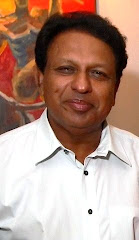
Remarks by former Ambassador T.P.Sreenivasan, Executive Head of the Kerala State Higher Education Council at the UNC-India Summit II at the University of North Carolina at Chapel Hill. June 25, 2014.


Member of the UNC Board of Governors, Hari Nath,
UNC President Tom Ross,
VP for International Engagement, UNC, Leslie Boney,
Scott Simkins of NCA and TSU,
International Programs Coordinator Bonnei Derr,
Members of the faculty,
Friends,

The campus air in Chapel Hill exhilarates me even though I have been on the road for more than 24 hours and I am not sure when the jet lag will hit me. It is indeed an honour to be invited as the Keynote Speaker at the UNC-India Education Summit II, 2014. I recall how the idea of Kerala-UNC collaboration arose at a seminar organized by the Wadhwani Chair of the CSIS a year ago, at which I made a presentation on the Kerala State Higher Education Council under the chairmanship of Ambassador Rick Inderfurth, himself an alumnus of the UNC at Chapel Hill.

Leslie Boney and Scott Simkins should be in the category of pioneers and explorers like David Livingstone and Christopher Columbus, as they came to the distant Thiruvananthapuram in Kerala State in their quest for new frontiers of educational cooperation. Today, we are reaping the harvest of their efforts by celebrating the growing cooperation between UNC and Kerala. I am here to reciprocate their visit and to see how far we can go on our path of collaboration. During the initial visit itself, they made a contribution to our thinking at the International Meet on Transnational Education (IMTE) as well as at the seminars in the Mahatma Gandhi University (MGU) in Kottayam and the Cochin University of Science and Technology (CUSAT) at Kochi. Two more experts, Sanjiv Sarin and Jerono Rotich have also been to MGU even within the first year of our cooperation. This Summit will give us an opportunity to assess the work of UNC not only in Kerala, but also in the rest of India. The pace at which UNC has begun to work in India is truly remarkable.

Leslie has asked me to place the educational reforms in Kerala and India in the context of the advent of the new Government under Prime Minister Nrendra Modi. Neeraj Agrawal has already spoken of the prospects of the Narendra Modi Government from the point of view of a BJP insider. I share his view that there is much excitement about the change in Government and there is an air of new purposefulness in India. Many policies of the new Government are yet to be announced, but the indications so far are that there would be change, but also continuity, particularly in foreign policy. As for education, the concerned Minister, Smriti Irani, who was initially criticized for not having been to a University, has made a mark as a young, energetic and visionary person. A new educational policy is said to be on the anvil and all indications are that it is likely to be forward looking, modern and technologically savvy. She has spoken of excellence in institutions in every state and the adoption of modern techniques of education like MOOCS.

The reports from Leslie and Scott have indicated the efforts we are making to build Higher Education 2.0, with six areas identified for special attention. The Central Government too seems to be introducing reforms, building on the good foundations laid in the past to meet the challenges and use the opportunities of the 21st century, particularly the demographic dividend India will have in the next few years. In my view, what is needed is not just a new education policy, but a new education system.

The new Government has inherited a substantially diminished relationship between India and the United States, compared to its heyday at the time of the India-US nuclear deal. President Barack Obama came to India in 2010 with the intention of building a defining relationship of the 21st century, expecting to benefit from the nuclear deal, purchase by India of military aircraft and the liberalization of the Indian economy. Those hopes have been belied for various reasons, most notably because of the policy paralysis in Delhi. The “roller coaster ride” of India-US relations had reached a deep trough, with the Khobragade incident and the visa denial to Narendra Modi imposed in 2005. But as it has been made clear by recent events, the roller coaster has begun to move up again. Since the priorities of the Modi Government are domestic development and strengthening India’s strategic space, the US will be a natural partner and the baggage of the past will be left aside. Prime Minister Modi is scheduled to visit the US this September and no visa hassle is expected!

It must be remembered that even in the midst of the din and bustle of political controversies, quiet work in the various working groups has been taking place and education is one of the areas in which progress has been made. I have no doubt that this will continue and new areas of cooperation between the two countries will emerge. I hope that the modest success we have achieved in Kerala-UNC cooperation will be a contribution to the larger picture.

The reports we have received today on the various ongoing programs like UNC’s Hindi-Urdu Language Consortium Program, its MOOC on the Asian economies, Social Work cooperation between UNC Wilmington and Bangalore University and others show how much UNC is involved in India already. There was a time when India was hardly on the American radar, political, economic or educational. But today, India is very much in the consciousness of the US and the prospects are bright for multifaceted collaboration. From being “estranged democracies”, the two countries have become “engaged democracies”. The UNC-India Summit II has been a significant milestone in our journey together.

Thank you.


Saturday, June 14, 2014

The making of a diplomat


CAMPUS RECONNECT

The making of a diplomat

ATHIRA M.
SHARE  ·   COMMENT   ·   PRINT   ·   T+  
  • Diplomat T. P. Sreenivasan is currently executive Vice-Chairman, Kerala State Higher Education Council, and Director General, Kerala International Centre. Photo: Athira M.
    The HinduDiplomat T. P. Sreenivasan is currently executive Vice-Chairman, Kerala State Higher Education Council, and Director General, Kerala International Centre. Photo: Athira M.
  • T. P Sreenivasan replying to the toast to the outgoing students at University College
    Special ArrangementT. P Sreenivasan replying to the toast to the outgoing students at University College

T. P. Sreenivasan looks back at his vibrant college life

When I finished my schooling in my home town Kayamkulam with a first class, my father, K. Parameswaran Pillai, decided that I would go to a university and that too in Thiruvananthapuram. Many had advised my parents to put me into the one-year teaching course. But my father, a school teacher, has always set the goals for me and my siblings and my mother, N. Chellamma, ensured that we could pursue them.
Thus I joined the Intermediate College in 1960 – new place, new surroundings, and a new medium of instruction. It was a total culture shock for me as I had studied in Malayalam medium schools till then. I didn’t understand most of the things the teachers taught because except my second language, Malayalam, everything else was taught in English. Later I realised that it was good that they didn’t use Malayalam in class because that’s how I picked up English.
There was this outsider tag always associated with me and that continued even after I joined University College for BA English. I was tempted to take up science, but my father was adamant that I should take up English since he believed that I was destined to join the foreign service. The reason behind this dream of his was Shankar Pillai, a teacher of University College, whom my father had met. Shankar had cleared the Indian Foreign Service (IFS) exams, but was killed by a mad man at his office in Canada. My father thought I would replace him one day in the foreign service.
Things changed for the better within two years at University College especially after I got high marks in the second year examination of my BA course. Though I was still an outsider for those from the capital city, it did not take long for the situation to improve. In fact, I should thank one of our teachers, Sudhakaran Nair, who took all of us around and brought us together.
I can go on and on about my teachers, which includes people like G. Kumara Pillai, Ayyappa Paniker, Hridayakumari, Santhakumari, Chellamma Philip, K. K. Neelakantan, K. Srinivasan, John and Vaidyanathan, among others. Ayyappa Paniker sir has been the one who left behind a lasting impression on me. Though I couldn’t understand his brilliance and sense of humour while in college, in my later years I was fortunate to get to know him more. His intelligence kept me in awe. He introduced me to the world of global literature and encouraged me to read more. As for Hridayakumari teacher, it was my dream to speak like her!
We did give nicknames to a few teachers. Sankara Narayana Iyer sir was called ‘Vada’ sir, probably because he used to bring vada for lunch. It is learnt that once some of the students tied a vada on the fan when he walked into the class. Then there was ‘Punchiri’ Mathai, who always had a strange smile on his face. Vaidyanathan sir was called ‘Vadi’, because was very tall and straight like a stick, and looked more like a soldier.
Another major influence has been my principal N. S. Warrier sir who instilled in me a liking for foreign affairs. He was very much interested in what was happening around the world and used to call me to his office to discuss that with me. He believed that I have a future in foreign service. In fact, as I was active in Students Congress then and decided to stand for the post of Chairman, he immediately wrote to my father about that. I had to withdraw from the move.
I used to move around with a group of four, some of them my seniors. We used to watch English movies at Sreekumar Theatre, where a new movie was released once in every three days. Then the charge was 24 paisa!
The five years on the University College campus, pursuing BA and MA in English, have been the most formative and memorable years of my life. I am deeply hurt by the fact its days of glory is now a thing of the the past.
After passing out, I taught at Mar Ivanios College for over a year. By then I had cleared IFS and it was time to explore new pastures.
Illustrious profile
T.P. Sreenivasan (IFS batch, 1967) has served in the foreign service for 37 years. A former Ambassador of India he is currently executive Vice-Chairman, Kerala State Higher Education Council, and Director General, Kerala International Centre.
(A column to commemorate the platinum jubilee of the University of Kerala. Eminent teachers and people from different walks of life talk about their student days in various colleges under the University.)


  • Diplomat T. P. Sreenivasan is currently executive Vice-Chairman, Kerala State Higher Education Council, and Director General, Kerala International Centre. Photo: Athira M.
  • T. P Sreenivasan replying to the toast to the outgoing students at University College
    Special ArrangementT. P Sreenivasan replying to the toast to the outgoing students at University College

T. P. Sreenivasan looks back at his vibrant college life

When I finished my schooling in my home town Kayamkulam with a first class, my father, K. Parameswaran Pillai, decided that I would go to a university and that too in Thiruvananthapuram. Many had advised my parents to put me into the one-year teaching course. But my father, a school teacher, has always set the goals for me and my siblings and my mother, N. Chellamma, ensured that we could pursue them.
Thus I joined the Intermediate College in 1960 – new place, new surroundings, and a new medium of instruction. It was a total culture shock for me as I had studied in Malayalam medium schools till then. I didn’t understand most of the things the teachers taught because except my second language, Malayalam, everything else was taught in English. Later I realised that it was good that they didn’t use Malayalam in class because that’s how I picked up English.
There was this outsider tag always associated with me and that continued even after I joined University College for BA English. I was tempted to take up science, but my father was adamant that I should take up English since he believed that I was destined to join the foreign service. The reason behind this dream of his was Shankar Pillai, a teacher of University College, whom my father had met. Shankar had cleared the Indian Foreign Service (IFS) exams, but was killed by a mad man at his office in Canada. My father thought I would replace him one day in the foreign service.
Things changed for the better within two years at University College especially after I got high marks in the second year examination of my BA course. Though I was still an outsider for those from the capital city, it did not take long for the situation to improve. In fact, I should thank one of our teachers, Sudhakaran Nair, who took all of us around and brought us together.
I can go on and on about my teachers, which includes people like G. Kumara Pillai, Ayyappa Paniker, Hridayakumari, Santhakumari, Chellamma Philip, K. K. Neelakantan, K. Srinivasan, John and Vaidyanathan, among others. Ayyappa Paniker sir has been the one who left behind a lasting impression on me. Though I couldn’t understand his brilliance and sense of humour while in college, in my later years I was fortunate to get to know him more. His intelligence kept me in awe. He introduced me to the world of global literature and encouraged me to read more. As for Hridayakumari teacher, it was my dream to speak like her!
We did give nicknames to a few teachers. Sankara Narayana Iyer sir was called ‘Vada’ sir, probably because he used to bring vada for lunch. It is learnt that once some of the students tied a vada on the fan when he walked into the class. Then there was ‘Punchiri’ Mathai, who always had a strange smile on his face. Vaidyanathan sir was called ‘Vadi’, because was very tall and straight like a stick, and looked more like a soldier.
Another major influence has been my principal N. S. Warrier sir who instilled in me a liking for foreign affairs. He was very much interested in what was happening around the world and used to call me to his office to discuss that with me. He believed that I have a future in foreign service. In fact, as I was active in Students Congress then and decided to stand for the post of Chairman, he immediately wrote to my father about that. I had to withdraw from the move.
I used to move around with a group of four, some of them my seniors. We used to watch English movies at Sreekumar Theatre, where a new movie was released once in every three days. Then the charge was 24 paisa!
The five years on the University College campus, pursuing BA and MA in English, have been the most formative and memorable years of my life. I am deeply hurt by the fact its days of glory is now a thing of the the past.
After passing out, I taught at Mar Ivanios College for over a year. By then I had cleared IFS and it was time to explore new pastures.
Illustrious profile
T.P. Sreenivasan (IFS batch, 1967) has served in the foreign service for 37 years. A former Ambassador of India he is currently executive Vice-Chairman, Kerala State Higher Education Council, and Director General, Kerala International Centre.
(A column to commemorate the platinum jubilee of the University of Kerala. Eminent teachers and people from different walks of life talk about their student days in various colleges under the University.)

Sunday, May 11, 2014

More Continuity than Change


Foreign Policy: More Continuity than Change

(The Indian Express)

By T.P.Sreenivasan

Aspirants to the post of National Security Adviser, numbering as many as the Prime Ministerial candidates, may be burning the midnight oil to fashion foreign policy and security strategies for their masters. They may have many ideas to revamp policy, reshape institutions, including the Indian Foreign Service, and to open new chapters in relations with the neighbours and major powers. They will invent catchy phrases and innovative concepts to be flaunted at press conferences. But once the initial euphoria is over and the new Government settles down to business, it is likely to be continuity rather than change. it would be old wine, even if it is in a new bottle.

No Government makes foreign policy in solitary splendor. In fact, the concept of independent foreign policy itself is misleading, as it should suit not only the originator, but also its “consumers”, who are independent countries themselves, with their own strategic priorities. Constant changes will be needed in foreign policy to resonate with others. Totally unexpected events may overturn carefully crafted policies overnight. The broad policies and strategy, outlined by any Government will not be different from the traditional foreign policy, which has enjoyed general consensus. Here, the insights, judgments and instincts of professional diplomats will prevail, as has been seen at the time of changes in the past.

The announcement by the Morarji Government of “genuine nonalignment” and the Vajpayee Government of nuclear weapon status for the country are being pointed out as instances of fundamental changes brought about by new Governments in their initial stages. But neither of these was fundamental or unanticipated. “Genuine nonalignment” simply meant distancing the country from the Soviet Union, but the Government soon discovered the true extent of our involvement with the Soviet Union and quietly went about its business with the Soviet Union as usual. Morarji went to Moscow to dilute the relationship with Moscow, but came back even without disowning the 1971 Treaty of Friendship and Cooperation.

The nuclear tests of 1998 were not made in a day. Successive governments, right from the days of Pandit Nehru, had maintained the nuclear option and made heavy investments in explosive technology. The experiment in 1974 was nothing short of a step towards weaponisation. It is very well known that P.V.Narasimha Rao had scheduled tests and pulled back for fear of economic sanctions. The timing of the tests in 1998 was determined more by the international situation arising out of the provisions of the CTBT than by any ideology. India chose to face sanctions after testing rather than face them for not signing the CTBT. The main proponents of the test were Brajesh Mishra and K.Subrahmanyam, who were strategists, not politicians. The fact that the subsequent Governments endorsed the tests is enough proof of continuity in nuclear policy. Rumors about the possibility of a new Government reviewing India’s non-first use doctrine provoked widespread reaction from strategists. The proposal appears to have been dropped.

Practical matters, rather than ideology, have determined our relations with our neighbours, including Pakistan. Changes in policy were triggered by negative reaction from our neighbours. Every possibility has been explored in different shades of our policy ranging from the tough Indira doctrine to the soft Gujral doctrine. No Government has advocated war as an option against Pakistan. The Kargil war came after the biggest peace offensive by the Vajpayee Government and, with all its tough talk, the Indian side refrained from crossing the Line of Control. A new Government may criticize Manmohan Singh’s “extra mile” policy, but it will not go beyond reciprocity, as war is no option between the two nuclear-armed neighbours.

Changes in nuances in Sri Lanka policy will depend on where the two Kazhagams will stand in the new dispensation. But even if a Prime Minister emerges from those two parties, there will only be war of words, not intervention on behalf of the Tamils. India has tried every trick in the book from equipping the LTTE to fighting it. New initiatives are hard to find when the Sri Lankan Government believes that it has solved the Tamil issue. The case is not dissimilar with the other neighbours. The more concessions we give, the more will be asked for, the more we deny, the more blackmailing will be resorted to. We shall see more of the same pressures and pulls under any Government in Delhi.

The Vajpayee Cabinet had at least one member, who characterized China as “enemy number one”. Vajpayee himself took Bill Clinton into confidence about the threat from China. But the same Government sought a strategic dialogue with China. Manmohan Singh has dealt with China with restraint despite provocations on the logic that China is too big to threaten India. The dragon may well have become vegetarian to make its rise peaceful. No political party has an alternate formula for China. A new Government may give defence preparedness more stress, but it will not be more assertive with China than its predecessor.

The relations with the US will be high priority for any Government, even the present one, if it comes back to power. It will look urgently into the points of irritation, but it will find soon that the issues are intractable. The grievances that the US has against India, like the nuclear liability act, the fighter aircraft issue and liberalization of the economy to protect the US interests are not easy to deal with. But friendly gestures in Asia Pacific, such as joint exercises with the US, Japan and Australia will offer sufficient compensation for the US. A new Government will have the advantage of being able to distance itself from the Khobragade fiasco and begin relations afresh. But any Government, even with participation of the left, will work hard to improve relations with the only Super Power.

Indications of institutional changes, hinted by some political parties, betray lack of insight. Diplomats have been handling economic and trade issues for years, but merging the External Affairs Ministry with the Trade Ministry will have adverse implications for both. Long term policy planning and strategic thinking, which, according to some American scholars, are lacking in India, will be tried, but soon routine issues will once again dominate foreign relations. No one disputes assigning a greater role for military leaders in policy and doctrines, but equally important is the civilian control of defence. Regional satraps may become prominent if we get a multiparty coalition, but they will not be allowed to dabble in foreign policy beyond a point.


Change will be part of the agenda of any Government that comes to power in India later this month. A dream foreign policy that enhances India’s power and prestige will be part of it. But, as Barrack Obama found out in the US, the power to change is not limitless, especially in foreign policy. Moreover, the wish lists that they will have to deal with domestically will be enormous and pressing. After the initial declarations of innovative policies potential policy makers will be hatching now, the new Government will reconcile themselves to the realities. It is likely to focus on the primary purpose of foreign policy, which is to ensure peaceful domestic development. The devil in the detail may change colours, but the framework will be hard to change.