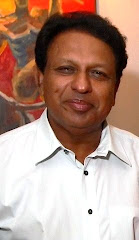
Paper Presented by me at a Seminar on Conflict in Sri Lanka-Road Ahead in Colombo on March 27, 2008
Mr.Chairman,
Sir Arthur Clarke, the most celebrated guest citizen of Sri Lanka passed away without having his three fondest wishes fulfilled. He had wanted to establish contact with extra terrestrial beings, which, he knew, existed; he had wanted to rid humanity of dependence on fossil fuels and he had wished to see lasting peace established in his adopted land. Many of his other dreams came true and these three may well happen, but all the three appear distant at this time. On establishing peace, he observed: “Peace cannot be just wished; it requires a great deal of hard work.” Let us hope that peace comes to Sri Lanka before we see ET and set ourselves free from slavery to black gold.
If seminars, studies and debates could resolve the simmering problems in Sri Lanka, which have taken a huge toll in terms of human lives and property, it would have happened long ago. Much has been said and written by both Sri Lankans and outsiders, many peacemakers have made sincere efforts and every known method of resolving conflicts has been tried. The sum total of our experience in Sri Lanka has shown that only a change in the minds of men can lead to lasting peace in this war ravaged and tension ridden piece of Paradise.
Many of the studies and seminars, particularly by the Centre for Security Analysis, have not been in vain. The fact that they and other think tanks persist with their efforts to look for new insights and alternatives shows that they are sincere and determined to end this conflict. One particular study, “Cost of Conflict in Sri Lanka” by another think-tank confirms our suspicion that the costs of the conflict have been staggering. In every sphere of activity, the economic costs alone are huge, not to speak of loss of lives, the opportunity costs and the environmental costs. Sri Lanka of the sixties was a role model for developing nations. Some analysts have concluded that the cost of the conflict per year is 2 to 3% of the GDP per year. By 1996, the cumulative cost of the war was estimated to be 1.5 times the GDP of Sri Lanka. There are no winners in this conflict, only victims.
Speaking of the international dimensions of the conflict in Sri Lanka, it should be said in fairness to the international community that it has not been insensitive to the problems faced by this nation. Whether it is the neighbouring India or the distant Norway, whether it is the United Nations or the Commonwealth, nations and international organizations have spared no effort to bring this conflict to an end. That those efforts were rebuffed, often with tragic consequences, proved that the problems were deep and extremely complex. But it is unconscionable to abandon peace efforts, as a military solution would not be attainable. Only a negotiated solution, which takes into account the legitimate aspirations of all Sri Lankan citizens, can be durable and the international community has the responsibility to urge and assist such a solution.
The Sri Lankan Ambassador to the US said recently that no other country in the world in a similar situation has given greater access to foreign individuals, nations and international organizations than Sri Lanka has done. This is an acknowledged fact. The successive Governments in Sri Lanka have thrown open the doors of the country to those they thought would be of help, without asserting the point that these are matters of domestic jurisdiction, in which the outside world had no business to get involved. All the parties concerned have traveled long distances in the quest for peace. Even today, though the Government has taken a position that it will not allow stationing of foreigners in the island, it has not closed its doors to foreign ideas and assistance to establish peace. I have no doubt that the Nobel Peace Prize is waiting to be awarded to any one who can find the magic formula which can bring peace to Sri Lanka.
The role of the international community is essentially limited as the conflict is domestic in origin and has to be resolved domestically. As Prof. G.L.Peiris observed at a CSA seminar in Chennai: “We have to remember at all times that this is our problem and there is no question of abdicating responsibility and blaming the international community when things go wrong. That is an irresponsible attitude. Our friends can help us, the solution is in our own hands because this is our problem and as a nation we have to formulate a solution with the assistance of the international community.”
An analysis of the previous efforts at internationalization and direct external intervention, particularly by India in the eighties, shows the validity of Prof Peiris’s assertion. India’s intervention was, in a way, aimed at preventing excessive internationalization of the issue. If the accord of 1987 had succeeded, the history of Sri Lanka would have been different. India paid a heavy price for the failure of the accord and decided not to involve directly in the conflict any more. But it has not tried to prevent other international efforts to facilitate a peace process. The most recent abrogation of the ceasefire agreement has once again demonstrated the limitations of any external role. The external role is further constrained by the fact that many countries see one of the parties as a terrorist group.
But the international community can neither ignore nor remain a silent witness to the conflict in Sri Lanka. At the very least, it has to alleviate the suffering of the people and be ready to rebuild the devastated areas as soon as the situation permits it to do so. The way India went to give medical and other assistance to the tsunami victims in the North-East was much appreciated even by the warring factions.
In a situation where the traditional methods of peace making and peace keeping are not possible by the United Nations, the international community can only urge Sri Lankans to make use of the vast experience it has gained in other areas and to abide by the norms, standards and ground rules set by the United Nations over the years. The concepts that surface again and again in the discussions on the Sri Lankan situation are self-determination, democracy, non –violence, human rights, development, disarmament and terrorism. None of these concepts is either new or unique to Sri Lanka. Their characteristics and scope have been debated in the United Nations either in the abstract or in the context of a particular conflict or another. International consensus or near consensus exists on many of these concepts and the best that the international community can do is to urge the parties in Sri Lanka to abide by these norms. The international community will support the country during and after the conflict if it is confident that the norms have been followed.
Take, for instance, the concept of self-determination. While it is asserted as a right of all peoples, it was clarified in the early days of the UN that it applied only to people under colonial occupation or alien domination. A people exercises self-determination in a particular moment in history and once a sovereign nation is born, sections of that nation has no right to claim the right to self determination. The whole concept of the sovereign state will be undermined by repeated exercises in self-determination. Similarly, the international community has identified the features of a democratic society, even if local variations have developed. The possibility for the entire population to participate in elections and the government is the fundamental feature that cannot be compromised. At the same time, all violence stands condemned by the international community.
Human rights have been the subject of extensive deliberations and standard setting by the international community. Violations of the fundamental freedoms of citizens by states have been condemned worldwide and there are norms of behaviour by the states even while dealing with law and order situations. Extra-judicial killings, illegal detentions and torture are not permissible in any circumstances. No civilized nation should violate human rights of its people even in the face of provocations. But at the same time, politicization of human rights and violation of human rights by organized groups or terrorists also stand condemned.
Terrorism has been recognized globally as the worst kind of crime against humanity as it takes different forms and manifestations. Although an international convention on terrorism is yet to take shape, there are several seminal conventions on terrorist activities of various kinds. In an earlier phase, there was a tendency to exclude liberation struggles from the purview of terrorism, but today there is universal recognition that there is no such thing as “good terrorism”. To use indiscriminate force to destroy innocent lives and property in order to secure political advantages is to engage in the worst form of terrorism. States too cannot engage in terrorist activities of any kind. Some see even the examination of “root causes” of terrorism as justification of terrorism.
These are some of the issues on which the international community has clear and definite views. As long as the parties to the conflict act within the framework of these norms, they can be assured of the support of international community. The confidence of the Government that the country is at the threshold of a decisive phase in her contemporary history is welcome and as long as the norms are observed, nobody will point fingers or preach from the pulpit. As Jehan Pereira observed just the other day, the need for preservation of Sri Lanka’s territorial integrity, the inadmissibility of terrorism and the impracticability of a military solution are the messages that lie behind the mixed signals that emanate from the international community.
Thank you
Saturday, March 29, 2008


Thursday, March 20, 2008
Talbott is right: so is Sinha
By T.P.Sreenivasan
In an uncharacteristically convoluted manner, former U.S. Deputy Secretary of State, Strobe Talbott told a news channel that the NDA Government was ready to settle for much less than what had been offered by the Bush Administration to the UPA Government in the form of a nuclear deal. “I think that what the Clinton Administration has been prepared to offer the BJP-led Government that we were dealing with, the deal that President Bush was willing to make with Manmohan Singh and company, the Indian side would have gone for it”, he said. The statement is hypothetical as the Clinton Administration did not offer any such deal, but the public record would corroborate Talbott’s claim in substance. Talbott’s “Engaging India” and Jaswant Singh’s “A Call to Honour” differ on the details as to what each tried to achieve in their marathon talks, but both agree that the “village” that they sought to find was not a comprehensive agreement, but an understanding on each other’s concerns, arising out of India’s tests. But if they had the opportunity to build a house once they reached the village, they would have gone for it.
Talks with the United States became imperative when the Clinton Administration imposed the Glenn Amendment sanctions over and above the technology denial regime that had already existed. Though Jaswant Singh never conceded that his immediate objective was to return to the pre-May 1998 situation, Talbott made no secret of the conditions or “benchmarks” India had to reach to set it free from the new sanctions. The Glenn Amendment was entirely uncharted waters and the way it operated sent shock waves across India. Apart from trade and financial restrictions, the so-called people sanctions threatened to undermine even the visa system. Several Indian scientists had to leave and others, like Dr.R.Chidambaram, were denied even visitors’ visa. American officials decided to err on the side of overdoing the sanctions regime. There was a palpable sense of emergency in the air in Washington, when anxious Indian Americans lost sleep over their visa status. The Jaswant Singh-Talbott talks were, therefore, seen in India and the U.S as a modality for getting the Glenn Amendment sanctions lifted.
Talbott’s benchmarks were clearly spelt out publicly. They consisted of India’s signature on the CTBT, India’s agreement to negotiate a permanent ban on the production of fissile material and, in the interim, a freeze on further production, a strategic restraint regime, a stricter export control regime and improvement in India-Pakistan relations. The U.S. expected that these reasonable benchmarks would be accepted in return for the reward in the form of sanctions relief and a Presidential visit. But India, without rejecting any of the conditions outright, kept developing theories on each of them, as though we were willing to do some of them as part of our own scheme of things at our own pace. We were tantalizingly close to making our de facto commitment not to test into a de jure undertaking, we had no problem with entering negotiations on an FMCT, we had an open mind on export control and we were more than willing to normalize relations with Pakistan. It was only on the question of strategic restraint that there was no meeting point.
No nuclear deal like the kind President Bush offered to India was on the table, but India’s anxiety to build new bridges with the United States and the new confidence that India had demonstrated in the talks should lead to the logical conclusion that India would have moved to a nuclear deal if such a deal was on offer. But the fact is that the two sides had a more limited objective of returning to the pre-May 1998 position.
Talbott’s contention is also based on the efforts made by the NPA Government to move further on the nuclear front with the Bush Administration. Jaswant Singh states that the document signed in January 2004, the ‘Next Steps in Strategic Partnership’ (NSSP) had been planned during his time as Foreign Minister. It was under the aegis of NSSP that the two countries began talking about the sale of civilian nuclear technology, joint space exploration, missile defence and high technology trade. Jaswant Singh has expressed satisfaction that it was on the foundations laid by him that the nuclear deal was constructed by the Bush Administration and the UPA Government. It is also well known that it was the NDA Government that had first mooted the idea of additional nuclear installations being subjected to IAEA inspection in return for civilian nuclear co-operation. On the basis of this, it was logical for Talbott to assume that the NDA Government would have accepted the present deal or even something less. He had read the minds of his interlocutors correctly.
It was not Jaswant Singh, but Yashwant Sinha, who reacted to Talbott. Without the burden of history on him, he said in a straightforward fashion that “we had no discussion on the current lines of the current nuclear deal or the 123 Agreement’ with the Clinton Administration. This was absolutely correct. He was also correct in asserting that “there was no draft of the kind like the 123 Agreement of the present Government”. But when he went on to say that “in our time, as all the evidence will show, we were discussing peripheral issues like safety of nuclear plants etc’, he was way off the mark. How could Jaswant Singh claim that he planted the seed for today’s tree if only peripheral issues were under consideration?
Indeed, both Talbott and Sinha are right in their own ways. They represent two former Governments, who aspired to reach an agreement on nuclear issues, but could not make it on account of force of circumstances. But it is hard for politicians to rise above politics. It takes statesmen to see beyond political expediency and accept what is in the best interests of their countries.
By T.P.Sreenivasan
In an uncharacteristically convoluted manner, former U.S. Deputy Secretary of State, Strobe Talbott told a news channel that the NDA Government was ready to settle for much less than what had been offered by the Bush Administration to the UPA Government in the form of a nuclear deal. “I think that what the Clinton Administration has been prepared to offer the BJP-led Government that we were dealing with, the deal that President Bush was willing to make with Manmohan Singh and company, the Indian side would have gone for it”, he said. The statement is hypothetical as the Clinton Administration did not offer any such deal, but the public record would corroborate Talbott’s claim in substance. Talbott’s “Engaging India” and Jaswant Singh’s “A Call to Honour” differ on the details as to what each tried to achieve in their marathon talks, but both agree that the “village” that they sought to find was not a comprehensive agreement, but an understanding on each other’s concerns, arising out of India’s tests. But if they had the opportunity to build a house once they reached the village, they would have gone for it.
Talks with the United States became imperative when the Clinton Administration imposed the Glenn Amendment sanctions over and above the technology denial regime that had already existed. Though Jaswant Singh never conceded that his immediate objective was to return to the pre-May 1998 situation, Talbott made no secret of the conditions or “benchmarks” India had to reach to set it free from the new sanctions. The Glenn Amendment was entirely uncharted waters and the way it operated sent shock waves across India. Apart from trade and financial restrictions, the so-called people sanctions threatened to undermine even the visa system. Several Indian scientists had to leave and others, like Dr.R.Chidambaram, were denied even visitors’ visa. American officials decided to err on the side of overdoing the sanctions regime. There was a palpable sense of emergency in the air in Washington, when anxious Indian Americans lost sleep over their visa status. The Jaswant Singh-Talbott talks were, therefore, seen in India and the U.S as a modality for getting the Glenn Amendment sanctions lifted.
Talbott’s benchmarks were clearly spelt out publicly. They consisted of India’s signature on the CTBT, India’s agreement to negotiate a permanent ban on the production of fissile material and, in the interim, a freeze on further production, a strategic restraint regime, a stricter export control regime and improvement in India-Pakistan relations. The U.S. expected that these reasonable benchmarks would be accepted in return for the reward in the form of sanctions relief and a Presidential visit. But India, without rejecting any of the conditions outright, kept developing theories on each of them, as though we were willing to do some of them as part of our own scheme of things at our own pace. We were tantalizingly close to making our de facto commitment not to test into a de jure undertaking, we had no problem with entering negotiations on an FMCT, we had an open mind on export control and we were more than willing to normalize relations with Pakistan. It was only on the question of strategic restraint that there was no meeting point.
No nuclear deal like the kind President Bush offered to India was on the table, but India’s anxiety to build new bridges with the United States and the new confidence that India had demonstrated in the talks should lead to the logical conclusion that India would have moved to a nuclear deal if such a deal was on offer. But the fact is that the two sides had a more limited objective of returning to the pre-May 1998 position.
Talbott’s contention is also based on the efforts made by the NPA Government to move further on the nuclear front with the Bush Administration. Jaswant Singh states that the document signed in January 2004, the ‘Next Steps in Strategic Partnership’ (NSSP) had been planned during his time as Foreign Minister. It was under the aegis of NSSP that the two countries began talking about the sale of civilian nuclear technology, joint space exploration, missile defence and high technology trade. Jaswant Singh has expressed satisfaction that it was on the foundations laid by him that the nuclear deal was constructed by the Bush Administration and the UPA Government. It is also well known that it was the NDA Government that had first mooted the idea of additional nuclear installations being subjected to IAEA inspection in return for civilian nuclear co-operation. On the basis of this, it was logical for Talbott to assume that the NDA Government would have accepted the present deal or even something less. He had read the minds of his interlocutors correctly.
It was not Jaswant Singh, but Yashwant Sinha, who reacted to Talbott. Without the burden of history on him, he said in a straightforward fashion that “we had no discussion on the current lines of the current nuclear deal or the 123 Agreement’ with the Clinton Administration. This was absolutely correct. He was also correct in asserting that “there was no draft of the kind like the 123 Agreement of the present Government”. But when he went on to say that “in our time, as all the evidence will show, we were discussing peripheral issues like safety of nuclear plants etc’, he was way off the mark. How could Jaswant Singh claim that he planted the seed for today’s tree if only peripheral issues were under consideration?
Indeed, both Talbott and Sinha are right in their own ways. They represent two former Governments, who aspired to reach an agreement on nuclear issues, but could not make it on account of force of circumstances. But it is hard for politicians to rise above politics. It takes statesmen to see beyond political expediency and accept what is in the best interests of their countries.
The “Unclear” Deal
By T.P.Sreenivasan
(Former Ambassador of India and Governor of IAEA)
After two years of the most extensive and exhaustive debate nationally and internationally, no one seems to be clear about the prospects of the Indo-US Nuclear Deal of 2005. The UPA Government, which piloted the deal with gusto till August 2007 and performed a negotiating feat by finalizing a bilateral agreement with the US (the 123 agreement) and appeared to be prepared to go down with it, if necessary, has suddenly lost momentum. The BJP, which initiated a new strategic partnership with the US and prepared the ground for the deal, wants it renegotiated, with no certainty that they can get a better deal. The left, with its abhorrence of possible US domination on account of the deal, blows hot and cold. For the first time in Indian history, India is in no position to operationalise an international agreement, which has been approved by its cabinet. The path ahead is unclear for the nuclear deal.
Except for a few fanatics, who think that India can do without nuclear energy in the future, no one believes that India can afford to continue its international isolation as a non-signatory to the Nuclear Non-Proliferation Treaty (NPT). We know that we decided many years ago that the energy mix for India in the future will have nuclear energy as an important component. We also know that our civilian nuclear programme cannot be sustained at a level commensurate with our current economic growth unless we have access to fuel and technology from abroad. We know, therefore, that we need to have a deal of some kind at some time in the near future with the nuclear weapon states. In fact, India’s diplomatic efforts since 1974 have been directed towards securing such a deal without signing the NPT. Till 2005, the prospects for such a deal were gloomy, particularly after India defied international opinion and declared itself a nuclear weapon state. Any Government of India in the future, regardless of its ideology, will have to seek an accommodation with the international non-proliferation regime. What is unclear is the price we are willing to pay for such an accommodation.
For Indian diplomats, who have been engaged in disarmament negotiations for several years, the Indo-US Joint Statement of July 18, 2005 was a dream come true. President Clinton, with all his goodwill for India, could not go beyond setting aside the nuclear issue and proceeding with co-operation in other areas, but President Bush showed an alternative to the NPT route for India to end its nuclear isolation. India virtually won nuclear weapon state status with the same rights and obligations as the other nuclear weapon states. In return, India reaffirmed its moratorium on testing; it agreed to separate the Indian military and civilian nuclear facilities and place the civilian facilities under IAEA inspection and abide by the internationally accepted norms for export control and fissile material production. The balance of rights and obligations in the Statement ensured that we had a non-discriminatory regime in place. Against the backdrop of the bitter arguments of 31 years, the deal looked the best that we could ask for.
But a mix of ignorance, fear of the United States and undue optimism about our own capabilities ignited protests against the deal in India and the blind believers in non-proliferation in the United States and elsewhere raised a hue and cry. Both the Governments were pressured by their respective constituencies to become rigid, if not backtrack on the initial agreement. In India, it was the scientific community, unaccustomed to external inspections, which raised questions. The issue of the theoretical possibility of testing by India was raised repeatedly, making India suspect in the eyes of the world. They argued that the separation plan was expensive and unrealistic and that India’s deterrent as well as its fast breeder programme would be jeopardized by the deal. The non-proliferation Ayatollahs in the US created the Hyde Act of the US Congress, with the objective of constraining the Administration to put forward caveats of a political nature. The cumulative effect of these debates was that the Indian and US negotiators had their hands and feet tied as they sat down to negotiate the enabling 123 Agreement.
It is a tribute to the negotiating skills of the Indian diplomats and the willingness of the US to go more than half way that the 123 agreement was successfully negotiated. The contentious issues of testing and reprocessing were resolved for the purposes of the agreement, even though doubts remained on both these issues. India has the right to test, but the US has the right to react! The reprocessing scenario is far from clear as the modalities are yet to be worked out.
The Government genuinely believed that the agreement would move forward to the IAEA and the Nuclear Suppliers Group (NSG) before being submitted to the US Congress. But the bomb shell came not from the IAEA or the NSG, but from the leftist members of the UPA coalition when they demanded that the agreement should not be operationalised as they saw the grave danger of US hegemony in it. It is not clear as to why they chose to oppose the deal only after the agreement was reached with the US. They felt, perhaps, that the US would not agree to the features we were seeking in the agreement and, therefore, remained silent. The Government was unaware of the strong feelings in the minds of the Left and tried to call their bluff only to find that the Left was willing to bring the Government down on this issue. The UPA relented in the end and virtually put the agreement in the cold storage. Not that it loved the nuclear deal less: it loved power more. In any event, if they gave up power, the deal would have also fallen by the wayside.
The “unclear” deal will have to wait for better times when we have a Government which has the ability to implement agreements it negotiates with foreign governments. But it remains to be seen in what circumstances and under what conditions the deal will be operationalised. It is a deal, which is good for India, good for the US and good for the world. But it has to be acceptable to the members of the ruling coalition in India. In a democracy, the crucial test is not the merits of the issue, but its perception by the majority.
By T.P.Sreenivasan
(Former Ambassador of India and Governor of IAEA)
After two years of the most extensive and exhaustive debate nationally and internationally, no one seems to be clear about the prospects of the Indo-US Nuclear Deal of 2005. The UPA Government, which piloted the deal with gusto till August 2007 and performed a negotiating feat by finalizing a bilateral agreement with the US (the 123 agreement) and appeared to be prepared to go down with it, if necessary, has suddenly lost momentum. The BJP, which initiated a new strategic partnership with the US and prepared the ground for the deal, wants it renegotiated, with no certainty that they can get a better deal. The left, with its abhorrence of possible US domination on account of the deal, blows hot and cold. For the first time in Indian history, India is in no position to operationalise an international agreement, which has been approved by its cabinet. The path ahead is unclear for the nuclear deal.
Except for a few fanatics, who think that India can do without nuclear energy in the future, no one believes that India can afford to continue its international isolation as a non-signatory to the Nuclear Non-Proliferation Treaty (NPT). We know that we decided many years ago that the energy mix for India in the future will have nuclear energy as an important component. We also know that our civilian nuclear programme cannot be sustained at a level commensurate with our current economic growth unless we have access to fuel and technology from abroad. We know, therefore, that we need to have a deal of some kind at some time in the near future with the nuclear weapon states. In fact, India’s diplomatic efforts since 1974 have been directed towards securing such a deal without signing the NPT. Till 2005, the prospects for such a deal were gloomy, particularly after India defied international opinion and declared itself a nuclear weapon state. Any Government of India in the future, regardless of its ideology, will have to seek an accommodation with the international non-proliferation regime. What is unclear is the price we are willing to pay for such an accommodation.
For Indian diplomats, who have been engaged in disarmament negotiations for several years, the Indo-US Joint Statement of July 18, 2005 was a dream come true. President Clinton, with all his goodwill for India, could not go beyond setting aside the nuclear issue and proceeding with co-operation in other areas, but President Bush showed an alternative to the NPT route for India to end its nuclear isolation. India virtually won nuclear weapon state status with the same rights and obligations as the other nuclear weapon states. In return, India reaffirmed its moratorium on testing; it agreed to separate the Indian military and civilian nuclear facilities and place the civilian facilities under IAEA inspection and abide by the internationally accepted norms for export control and fissile material production. The balance of rights and obligations in the Statement ensured that we had a non-discriminatory regime in place. Against the backdrop of the bitter arguments of 31 years, the deal looked the best that we could ask for.
But a mix of ignorance, fear of the United States and undue optimism about our own capabilities ignited protests against the deal in India and the blind believers in non-proliferation in the United States and elsewhere raised a hue and cry. Both the Governments were pressured by their respective constituencies to become rigid, if not backtrack on the initial agreement. In India, it was the scientific community, unaccustomed to external inspections, which raised questions. The issue of the theoretical possibility of testing by India was raised repeatedly, making India suspect in the eyes of the world. They argued that the separation plan was expensive and unrealistic and that India’s deterrent as well as its fast breeder programme would be jeopardized by the deal. The non-proliferation Ayatollahs in the US created the Hyde Act of the US Congress, with the objective of constraining the Administration to put forward caveats of a political nature. The cumulative effect of these debates was that the Indian and US negotiators had their hands and feet tied as they sat down to negotiate the enabling 123 Agreement.
It is a tribute to the negotiating skills of the Indian diplomats and the willingness of the US to go more than half way that the 123 agreement was successfully negotiated. The contentious issues of testing and reprocessing were resolved for the purposes of the agreement, even though doubts remained on both these issues. India has the right to test, but the US has the right to react! The reprocessing scenario is far from clear as the modalities are yet to be worked out.
The Government genuinely believed that the agreement would move forward to the IAEA and the Nuclear Suppliers Group (NSG) before being submitted to the US Congress. But the bomb shell came not from the IAEA or the NSG, but from the leftist members of the UPA coalition when they demanded that the agreement should not be operationalised as they saw the grave danger of US hegemony in it. It is not clear as to why they chose to oppose the deal only after the agreement was reached with the US. They felt, perhaps, that the US would not agree to the features we were seeking in the agreement and, therefore, remained silent. The Government was unaware of the strong feelings in the minds of the Left and tried to call their bluff only to find that the Left was willing to bring the Government down on this issue. The UPA relented in the end and virtually put the agreement in the cold storage. Not that it loved the nuclear deal less: it loved power more. In any event, if they gave up power, the deal would have also fallen by the wayside.
The “unclear” deal will have to wait for better times when we have a Government which has the ability to implement agreements it negotiates with foreign governments. But it remains to be seen in what circumstances and under what conditions the deal will be operationalised. It is a deal, which is good for India, good for the US and good for the world. But it has to be acceptable to the members of the ruling coalition in India. In a democracy, the crucial test is not the merits of the issue, but its perception by the majority.
Monday, March 17, 2008
SPEECHES, SPEECHES, SPEECHES (From January 2008)
January 27, 2008
Lecture at the Civil Service Academy, Trivandrum
January 31, 2008
Inauguration of Angloscape Workshop, Trivandrum
February 7, 2008
Valedictory Address, Trivandrum Management Association
February 8, 2008
Friday Club Meeting of KIC with HE David Malone, Canadian High Commissioner
February 12, 2008
Valedictory Address Seminar on Clobalisation, Ethnicity and Terrorism in South India
University of Kerala, Trivandrum
February 14, 2008
President, Anniversary of Sree Chithra Memorial School, Chirayinkil
February 17, 2008
Kerala Launch of my two books by the Maharaja of Travancore, Trivandrum Club
February 21-27, 2008
Commission of Eminent Persons, IAEA, Vienna
February 27, 2008
Inaugural Address, Himalayan Research and Cultural Foundation
Seminar on Central Asia, Trivandrum
March 2, 2008
Pondicherry University
Inaugural Address Seminar on India and the EU.
March 6, 2008
Alliance Francais, Trivandrum
Lecture on India and the European Union
March 9, 2008
Inauguration of the Janasakthi Convention, Calicut
March 11, 2008
Meeting of the SCAP India Committee, ICWA, New Delhi
March 12, 2008
Release of a book by VSSNair, Institution of Engineers, Trivandrum
March 14, 2008
Friday Club Meeting of the KIC on MYANMAR
January 27, 2008
Lecture at the Civil Service Academy, Trivandrum
January 31, 2008
Inauguration of Angloscape Workshop, Trivandrum
February 7, 2008
Valedictory Address, Trivandrum Management Association
February 8, 2008
Friday Club Meeting of KIC with HE David Malone, Canadian High Commissioner
February 12, 2008
Valedictory Address Seminar on Clobalisation, Ethnicity and Terrorism in South India
University of Kerala, Trivandrum
February 14, 2008
President, Anniversary of Sree Chithra Memorial School, Chirayinkil
February 17, 2008
Kerala Launch of my two books by the Maharaja of Travancore, Trivandrum Club
February 21-27, 2008
Commission of Eminent Persons, IAEA, Vienna
February 27, 2008
Inaugural Address, Himalayan Research and Cultural Foundation
Seminar on Central Asia, Trivandrum
March 2, 2008
Pondicherry University
Inaugural Address Seminar on India and the EU.
March 6, 2008
Alliance Francais, Trivandrum
Lecture on India and the European Union
March 9, 2008
Inauguration of the Janasakthi Convention, Calicut
March 11, 2008
Meeting of the SCAP India Committee, ICWA, New Delhi
March 12, 2008
Release of a book by VSSNair, Institution of Engineers, Trivandrum
March 14, 2008
Friday Club Meeting of the KIC on MYANMAR
Wednesday, October 17, 2007
ElBaradei in India- A Friend Caught in the Storm
By T.P.Sreenivasan
When Mohamed ElBaradei told me that he would be in India on the same days that I was going to be in Vienna, I was not only disappointed, but also perturbed that he might be in India at the wrong time. Indeed he was and, irony of ironies, the forum he came to address on the benefits of India joining the nuclear mainstream turned out to be the burial ground of the India-U.S. nuclear deal. His proverbial diplomatic skills were on display at every step, but his friends in India could have spared him the experience. Whether the Government chose to stick to the deal and faced elections or took the path of self-preservation, ElBaradei was sure to be embarrassed. He could have played a role only if India had decided to begin consultations with the IAEA on the next steps for the implementation of the deal. To his credit, the IAEA chief weathered the storm admirably, without hurting his hosts or himself.
ElBaradei is unique among the non-proliferationists in that his commitment to the NPT is equally matched by his commitment to the development of the developing world. Non-proliferation is not a dogma for him; it is the first step towards elimination of nuclear weapons. He is, therefore, as tough with the nuclear weapon states as with the non-nuclear weapon states when it comes to their commitments under the NPT. He is also meticulous in investigating allegations about violations of the treaty as he has shown in the cases of Iraq and Iran. His latest statements on Iran prompted the New York Times to call ElBaradei an “irritant”, reminiscent of the propaganda mounted against him when the war clouds were gathering over Iraq. His assertion of Iran’s innocence, unless proved guilty, is seen as blasphemy by the Ayatollahs of non-proliferation in the west.
As for India and the others (Pakistan and Israel) who are outside the NPT, ElBaradei has shown greater tolerance and understanding than his predecessors. He has consistently maintained that a way should be found to bring them into the fold rather than isolate them. Long before the India-U.S. deal was contemplated, he used to suggest small but significant measures to us to bring us closer to the world consensus on non-proliferation. He felt that India should make use of the Technical Co-operation Fund and also accept safety inspections without compromising our position. He was extremely sensitive to our fundamental position and he sought to find an alternate route. For him, the India-U.S. nuclear deal was this very alternative and that explains his enthusiastic welcome for the initiative even without any prompting by India or the United States.
The invitation for the IAEA chief went not from the government, but from the Hindustan Times. It is not clear whether the newspaper acted on its own, sensing his news value or the government encouraged it in the hope of gaining some support for the deal. The function in Mumbai at which Dr. Anil Kakodkar handed over a miniature model of a cobalt therapy unit for Vietnam as part of the technical co-operation programme was a bit laboured because a similar ceremony was held in Vienna at the time of the General Conference in September. There has been even a suggestion by those who do not know ElBaradei that the U.S. prompted him to go to India. It is also significant that the Prime Minister broke normal protocol to host a meal for ElBaradei. Normally, the Prime Minister does not even meet heads of UN Specialised Agencies.
The masterly diplomat that he is, ElBaradei sensed the atmosphere in India very quickly and steered clear of either supporting the nuclear deal per se or suggesting that there is any hurry to begin the negotiations with the IAEA Board or the NSG. He stressed, however, that, as a friend of India, he would like India to get the full benefits of nuclear technology and not remain isolated. He also made the point that the global efforts for elimination of nuclear weapons cannot succeed without the participation of India in the nuclear mainstream. At one point, it was reported that he suggested that the safeguards agreement was not “significant” as the IAEA already had similar agreements with India, but what he meant was that it did not involve complex negotiations, once there was political agreement.
The only point he made about the deal was that it was a significant step towards the ending of India’s isolation and that regardless of changes in the United States, the deal will go through the Congress. He noted that there was bipartisan support for the deal. Even after it became clear that the deal would be shelved in order to save the government, Elbaradei did not express any alarm. His poise and choice of words were impeccable even though the spinning around him would have made him wonder whether he should have come to India at this particular juncture.
The sudden change of heart by the government to shelve the deal when Elbaradei was in town was the mother of all coincidences. But it may not be a coincidence that the left decided to press the government to abandon the deal when he was in India. They may have seen the visit as a demonstration by the government that it was going to take the deal forward. ElBaradei is a friend indeed, but we should have waited for the need to arise before we tested his friendship.
By T.P.Sreenivasan
When Mohamed ElBaradei told me that he would be in India on the same days that I was going to be in Vienna, I was not only disappointed, but also perturbed that he might be in India at the wrong time. Indeed he was and, irony of ironies, the forum he came to address on the benefits of India joining the nuclear mainstream turned out to be the burial ground of the India-U.S. nuclear deal. His proverbial diplomatic skills were on display at every step, but his friends in India could have spared him the experience. Whether the Government chose to stick to the deal and faced elections or took the path of self-preservation, ElBaradei was sure to be embarrassed. He could have played a role only if India had decided to begin consultations with the IAEA on the next steps for the implementation of the deal. To his credit, the IAEA chief weathered the storm admirably, without hurting his hosts or himself.
ElBaradei is unique among the non-proliferationists in that his commitment to the NPT is equally matched by his commitment to the development of the developing world. Non-proliferation is not a dogma for him; it is the first step towards elimination of nuclear weapons. He is, therefore, as tough with the nuclear weapon states as with the non-nuclear weapon states when it comes to their commitments under the NPT. He is also meticulous in investigating allegations about violations of the treaty as he has shown in the cases of Iraq and Iran. His latest statements on Iran prompted the New York Times to call ElBaradei an “irritant”, reminiscent of the propaganda mounted against him when the war clouds were gathering over Iraq. His assertion of Iran’s innocence, unless proved guilty, is seen as blasphemy by the Ayatollahs of non-proliferation in the west.
As for India and the others (Pakistan and Israel) who are outside the NPT, ElBaradei has shown greater tolerance and understanding than his predecessors. He has consistently maintained that a way should be found to bring them into the fold rather than isolate them. Long before the India-U.S. deal was contemplated, he used to suggest small but significant measures to us to bring us closer to the world consensus on non-proliferation. He felt that India should make use of the Technical Co-operation Fund and also accept safety inspections without compromising our position. He was extremely sensitive to our fundamental position and he sought to find an alternate route. For him, the India-U.S. nuclear deal was this very alternative and that explains his enthusiastic welcome for the initiative even without any prompting by India or the United States.
The invitation for the IAEA chief went not from the government, but from the Hindustan Times. It is not clear whether the newspaper acted on its own, sensing his news value or the government encouraged it in the hope of gaining some support for the deal. The function in Mumbai at which Dr. Anil Kakodkar handed over a miniature model of a cobalt therapy unit for Vietnam as part of the technical co-operation programme was a bit laboured because a similar ceremony was held in Vienna at the time of the General Conference in September. There has been even a suggestion by those who do not know ElBaradei that the U.S. prompted him to go to India. It is also significant that the Prime Minister broke normal protocol to host a meal for ElBaradei. Normally, the Prime Minister does not even meet heads of UN Specialised Agencies.
The masterly diplomat that he is, ElBaradei sensed the atmosphere in India very quickly and steered clear of either supporting the nuclear deal per se or suggesting that there is any hurry to begin the negotiations with the IAEA Board or the NSG. He stressed, however, that, as a friend of India, he would like India to get the full benefits of nuclear technology and not remain isolated. He also made the point that the global efforts for elimination of nuclear weapons cannot succeed without the participation of India in the nuclear mainstream. At one point, it was reported that he suggested that the safeguards agreement was not “significant” as the IAEA already had similar agreements with India, but what he meant was that it did not involve complex negotiations, once there was political agreement.
The only point he made about the deal was that it was a significant step towards the ending of India’s isolation and that regardless of changes in the United States, the deal will go through the Congress. He noted that there was bipartisan support for the deal. Even after it became clear that the deal would be shelved in order to save the government, Elbaradei did not express any alarm. His poise and choice of words were impeccable even though the spinning around him would have made him wonder whether he should have come to India at this particular juncture.
The sudden change of heart by the government to shelve the deal when Elbaradei was in town was the mother of all coincidences. But it may not be a coincidence that the left decided to press the government to abandon the deal when he was in India. They may have seen the visit as a demonstration by the government that it was going to take the deal forward. ElBaradei is a friend indeed, but we should have waited for the need to arise before we tested his friendship.
Nuclear Deal: Leave It to the Little Man
By T.P.Sreenivasan
“At the bottom of all the tributes paid to democracy is the little man walking into the little booth with a little pencil, making a little cross on a little bit of paper. No amount of rhetoric or voluminous discussion can possibly diminish the overwhelming importance of that point.” said Sir Winston Churchill. Will that little man put that little cross in the right place if he is given an opportunity to decide whether India should proceed with the nuclear deal?
The nuclear deal is nothing but a logical extension of the efforts made by the previous government to find an accommodation with the global non-proliferation regime after the tests of 1998. In fact, India has been pursuing such an accommodation since 1974, which means that virtually every political party in India is in agreement that India’s nuclear isolation should end. Therefore, there is no doubt that the little man will have no difficulty to accept a deal, which gives India an opening to nuclear technology without signing the Nuclear Non-Proliferation Treaty (NPT).
The only question, then, is whether the Manmohan Singh Government could have negotiated a better deal with the United States. Anyone, who has followed the dialogue with the United States since May 1998, will know that the deal has the right mix of rights and obligations for India and that we could not have done better in the negotiations, given the proclivities of public opinion not only in the United States, but also in other countries, including Russia. The proof of this is that the deal has gained acceptance in many countries, though the Chinese position is generally negative.
Strobe Talbott may have said that the Indian negotiators got the better of him, but the five benchmarks that he was pursuing with Jaswant Singh would have tied us in knots much more than the present nuclear deal would do. In fact, India had all but accepted the Comprehensive Test Ban Treaty (CTBT), subject only to “de-demonising” it in the eyes of the Indian public. Another benchmark, namely, strategic restraint, was nothing but a thinly veiled plan for capping, rolling back and eliminating our nuclear weapon capability. On export controls, we virtually endorsed the Nuclear Suppliers Group (NSG) guidelines. We had no difficulty in agreeing to negotiate and, if possible, sign a Fissile Material Cut-off Treaty (FMCT). Even on the fifth benchmark of better relations with Pakistan, we were receptive as Lahore and Agra had shown.
The Bush-Manmohan Singh deal, even with the Hyde Act as a backdrop, stops short of conceding some of the points in the blue print that the previous Government was considering. The 123 Agreement is open to different interpretations, but it has enough ambiguities there to operate in our interest, if the American change of heart in favour of India in the new world is real. It is a framework that can accommodate concessions in the business interests of both the countries. The withdrawal clauses in the Agreement are a masterpiece in drafting. But it is premised on good faith and mutuality of interests, not on the shibboleths of the cold war or even the Bangladesh war.
The opposition to the deal today, which did not become apparent during the 1998-2000 period and did not become acute till the 123 Agreement was finalized, is on the assumption that good faith does not exist and that a strategic relationship with the United States, even in the changed world scenario, is harmful. The argument appears to be in favour of an agreement that deals with the nuclear issue, but does not bring us any closer to the United States. The irony, of course, is that we have been trying in the past to resolve the nuclear imbroglio, which alone stood in the way of improving our relations with the United States.
As of today, the situation is that one alliance loves the deal, but it loves power more and another alliance hates the deal, but hates to lose the political leverage it has today. Yet another alliance would like to sign the same deal, but in a different garb, if and when it comes to power. No mechanism, whether political or technical can square this circle. The questionnaire can be answered, but the questions will remain. The Hyde Act and the 123 Agreement are realities that cannot be wished away. In fact, India, in an act of misjudgment, had deployed all its Indian American and business clout in Washington to have the Hyde Act passed, in the expectation that it would be defanged by the Bush administration. The Left was not breathing down the necks of the negotiators when they secured satisfactory formulations in the 123 Agreement.
If India pauses or even ejects on account of domestic pressure, it is not just our credibility that will be at stake, but also an opportunity to have a satisfactory deal. In international law, an agreement comes into force or it does not. Not “operationalising” is not a recognized option for parties to an agreement. Another U.S. President and another U.S. Congress may not be inclined to negotiate on the same lines in the future, particularly if there is no national consensus in India in favour of a new relationship between the two countries.
The question today is whether the apparent disapproval of the deal by a majority of the members of parliament really reflects the mood of the people. In other counties, this would be a classic case for a national referendum. Since we do not have such a constitutional provision, there is no choice for us, but to go to the little man and let him make a choice. But the worry is his proverbial unpredictability. Indian democracy will shine more if the political parties have the courage to face the electorate on an issue of such public importance. If voted back to power, the Government can pursue the deal as well as its worldview with vigour. If not, the new dispensation will find its own path forward. Let the little man decide.
January 29, 2007
By T.P.Sreenivasan
“At the bottom of all the tributes paid to democracy is the little man walking into the little booth with a little pencil, making a little cross on a little bit of paper. No amount of rhetoric or voluminous discussion can possibly diminish the overwhelming importance of that point.” said Sir Winston Churchill. Will that little man put that little cross in the right place if he is given an opportunity to decide whether India should proceed with the nuclear deal?
The nuclear deal is nothing but a logical extension of the efforts made by the previous government to find an accommodation with the global non-proliferation regime after the tests of 1998. In fact, India has been pursuing such an accommodation since 1974, which means that virtually every political party in India is in agreement that India’s nuclear isolation should end. Therefore, there is no doubt that the little man will have no difficulty to accept a deal, which gives India an opening to nuclear technology without signing the Nuclear Non-Proliferation Treaty (NPT).
The only question, then, is whether the Manmohan Singh Government could have negotiated a better deal with the United States. Anyone, who has followed the dialogue with the United States since May 1998, will know that the deal has the right mix of rights and obligations for India and that we could not have done better in the negotiations, given the proclivities of public opinion not only in the United States, but also in other countries, including Russia. The proof of this is that the deal has gained acceptance in many countries, though the Chinese position is generally negative.
Strobe Talbott may have said that the Indian negotiators got the better of him, but the five benchmarks that he was pursuing with Jaswant Singh would have tied us in knots much more than the present nuclear deal would do. In fact, India had all but accepted the Comprehensive Test Ban Treaty (CTBT), subject only to “de-demonising” it in the eyes of the Indian public. Another benchmark, namely, strategic restraint, was nothing but a thinly veiled plan for capping, rolling back and eliminating our nuclear weapon capability. On export controls, we virtually endorsed the Nuclear Suppliers Group (NSG) guidelines. We had no difficulty in agreeing to negotiate and, if possible, sign a Fissile Material Cut-off Treaty (FMCT). Even on the fifth benchmark of better relations with Pakistan, we were receptive as Lahore and Agra had shown.
The Bush-Manmohan Singh deal, even with the Hyde Act as a backdrop, stops short of conceding some of the points in the blue print that the previous Government was considering. The 123 Agreement is open to different interpretations, but it has enough ambiguities there to operate in our interest, if the American change of heart in favour of India in the new world is real. It is a framework that can accommodate concessions in the business interests of both the countries. The withdrawal clauses in the Agreement are a masterpiece in drafting. But it is premised on good faith and mutuality of interests, not on the shibboleths of the cold war or even the Bangladesh war.
The opposition to the deal today, which did not become apparent during the 1998-2000 period and did not become acute till the 123 Agreement was finalized, is on the assumption that good faith does not exist and that a strategic relationship with the United States, even in the changed world scenario, is harmful. The argument appears to be in favour of an agreement that deals with the nuclear issue, but does not bring us any closer to the United States. The irony, of course, is that we have been trying in the past to resolve the nuclear imbroglio, which alone stood in the way of improving our relations with the United States.
As of today, the situation is that one alliance loves the deal, but it loves power more and another alliance hates the deal, but hates to lose the political leverage it has today. Yet another alliance would like to sign the same deal, but in a different garb, if and when it comes to power. No mechanism, whether political or technical can square this circle. The questionnaire can be answered, but the questions will remain. The Hyde Act and the 123 Agreement are realities that cannot be wished away. In fact, India, in an act of misjudgment, had deployed all its Indian American and business clout in Washington to have the Hyde Act passed, in the expectation that it would be defanged by the Bush administration. The Left was not breathing down the necks of the negotiators when they secured satisfactory formulations in the 123 Agreement.
If India pauses or even ejects on account of domestic pressure, it is not just our credibility that will be at stake, but also an opportunity to have a satisfactory deal. In international law, an agreement comes into force or it does not. Not “operationalising” is not a recognized option for parties to an agreement. Another U.S. President and another U.S. Congress may not be inclined to negotiate on the same lines in the future, particularly if there is no national consensus in India in favour of a new relationship between the two countries.
The question today is whether the apparent disapproval of the deal by a majority of the members of parliament really reflects the mood of the people. In other counties, this would be a classic case for a national referendum. Since we do not have such a constitutional provision, there is no choice for us, but to go to the little man and let him make a choice. But the worry is his proverbial unpredictability. Indian democracy will shine more if the political parties have the courage to face the electorate on an issue of such public importance. If voted back to power, the Government can pursue the deal as well as its worldview with vigour. If not, the new dispensation will find its own path forward. Let the little man decide.
January 29, 2007
Wednesday, September 26, 2007
Words, Words, Words-Adventures in Diplomacy
My first book, with the title above, has just come off the press. Pearson Longman has done a splendid job in editing and production and the book will be on the stands shortly. Shri. Hamid Ansari, the Vice-President of India has graciously agreed to release the book in New Delhi later this year.
Advance praise for the book has come from Mohamed ElBaradei, Shashi Tharoor, Jagdish Bhagwati, KPS Menon and Karl Inderfurth.
The hard cover book has 253 pages and is priced at Rs.600 (US$15)It has eight colour pictures.
The book has the following chapters:
My Story (Memoirs)
Magic of Multilateralism (United Nations)
Nuclear winter, Kargil Spring (India-US relations)
On Whom the Sun Never Sets (Indian Diaspora)
Quest for Balance (The IAEA)
Back to the Backwaters
Happy reading!
My first book, with the title above, has just come off the press. Pearson Longman has done a splendid job in editing and production and the book will be on the stands shortly. Shri. Hamid Ansari, the Vice-President of India has graciously agreed to release the book in New Delhi later this year.
Advance praise for the book has come from Mohamed ElBaradei, Shashi Tharoor, Jagdish Bhagwati, KPS Menon and Karl Inderfurth.
The hard cover book has 253 pages and is priced at Rs.600 (US$15)It has eight colour pictures.
The book has the following chapters:
My Story (Memoirs)
Magic of Multilateralism (United Nations)
Nuclear winter, Kargil Spring (India-US relations)
On Whom the Sun Never Sets (Indian Diaspora)
Quest for Balance (The IAEA)
Back to the Backwaters
Happy reading!
Friday, November 24, 2006
Indo-US roller coaster on the brink again
Today,the Indian-American activists, who have been lobbying for better relations between India and the United States, are in a jubilant mood. They are basking in the glory of the Congressional approval of the India Bill. They are pleasantly surprised that the defeat of the Republicans has not made any difference to the outcome in the Senate.
In fact, it turns out that it was not the substance of the nuclear deal that prompted the Democrats to delay its approval. They simply did not want to hand out a political victory to President Bush. Now that he is down, even though not out, they have no reason to stand in the way of a strategic relationship.
Indian Americans, however, do not want to think of a scenario in which India walks out of the deal because of the conditions attached to it by the United States Congress. Many of them do not even bother to study the additional elements to see how much of it is vital to safeguard US interests before making an exception for India.
I asked a leading Indian American as to how the Indian community and the business circles would react if India backed out of the deal after they had spent so much time and effort to get the deal adopted by the US Congress.
For the first time in history, the US-India Business Council had hired a professional lobbyist to promote the deal. He did not even want to think about it as he felt that it would be a real disaster. Without challenging India's right not to be influenced one way or another on foreign policy issues, he felt strongly that India should focus on the core of the agreement and ignore what are essentially window dressing for internal consumption in the United States. They felt that India should take note of positions of Senators Edward Kennedy and Hillary Clinton, who are no enemies of India.
There is realisation here, as in India, that the deal goes beyond what it does to the nuclear issues between the two countries. It is more of a symbol of a transformation of bilateral relations. It will make a difference as to how the United States and the rest of the world look at India. The Cold War will end when cooperation begins under the deal. India will occupy a unique position in the global hierarchy and gain benefits beyond the terms of the nuclear deal.
Ironically, the opponents of the deal in the US are concerned about the narrow aspects of non-proliferation, while its critics in India are fighting the larger issue of US domination. For this reason, they see ghosts behind every clause in the Bill even before the final shape of the Bill is known. They see a conspiracy to induct CIA agents even behind proposals for scientific studies. The more innocuous the proposals, the more diabolical they become.
As the Senate was debating the Bill and dealing with 'killer amendments', I was speaking to the faculty and students of the James Madison University in Virginia. They were very surprised that there were critics of the deal in India after all the efforts made by the two governments to find an understanding on the nuclear issue. I had to dwell at length on the history of mutual suspicion between the two countries.
A young student asked what it would take America to remove Indian suspicions. Would India be happy only if the United States conceded every point in the negotiations?
I took refuge in the argument that India would be happy if the agreement of July 18, 2005 was left untouched. I did not tell them that there were objections even to the original agreement. I did not tell them also that the subsequent debate had brought the extremists to give up their tantrums about the original agreement.
One question on everybody's lips is where the two democracies will go if there is no deal at the end of December 2006. Will they be estranged again? Or will they be able to keep the relationship on an even keel? The answer is to go back to December 2000 when President Clinton and Prime Minister Vajpayee agreed upon a new architecture of bilateral relations without any understanding on the nuclear issue. The compulsions of cooperation between the two countries are too strong to be underestimated.
The roller coaster falls if it climbs the heights without reaching a plateau. President Bush and Prime Minister Manmohan Singh have laboriously pulled the roller coaster close to a higher plateau. The fall will be fast and scary if it does not make it up there. But as long as the roller coaster remains on its rails, the landing will be soft and the climb can begin again.
The non-proliferationists in the US and the 'suspicionists' in India should remember that they too have a stake in preventing a steep fall. They should at least refrain from making it difficult for the next long haul.
Today,the Indian-American activists, who have been lobbying for better relations between India and the United States, are in a jubilant mood. They are basking in the glory of the Congressional approval of the India Bill. They are pleasantly surprised that the defeat of the Republicans has not made any difference to the outcome in the Senate.
In fact, it turns out that it was not the substance of the nuclear deal that prompted the Democrats to delay its approval. They simply did not want to hand out a political victory to President Bush. Now that he is down, even though not out, they have no reason to stand in the way of a strategic relationship.
Indian Americans, however, do not want to think of a scenario in which India walks out of the deal because of the conditions attached to it by the United States Congress. Many of them do not even bother to study the additional elements to see how much of it is vital to safeguard US interests before making an exception for India.
I asked a leading Indian American as to how the Indian community and the business circles would react if India backed out of the deal after they had spent so much time and effort to get the deal adopted by the US Congress.
For the first time in history, the US-India Business Council had hired a professional lobbyist to promote the deal. He did not even want to think about it as he felt that it would be a real disaster. Without challenging India's right not to be influenced one way or another on foreign policy issues, he felt strongly that India should focus on the core of the agreement and ignore what are essentially window dressing for internal consumption in the United States. They felt that India should take note of positions of Senators Edward Kennedy and Hillary Clinton, who are no enemies of India.
There is realisation here, as in India, that the deal goes beyond what it does to the nuclear issues between the two countries. It is more of a symbol of a transformation of bilateral relations. It will make a difference as to how the United States and the rest of the world look at India. The Cold War will end when cooperation begins under the deal. India will occupy a unique position in the global hierarchy and gain benefits beyond the terms of the nuclear deal.
Ironically, the opponents of the deal in the US are concerned about the narrow aspects of non-proliferation, while its critics in India are fighting the larger issue of US domination. For this reason, they see ghosts behind every clause in the Bill even before the final shape of the Bill is known. They see a conspiracy to induct CIA agents even behind proposals for scientific studies. The more innocuous the proposals, the more diabolical they become.
As the Senate was debating the Bill and dealing with 'killer amendments', I was speaking to the faculty and students of the James Madison University in Virginia. They were very surprised that there were critics of the deal in India after all the efforts made by the two governments to find an understanding on the nuclear issue. I had to dwell at length on the history of mutual suspicion between the two countries.
A young student asked what it would take America to remove Indian suspicions. Would India be happy only if the United States conceded every point in the negotiations?
I took refuge in the argument that India would be happy if the agreement of July 18, 2005 was left untouched. I did not tell them that there were objections even to the original agreement. I did not tell them also that the subsequent debate had brought the extremists to give up their tantrums about the original agreement.
One question on everybody's lips is where the two democracies will go if there is no deal at the end of December 2006. Will they be estranged again? Or will they be able to keep the relationship on an even keel? The answer is to go back to December 2000 when President Clinton and Prime Minister Vajpayee agreed upon a new architecture of bilateral relations without any understanding on the nuclear issue. The compulsions of cooperation between the two countries are too strong to be underestimated.
The roller coaster falls if it climbs the heights without reaching a plateau. President Bush and Prime Minister Manmohan Singh have laboriously pulled the roller coaster close to a higher plateau. The fall will be fast and scary if it does not make it up there. But as long as the roller coaster remains on its rails, the landing will be soft and the climb can begin again.
The non-proliferationists in the US and the 'suspicionists' in India should remember that they too have a stake in preventing a steep fall. They should at least refrain from making it difficult for the next long haul.
Thursday, November 23, 2006
Nalini By Day, Nancy By Night - A Trailblazer
Sonali Gulati, an Indian American film maker and teacher, became curious when a telemarketer pronounced her name perfectly for the first time and realized that the voice she heard, despite its American accent, came from her motherland. Her encounter with outsourcing took her to India to figure out how young Indians coped with the dual identities imposed on them by their profession. She discovered a whole new world of call centres and the social transformation that they were engendering in India. She saw the potential for a full-length documentary on it and began shooting a trailer to bring back to the United States to raise funds for such a film. But when she began editing the trailer, she realized that she had enough footage to cover at least one aspect of the new world, namely, the identity crisis among the young call centre employees. She decided to turn the trailer shots into a 27-minute documentary and a fascinating film called “Nalini By Day, Nancy By Night” was born.
When the documentary was screened at the Longwood University in Virginia as part of an international awareness week to an American audience, it touched a sympathetic chord, even though it also brought back the rural American grievance over the flight of jobs to distant lands. Many Americans voiced concern over the consequence of outsourcing for the labour force in the United States. When they were told that it was a win-win situation for the United States and India, they pointed out that the profits went to the big corporations and that outsourcing had rendered many Americans jobless. The film gave them a glimpse of another dimension of outsourcing that they had not been aware of. But they also felt that a film should be made about the impact of outsourcing on America.
Gulati, who was lucky to have been introduced to the right people, got ready access to several call centres in Delhi and she was allowed to film extensively on the condition that she should not shoot the computer screens or attach mikes on the people she was filming. She made up for the poor audio by adding sub-titles to the concerned frames. She was aware that she was covering only one aspect of the new phenomenon, but she could not exclude altogether the other aspects, such as the economic impact of globalization on India.
The name of the film suggests the depiction of an individual experience, but ‘Nalini’ in the film is a generic name, which embraces the whole new generation of young men and women, who have been swept into the vortex of change on account of outsourcing. Through a series of conversations with owners, managers, supervisors, workers and aspiring candidates, the film reveals the aspirations, struggles and joys of the world of call centres.
Gulati discovers that the call centres are not the sweatshops, which she had imagined them to be. The workers have decent work places, basic comforts and luxuries of the American corporate life such as exercise machines, indoor games facilities and even cola and burgers. They get picked up from home and dropped back in the morning as they work when the United States sleeps in order to use the time advantage. They have a sense of liberation from their parents because they leave home when the parents come home and they can stay as late as they want with friends even after work.
The best part is, of course, the money they earn. The average earnings of a 21-year-old college graduate with the necessary language skills is US$ 210 per month, the same that a highly qualified MBA gets on first recruitment, Gulati says. Needless to say, they earn more than their parents after many years of work and their home expenses are low as they live with their parents even after they take up work. The workers generally present a happy and contented existence, though there is uncertainty about the future. They do not seem to grumble about the large profits their companies make and even larger fortunes that the American companies amass in the process.
Gulati raises the question of identity as she notices that they turn into aliens not only in name, but also in accent and pronunciation to raise the comfort level of their customers. The new identity protects them also from the racial prejudices of their American customers. There have been reports of some customers abusing them when their accent or pronunciation betrays their identity. But the film does not examine whether the Nancies by night really live as Nalinis by day. That may well be the subject of another movie as they may also have the challenge of relating to the real world when they go home. They cannot but be affected by the work environment and the changed accent. An aspirant from Jharkhand, who has a problem about making himself understood even by Indians, burns the midnight oil in a pathetic effort to speak like a Bostonian. It is not clear whether he finally makes it to the chosen few.
Gulati says that she did not engineer the conversations in the film in any manner, not even the conversation about the film, “Face Off”, which also deals with identity. It was simply an unexpected windfall, which she fully exploited. She just happened to film the right scene at the right time.
Indeed the skill of the filmmaker is in the juxtaposition of her shots, animation and archival material to create a witty and personal narrative. The archival material establishes a linkage between the present phenomenon of outsourcing to past co-operation among nations in the field of communications.
Gulati’s own dual identity is projected through the movie, as she herself provides the commentary in her accented English. In fact, it is a truly one-woman movie except for the music. No wonder it is being distributed by “Women Make Movies”.
From the title of the film to its jovial ending as the name Sonali Gulati is spelt out, the documentary commands attention by a mix of seriousness and gentle humour. “Nalini By Day, Nancy By Night” will be a trailblazer for a number of movies, either fictional or otherwise, on globalization. Gulati, at a very young age, has established herself as a sensitive and artistic film maker.
.
Sonali Gulati, an Indian American film maker and teacher, became curious when a telemarketer pronounced her name perfectly for the first time and realized that the voice she heard, despite its American accent, came from her motherland. Her encounter with outsourcing took her to India to figure out how young Indians coped with the dual identities imposed on them by their profession. She discovered a whole new world of call centres and the social transformation that they were engendering in India. She saw the potential for a full-length documentary on it and began shooting a trailer to bring back to the United States to raise funds for such a film. But when she began editing the trailer, she realized that she had enough footage to cover at least one aspect of the new world, namely, the identity crisis among the young call centre employees. She decided to turn the trailer shots into a 27-minute documentary and a fascinating film called “Nalini By Day, Nancy By Night” was born.
When the documentary was screened at the Longwood University in Virginia as part of an international awareness week to an American audience, it touched a sympathetic chord, even though it also brought back the rural American grievance over the flight of jobs to distant lands. Many Americans voiced concern over the consequence of outsourcing for the labour force in the United States. When they were told that it was a win-win situation for the United States and India, they pointed out that the profits went to the big corporations and that outsourcing had rendered many Americans jobless. The film gave them a glimpse of another dimension of outsourcing that they had not been aware of. But they also felt that a film should be made about the impact of outsourcing on America.
Gulati, who was lucky to have been introduced to the right people, got ready access to several call centres in Delhi and she was allowed to film extensively on the condition that she should not shoot the computer screens or attach mikes on the people she was filming. She made up for the poor audio by adding sub-titles to the concerned frames. She was aware that she was covering only one aspect of the new phenomenon, but she could not exclude altogether the other aspects, such as the economic impact of globalization on India.
The name of the film suggests the depiction of an individual experience, but ‘Nalini’ in the film is a generic name, which embraces the whole new generation of young men and women, who have been swept into the vortex of change on account of outsourcing. Through a series of conversations with owners, managers, supervisors, workers and aspiring candidates, the film reveals the aspirations, struggles and joys of the world of call centres.
Gulati discovers that the call centres are not the sweatshops, which she had imagined them to be. The workers have decent work places, basic comforts and luxuries of the American corporate life such as exercise machines, indoor games facilities and even cola and burgers. They get picked up from home and dropped back in the morning as they work when the United States sleeps in order to use the time advantage. They have a sense of liberation from their parents because they leave home when the parents come home and they can stay as late as they want with friends even after work.
The best part is, of course, the money they earn. The average earnings of a 21-year-old college graduate with the necessary language skills is US$ 210 per month, the same that a highly qualified MBA gets on first recruitment, Gulati says. Needless to say, they earn more than their parents after many years of work and their home expenses are low as they live with their parents even after they take up work. The workers generally present a happy and contented existence, though there is uncertainty about the future. They do not seem to grumble about the large profits their companies make and even larger fortunes that the American companies amass in the process.
Gulati raises the question of identity as she notices that they turn into aliens not only in name, but also in accent and pronunciation to raise the comfort level of their customers. The new identity protects them also from the racial prejudices of their American customers. There have been reports of some customers abusing them when their accent or pronunciation betrays their identity. But the film does not examine whether the Nancies by night really live as Nalinis by day. That may well be the subject of another movie as they may also have the challenge of relating to the real world when they go home. They cannot but be affected by the work environment and the changed accent. An aspirant from Jharkhand, who has a problem about making himself understood even by Indians, burns the midnight oil in a pathetic effort to speak like a Bostonian. It is not clear whether he finally makes it to the chosen few.
Gulati says that she did not engineer the conversations in the film in any manner, not even the conversation about the film, “Face Off”, which also deals with identity. It was simply an unexpected windfall, which she fully exploited. She just happened to film the right scene at the right time.
Indeed the skill of the filmmaker is in the juxtaposition of her shots, animation and archival material to create a witty and personal narrative. The archival material establishes a linkage between the present phenomenon of outsourcing to past co-operation among nations in the field of communications.
Gulati’s own dual identity is projected through the movie, as she herself provides the commentary in her accented English. In fact, it is a truly one-woman movie except for the music. No wonder it is being distributed by “Women Make Movies”.
From the title of the film to its jovial ending as the name Sonali Gulati is spelt out, the documentary commands attention by a mix of seriousness and gentle humour. “Nalini By Day, Nancy By Night” will be a trailblazer for a number of movies, either fictional or otherwise, on globalization. Gulati, at a very young age, has established herself as a sensitive and artistic film maker.
.
Saturday, November 18, 2006
A Tale of Two University Visits
Following a son's footsteps is the greatest joy of a father. So when Dr, Ramesh Rao, Chair, Communication Studies and Theatre Department of the Longwood University in Farmville, Virginia, invited me to deliver the same lecture that my son, Sreenath, delivered last year, I was more than excited. The long journey from Thiruvananthapuram to Farmville did not seem tedious at all as it was interspersed with meeting the family and friends in several cities and celebrations of Kerala Day in Washington DC, New York and New Jersey.
The Kerala Day celebrations were true to form with food and cultural festivals and speeches galore. I tried to introduce a certain focus by suggesting that a group of Malayalee achievers in the United States should be set up to advise the relevant people in Kerala on development. The idea was generally supported, but the focus was essentially on festivities.
A bumpy plane ride from New York to Richmond ended in a warm welcome by Dr. Ramesh Rao, who drove me to his charming home in Farmville to be greeted by his wife, Sujaya and his wide-eyed and smart four year old son. As ardent Hindus, they treated me fully in accordance with the dictum, "Adhiti devo bhava". Dr. Rao was characterised by an American scholar as a "Hindu militant", but he turned out to be a scholar rather than an activist.
Classes in American Universities are dramatically different from those of my student days in India. For one, they are informal and interactive, with the teacher being just a guide and not the embodiment of all wisdom. I went to four classes, two by Dr. Rao on public speaking and communications and two by others on water issues and international relations. The easy informality of the class rooms facilitate exchange of views and the students are encouraged to do their own research rather than take down the teachers' notes, even in under-graduate classes. One amusing discussion was on whether students should be allowed access to pornographic material on the Internet link provided by the University. Both girls and boys were for a liberal approach and one of them argued that pornography promoted abstinence!
The questions on India from students, which I answered, were well researched, sympathetic and intelligent. Speaking to young Americans on India was a refreshing experience.
In an unusual gesture, the President of Longwood, Dr.Patricia Cormier, invited me to a lunch at her magnificent home, on the edge of a golf course, with the senior faculty. Her probing questions led to a delightful conversation on a variety of subjects. The entire faculty was alert, courteous and well-informed.
I was in Longwood to participate in an International Awareness Week and the other Indian event was the screening of an engaging documentary on outsourcing, "Nalini By Day, Nancy By Night" by Sonali Gulati of the University of Virginia. I have written elsewhere on the sensitive and humourous portrayal of the call centre workers in the film.
My lecture itself was on "India and the US- Two Democracies on the World Stage", an amalgam of the three topics that Dr.Rao had suggested originally. He wanted me to cover the points that unite India and the US and the factors that divide them, Indian democracy and India's experience and vision of the United Nations. I traced the various historic events that led to the estrangement of the two democracies, despite their common colonial past and values and aspirations. Speaking on a couple of days before the Senate considered the nuclear deal, I presented an optimistic picture of the future of bilateral relations. The questioning from the audience showed that they heard me with interest and understanding. The President herself was there and her compliments were flattering indeed.
Dr. Rao drove me for a couple of hours the next day to the neighbouring James Madison University (JMU), where our first meeting was with Dr. Sushil Mittal, Director, Mahatma Gandhi Centre for Global Non-violence and Associate Professor of Hinduism. Dr. Mittal was born in Canada, but was brought up as an ardent Hindu and became a great scholar on Gandhi and Hinduism. As a true scholar, he has no links with Hindutva movements in any part of the world and he focuses on academic studies and lives as a Hindu and a Gandhian. He has built up the Gandhi Centre in AMU and believes that there is something called the Gandhi magic that brings him resources and opportunities to promote Gandhiji and Hinduism world wide. In his advocacy, he is forceful and convincing, just as he is uncompromising with obscurantism in any faith. The time we spent with him was most rewarding and enlightening.
Dr.Peter Pham Director, The Nelson Institute for International and Public Affairs of JMU, a political analyst and thinker with strong Republican credentials, much sought after by the media, hosted two events for me, one round table with the faculty and a public lecture on "Indo-US Strategic Relationship". The nuclear deal figured prominently in both, since the Senate was close to considering it when we were discussing it. We also looked beyond the deal and looked at the scenarios with and without the deal in place. My optimism was shared by the audience. The response from the students was exhilarating.
After three wonderful and sunny days, I spent a day at the Richmond airport, waiting for the storms to clear for my flight back to New York. It gave me the time to think over the experience. Once again, I was convinced that it is the liberal education that the American Universities provide that makes the United States a strong and prosperous nation.
Following a son's footsteps is the greatest joy of a father. So when Dr, Ramesh Rao, Chair, Communication Studies and Theatre Department of the Longwood University in Farmville, Virginia, invited me to deliver the same lecture that my son, Sreenath, delivered last year, I was more than excited. The long journey from Thiruvananthapuram to Farmville did not seem tedious at all as it was interspersed with meeting the family and friends in several cities and celebrations of Kerala Day in Washington DC, New York and New Jersey.
The Kerala Day celebrations were true to form with food and cultural festivals and speeches galore. I tried to introduce a certain focus by suggesting that a group of Malayalee achievers in the United States should be set up to advise the relevant people in Kerala on development. The idea was generally supported, but the focus was essentially on festivities.
A bumpy plane ride from New York to Richmond ended in a warm welcome by Dr. Ramesh Rao, who drove me to his charming home in Farmville to be greeted by his wife, Sujaya and his wide-eyed and smart four year old son. As ardent Hindus, they treated me fully in accordance with the dictum, "Adhiti devo bhava". Dr. Rao was characterised by an American scholar as a "Hindu militant", but he turned out to be a scholar rather than an activist.
Classes in American Universities are dramatically different from those of my student days in India. For one, they are informal and interactive, with the teacher being just a guide and not the embodiment of all wisdom. I went to four classes, two by Dr. Rao on public speaking and communications and two by others on water issues and international relations. The easy informality of the class rooms facilitate exchange of views and the students are encouraged to do their own research rather than take down the teachers' notes, even in under-graduate classes. One amusing discussion was on whether students should be allowed access to pornographic material on the Internet link provided by the University. Both girls and boys were for a liberal approach and one of them argued that pornography promoted abstinence!
The questions on India from students, which I answered, were well researched, sympathetic and intelligent. Speaking to young Americans on India was a refreshing experience.
In an unusual gesture, the President of Longwood, Dr.Patricia Cormier, invited me to a lunch at her magnificent home, on the edge of a golf course, with the senior faculty. Her probing questions led to a delightful conversation on a variety of subjects. The entire faculty was alert, courteous and well-informed.
I was in Longwood to participate in an International Awareness Week and the other Indian event was the screening of an engaging documentary on outsourcing, "Nalini By Day, Nancy By Night" by Sonali Gulati of the University of Virginia. I have written elsewhere on the sensitive and humourous portrayal of the call centre workers in the film.
My lecture itself was on "India and the US- Two Democracies on the World Stage", an amalgam of the three topics that Dr.Rao had suggested originally. He wanted me to cover the points that unite India and the US and the factors that divide them, Indian democracy and India's experience and vision of the United Nations. I traced the various historic events that led to the estrangement of the two democracies, despite their common colonial past and values and aspirations. Speaking on a couple of days before the Senate considered the nuclear deal, I presented an optimistic picture of the future of bilateral relations. The questioning from the audience showed that they heard me with interest and understanding. The President herself was there and her compliments were flattering indeed.
Dr. Rao drove me for a couple of hours the next day to the neighbouring James Madison University (JMU), where our first meeting was with Dr. Sushil Mittal, Director, Mahatma Gandhi Centre for Global Non-violence and Associate Professor of Hinduism. Dr. Mittal was born in Canada, but was brought up as an ardent Hindu and became a great scholar on Gandhi and Hinduism. As a true scholar, he has no links with Hindutva movements in any part of the world and he focuses on academic studies and lives as a Hindu and a Gandhian. He has built up the Gandhi Centre in AMU and believes that there is something called the Gandhi magic that brings him resources and opportunities to promote Gandhiji and Hinduism world wide. In his advocacy, he is forceful and convincing, just as he is uncompromising with obscurantism in any faith. The time we spent with him was most rewarding and enlightening.
Dr.Peter Pham Director, The Nelson Institute for International and Public Affairs of JMU, a political analyst and thinker with strong Republican credentials, much sought after by the media, hosted two events for me, one round table with the faculty and a public lecture on "Indo-US Strategic Relationship". The nuclear deal figured prominently in both, since the Senate was close to considering it when we were discussing it. We also looked beyond the deal and looked at the scenarios with and without the deal in place. My optimism was shared by the audience. The response from the students was exhilarating.
After three wonderful and sunny days, I spent a day at the Richmond airport, waiting for the storms to clear for my flight back to New York. It gave me the time to think over the experience. Once again, I was convinced that it is the liberal education that the American Universities provide that makes the United States a strong and prosperous nation.
Wednesday, November 08, 2006
Machines Mar US Polls- Again
The last time I watched US election results was back in 2000 from a Las Vegas hotel room. The television was on throughout the night and each time I woke up, the results appeared different. The overwhelming thought was not the enormity of the change, but surprise over the sheer inability of the Super Power to manage an election without snags. This time, as I followed the election results from a Washington hotel room, the thought was not very different. The results were, as expected, a severe setback to President Bush, but the number of glitches in the voting and counting machines, which interfered with the prompt expression of the will of the people was amazing. The system is not even scrutinized in the case of clear verdicts and consequently, no serious effort is made to fix the systemic problems.
The media had alerted the Government to the possibility of malfunctioning machines long before the elections. People had suspicion not only that machines might malfunction, but also that they might be manipulated. Curiously, neither the electoral officers, nor the manufacturers of the machines cared to assuage the concerns of the public in this regard. Even an invitation extended by a television channel to a representative of the association of voting machine manufacturers was rebuffed. All the latest computers in the world cannot guarantee accuracy and speed for the electoral process in the United States.
On the morning after, the results of the election to the House of Representatives were clear enough, but the position of the US Senate was unclear and, with the possibility of a recount in Virginia, it appeared as though the results would not be available for as long as a month. A recount is a simple matter, but interminable legal battles will ensure that it will be a legal decision rather than an electoral one. Like the proverbial ambulance chasers, lawyers will arrive in Richmond and raise so many issues that the recount will be delayed. With the Republicans and the Democrats sharing 49 seats each in the Senate, the results of Virginia and Montana will determine who will lead the Senate. It was the failure of the counting machine that held up the results in Montana. Apparently, the counting machine went back to zero at one point and the whole counting exercise had to begin all over again.
Undoubtedly, the elections were a referendum on President Bush, particularly his Iraq misadventure, but it is precisely on Iraq that the Democrats still do not have an alternate policy. Nancy Pelosi’s agenda for her first hundred hours in office does not even include Iraq. One thing that the Democrats can do is to cut off funding for the Iraq war to force the President to withdraw, but the Democrats cannot afford to do that mistake, having seen that even a botched up joke on the soldiers in Iraq could drive John Kerry into hiding. The farthest that the Democrats would go is to say that they would like to adopt an alternate approach, possibly on the basis of the Hamilton-Baker report on Iraq. In her first press conference, Nancy Pelosi, as the new voice of the people, spoke only about a bipartisan approach to Iraq and the need to fire Defense Secretary Rumsfeld. She was careful not to sound critical of the fighting forces in any manner.
It turns out that Iraq was not even the main issue that decided the outcome of the elections. Among the factors mentioned, Iraq (36%) comes only after corruption and ethics (41%) and terrorism (39%). It was scandals like aggressive homosexuality and indiscreet business deals which demolished Republican incumbents. A powerful Senator in Virginia suffered immensely for calling an Indian on the staff of his rival “macaca” (monkey). Congressman Foley’s folly of sending a suggestive e-mail to a young man on the Congressional staff hurt him and his replacement on the Republican ticket. But if terrorism and homeland security are still concerns, the Bush record is not unsatisfactory. He has ensured that anything like 9/11 never took place in the US in the last five years.
India was never mentioned in the elections, but India watchers and Indian Americans are curious about the fate of the Indo-US nuclear deal and the future of bilateral relations. The Democratic Party has more Indophiles than the Republican Party, but it also has more non-proliferationists. In the wake of the 1998 tests, friends of India of long standing in the Democratic Party were extremely critical of India. Many of them were apprehensive of the Indo-US nuclear deal and they went along with the related bills in the House and Senate Committees only after the non-proliferation concerns were incorporated in them. Senator Hillary Clinton was non-committal on the deal till the modified bill reached the Senate, much to the chagrin of her Indian American supporters.
The Bush Administration is still hopeful that the lame duck Senate will still approve the deal and a bilateral agreement will be possible soon. But with the President himself rendered lame duck by the elections, it remains to be seen how the deal will fare in the session of the old Senate. But for the rest of Indo-US relations, the President and the Congress will work together as there is bipartisan support for good relations with India. One new area of co-operation should be the management of men and machines during the elections!
Sunday, November 05, 2006
The Namesake is excellent
The pangs of migration, which run through much of Indian-American writing was the theme of the film. And the audience comprised those who could resonate with it by virtue of their own variety of the experience.
A Salman Rushdie-Padma Lakshmi-Mira Nair billing guaranteed the success of the premiere of The Namesake as the opening event of Aroon Shivdasani's sixth Indo-American Arts Council film festival in Manhattan on November 1.
The event was Indian American to the core, with its celebrities thronging the hall and delaying the performance by chatting away much beyond the social hour.
What sets The Namesake apart from the other Indian nostalgia-cum-rebellion movies is the sensitivity with which the writer Jhumpa Lahiri and the director Mira Nair have treated the story.
Tabu, apparently Mira's third choice for the lead role, lifted Ashima, the Bengali bride, who had more than her share of stress and trauma, to the level of a heroine of legendary proportions. The serenity and calm on her face even at the height of emotional drama, speak volumes of her innate strength, which initially prompts her to accept the challenge of a life abroad.
When she is told at the traditional 'bride viewing' about the loneliness of housewives abroad, her response is that, after all, 'he' will be with her and she hardly knew him! She faces adversity stoically and has a life as a singer beyond the dissolution of her family and her husband's death. Her grief is dignified and her acting restrained.
Irrfan Khan as Ashoke Ganguly is the perfect Bengali intellectual, to whom books gave the joy of travel without moving an inch. Nikolai Gogol, the mystic writer from the Ukraine inspired him more than the Bengali masters to the extent that he gives his son the name Gogol, which has a Bengali ring about it.
It is a copy of Gogol's Overcoat that changes his life in more ways than one, but he does not even try to persuade his son not to change his name into Nikhil, an uncanny adaptation of Nikolai. He is an extraordinary liberal father when it comes to his children and there is hardly any clash between father and son on account of their cultural identities.
He clings to his values and culture, but does not resent the customs of others, even a peck on the cheek by his son's girlfriend. He accepts the transition with dignity and even trains his wife for a life without him by moving to another city for a while.
Even the way he faces death, without protesting against his having to wait in line for medical attention makes him an embodiment of pathos. He may be a bit unreal in the context of desi culture in the US, but not exaggerated or artificial. His Bengali pride and sense of history stand out in the film.
Kal Penn is an unusual Indian name, but as Gogol, he is the epitome of the second-generation desi in America. He is tethered to the rock of an Indian upbringing, but he pulls it as far as he can to be part of the culture that he has to live in. He is extremely loyal to his parents, but sees no contradiction in having a family of his own by virtue of a relationship with a white girl. He quickly accepts his mother's suggestion to marry an Indian, but ironically finds that his Indian wife is disloyal.
Gogol's relationship with his mother and father is portrayed in a subtle manner and he becomes the true hero of the movie when he handles his varied roles with equal devotion.
Others in the film, except Jacinda Barrett, Gogol's American girlfriend, are just part of the wide canvas that Mira Nair uses to tell her story. None of them commands individual attention. But all of them merge into the scenery and accentuate different aspects of desi life in America. The slice of desi life that the film presents is authentic.
Jhumpa Lahiri was not at the premiere, but it is her genius that permeates the film. Mira Nair did justice to the novel by her casting, her sympathy for the theme, which, she said, was her own story in a way, and her superb sense of timing. The opening scene in an Indian train and the accident that follows bring in the change in the Ganguly family with a bang.
The film is likely to lose a couple of its explicit sex scenes when it opens in India. But the scenes are integral to the movie and the first scene of Ashoke and Ashima in bed with all their clothes on contrasts with the prompt shedding of clothes by Gogol's Indian girlfriend. Migration, it is clear, changes even the way people make love.
Indian Americans love to delve deep into their own lives and they lap up all the desi literature and movies about themselves. But they are very discriminating in their taste. The Bombay Dreams musical, which did well in London, flopped in New York because of the exacting standards of the Indians in New York.
Many tearjerker tales of desi nostalgia have disappeared without a trace. But The Namesake is sure to be received well when it is commercially released early next year. The celebrity audience on November 1 has already passed the verdict: "Excellent!"
The pangs of migration, which run through much of Indian-American writing was the theme of the film. And the audience comprised those who could resonate with it by virtue of their own variety of the experience.
A Salman Rushdie-Padma Lakshmi-Mira Nair billing guaranteed the success of the premiere of The Namesake as the opening event of Aroon Shivdasani's sixth Indo-American Arts Council film festival in Manhattan on November 1.
The event was Indian American to the core, with its celebrities thronging the hall and delaying the performance by chatting away much beyond the social hour.
What sets The Namesake apart from the other Indian nostalgia-cum-rebellion movies is the sensitivity with which the writer Jhumpa Lahiri and the director Mira Nair have treated the story.
Tabu, apparently Mira's third choice for the lead role, lifted Ashima, the Bengali bride, who had more than her share of stress and trauma, to the level of a heroine of legendary proportions. The serenity and calm on her face even at the height of emotional drama, speak volumes of her innate strength, which initially prompts her to accept the challenge of a life abroad.
When she is told at the traditional 'bride viewing' about the loneliness of housewives abroad, her response is that, after all, 'he' will be with her and she hardly knew him! She faces adversity stoically and has a life as a singer beyond the dissolution of her family and her husband's death. Her grief is dignified and her acting restrained.
Irrfan Khan as Ashoke Ganguly is the perfect Bengali intellectual, to whom books gave the joy of travel without moving an inch. Nikolai Gogol, the mystic writer from the Ukraine inspired him more than the Bengali masters to the extent that he gives his son the name Gogol, which has a Bengali ring about it.
It is a copy of Gogol's Overcoat that changes his life in more ways than one, but he does not even try to persuade his son not to change his name into Nikhil, an uncanny adaptation of Nikolai. He is an extraordinary liberal father when it comes to his children and there is hardly any clash between father and son on account of their cultural identities.
He clings to his values and culture, but does not resent the customs of others, even a peck on the cheek by his son's girlfriend. He accepts the transition with dignity and even trains his wife for a life without him by moving to another city for a while.
Even the way he faces death, without protesting against his having to wait in line for medical attention makes him an embodiment of pathos. He may be a bit unreal in the context of desi culture in the US, but not exaggerated or artificial. His Bengali pride and sense of history stand out in the film.
Kal Penn is an unusual Indian name, but as Gogol, he is the epitome of the second-generation desi in America. He is tethered to the rock of an Indian upbringing, but he pulls it as far as he can to be part of the culture that he has to live in. He is extremely loyal to his parents, but sees no contradiction in having a family of his own by virtue of a relationship with a white girl. He quickly accepts his mother's suggestion to marry an Indian, but ironically finds that his Indian wife is disloyal.
Gogol's relationship with his mother and father is portrayed in a subtle manner and he becomes the true hero of the movie when he handles his varied roles with equal devotion.
Others in the film, except Jacinda Barrett, Gogol's American girlfriend, are just part of the wide canvas that Mira Nair uses to tell her story. None of them commands individual attention. But all of them merge into the scenery and accentuate different aspects of desi life in America. The slice of desi life that the film presents is authentic.
Jhumpa Lahiri was not at the premiere, but it is her genius that permeates the film. Mira Nair did justice to the novel by her casting, her sympathy for the theme, which, she said, was her own story in a way, and her superb sense of timing. The opening scene in an Indian train and the accident that follows bring in the change in the Ganguly family with a bang.
The film is likely to lose a couple of its explicit sex scenes when it opens in India. But the scenes are integral to the movie and the first scene of Ashoke and Ashima in bed with all their clothes on contrasts with the prompt shedding of clothes by Gogol's Indian girlfriend. Migration, it is clear, changes even the way people make love.
Indian Americans love to delve deep into their own lives and they lap up all the desi literature and movies about themselves. But they are very discriminating in their taste. The Bombay Dreams musical, which did well in London, flopped in New York because of the exacting standards of the Indians in New York.
Many tearjerker tales of desi nostalgia have disappeared without a trace. But The Namesake is sure to be received well when it is commercially released early next year. The celebrity audience on November 1 has already passed the verdict: "Excellent!"
Saddam Hussein
The news has just arrived that Saddam Hussein has been sentenced to death by hanging. As expected, there are supporters and opponents of the verdict. But was not this a foregone conclusion ever since tha Americans went into Iraq? If a soldier had shot him to death when he was found in a hole, the matter would have ended then and there. So the question is why the Americans went through this whole legal process to bring him to judgement. It could be a genuine desire to see that justice is done. The present sentence has been given by an Iraqi court after the due process of law.
Saddam Hussein should also feel satisfied that he had an opportunity to defend himself and show his contempt for the new rulers in Baghdad. There may be reactions to his hanging, but the question is simply whether a dead Saddam Hussein will have a greater impact on history than a live one. History alone will tell.
November 5, 2006
The news has just arrived that Saddam Hussein has been sentenced to death by hanging. As expected, there are supporters and opponents of the verdict. But was not this a foregone conclusion ever since tha Americans went into Iraq? If a soldier had shot him to death when he was found in a hole, the matter would have ended then and there. So the question is why the Americans went through this whole legal process to bring him to judgement. It could be a genuine desire to see that justice is done. The present sentence has been given by an Iraqi court after the due process of law.
Saddam Hussein should also feel satisfied that he had an opportunity to defend himself and show his contempt for the new rulers in Baghdad. There may be reactions to his hanging, but the question is simply whether a dead Saddam Hussein will have a greater impact on history than a live one. History alone will tell.
November 5, 2006
Friday, April 21, 2006
Ramapuram and Guruvayoor
Lekha and I made a two day trip to north Kerala essentially to attend two weddings. My old friend, Rajan, formerly of the IPS, was celebrating the wedding of his son, Donald Nambuthiri at his village home in Ramapuram near Kottayam. The wedding itself was in Angamaly the next day, but we decided to attend the "ayni oonu", the celebratory meal for the bridegroom. Apparently, after that meal, he can eat only after the wedding.
It was great to see Rajan and his wife after many years. We also met Sarita, Rajan's neice, who was a little child when Rajan and I were in college.
We drove to Guruvayoor on the evening of April 15. We were able to have a darshan of Guruvayoorappan, thanks to the arrangements made by the DGP, Rajan Medhekar. We went to the temple again the next morning before we attended the wedding of the son of Vijayachandran, formerly of IAS. We had a lovely lunch at Vanamala Hotel. Radhakrishnan Nair, formerly of IPS, drove back with us to Thiruvanathapuram. We reached pretty fast because of our "kamikaze" driver, but it was not a comfortable drive. The roads have become better, but the drivers go very fast without observing any of the traffic rules.
The trip was really fruitful, with the darshan of Guruvayoorappan and meeting of old friends.
Lekha and I made a two day trip to north Kerala essentially to attend two weddings. My old friend, Rajan, formerly of the IPS, was celebrating the wedding of his son, Donald Nambuthiri at his village home in Ramapuram near Kottayam. The wedding itself was in Angamaly the next day, but we decided to attend the "ayni oonu", the celebratory meal for the bridegroom. Apparently, after that meal, he can eat only after the wedding.
It was great to see Rajan and his wife after many years. We also met Sarita, Rajan's neice, who was a little child when Rajan and I were in college.
We drove to Guruvayoor on the evening of April 15. We were able to have a darshan of Guruvayoorappan, thanks to the arrangements made by the DGP, Rajan Medhekar. We went to the temple again the next morning before we attended the wedding of the son of Vijayachandran, formerly of IAS. We had a lovely lunch at Vanamala Hotel. Radhakrishnan Nair, formerly of IPS, drove back with us to Thiruvanathapuram. We reached pretty fast because of our "kamikaze" driver, but it was not a comfortable drive. The roads have become better, but the drivers go very fast without observing any of the traffic rules.
The trip was really fruitful, with the darshan of Guruvayoorappan and meeting of old friends.
Wednesday, December 07, 2005
India after the India-US Nuclear Deal
By Ambassador T.P.Sreenivasan
(Prepared text for a talk given at a Brookings-Carnegie-Stimson event at the Stimson Centre, Washington D.C at 430 pm on Wednesday, December 7, 2005)
I have been a witness to and a part of several defining moments in Indian foreign policy during my 37 years in the Foreign Service. They transformed the way Indian leaders and diplomats looked at the world and dealt with international issues, even though there were no announcements of any change of policy. They coloured our thinking and determined our judgments and clearly marked a break from our past habits and attitudes. Attaining self-sufficiency in food grains, the victory in the Bangladesh war, the PNE of 1974, the declaration of the emergency and the subsequent change of Government, the suppression of the coup in Maldives, economic liberalization and the nuclear tests of 1998 were some of these moments. That India did not have to depend on food imports to feed its millions sharpened the independent edge of Indian foreign policy. The victory in Bangladesh destroyed the notion that religion should determine nationhood. The PNE of 1974 made us proud of our scientific prowess. The emergency made us hang our heads in shame, but the subsequent elections, free and fair beyond doubt, strengthened our democratic foundations. Maldives established Indian pre-eminence in the Indian Ocean. The liberalization of the economy unleashed India’s economic strength. The tests of 1998 removed the last vestiges of insecurity from Indian minds.
The India-US nuclear deal of July 2005 marked yet another defining moment. India, which had fought nuclear ostracism of different grades since 1974, finally reached the point of finding a higher place in the nuclear caste system, very close to the Brahmins, the nuclear weapon states. It broke the barriers of NPT and CTBT to transform itself from a non-nuclear weapon state in possession of nuclear weapons to a responsible state with advanced nuclear technology with the rights and obligations similar to those of other such states, “such as the United States”. India overcame its half a century old paranoia about U.S. domination and felt confident about reaching an accommodation with it. It struck a balance between its need for technology and equipment and its fierce desire for autonomy in nuclear maters. It was a major event, as spectacular as the others, which dictated a new mindset for Indian diplomatic practitioners. But, unlike the other major events, the nuclear deal became a bone of contention within India and opened up an unprecedented foreign policy debate. Judging from the views of some former diplomats, it is possible to imagine that there is no consensus on it even within the establishment.
One reason for this phenomenon is that the nuclear deal was still a blue print when it was revealed and there were issues to be resolved before it became an accomplished fact. Both its promoters and detractors went to work and new issues emerged. No other bilateral agreement has been the subject of so much analysis before it came into effect. But if such an interregnum were available, many agreements would have been in jeopardy.
Of course, there are deeper reasons for the extraordinary attention that the nuclear deal has attracted. Most important among them is the popular suspicion about the motivation of the United States for finding an accommodation with India. There is much admiration in India for the U.S. for its accomplishments and its power. It is the Promised Land that beckons Indians who aspire high. But even after the end of the cold war, there is no change in the basic perception that the U.S has its own agenda in dealing with India. This is particularly grave when it comes to nuclear matters. Before the tests of 1998, even discussing nuclear issues with the United States was considered hazardous. The reaction to the tentative movements made by Mr. Morarji Desai and Mr. P.V.Narasimha Rao in this area was negative. But the Indian public became comfortable after May 1998 in seeking an understanding with the U.S. short of rolling and eliminating our nuclear capability. But the suspicion became deeper after the United States acknowledged Pakistan as a frontline state in its fight against terrorism. In the Indian mind, Pakistan is not just the initiator and promoter of terrorism but also a global supporter of it as an instrument of freedom struggle. So the repeated declarations by the United States that it wishes to see India as a great power have not made much of an impact on public opinion in India. It has been pointed out that no state can make another a great power, this being dependent on various inherent strengths such as economic and military strength and political resilience and a country’s own greatness. No power would want to build up another to compete with it. At best, the mood is to keep an open mind. The Iran issue, first the pipeline and then the nuclear waltz in Vienna further muddled the perception.
The question as to why the Bush Administration moved beyond the Jaswant Singh- Talbot exchanges and even NSSP to legitimize the Indian nuclear capability has not been answered fully. The official Indian explanation is that India has become such an important factor in global issues of interest to it that the U.S. wants to build a partnership with it. The interest of the E.U. and others to build partnerships with India supports this view. The more popular understanding is that the U.S. wishes to build a relationship with India to counter the spectacular economic, military and political power of China. Sufficient evidence exists to reinforce this theory, even though India itself does not endorse it. At the same time, it is obvious that the India card is only one among the many tools that the U.S. has in dealing with the emergence of China and, therefore, this factor should not be exaggerated beyond a point. At least one group of strategic thinkers believes that China is no threat to India or the United States. One theory is that the U.S. motivation is to get a hold over the Indian nuclear capability by enticing India into the non-proliferation regime by making illusory concessions. Those who subscribe to this theory see in the deal a Machiavellian strategy to circumscribe the Indian nuclear capability.
The Indian public is not convinced as yet that India needs the nuclear deal for its civilian or military needs. The Gandhian insistence on “swadeshi” or indigenous effort is deeply embedded in the Indian psyche and it has been nursed by occasional reports from our scientific establishments that the necessity of denial has become the mother of crucial inventions. The Indian nuclear programme has not been transparent and even the demand for transparency is muted by the awareness of national security considerations. There are half-baked notions about India using its plentiful thorium resources to replace uranium. The wastefulness of re-inventing the wheel does not seem to impress the “swadeshi” fraternity. Since the dire need for nuclear fuel, if not for modern technology and equipment, for energy generation has been a well-kept secret, many in India do not see why India should go out of its way to secure nuclear co-operation.
The global debate about nuclear versus conventional energy for development is also present among the Indian intelligentsia. Many believe that India’s quest for electricity on the nuclear route is neither necessary nor desirable. The present low share of nuclear energy in the Indian energy mix and the fear of accidents generated by Chernobyl have impacted Indian thinking. At least one state in India, Kerala, shares the allergy to nuclear power stations. Some do not even accept that nuclear energy is the cleanest form of energy. While it is free of greenhouse gas emissions, it has other hazards that make it unattractive.
Even those who understand the imperatives of joining the global nuclear mainstream think that India has made too many concessions in the deal. According to them, the total freedom that India had professed for many years had been sacrificed for the sake of minor benefits. The separation of military and civilian establishments, voluntary placement of the civilian establishments under IAEA safeguards and the signing of an Additional Protocol are seen as violative of our nuclear sovereignty. The U.S. on the other hand, has merely agreed to work with the Congress to change domestic laws and to consult allies to remove the constraints on full nuclear co-operation with India. The subsequent discussions in the Congress and the NSG in Vienna have shown that the U.S. part of the deal may not be delivered. There are also serious attempts to modify the terms of the agreement in a manner prejudicial to the overall balance of the package. The skepticism in India has further increased by the suggestion that the separation of facilities might not be entirely at India’s discretion. The danger of reopening of issues already negotiated and settled stares the deal in the face.
India’s present political dispensation casts its own shadow on the deal. For the first time in India, the Communists are part of the ruling coalition, though they are not in the Government itself. The Government operates within a common minimum programme drawn up by the coalition partners and one of the points agreed is that India will have an independent foreign policy. The nebulous concept of independence is subject to interpretation. For the communists, any increase in the U.S. influence in India is an aberration and the nuclear deal, therefore, goes against the grain. The recent murder of an Indian national by the Taliban in Afghanistan has been seen as a consequence of India getting closer to the United States.
The votaries of nonalignment too are uncomfortable with signs of abdication of freedom of action. This is based more on ideology rather than on the fact that India was never a part of the consensus on non-proliferation within the Nonaligned Movement because of its position as a non-NPT country. The nonaligned declarations on non-proliferation were attributed only to NPT member states. If anything, the deal will only bring India closer to the nonaligned position on non-proliferation. More than the terms of the nuclear deal, what provoked the leftists and the nonaligned were the coincidental developments with regard to Iran. For more than two years, India has been walking the tight rope in Vienna, striving to balance Iran’s rights and obligations with regard to its nuclear activities. Neither the United States nor Iran was displeased with the natural Indian position that Iran should live up to its obligations under the NPT and that Iran should allay the fears of the international community by providing answers to the questions raised within the IAEA. Referral to the UN Security Council is an action required of the Board of Governors under the Statute in the event of a determination of non-compliance. India and the Nonaligned Chapter in Vienna had never ruled out such a referral and indeed used it as a pressure point on Iran. It is clearly understood that a referral to the Security Council does not mean sanctions or war automatically. But in the wake of the nuclear deal, India’s position on Iran in Vienna became a litmus test of its commitment to non-proliferation. In a situation where Russia and China, two nuclear weapon states and Pakistan, a U.S. ally, abstained, India was pressurized to support the resolution, which it virtually disavowed in its explanation of vote. The Indian vote was cast to save the nuclear deal, not to castigate Iran. The Indian assertion that its vote was to get Iran more time to resolve the remaining issues carried no conviction.
The fact that India had never acted against the U.S. interests in Vienna even before was not highlighted and the Vienna vote became a symbol of submission. Whether the Indian vote under duress helped the U.S. in any manner is yet to be established. The linkage established between the nuclear deal and the Vienna vote served only to strengthen the suspicion of the U.S. motives. There was a collective sigh of relief when a vote was averted in November, but the hero this time was Russia. In the IAEA itself, India gained on account of the vote as it moved from the sidelines of the Iran debate to the center stage. One of the reasons for the postponement of a vote in November is attributed to the possibility of India changing its vote on account of leftist pressure.
Another unfortunate twist of fate was that the deal came at the very moment when India’s quest for a permanent membership of the Security Council was at its most intense phase. The criteria that the United States spelt out for new members appeared to fit India perfectly well except for the one on non-proliferation and the deal appeared to have removed this last obstacle. Together with the declaration that it would lead India to the high table of great powers, the nuclear deal raised hopes in India that the United States would finally signal support for India to take a place at the horseshoe table at the United Nations. In Indian popular perception, permanent membership is synonymous with global status and its denial is seen as contradicting the declared intentions of the United States. Another anomaly that baffles Indians is the exclusion of India from APEC. Praise of India’s liberalization, economic performance and democracy does not jell with India’s exclusion from a group to which it rightfully belongs in every way.
The way the Indian public reacted to the mention of the then Minister of External Affairs and the ruling Congress Party in an annex to the Volcker report was not unrelated to the nuclear deal and the Vienna vote. The first to play up the Volcker report were the leftists on the assumption that the Minister was the architect of the new relationship with the United States. When the Minister sought to distance himself from the new posture in Indian foreign policy, the leftists became his supporters and the opposition his detractors, leaving very little option with the Prime Minister other than of divesting him of the crucial external affairs portfolio. The nuclear deal claimed its first victim. Normally, the uninvestigated reference to the Minister and his Party would not have raised such a storm in India. It simply merited an investigation and the Minister could have continued till the charges were proved. It is the height of irony that those whom Volcker had indicted remain in high places while India loses a Minister who happened to figure in an uninvestigated allegation.
Opinions on the nuclear deal are divided both in India and the United States. But the detractors of the deal in India who feel that India conceded too much and those in the United States, who are convinced that the deal strikes at the root of non-proliferation have helped to highlight that the deal has achieved a balance of interests of both the countries. Once this realization dawns on them, there would be acceptance, however reluctant, of its basic merits. The non-proliferation concerns of the United States were essentially over horizontal proliferation and that is no more an issue as far as India is concerned. Vertical proliferation in India is constrained by India’s own policy of minimum deterrence and the moratorium on testing. The constraints imposed by the deal itself, such as inspections under an Additional Protocol will also guarantee that India does not engage in an arms race. The fear of the deal setting a bad example for others is unfounded as the case of India is sui generis. There is no other country with the same attributes and circumstances as India. Above all, smooth implementation of the nuclear deal will finally remove the apprehensions in the Indian mind about the motivation of the United States. The obvious thing to do is to implement the deal as the best in the circumstances.
India is conscious that the acceptance of the nuclear deal by the NSG will not be easy, particularly if its advantages are not highlighted by the public opinion in the United States. The threshold countries have hardened their positions as scholars in the United States have called for modifications of the deal. The critics in the United States have the bilateral dimensions in mind even when they assert the demands of non-proliferation, while he NSG members operate in a multilateral environment and tend to miss the wood for the trees. The onus of guiding the NSG into recognizing the merits of India joining them is that of the United States and the other nuclear weapon states. It is a good omen that the Director General of the IAEA, who has great influence on the thinking of the NSG, has welcomed the deal. He, more than anybody else, can vouch for the efficacy of the proposed inspection and spell out how the deal will contribute to the cause of non-proliferation.
Both India and the United States have a great stake in the success of the projected visit of President Bush to India early next year. The hope and expectation raised that he will go to India after establishing full nuclear co-operation with India should not be belied. New Delhi will receive him with garlands at any time, but the fragrance of the flowers of welcome will be even greater if he delivers on the promise of the nuclear deal.
By Ambassador T.P.Sreenivasan
(Prepared text for a talk given at a Brookings-Carnegie-Stimson event at the Stimson Centre, Washington D.C at 430 pm on Wednesday, December 7, 2005)
I have been a witness to and a part of several defining moments in Indian foreign policy during my 37 years in the Foreign Service. They transformed the way Indian leaders and diplomats looked at the world and dealt with international issues, even though there were no announcements of any change of policy. They coloured our thinking and determined our judgments and clearly marked a break from our past habits and attitudes. Attaining self-sufficiency in food grains, the victory in the Bangladesh war, the PNE of 1974, the declaration of the emergency and the subsequent change of Government, the suppression of the coup in Maldives, economic liberalization and the nuclear tests of 1998 were some of these moments. That India did not have to depend on food imports to feed its millions sharpened the independent edge of Indian foreign policy. The victory in Bangladesh destroyed the notion that religion should determine nationhood. The PNE of 1974 made us proud of our scientific prowess. The emergency made us hang our heads in shame, but the subsequent elections, free and fair beyond doubt, strengthened our democratic foundations. Maldives established Indian pre-eminence in the Indian Ocean. The liberalization of the economy unleashed India’s economic strength. The tests of 1998 removed the last vestiges of insecurity from Indian minds.
The India-US nuclear deal of July 2005 marked yet another defining moment. India, which had fought nuclear ostracism of different grades since 1974, finally reached the point of finding a higher place in the nuclear caste system, very close to the Brahmins, the nuclear weapon states. It broke the barriers of NPT and CTBT to transform itself from a non-nuclear weapon state in possession of nuclear weapons to a responsible state with advanced nuclear technology with the rights and obligations similar to those of other such states, “such as the United States”. India overcame its half a century old paranoia about U.S. domination and felt confident about reaching an accommodation with it. It struck a balance between its need for technology and equipment and its fierce desire for autonomy in nuclear maters. It was a major event, as spectacular as the others, which dictated a new mindset for Indian diplomatic practitioners. But, unlike the other major events, the nuclear deal became a bone of contention within India and opened up an unprecedented foreign policy debate. Judging from the views of some former diplomats, it is possible to imagine that there is no consensus on it even within the establishment.
One reason for this phenomenon is that the nuclear deal was still a blue print when it was revealed and there were issues to be resolved before it became an accomplished fact. Both its promoters and detractors went to work and new issues emerged. No other bilateral agreement has been the subject of so much analysis before it came into effect. But if such an interregnum were available, many agreements would have been in jeopardy.
Of course, there are deeper reasons for the extraordinary attention that the nuclear deal has attracted. Most important among them is the popular suspicion about the motivation of the United States for finding an accommodation with India. There is much admiration in India for the U.S. for its accomplishments and its power. It is the Promised Land that beckons Indians who aspire high. But even after the end of the cold war, there is no change in the basic perception that the U.S has its own agenda in dealing with India. This is particularly grave when it comes to nuclear matters. Before the tests of 1998, even discussing nuclear issues with the United States was considered hazardous. The reaction to the tentative movements made by Mr. Morarji Desai and Mr. P.V.Narasimha Rao in this area was negative. But the Indian public became comfortable after May 1998 in seeking an understanding with the U.S. short of rolling and eliminating our nuclear capability. But the suspicion became deeper after the United States acknowledged Pakistan as a frontline state in its fight against terrorism. In the Indian mind, Pakistan is not just the initiator and promoter of terrorism but also a global supporter of it as an instrument of freedom struggle. So the repeated declarations by the United States that it wishes to see India as a great power have not made much of an impact on public opinion in India. It has been pointed out that no state can make another a great power, this being dependent on various inherent strengths such as economic and military strength and political resilience and a country’s own greatness. No power would want to build up another to compete with it. At best, the mood is to keep an open mind. The Iran issue, first the pipeline and then the nuclear waltz in Vienna further muddled the perception.
The question as to why the Bush Administration moved beyond the Jaswant Singh- Talbot exchanges and even NSSP to legitimize the Indian nuclear capability has not been answered fully. The official Indian explanation is that India has become such an important factor in global issues of interest to it that the U.S. wants to build a partnership with it. The interest of the E.U. and others to build partnerships with India supports this view. The more popular understanding is that the U.S. wishes to build a relationship with India to counter the spectacular economic, military and political power of China. Sufficient evidence exists to reinforce this theory, even though India itself does not endorse it. At the same time, it is obvious that the India card is only one among the many tools that the U.S. has in dealing with the emergence of China and, therefore, this factor should not be exaggerated beyond a point. At least one group of strategic thinkers believes that China is no threat to India or the United States. One theory is that the U.S. motivation is to get a hold over the Indian nuclear capability by enticing India into the non-proliferation regime by making illusory concessions. Those who subscribe to this theory see in the deal a Machiavellian strategy to circumscribe the Indian nuclear capability.
The Indian public is not convinced as yet that India needs the nuclear deal for its civilian or military needs. The Gandhian insistence on “swadeshi” or indigenous effort is deeply embedded in the Indian psyche and it has been nursed by occasional reports from our scientific establishments that the necessity of denial has become the mother of crucial inventions. The Indian nuclear programme has not been transparent and even the demand for transparency is muted by the awareness of national security considerations. There are half-baked notions about India using its plentiful thorium resources to replace uranium. The wastefulness of re-inventing the wheel does not seem to impress the “swadeshi” fraternity. Since the dire need for nuclear fuel, if not for modern technology and equipment, for energy generation has been a well-kept secret, many in India do not see why India should go out of its way to secure nuclear co-operation.
The global debate about nuclear versus conventional energy for development is also present among the Indian intelligentsia. Many believe that India’s quest for electricity on the nuclear route is neither necessary nor desirable. The present low share of nuclear energy in the Indian energy mix and the fear of accidents generated by Chernobyl have impacted Indian thinking. At least one state in India, Kerala, shares the allergy to nuclear power stations. Some do not even accept that nuclear energy is the cleanest form of energy. While it is free of greenhouse gas emissions, it has other hazards that make it unattractive.
Even those who understand the imperatives of joining the global nuclear mainstream think that India has made too many concessions in the deal. According to them, the total freedom that India had professed for many years had been sacrificed for the sake of minor benefits. The separation of military and civilian establishments, voluntary placement of the civilian establishments under IAEA safeguards and the signing of an Additional Protocol are seen as violative of our nuclear sovereignty. The U.S. on the other hand, has merely agreed to work with the Congress to change domestic laws and to consult allies to remove the constraints on full nuclear co-operation with India. The subsequent discussions in the Congress and the NSG in Vienna have shown that the U.S. part of the deal may not be delivered. There are also serious attempts to modify the terms of the agreement in a manner prejudicial to the overall balance of the package. The skepticism in India has further increased by the suggestion that the separation of facilities might not be entirely at India’s discretion. The danger of reopening of issues already negotiated and settled stares the deal in the face.
India’s present political dispensation casts its own shadow on the deal. For the first time in India, the Communists are part of the ruling coalition, though they are not in the Government itself. The Government operates within a common minimum programme drawn up by the coalition partners and one of the points agreed is that India will have an independent foreign policy. The nebulous concept of independence is subject to interpretation. For the communists, any increase in the U.S. influence in India is an aberration and the nuclear deal, therefore, goes against the grain. The recent murder of an Indian national by the Taliban in Afghanistan has been seen as a consequence of India getting closer to the United States.
The votaries of nonalignment too are uncomfortable with signs of abdication of freedom of action. This is based more on ideology rather than on the fact that India was never a part of the consensus on non-proliferation within the Nonaligned Movement because of its position as a non-NPT country. The nonaligned declarations on non-proliferation were attributed only to NPT member states. If anything, the deal will only bring India closer to the nonaligned position on non-proliferation. More than the terms of the nuclear deal, what provoked the leftists and the nonaligned were the coincidental developments with regard to Iran. For more than two years, India has been walking the tight rope in Vienna, striving to balance Iran’s rights and obligations with regard to its nuclear activities. Neither the United States nor Iran was displeased with the natural Indian position that Iran should live up to its obligations under the NPT and that Iran should allay the fears of the international community by providing answers to the questions raised within the IAEA. Referral to the UN Security Council is an action required of the Board of Governors under the Statute in the event of a determination of non-compliance. India and the Nonaligned Chapter in Vienna had never ruled out such a referral and indeed used it as a pressure point on Iran. It is clearly understood that a referral to the Security Council does not mean sanctions or war automatically. But in the wake of the nuclear deal, India’s position on Iran in Vienna became a litmus test of its commitment to non-proliferation. In a situation where Russia and China, two nuclear weapon states and Pakistan, a U.S. ally, abstained, India was pressurized to support the resolution, which it virtually disavowed in its explanation of vote. The Indian vote was cast to save the nuclear deal, not to castigate Iran. The Indian assertion that its vote was to get Iran more time to resolve the remaining issues carried no conviction.
The fact that India had never acted against the U.S. interests in Vienna even before was not highlighted and the Vienna vote became a symbol of submission. Whether the Indian vote under duress helped the U.S. in any manner is yet to be established. The linkage established between the nuclear deal and the Vienna vote served only to strengthen the suspicion of the U.S. motives. There was a collective sigh of relief when a vote was averted in November, but the hero this time was Russia. In the IAEA itself, India gained on account of the vote as it moved from the sidelines of the Iran debate to the center stage. One of the reasons for the postponement of a vote in November is attributed to the possibility of India changing its vote on account of leftist pressure.
Another unfortunate twist of fate was that the deal came at the very moment when India’s quest for a permanent membership of the Security Council was at its most intense phase. The criteria that the United States spelt out for new members appeared to fit India perfectly well except for the one on non-proliferation and the deal appeared to have removed this last obstacle. Together with the declaration that it would lead India to the high table of great powers, the nuclear deal raised hopes in India that the United States would finally signal support for India to take a place at the horseshoe table at the United Nations. In Indian popular perception, permanent membership is synonymous with global status and its denial is seen as contradicting the declared intentions of the United States. Another anomaly that baffles Indians is the exclusion of India from APEC. Praise of India’s liberalization, economic performance and democracy does not jell with India’s exclusion from a group to which it rightfully belongs in every way.
The way the Indian public reacted to the mention of the then Minister of External Affairs and the ruling Congress Party in an annex to the Volcker report was not unrelated to the nuclear deal and the Vienna vote. The first to play up the Volcker report were the leftists on the assumption that the Minister was the architect of the new relationship with the United States. When the Minister sought to distance himself from the new posture in Indian foreign policy, the leftists became his supporters and the opposition his detractors, leaving very little option with the Prime Minister other than of divesting him of the crucial external affairs portfolio. The nuclear deal claimed its first victim. Normally, the uninvestigated reference to the Minister and his Party would not have raised such a storm in India. It simply merited an investigation and the Minister could have continued till the charges were proved. It is the height of irony that those whom Volcker had indicted remain in high places while India loses a Minister who happened to figure in an uninvestigated allegation.
Opinions on the nuclear deal are divided both in India and the United States. But the detractors of the deal in India who feel that India conceded too much and those in the United States, who are convinced that the deal strikes at the root of non-proliferation have helped to highlight that the deal has achieved a balance of interests of both the countries. Once this realization dawns on them, there would be acceptance, however reluctant, of its basic merits. The non-proliferation concerns of the United States were essentially over horizontal proliferation and that is no more an issue as far as India is concerned. Vertical proliferation in India is constrained by India’s own policy of minimum deterrence and the moratorium on testing. The constraints imposed by the deal itself, such as inspections under an Additional Protocol will also guarantee that India does not engage in an arms race. The fear of the deal setting a bad example for others is unfounded as the case of India is sui generis. There is no other country with the same attributes and circumstances as India. Above all, smooth implementation of the nuclear deal will finally remove the apprehensions in the Indian mind about the motivation of the United States. The obvious thing to do is to implement the deal as the best in the circumstances.
India is conscious that the acceptance of the nuclear deal by the NSG will not be easy, particularly if its advantages are not highlighted by the public opinion in the United States. The threshold countries have hardened their positions as scholars in the United States have called for modifications of the deal. The critics in the United States have the bilateral dimensions in mind even when they assert the demands of non-proliferation, while he NSG members operate in a multilateral environment and tend to miss the wood for the trees. The onus of guiding the NSG into recognizing the merits of India joining them is that of the United States and the other nuclear weapon states. It is a good omen that the Director General of the IAEA, who has great influence on the thinking of the NSG, has welcomed the deal. He, more than anybody else, can vouch for the efficacy of the proposed inspection and spell out how the deal will contribute to the cause of non-proliferation.
Both India and the United States have a great stake in the success of the projected visit of President Bush to India early next year. The hope and expectation raised that he will go to India after establishing full nuclear co-operation with India should not be belied. New Delhi will receive him with garlands at any time, but the fragrance of the flowers of welcome will be even greater if he delivers on the promise of the nuclear deal.
The following are entries in a previous blog, which has been discontinued.
Thiruvananthapuram Musings
Soorya Festival
A music and dance festival every evening for 75 days in a small city like Thiruvananthapuram was unthinkable till an enterprising person called Soorya Krishnamoorthy hit upon this idea. Of course, the Festival had humble beginnings, but today it is an amazing spectacle, indeed a feast. The Festival this year began at the end of September and it will continue till December 4.
Every artiste worth his or her name in India today gets featured in the Soorya Festival. From a situation where the Soorya organisers had to seek them out, now artistes seem to seek to participate in the Festival. The variety of it is amazing. Every genre of dance and music makes an appearance together with poetry, stories and even speeches. People throng these events day after day to relish the fare.
Today, two short story writers and a stand -up comedian entertained the audience. The stories were provocative enough and the comedian was full of fun and frolic.
Thiruvananthapuram has come to life with the Soorya festival
POSTED BY Administrator ON 10.16.05 @ 1:42 pm | 0 Comments
Videsha Vicharam
My first solo show on television appeared today. It was a review of Prime Minister Manmohan Singh’s visit to Washington as the first in a series entitled “Videsha Vicharam” or foreign review. The title was formulated after a discussion I had with K.P.Mohanan, Gopakumar and Anil Adoor of Asianet. Other titles under discussion were “Videsha Varaphalam”, “Eye on the World”, “Viswa Darshanam” etc.
I had proposed such a programme to Dr.Raji Menon, Chairman of Asianet some time ago, but since then, he invited me to join Asianet and the discussion turned to such a possible assignment. As it happened, the programme materialised after I joined Asianet as an Adviser. I made a pilot recording first and then decided to begin the series with the Washington visit. The producer, Anil Adoor, made a significant contribution to the making of the programme.
In reviewing the visit, I took the same line as I had done in my article in Rediff.com ie the deal has done India more good than harm. Some concessions had to be made to secure international co-operation. In a sense, the purpose of the non-proliferation laws and Nuclear Suppliers’ Group regulations has been served. India could not secure nuclear technology and supplies without submitting its peaceful nuclear installations to international inspection. I also touched upon the controversy generated by Atal Behari Vajpayee, who had initiated a dialogue with the US to reach an understanding.
I had a script, but I did not read from it. The inadequacies of my Malayalam were obvious, but I managed the situation quite well. So far I have received only positive feedback.
The programme will be aired every alternate Tuesday.
T.P.Sreenivasan
July Twenty-fourth Two Thousand and Five.
POSTED BY Administrator ON 07.24.05 @ 1:51 pm | 0 Comments
Pandippada- A Movie
We drove to Attingal to see a celebrated movie, Pandippada, which was characterised as a humour epic. It was a great disappointment. It had some streaks of comedy in the dialogue, but the story was so stupid and meaningless that it failed to entertain. It was loud and poor in direction and acting. Dileep dominated the story with his two cronies and Navya Nair appreared ill suited for the role she played. She had portrayed some sensitive characters in the past, but she was wasted in this movie.
Full length comedies are popular in Malayalam, but in his anxiety to provide comedy for three hours, the director had to scrape the bottom.
T.P.Sreenivasan
July Seventeenth Two Thousand and Five
POSTED BY Administrator ON 07.17.05 @ 12:40 pm | 0 Comments
Washington Calling
The PM of india, Dr. Manmohan Singh has left for Washington on what is desribed as a historic trip. This is not the first time that Indian leaders have visited the United States with the expectation that a new chapter will be opened in India-US relations. But the build up this time is more than ever before. The US appears to be more keen than India to raise the level of the relationship. This is not surprising because the Republicans have felt for long that India needs to be strengthened to balance the growing power of China. When the Democrats were ready to punish India for the nuclear tests, it was Henry Kissinger who spoke first in justification of the tests by speaking of India’s “tough neighbourhood”. The Bush policy is a logical extension of that approach.
On previous occasions, all the constraints in the development of relations were on the side of the US. But this time, Dr. Manmohan Singh has an unseen member in his delegation in the person of Praksh Karat, who is likely to hold him back at every stage. This will be a new experience for any Indian Prime Minister. He will not be able to respond fully to any of the initiatives that President Bush might propose. Will the US hug be a “Dhritarashtra Alinganam” in the eyes of the left parties?
The test of the success of the visit is the advance that it is likely to mark in nuclear co-operation. There is no sign that the US is just about to remove the non-proliferation concerns. A concession on Tarapur does not amount to much as it is already under safeguards. If the energy dialogue leads to an understanding on supply of civilian nuclear reactors, it will be a definite move in the right direction.
The confrontation between G-4 and the US on the expansion of the Security Council is another constraint. The US has made a gesture by obliquely supporting India, but it has not been able to break the G-4 solidarity. The US is strongly opposed to the kind of formula that G-4 proposes. The outcome of the Bush-Singh dialogue on this issue will be of considerable interest. One way or the other, the US will ensure that the G-4 resolution is not put to a vote.
T.P. Sreenivasan
July Fifteenth Two Thousand Five
POSTED BY Administrator ON 07.16.05 @ 3:10 am | 0 Comments
The Big Choice
K. Subrahmanyam writes in the ‘Tribune’ today that India has to make a choice between achieving phenomenal progress by accepting the US offer of helping India acquire global power status or wallowing in the neo Hindu growth rate of 6% for years to come. The choice has to be made in the next two weeks, obviously a reference to the forthcoming visit of the Prime Minister to Washington. According to KS, China made the choice some years ago and became a major power with US blessings.
I would say that India had this choice as soon as we became independent and we consciously chose the Hindu rate of growth rather than surrender our soul to the West. Nothing prevented us at that time from placing ourselves under one of the umbrellas and avoiding the heavy expenditure on building up our basic sciences and defence capability. Morality is not the issue in making such a choice, it is merely self interest. We made a judgement then that our interests would be best served by following an independent path rather than by playing second fiddle to a major power. Just as there are no permanent enemies or friends, there are no countries, which will take us to great power status out of charity. The US offer is essentially in its own interest and our acceptance of it today is as riddled with risks as it was half a century ago.
Of course, there is no evil in exploiting the present situation with the conviction that we can intelligently make use of the opportunity as the Chinese have done. But our problem is that our system does not have the capability to make use of the opportunity to the nation’s advantage. People in power will derive advantages from the new linkages and the nation will not derive the full benefits because of corruption and inefficiency. The ideological mix that the present Government represents will not be able to absorb the benefits consistently. The US itself will feel frustrated and try to derive the maximum benefits from the confused scenario.
India, I hope, will not make the kind of choice that is being offered. We wil adopt the Brahminical approach of accepting some offers and rejecting others and follow our own middle path. Indian genius does not have the capability to do what the Chinese have done. In this particular case, it is a blessing rather than a curse.
T.P.Sreenivasan
July Eight Two Thousand Five
Thiruvananthapuram Musings
Soorya Festival
A music and dance festival every evening for 75 days in a small city like Thiruvananthapuram was unthinkable till an enterprising person called Soorya Krishnamoorthy hit upon this idea. Of course, the Festival had humble beginnings, but today it is an amazing spectacle, indeed a feast. The Festival this year began at the end of September and it will continue till December 4.
Every artiste worth his or her name in India today gets featured in the Soorya Festival. From a situation where the Soorya organisers had to seek them out, now artistes seem to seek to participate in the Festival. The variety of it is amazing. Every genre of dance and music makes an appearance together with poetry, stories and even speeches. People throng these events day after day to relish the fare.
Today, two short story writers and a stand -up comedian entertained the audience. The stories were provocative enough and the comedian was full of fun and frolic.
Thiruvananthapuram has come to life with the Soorya festival
POSTED BY Administrator ON 10.16.05 @ 1:42 pm | 0 Comments
Videsha Vicharam
My first solo show on television appeared today. It was a review of Prime Minister Manmohan Singh’s visit to Washington as the first in a series entitled “Videsha Vicharam” or foreign review. The title was formulated after a discussion I had with K.P.Mohanan, Gopakumar and Anil Adoor of Asianet. Other titles under discussion were “Videsha Varaphalam”, “Eye on the World”, “Viswa Darshanam” etc.
I had proposed such a programme to Dr.Raji Menon, Chairman of Asianet some time ago, but since then, he invited me to join Asianet and the discussion turned to such a possible assignment. As it happened, the programme materialised after I joined Asianet as an Adviser. I made a pilot recording first and then decided to begin the series with the Washington visit. The producer, Anil Adoor, made a significant contribution to the making of the programme.
In reviewing the visit, I took the same line as I had done in my article in Rediff.com ie the deal has done India more good than harm. Some concessions had to be made to secure international co-operation. In a sense, the purpose of the non-proliferation laws and Nuclear Suppliers’ Group regulations has been served. India could not secure nuclear technology and supplies without submitting its peaceful nuclear installations to international inspection. I also touched upon the controversy generated by Atal Behari Vajpayee, who had initiated a dialogue with the US to reach an understanding.
I had a script, but I did not read from it. The inadequacies of my Malayalam were obvious, but I managed the situation quite well. So far I have received only positive feedback.
The programme will be aired every alternate Tuesday.
T.P.Sreenivasan
July Twenty-fourth Two Thousand and Five.
POSTED BY Administrator ON 07.24.05 @ 1:51 pm | 0 Comments
Pandippada- A Movie
We drove to Attingal to see a celebrated movie, Pandippada, which was characterised as a humour epic. It was a great disappointment. It had some streaks of comedy in the dialogue, but the story was so stupid and meaningless that it failed to entertain. It was loud and poor in direction and acting. Dileep dominated the story with his two cronies and Navya Nair appreared ill suited for the role she played. She had portrayed some sensitive characters in the past, but she was wasted in this movie.
Full length comedies are popular in Malayalam, but in his anxiety to provide comedy for three hours, the director had to scrape the bottom.
T.P.Sreenivasan
July Seventeenth Two Thousand and Five
POSTED BY Administrator ON 07.17.05 @ 12:40 pm | 0 Comments
Washington Calling
The PM of india, Dr. Manmohan Singh has left for Washington on what is desribed as a historic trip. This is not the first time that Indian leaders have visited the United States with the expectation that a new chapter will be opened in India-US relations. But the build up this time is more than ever before. The US appears to be more keen than India to raise the level of the relationship. This is not surprising because the Republicans have felt for long that India needs to be strengthened to balance the growing power of China. When the Democrats were ready to punish India for the nuclear tests, it was Henry Kissinger who spoke first in justification of the tests by speaking of India’s “tough neighbourhood”. The Bush policy is a logical extension of that approach.
On previous occasions, all the constraints in the development of relations were on the side of the US. But this time, Dr. Manmohan Singh has an unseen member in his delegation in the person of Praksh Karat, who is likely to hold him back at every stage. This will be a new experience for any Indian Prime Minister. He will not be able to respond fully to any of the initiatives that President Bush might propose. Will the US hug be a “Dhritarashtra Alinganam” in the eyes of the left parties?
The test of the success of the visit is the advance that it is likely to mark in nuclear co-operation. There is no sign that the US is just about to remove the non-proliferation concerns. A concession on Tarapur does not amount to much as it is already under safeguards. If the energy dialogue leads to an understanding on supply of civilian nuclear reactors, it will be a definite move in the right direction.
The confrontation between G-4 and the US on the expansion of the Security Council is another constraint. The US has made a gesture by obliquely supporting India, but it has not been able to break the G-4 solidarity. The US is strongly opposed to the kind of formula that G-4 proposes. The outcome of the Bush-Singh dialogue on this issue will be of considerable interest. One way or the other, the US will ensure that the G-4 resolution is not put to a vote.
T.P. Sreenivasan
July Fifteenth Two Thousand Five
POSTED BY Administrator ON 07.16.05 @ 3:10 am | 0 Comments
The Big Choice
K. Subrahmanyam writes in the ‘Tribune’ today that India has to make a choice between achieving phenomenal progress by accepting the US offer of helping India acquire global power status or wallowing in the neo Hindu growth rate of 6% for years to come. The choice has to be made in the next two weeks, obviously a reference to the forthcoming visit of the Prime Minister to Washington. According to KS, China made the choice some years ago and became a major power with US blessings.
I would say that India had this choice as soon as we became independent and we consciously chose the Hindu rate of growth rather than surrender our soul to the West. Nothing prevented us at that time from placing ourselves under one of the umbrellas and avoiding the heavy expenditure on building up our basic sciences and defence capability. Morality is not the issue in making such a choice, it is merely self interest. We made a judgement then that our interests would be best served by following an independent path rather than by playing second fiddle to a major power. Just as there are no permanent enemies or friends, there are no countries, which will take us to great power status out of charity. The US offer is essentially in its own interest and our acceptance of it today is as riddled with risks as it was half a century ago.
Of course, there is no evil in exploiting the present situation with the conviction that we can intelligently make use of the opportunity as the Chinese have done. But our problem is that our system does not have the capability to make use of the opportunity to the nation’s advantage. People in power will derive advantages from the new linkages and the nation will not derive the full benefits because of corruption and inefficiency. The ideological mix that the present Government represents will not be able to absorb the benefits consistently. The US itself will feel frustrated and try to derive the maximum benefits from the confused scenario.
India, I hope, will not make the kind of choice that is being offered. We wil adopt the Brahminical approach of accepting some offers and rejecting others and follow our own middle path. Indian genius does not have the capability to do what the Chinese have done. In this particular case, it is a blessing rather than a curse.
T.P.Sreenivasan
July Eight Two Thousand Five
Tuesday, December 06, 2005
Feast of Thoughts
My lunch and dinner today in Washington DC were not only delightful to the palate, but also satisfying to the mind. At a lunch at the Bombay Palace restaurant on K street, courtesy Mr. Baburaj Stephen, I had for company, apart from Mr.Stephen, former Congressman Stephen Solarz and Prof. Bruce Robertson of the Foreign Service Institute. Steve was his usual self, full of machine gun fire questions, this time on the India US nuclear deal. He had his own theories, all in favour of India. Bruce too showed great interest in the issue and I gave them a preview of my comments to be made at the Stimson Centre on Dec 7. We had no violent disagreements and we agreed that we needed to keep our fingers crossed. An interesting coinage that I heard from Steve was "Nothing succeeds like successors!" We exchanged some Soviet jokes over dessert.
The former US Ambassador to the IAEA, Mr. Ken Brill, who is now one of the deputies of the Intelligence Czar, Ambassador Negroponte, took me to his lovely home in Bethesda, not far from my old home there for a delightful dinner with his wife, Mary and two senior US diplomats with record of service in India.Interestingly, one of them was working till recently on tsunami and the other is currently working on the bird flu. It is anazing that the State Department does the co-ordination of these international efforts. In India, the nodal Ministries will jump in with hardly any input from the Foreign Office. The bird flu was being watched very carefully and it turned out that major decisions would have to be taken within days. India apparently would be in danger from migratory birds, when they start arriving there.
We reminisced over India, the IFS collegues they knew and, of course, Vienna. The dinner was lovely and the conversation was a feast.
As it happens, the Aspen Group led by Ambassador Naresh Chandra is in town. The group had a meeting with Senator Lugar, who made it clear that there was no chance of the nuclear deal being implemented before the President's visit to India in February 2006.
My lunch and dinner today in Washington DC were not only delightful to the palate, but also satisfying to the mind. At a lunch at the Bombay Palace restaurant on K street, courtesy Mr. Baburaj Stephen, I had for company, apart from Mr.Stephen, former Congressman Stephen Solarz and Prof. Bruce Robertson of the Foreign Service Institute. Steve was his usual self, full of machine gun fire questions, this time on the India US nuclear deal. He had his own theories, all in favour of India. Bruce too showed great interest in the issue and I gave them a preview of my comments to be made at the Stimson Centre on Dec 7. We had no violent disagreements and we agreed that we needed to keep our fingers crossed. An interesting coinage that I heard from Steve was "Nothing succeeds like successors!" We exchanged some Soviet jokes over dessert.
The former US Ambassador to the IAEA, Mr. Ken Brill, who is now one of the deputies of the Intelligence Czar, Ambassador Negroponte, took me to his lovely home in Bethesda, not far from my old home there for a delightful dinner with his wife, Mary and two senior US diplomats with record of service in India.Interestingly, one of them was working till recently on tsunami and the other is currently working on the bird flu. It is anazing that the State Department does the co-ordination of these international efforts. In India, the nodal Ministries will jump in with hardly any input from the Foreign Office. The bird flu was being watched very carefully and it turned out that major decisions would have to be taken within days. India apparently would be in danger from migratory birds, when they start arriving there.
We reminisced over India, the IFS collegues they knew and, of course, Vienna. The dinner was lovely and the conversation was a feast.
As it happens, the Aspen Group led by Ambassador Naresh Chandra is in town. The group had a meeting with Senator Lugar, who made it clear that there was no chance of the nuclear deal being implemented before the President's visit to India in February 2006.
Remembering Former President K.R.Narayanan
In a touching ceremony at the impressive Seventh Day Adventist Church in Washington, friends, admirers and associates of former President K.R.Narayanan paid rich tributes to him today. Among the speakers were Ambassador Ronen Sen, Former President of the Seventh Day Adventist Church, Neal Wilson, Journalist Seymour Hirsch, Author Selig Harrison and renowned oncologist, M.V.Pillai. I was also privileged to address the gathering. Mr. Steve Strength, the son-in-law of Mr.Narayanan represented the family.The leaders of the Indian community in the Metropolitan area thronged the hall to honour a former Indian Ambassador, who had won their hearts. Speaker after speaker spoke of Mr. Narayanan's wisdom, erudition, humility and charm. Padmasree Rajan Devadas, an ardent admirer of Mr.Narayanan presented a slide show.
Dr. Sambu Banik, Mr. Sunny Wycliffe and Padmasree Rajan Devadas took the lead in organising the function. It was a fitting tribute to a scholar, diplomat, statesman and, above all, a man of the masses, whose tenure in Washington remembered with affection and admiration.
I recalled how I watched his legendary career right from the days I sat at the same desk in the University College that he had graced. On the occasions I encountered the legend in flesh and blood, I realised that the legend had not done justice to the man. History, I said, would give him a place among the builders of modern India.
December 4, 2005
In a touching ceremony at the impressive Seventh Day Adventist Church in Washington, friends, admirers and associates of former President K.R.Narayanan paid rich tributes to him today. Among the speakers were Ambassador Ronen Sen, Former President of the Seventh Day Adventist Church, Neal Wilson, Journalist Seymour Hirsch, Author Selig Harrison and renowned oncologist, M.V.Pillai. I was also privileged to address the gathering. Mr. Steve Strength, the son-in-law of Mr.Narayanan represented the family.The leaders of the Indian community in the Metropolitan area thronged the hall to honour a former Indian Ambassador, who had won their hearts. Speaker after speaker spoke of Mr. Narayanan's wisdom, erudition, humility and charm. Padmasree Rajan Devadas, an ardent admirer of Mr.Narayanan presented a slide show.
Dr. Sambu Banik, Mr. Sunny Wycliffe and Padmasree Rajan Devadas took the lead in organising the function. It was a fitting tribute to a scholar, diplomat, statesman and, above all, a man of the masses, whose tenure in Washington remembered with affection and admiration.
I recalled how I watched his legendary career right from the days I sat at the same desk in the University College that he had graced. On the occasions I encountered the legend in flesh and blood, I realised that the legend had not done justice to the man. History, I said, would give him a place among the builders of modern India.
December 4, 2005
Subscribe to:
Posts (Atom)