The Wall Street Journal July 20, 2010
Empty Talks, Fragile Peace
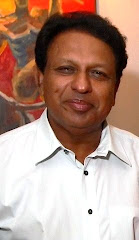
By T.P.Sreenivasan
A dialogue that began between India and Pakistan with the purpose of removing the trust deficit between them has ended up sowing greater distrust. Mystery remains as to why the two sides went ahead with talks last week when the preparatory meetings had not shown any sign of success. The theory that any dialogue will bring some incremental benefits has been proven wrong.
Sparks flew right, left and center when Foreign Ministers S.M. Krishna and Shah Mahmood Qureshi of India and Pakistan, respectively, gave an account of the “cordial and positive” talks they held in Islamabad on July 15. On every issue that came up in the final press conference, the positions of the two countries remained far apart. No advance was made on investigations into the November 2008 Mumbai terrorist attack; no respite was indicated on infiltrations or ceasefire violations across the Line of Control separating Indian- and Pakistani-controlled areas of Kashmir; and Pakistan continues to allege that India is stirring up trouble in Baluchistan. If there was any good news on other issues, nothing was heard about it.
The timing was a big part of the problem. India had just received evidence from its questioning of the architect of the Mumbai terrorist attack, David Headley, suggesting that Pakistan’s intelligence agency was involved in the attack, a charge Pakistan denies. That was good enough reason for the talks to be suspended until the cobwebs in the case were cleared.
Instead, Pakistan rebuffed the allegation from Indian Home Secretary G.K. Pillai, repeated on the eve of the summit. Pakistan’s foreign minister equated Mr. Pillai’s comment to remarks made by one of the prime suspects in the attacks, Hafeez Sayeed, by saying that both were equally unhelpful. This cast further doubt on Pakistan’s commitment to bringing the perpetrators to book. Without that determination, no progress was possible on other issues as far as India was concerned.
Meanwhile, even as Pakistan’s army was firing a salute for the Indian foreign minister, guns were booming across the line of control in Kashmir. On July 13, a major of the Indian army was killed and a colonel wounded by the firing from across the line. Mr. Krishna also told Mr. Qureshi that there was a 40% increase in the infiltration of Pakistan terrorists into Jammu and Kashmir. The sound of guns on the border cannot provide background music to talks on peace.
Complicating matters, Pakistani President Asif Ali Zardari had just returned from his fifth visit to China since he became president. The president brought back with him not just the two nuclear reactors China had agreed to build in defiance of world opinion and Nuclear Suppliers Group guidelines, but also additional infrastructure to be built on what India considers its own territory in Jammu and Kashmir. The message was one of eternal friendship between Pakistan and China, clearly aimed at keeping India in check. Pakistan believes it can afford a bit of distrust with India if it has a surfeit of trust with China.
India may have calculated that some progress with Pakistan would help bolster India’s own reputation in the forthcoming international conference on Afghanistan, which both India and Pakistan are scheduled to attend. Pakistan, already concerned about the U.S. position that India has a legitimate role in Afghanistan, may not have wanted any change in the equations in Afghanistan at this stage. Letting this round of dialogue go without results may have been part of Pakistan’s calculation.
In a similar vein, U.S. National Security Adviser Jim Jones arrived in India a day before the Islamabad parleys to prepare for President Barack Obama’s scheduled November visit. His outright condemnation of terrorism and the blunt message he conveyed to Pakistan about harboring terrorists within its own territory may have made alarm bells ring in Islamabad. Any admission of Mumbai guilt at this time could have undermined Pakistan’s credibility with the United States.
Such a configuration of events and trends provided a sure recipe for disaster at the Islamabad talks. Perhaps the two countries felt they had gone too far along in the preparations to postpone the summit without losing face. But it’s far worse for peace talks to end in a war of words. Mr. Qureshi rubbed salt in the wound by criticizing Mr. Krishna personally when he was still on Pakistan soil.
Hope remains alive. The two sides will reconvene in November, and when they do, they could usefully remember the experience of this round: Talking for talking’s sake, without a clear path toward results, risks adding a war of recriminations in addition to all the countries’ other troubles.
Mr. Sreenivasan is director general of the Kerala International Centre in Trivandrum and a member of the National Security Advisory Board in New Delhi
Monday, July 19, 2010


Friday, June 04, 2010
Shashi Tharoor without Twitter, OSD and IPL----
A Successful Minister of State of External Affairs
By T.P.Sreenivasan
Shakespearean tragic heroes are known more for their tragic flaws than for their magic qualities. Hamlet was indecisive, Macbeth was ambitious, Othello was jealous and King Lear was vane. But Hamlet was a thoughtful and loyal son, Macbeth was a heroic warrior, Othello was a loving husband and King Lear was a doting father. The evil that men do lives after them; the good is oft interred with their bones, as the bard himself has said
Being a Minister of State in the Ministry of External Affairs (MOS) must be very frustrating for any politician. The MOS has nothing to do with the sexy subjects the Ministry deals with—Pakistan, China, the United States, the other big powers and the United Nations. Moreover, any one, who has no role in the posting and promotion of IFS officers directly or indirectly, has any clout in South Block. But there is so much to do in other areas and, given the right attitude and hard work, any MOS can make a mark and use the position as a stepping stone to climb greater heights. Among the Ministers of State that I have worked with between 1977 and 2004, the two who made the biggest impact were Natwar Singh, on account of his direct access to the Prime Minister and Salman Khurshid, by sheer brilliance and hard work. More recently, Anand Sharma and E. Ahamed have proved their mettle and moved on to other positions. Many others have fallen by the wayside as they were misfits in the South Block. One of them read ‘Namibia’ as ‘Nambiar’ and the other pronounced “nodules” as “noodles”. Covering their meetings with their counterparts was often embarrassing for professional diplomats. They held their breath in the hope that the Minister would not say anything improper or undiplomatic.
Shashi Tharoor would have been a highly successful MOS in every respect, had he just focused on the work of his Ministry. A senior official of the Ministry of External Affairs told me what a delight it was to work with Tharoor. He would read a brief once and understand all the nuances of the issues he had to deal with. After that, he would handle any meeting with aplomb because he understood the intricacies of international relations, with his long experience at the United Nations. He had no problem dealing with unexpected issues raised by his interlocutors and he was never lost for words. “It was a pleasure watching him at work”, he said. This view was shared by many in the Ministry of External Affairs.
Those who miss him sorely in the South Block are the Ambassadors from the Gulf, Africa and Latin America, who are orphans once again as no Minister, not even the concerned Secretary has any time for them. They are often at the mercy of the concerned Joint Secretaries, who would condescend to give them time only if there was some urgent business to do. Ambassadors would like to send cables home about conversations at the highest level possible and it is rarely that they get chances to go beyond the level of the territorial Joint Secretaries. Tharoor knew many of these Ambassadors, who had served at the United Nations and made it a point to meet all of them and even accepted their invitations to visit their embassies.
A delegation of Latin American Ambassadors, who visited Trivandrum when Tharoor was the MOS were all praise for Tharoor for the attention he gave them, particularly to facilitate their visit to his own constituency. Now, with only one MOS in the Ministry, the Ambassadors from Africa, Latin America and the Gulf have no chance of meeting the MOS. By his exit, Tharoor has left a wide gulf in the Ministry.
Ironically, the longest speech Tharoor ever made in the Lok Sabha was after he resigned. But he had once an opportunity to handle a question on Afghanistan in the absence of the External Affairs Minister. Even senior Cabinet Ministers were greatly impressed with his performance. He was well briefed, inventive and articulate.
It was during his visits abroad that he proved his mettle, whether in bilateral discussions or in conferences. He certainly had drafts and briefs prepared for him by the bright officers of the Ministry of External affairs, but he made them his own because of his familiarity with the issues, his perception of Indian interests and his general geniality and oratorical skills. He breathed new life into the Indian Ocean Rim Association for Regional Cooperation (IOR-ARC) with his speech at the Plenary Meeting of the Ninth Council of Ministers in Yemen in June 2009. The association was largely an Indian creation and it had become imperative for India to give more substantive support to it. He gave a shot in the arm to another body, the Community of Democracies, set up with much fanfare during the Clinton era, when he addressed its Fifth Ministerial Conference in Lisbon in July 2009. He also delivered several speeches in different parts of India on foreign policy in general and different regions in particular. In the course of his short stint as MOS in the Ministry of External Affairs, he has built up an impressive repertoire of valuable pronouncements on foreign policy. His speeches on foreign policy at his own alma mater, St. Stephen’s College and at the Aligarh Muslim University were a clarion call for inclusive foreign policy making, with the cooperation of Universities, think tanks and strategic thinkers. His point that foreign policy is too important to be left to the foreign office alone must have struck a sympathetic chord across the nation.
Tharoor followed up his idea of inclusive foreign policy making by reviving the Policy Planning Division in the Ministry with the participation of expertise from outside South Block. The Policy Planning Division was just a parking place most of the time, but it was a powerful force at the time when G.Parthasarathy and A.K.Damodaran turned it into a policy making body. Heads of territorial divisions in the Ministry never conceded space for the Policy Planning Division except when the leadership in the Ministry made use of it. Tharoor had made a good beginning by stressing the importance of policy planning. Planning for the future is as hazardous in foreign policy as in other areas, but planning with the best available data is the surest way to expect the unexpected.
Among his many purposeful visits abroad, the most important was his timely visit to Haiti soon after the devastating earthquake there. It must have been a sad moment for him to see many of his friends in the United Nations gone in the earthquake, but his visit, the first Ministerial visit to the island, brought much solace and comfort to the victims, specially to the Indian community.
Back home, Tharoor also attended to the needs of passport offices and Haj pilgrims to the extent possible. Both these operations of the Ministry have perennial problems and they will never be perfect, regardless of the efforts put in by successive teams. The outsourcing experiment in providing consular services has made them less personalized and less efficient. But a ministerial touch does energise matters and Tharoor has made an important contribution.
As MOS in the Ministry of External Affairs, Tharoor had more attributes than were considered necessary for the job in the past. Had it not been for twitter, his OSD and IPL, he may well have done well and qualified for higher responsibilities.
May 25, 2010
--
A Successful Minister of State of External Affairs
By T.P.Sreenivasan
Shakespearean tragic heroes are known more for their tragic flaws than for their magic qualities. Hamlet was indecisive, Macbeth was ambitious, Othello was jealous and King Lear was vane. But Hamlet was a thoughtful and loyal son, Macbeth was a heroic warrior, Othello was a loving husband and King Lear was a doting father. The evil that men do lives after them; the good is oft interred with their bones, as the bard himself has said
Being a Minister of State in the Ministry of External Affairs (MOS) must be very frustrating for any politician. The MOS has nothing to do with the sexy subjects the Ministry deals with—Pakistan, China, the United States, the other big powers and the United Nations. Moreover, any one, who has no role in the posting and promotion of IFS officers directly or indirectly, has any clout in South Block. But there is so much to do in other areas and, given the right attitude and hard work, any MOS can make a mark and use the position as a stepping stone to climb greater heights. Among the Ministers of State that I have worked with between 1977 and 2004, the two who made the biggest impact were Natwar Singh, on account of his direct access to the Prime Minister and Salman Khurshid, by sheer brilliance and hard work. More recently, Anand Sharma and E. Ahamed have proved their mettle and moved on to other positions. Many others have fallen by the wayside as they were misfits in the South Block. One of them read ‘Namibia’ as ‘Nambiar’ and the other pronounced “nodules” as “noodles”. Covering their meetings with their counterparts was often embarrassing for professional diplomats. They held their breath in the hope that the Minister would not say anything improper or undiplomatic.
Shashi Tharoor would have been a highly successful MOS in every respect, had he just focused on the work of his Ministry. A senior official of the Ministry of External Affairs told me what a delight it was to work with Tharoor. He would read a brief once and understand all the nuances of the issues he had to deal with. After that, he would handle any meeting with aplomb because he understood the intricacies of international relations, with his long experience at the United Nations. He had no problem dealing with unexpected issues raised by his interlocutors and he was never lost for words. “It was a pleasure watching him at work”, he said. This view was shared by many in the Ministry of External Affairs.
Those who miss him sorely in the South Block are the Ambassadors from the Gulf, Africa and Latin America, who are orphans once again as no Minister, not even the concerned Secretary has any time for them. They are often at the mercy of the concerned Joint Secretaries, who would condescend to give them time only if there was some urgent business to do. Ambassadors would like to send cables home about conversations at the highest level possible and it is rarely that they get chances to go beyond the level of the territorial Joint Secretaries. Tharoor knew many of these Ambassadors, who had served at the United Nations and made it a point to meet all of them and even accepted their invitations to visit their embassies.
A delegation of Latin American Ambassadors, who visited Trivandrum when Tharoor was the MOS were all praise for Tharoor for the attention he gave them, particularly to facilitate their visit to his own constituency. Now, with only one MOS in the Ministry, the Ambassadors from Africa, Latin America and the Gulf have no chance of meeting the MOS. By his exit, Tharoor has left a wide gulf in the Ministry.
Ironically, the longest speech Tharoor ever made in the Lok Sabha was after he resigned. But he had once an opportunity to handle a question on Afghanistan in the absence of the External Affairs Minister. Even senior Cabinet Ministers were greatly impressed with his performance. He was well briefed, inventive and articulate.
It was during his visits abroad that he proved his mettle, whether in bilateral discussions or in conferences. He certainly had drafts and briefs prepared for him by the bright officers of the Ministry of External affairs, but he made them his own because of his familiarity with the issues, his perception of Indian interests and his general geniality and oratorical skills. He breathed new life into the Indian Ocean Rim Association for Regional Cooperation (IOR-ARC) with his speech at the Plenary Meeting of the Ninth Council of Ministers in Yemen in June 2009. The association was largely an Indian creation and it had become imperative for India to give more substantive support to it. He gave a shot in the arm to another body, the Community of Democracies, set up with much fanfare during the Clinton era, when he addressed its Fifth Ministerial Conference in Lisbon in July 2009. He also delivered several speeches in different parts of India on foreign policy in general and different regions in particular. In the course of his short stint as MOS in the Ministry of External Affairs, he has built up an impressive repertoire of valuable pronouncements on foreign policy. His speeches on foreign policy at his own alma mater, St. Stephen’s College and at the Aligarh Muslim University were a clarion call for inclusive foreign policy making, with the cooperation of Universities, think tanks and strategic thinkers. His point that foreign policy is too important to be left to the foreign office alone must have struck a sympathetic chord across the nation.
Tharoor followed up his idea of inclusive foreign policy making by reviving the Policy Planning Division in the Ministry with the participation of expertise from outside South Block. The Policy Planning Division was just a parking place most of the time, but it was a powerful force at the time when G.Parthasarathy and A.K.Damodaran turned it into a policy making body. Heads of territorial divisions in the Ministry never conceded space for the Policy Planning Division except when the leadership in the Ministry made use of it. Tharoor had made a good beginning by stressing the importance of policy planning. Planning for the future is as hazardous in foreign policy as in other areas, but planning with the best available data is the surest way to expect the unexpected.
Among his many purposeful visits abroad, the most important was his timely visit to Haiti soon after the devastating earthquake there. It must have been a sad moment for him to see many of his friends in the United Nations gone in the earthquake, but his visit, the first Ministerial visit to the island, brought much solace and comfort to the victims, specially to the Indian community.
Back home, Tharoor also attended to the needs of passport offices and Haj pilgrims to the extent possible. Both these operations of the Ministry have perennial problems and they will never be perfect, regardless of the efforts put in by successive teams. The outsourcing experiment in providing consular services has made them less personalized and less efficient. But a ministerial touch does energise matters and Tharoor has made an important contribution.
As MOS in the Ministry of External Affairs, Tharoor had more attributes than were considered necessary for the job in the past. Had it not been for twitter, his OSD and IPL, he may well have done well and qualified for higher responsibilities.
May 25, 2010
--
Iran-Brazil-Turkey----Hazards of Mediation.
By T.P.Sreenivasan
I was in Brasilia last month, together with twenty others from around the globe, to discuss “Emerging Structures of Global Governance” at the initiative of the Government of Brazil. Our man in Brasilia, Ambassador B.S.Prakash, pleased with a highly successful visit of Prime Minister Manmohan Singh, who participated in two summits (Brazil-Russia-India-China (BRIC) and India-Brazil-South Africa(IBSA) in one day, was all praise for the new initiatives of Brazil in the international arena. Al Jazeera had a story at the same time about the emergence of Brazil on the centre stage of the world. President Lula’s domestic success and heightened status in South America had encouraged him to play a global role. The seminar on global governance itself, where the best minds of Brazil asserted that there was a turning point in the international system, was aimed at providing leadership for change.
Turkey too was poised for a new role on the global scene. Foreign Minister Ahmet Davuloglu, in spelling out the new directions in Turkish foreign policy, had stated, “Today, Turkey has a great deal of say in the international arena. More importantly, there is a critical group of countries that lends a careful ear to Turkey’s stance on a myriad of regional and international issues. At this point, the world expects great things from Turkey and we are fully aware of our responsibility to carry out a careful foreign policy.”
Given their non-permanent membership of the UN Security Council and their willingness to wade into international waters, it was no wonder that the two countries took on the most pressing of the international problems of the day, the face-off between the United States and Iran. Though it looked like an initiative taken on by them at the instance of Iran, the United States had obviously encouraged them to strike a bargain, though Hillary Clinton had predicted that they would fail. The skilful diplomats of Brazil and Turkey revived an old deal of swapping of Low Enriched Uranium in exchange for fuel rods, from which Iran had reneged ostensibly on account of the trust deficit between Iran and its western interlocutors. The idea that the Iranian uranium will be in the trusted hands of Turkey and the fuel rods will come from the same source as indicated before made the deal possible.
The ten article agreement is fairly simple and straightforward. The commitment to nonproliferation and respect to the rights of states to nuclear energy, research and fuel cycle have been asserted at the outset. In the most important part of the agreement, Turkey is to keep 1200 kilogram of Low Enriched Uranium fuel (3.5%) owned by Iran with monitoring by the International Atomic Energy Agency (IAEA) and Iran itself. In exchange, the Vienna Group (France, Russia, the US and the IAEA) will deliver 120 kilogram of nuclear fuel with 20% purity) to Iran for use in its research reactor in Teheran. By and large, the agreement is very similar to an earlier proposal, which was made by the IAEA in consultation with the US and others. Iran did not agree at that time as it was not sure that the western countries would honour their part of the agreement.
Both Turkey and Brazil were in direct contact with the US right from the Washington Nuclear Security Summit on this issue and they had reason to believe that the new deal would be acceptable to the US. The Turkish Foreign Minister was confident that the sanctions were no more necessary. “This agreement should be regarded positively and there is no need for sanctions, now that we have made guarantees and the low enriched uranium will remain in Turkey”, he said. India too voiced cautious optimism about the deal brokered by Turkey and Brazil. But Israel was quick in rejecting the deal by stating that Iran had “manipulated” Turkey and Brazil. Israel felt that Iran would not honour the agreement and the involvement of rising powers such as Brazil and Turkey would radically complicate matters. “The Iranian nuclear installations are going to continue working and Teheran will pursue its efforts to obtain a military nuclear programme while developing long-range missiles”, said an Israeli official.
Predictably, the US too rejected the deal and moved forward with the sanctions resolution, which apparently has the acquiescence of both Russia and China. The US has pointed out that the new deal does not say anything about the cessation of enrichment of uranium by Iran. The European Union has also taken the position that the deal is not enough to stop work on tougher sanctions. “If Iran has now accepted the IAEA proposal, this is welcome, but it does not solve the fundamental problem, which is that the international community has serious concerns about the peaceful intention of the Iran nuclear programme”, said a spokesperson of the European Union. The reasons for the rejection of the deal were not clear immediately, but the main reason is that considerable time has passed since the west had made a similar proposal. At that time, the transfer of 1200 kilogram of Low Enriched Uranium would have left Teheran with much less than the 1000 kilogram of LEU required to make a bomb. But in the interim period, Teheran has enriched more uranium and even after the transfer, it will have sufficient stocks to move towards weaponisation. Today, Iran is estimated to have nearly 2500 kilogram of LEU. But why this fact was not pointed out to Turkey and Brazil at the time of the negotiations remains a mystery.
Iran, Turkey and Brazil have, however, continued to press the world to accept the deal and delay the imposition of sanctions. Turkey has written to 26 countries saying that the deal would resolve the nuclear standoff with Iran by way of diplomacy and negotiations. The activism of Turkey and Brazil as the mediators is likely to embarrass the United States and its partners.
On the larger geopolitical context, the involvement of Turkey and Brazil in what was essentially a tussle between Iran and the west, appeared to mark the beginnings of a new world order. Iranian acceptance of a deal which was originally proposed by the west with new guarantors, one of them a regional Islamic country and the other outside the region, seemed like the rejection of the west as a partner and the discovery of an alternative, with broader international implications. Iran did not trust France and Russia, but it had no problems with Turkey and Brazil.
There must be red faces in Turkey and Brazil on account of the rejection of their deal by the west, which had encouraged them to enter into negotiations with Iran. The jubilation of Iran will also be an embarrassment for them. They must have discovered the hazards of mediation in an issue, which has assumed innumerable dimensions. Their zest for playing a new role in international relations may well have suffered a setback by the Iran experience.
By T.P.Sreenivasan
I was in Brasilia last month, together with twenty others from around the globe, to discuss “Emerging Structures of Global Governance” at the initiative of the Government of Brazil. Our man in Brasilia, Ambassador B.S.Prakash, pleased with a highly successful visit of Prime Minister Manmohan Singh, who participated in two summits (Brazil-Russia-India-China (BRIC) and India-Brazil-South Africa(IBSA) in one day, was all praise for the new initiatives of Brazil in the international arena. Al Jazeera had a story at the same time about the emergence of Brazil on the centre stage of the world. President Lula’s domestic success and heightened status in South America had encouraged him to play a global role. The seminar on global governance itself, where the best minds of Brazil asserted that there was a turning point in the international system, was aimed at providing leadership for change.
Turkey too was poised for a new role on the global scene. Foreign Minister Ahmet Davuloglu, in spelling out the new directions in Turkish foreign policy, had stated, “Today, Turkey has a great deal of say in the international arena. More importantly, there is a critical group of countries that lends a careful ear to Turkey’s stance on a myriad of regional and international issues. At this point, the world expects great things from Turkey and we are fully aware of our responsibility to carry out a careful foreign policy.”
Given their non-permanent membership of the UN Security Council and their willingness to wade into international waters, it was no wonder that the two countries took on the most pressing of the international problems of the day, the face-off between the United States and Iran. Though it looked like an initiative taken on by them at the instance of Iran, the United States had obviously encouraged them to strike a bargain, though Hillary Clinton had predicted that they would fail. The skilful diplomats of Brazil and Turkey revived an old deal of swapping of Low Enriched Uranium in exchange for fuel rods, from which Iran had reneged ostensibly on account of the trust deficit between Iran and its western interlocutors. The idea that the Iranian uranium will be in the trusted hands of Turkey and the fuel rods will come from the same source as indicated before made the deal possible.
The ten article agreement is fairly simple and straightforward. The commitment to nonproliferation and respect to the rights of states to nuclear energy, research and fuel cycle have been asserted at the outset. In the most important part of the agreement, Turkey is to keep 1200 kilogram of Low Enriched Uranium fuel (3.5%) owned by Iran with monitoring by the International Atomic Energy Agency (IAEA) and Iran itself. In exchange, the Vienna Group (France, Russia, the US and the IAEA) will deliver 120 kilogram of nuclear fuel with 20% purity) to Iran for use in its research reactor in Teheran. By and large, the agreement is very similar to an earlier proposal, which was made by the IAEA in consultation with the US and others. Iran did not agree at that time as it was not sure that the western countries would honour their part of the agreement.
Both Turkey and Brazil were in direct contact with the US right from the Washington Nuclear Security Summit on this issue and they had reason to believe that the new deal would be acceptable to the US. The Turkish Foreign Minister was confident that the sanctions were no more necessary. “This agreement should be regarded positively and there is no need for sanctions, now that we have made guarantees and the low enriched uranium will remain in Turkey”, he said. India too voiced cautious optimism about the deal brokered by Turkey and Brazil. But Israel was quick in rejecting the deal by stating that Iran had “manipulated” Turkey and Brazil. Israel felt that Iran would not honour the agreement and the involvement of rising powers such as Brazil and Turkey would radically complicate matters. “The Iranian nuclear installations are going to continue working and Teheran will pursue its efforts to obtain a military nuclear programme while developing long-range missiles”, said an Israeli official.
Predictably, the US too rejected the deal and moved forward with the sanctions resolution, which apparently has the acquiescence of both Russia and China. The US has pointed out that the new deal does not say anything about the cessation of enrichment of uranium by Iran. The European Union has also taken the position that the deal is not enough to stop work on tougher sanctions. “If Iran has now accepted the IAEA proposal, this is welcome, but it does not solve the fundamental problem, which is that the international community has serious concerns about the peaceful intention of the Iran nuclear programme”, said a spokesperson of the European Union. The reasons for the rejection of the deal were not clear immediately, but the main reason is that considerable time has passed since the west had made a similar proposal. At that time, the transfer of 1200 kilogram of Low Enriched Uranium would have left Teheran with much less than the 1000 kilogram of LEU required to make a bomb. But in the interim period, Teheran has enriched more uranium and even after the transfer, it will have sufficient stocks to move towards weaponisation. Today, Iran is estimated to have nearly 2500 kilogram of LEU. But why this fact was not pointed out to Turkey and Brazil at the time of the negotiations remains a mystery.
Iran, Turkey and Brazil have, however, continued to press the world to accept the deal and delay the imposition of sanctions. Turkey has written to 26 countries saying that the deal would resolve the nuclear standoff with Iran by way of diplomacy and negotiations. The activism of Turkey and Brazil as the mediators is likely to embarrass the United States and its partners.
On the larger geopolitical context, the involvement of Turkey and Brazil in what was essentially a tussle between Iran and the west, appeared to mark the beginnings of a new world order. Iranian acceptance of a deal which was originally proposed by the west with new guarantors, one of them a regional Islamic country and the other outside the region, seemed like the rejection of the west as a partner and the discovery of an alternative, with broader international implications. Iran did not trust France and Russia, but it had no problems with Turkey and Brazil.
There must be red faces in Turkey and Brazil on account of the rejection of their deal by the west, which had encouraged them to enter into negotiations with Iran. The jubilation of Iran will also be an embarrassment for them. They must have discovered the hazards of mediation in an issue, which has assumed innumerable dimensions. Their zest for playing a new role in international relations may well have suffered a setback by the Iran experience.
Iran-Brazil-Turkey----Hazards of Mediation.
By T.P.Sreenivasan
I was in Brasilia last month, together with twenty others from around the globe, to discuss “Emerging Structures of Global Governance” at the initiative of the Government of Brazil. Our man in Brasilia, Ambassador B.S.Prakash, pleased with a highly successful visit of Prime Minister Manmohan Singh, who participated in two summits (Brazil-Russia-India-China (BRIC) and India-Brazil-South Africa(IBSA) in one day, was all praise for the new initiatives of Brazil in the international arena. Al Jazeera had a story at the same time about the emergence of Brazil on the centre stage of the world. President Lula’s domestic success and heightened status in South America had encouraged him to play a global role. The seminar on global governance itself, where the best minds of Brazil asserted that there was a turning point in the international system, was aimed at providing leadership for change.
Turkey too was poised for a new role on the global scene. Foreign Minister Ahmet Davuloglu, in spelling out the new directions in Turkish foreign policy, had stated, “Today, Turkey has a great deal of say in the international arena. More importantly, there is a critical group of countries that lends a careful ear to Turkey’s stance on a myriad of regional and international issues. At this point, the world expects great things from Turkey and we are fully aware of our responsibility to carry out a careful foreign policy.”
Given their non-permanent membership of the UN Security Council and their willingness to wade into international waters, it was no wonder that the two countries took on the most pressing of the international problems of the day, the face-off between the United States and Iran. Though it looked like an initiative taken on by them at the instance of Iran, the United States had obviously encouraged them to strike a bargain, though Hillary Clinton had predicted that they would fail. The skilful diplomats of Brazil and Turkey revived an old deal of swapping of Low Enriched Uranium in exchange for fuel rods, from which Iran had reneged ostensibly on account of the trust deficit between Iran and its western interlocutors. The idea that the Iranian uranium will be in the trusted hands of Turkey and the fuel rods will come from the same source as indicated before made the deal possible.
The ten article agreement is fairly simple and straightforward. The commitment to nonproliferation and respect to the rights of states to nuclear energy, research and fuel cycle have been asserted at the outset. In the most important part of the agreement, Turkey is to keep 1200 kilogram of Low Enriched Uranium fuel (3.5%) owned by Iran with monitoring by the International Atomic Energy Agency (IAEA) and Iran itself. In exchange, the Vienna Group (France, Russia, the US and the IAEA) will deliver 120 kilogram of nuclear fuel with 20% purity) to Iran for use in its research reactor in Teheran. By and large, the agreement is very similar to an earlier proposal, which was made by the IAEA in consultation with the US and others. Iran did not agree at that time as it was not sure that the western countries would honour their part of the agreement.
Both Turkey and Brazil were in direct contact with the US right from the Washington Nuclear Security Summit on this issue and they had reason to believe that the new deal would be acceptable to the US. The Turkish Foreign Minister was confident that the sanctions were no more necessary. “This agreement should be regarded positively and there is no need for sanctions, now that we have made guarantees and the low enriched uranium will remain in Turkey”, he said. India too voiced cautious optimism about the deal brokered by Turkey and Brazil. But Israel was quick in rejecting the deal by stating that Iran had “manipulated” Turkey and Brazil. Israel felt that Iran would not honour the agreement and the involvement of rising powers such as Brazil and Turkey would radically complicate matters. “The Iranian nuclear installations are going to continue working and Teheran will pursue its efforts to obtain a military nuclear programme while developing long-range missiles”, said an Israeli official.
Predictably, the US too rejected the deal and moved forward with the sanctions resolution, which apparently has the acquiescence of both Russia and China. The US has pointed out that the new deal does not say anything about the cessation of enrichment of uranium by Iran. The European Union has also taken the position that the deal is not enough to stop work on tougher sanctions. “If Iran has now accepted the IAEA proposal, this is welcome, but it does not solve the fundamental problem, which is that the international community has serious concerns about the peaceful intention of the Iran nuclear programme”, said a spokesperson of the European Union. The reasons for the rejection of the deal were not clear immediately, but the main reason is that considerable time has passed since the west had made a similar proposal. At that time, the transfer of 1200 kilogram of Low Enriched Uranium would have left Teheran with much less than the 1000 kilogram of LEU required to make a bomb. But in the interim period, Teheran has enriched more uranium and even after the transfer, it will have sufficient stocks to move towards weaponisation. Today, Iran is estimated to have nearly 2500 kilogram of LEU. But why this fact was not pointed out to Turkey and Brazil at the time of the negotiations remains a mystery.
Iran, Turkey and Brazil have, however, continued to press the world to accept the deal and delay the imposition of sanctions. Turkey has written to 26 countries saying that the deal would resolve the nuclear standoff with Iran by way of diplomacy and negotiations. The activism of Turkey and Brazil as the mediators is likely to embarrass the United States and its partners.
On the larger geopolitical context, the involvement of Turkey and Brazil in what was essentially a tussle between Iran and the west, appeared to mark the beginnings of a new world order. Iranian acceptance of a deal which was originally proposed by the west with new guarantors, one of them a regional Islamic country and the other outside the region, seemed like the rejection of the west as a partner and the discovery of an alternative, with broader international implications. Iran did not trust France and Russia, but it had no problems with Turkey and Brazil.
There must be red faces in Turkey and Brazil on account of the rejection of their deal by the west, which had encouraged them to enter into negotiations with Iran. The jubilation of Iran will also be an embarrassment for them. They must have discovered the hazards of mediation in an issue, which has assumed innumerable dimensions. Their zest for playing a new role in international relations may well have suffered a setback by the Iran experience.
By T.P.Sreenivasan
I was in Brasilia last month, together with twenty others from around the globe, to discuss “Emerging Structures of Global Governance” at the initiative of the Government of Brazil. Our man in Brasilia, Ambassador B.S.Prakash, pleased with a highly successful visit of Prime Minister Manmohan Singh, who participated in two summits (Brazil-Russia-India-China (BRIC) and India-Brazil-South Africa(IBSA) in one day, was all praise for the new initiatives of Brazil in the international arena. Al Jazeera had a story at the same time about the emergence of Brazil on the centre stage of the world. President Lula’s domestic success and heightened status in South America had encouraged him to play a global role. The seminar on global governance itself, where the best minds of Brazil asserted that there was a turning point in the international system, was aimed at providing leadership for change.
Turkey too was poised for a new role on the global scene. Foreign Minister Ahmet Davuloglu, in spelling out the new directions in Turkish foreign policy, had stated, “Today, Turkey has a great deal of say in the international arena. More importantly, there is a critical group of countries that lends a careful ear to Turkey’s stance on a myriad of regional and international issues. At this point, the world expects great things from Turkey and we are fully aware of our responsibility to carry out a careful foreign policy.”
Given their non-permanent membership of the UN Security Council and their willingness to wade into international waters, it was no wonder that the two countries took on the most pressing of the international problems of the day, the face-off between the United States and Iran. Though it looked like an initiative taken on by them at the instance of Iran, the United States had obviously encouraged them to strike a bargain, though Hillary Clinton had predicted that they would fail. The skilful diplomats of Brazil and Turkey revived an old deal of swapping of Low Enriched Uranium in exchange for fuel rods, from which Iran had reneged ostensibly on account of the trust deficit between Iran and its western interlocutors. The idea that the Iranian uranium will be in the trusted hands of Turkey and the fuel rods will come from the same source as indicated before made the deal possible.
The ten article agreement is fairly simple and straightforward. The commitment to nonproliferation and respect to the rights of states to nuclear energy, research and fuel cycle have been asserted at the outset. In the most important part of the agreement, Turkey is to keep 1200 kilogram of Low Enriched Uranium fuel (3.5%) owned by Iran with monitoring by the International Atomic Energy Agency (IAEA) and Iran itself. In exchange, the Vienna Group (France, Russia, the US and the IAEA) will deliver 120 kilogram of nuclear fuel with 20% purity) to Iran for use in its research reactor in Teheran. By and large, the agreement is very similar to an earlier proposal, which was made by the IAEA in consultation with the US and others. Iran did not agree at that time as it was not sure that the western countries would honour their part of the agreement.
Both Turkey and Brazil were in direct contact with the US right from the Washington Nuclear Security Summit on this issue and they had reason to believe that the new deal would be acceptable to the US. The Turkish Foreign Minister was confident that the sanctions were no more necessary. “This agreement should be regarded positively and there is no need for sanctions, now that we have made guarantees and the low enriched uranium will remain in Turkey”, he said. India too voiced cautious optimism about the deal brokered by Turkey and Brazil. But Israel was quick in rejecting the deal by stating that Iran had “manipulated” Turkey and Brazil. Israel felt that Iran would not honour the agreement and the involvement of rising powers such as Brazil and Turkey would radically complicate matters. “The Iranian nuclear installations are going to continue working and Teheran will pursue its efforts to obtain a military nuclear programme while developing long-range missiles”, said an Israeli official.
Predictably, the US too rejected the deal and moved forward with the sanctions resolution, which apparently has the acquiescence of both Russia and China. The US has pointed out that the new deal does not say anything about the cessation of enrichment of uranium by Iran. The European Union has also taken the position that the deal is not enough to stop work on tougher sanctions. “If Iran has now accepted the IAEA proposal, this is welcome, but it does not solve the fundamental problem, which is that the international community has serious concerns about the peaceful intention of the Iran nuclear programme”, said a spokesperson of the European Union. The reasons for the rejection of the deal were not clear immediately, but the main reason is that considerable time has passed since the west had made a similar proposal. At that time, the transfer of 1200 kilogram of Low Enriched Uranium would have left Teheran with much less than the 1000 kilogram of LEU required to make a bomb. But in the interim period, Teheran has enriched more uranium and even after the transfer, it will have sufficient stocks to move towards weaponisation. Today, Iran is estimated to have nearly 2500 kilogram of LEU. But why this fact was not pointed out to Turkey and Brazil at the time of the negotiations remains a mystery.
Iran, Turkey and Brazil have, however, continued to press the world to accept the deal and delay the imposition of sanctions. Turkey has written to 26 countries saying that the deal would resolve the nuclear standoff with Iran by way of diplomacy and negotiations. The activism of Turkey and Brazil as the mediators is likely to embarrass the United States and its partners.
On the larger geopolitical context, the involvement of Turkey and Brazil in what was essentially a tussle between Iran and the west, appeared to mark the beginnings of a new world order. Iranian acceptance of a deal which was originally proposed by the west with new guarantors, one of them a regional Islamic country and the other outside the region, seemed like the rejection of the west as a partner and the discovery of an alternative, with broader international implications. Iran did not trust France and Russia, but it had no problems with Turkey and Brazil.
There must be red faces in Turkey and Brazil on account of the rejection of their deal by the west, which had encouraged them to enter into negotiations with Iran. The jubilation of Iran will also be an embarrassment for them. They must have discovered the hazards of mediation in an issue, which has assumed innumerable dimensions. Their zest for playing a new role in international relations may well have suffered a setback by the Iran experience.
Saturday, May 01, 2010
Madhuri Gupta maligns the Foreign Service
By T.P.Sreenivasan
Someone just told me at a function in Thiruvananthapuram that it should be a dark day for the Indian Foreign Service since an Indian diplomat was caught as a traitor in an enemy State. After I recovered from the shock of that statement, I explained at some length to the assembled group about the composition of our missions abroad. I said that it would be wrong to assume that everyone who worked in our missions abroad belonged to the elite Foreign Service. In fact, no member of the IFS has ever been accused of spying. My listeners were surprised that all diplomatic personnel in our missions were not from the Foreign Service.
The national media, particularly the news channels, which takes the credit for breaking the story, has been bandying about words like "senior diplomat", "Foreign Service officer" and "top official" etc to enhance the seriousness of their scoop. It was also reporting that Madhuri Gupta was present at all the important and confidential discussions with Pakistan and about the possibility of her having befriended a Research and Analysis Wing officer in the mission. The viewers of our 24X7 news channels must be imagining her to be next only to the high commissioner in the mission hierarchy.
I have never met or heard of Madhuri Gupta, the second secretary in our high commission in Islamabad [ Images ], but with my familiarity with the system I can certainly assert that describing her as a diplomat is totally misleading. She may never have been trained in diplomacy, particularly secrecy and discretion. She apparently belongs to the interpreters' cadre and her language is Urdu. She did not have to make any extra effort to get posted to Islamabad with her language proficiency. Her reported postings to Baghdad and Kuala Lampur should be more of a mystery.
Since the interpreters do more or less the same job for years together, they are given career advancement by giving them senior diplomatic designations. "Second secretary" is a designation an IFS officer gets within three years of entering the service, while she may have got it after 20 years. This designation for an interpreter is a mere acknowledgement of his or her having spent many years in the government. Interpreters have been designated as counsellors and ministers in large missions just to indicate that they are senior and competent interpreters. Their job continues to be interpretation and translation.
The only disadvantage in giving them such high designations is that they will not serve the junior officers in the mission, who need interpretation the most. It is embarrassing for a "counsellor" to interpret for a mere "first secretary".
Many innovative ideas have been discussed to make the cadre of interpreters attractive to good people. One of them is to select some of them to the regular Foreign Service with real diplomatic responsibilities. But very few of them have been found fit enough to be elevated to higher levels. One celebrated exception was Vasant Paranjpe, a highly competent Chinese interpreter, who retired as ambassador to the Republic of Korea. His services were eulogised by many colleagues when he passed away recently.
Our missions abroad, particularly the larger missions, are staffed from a variety of ministries and departments of the Government of India [ Images ]. For instance, during my time in Moscow [ Images ], we had only about half a dozen IFS officers in a list of a hundred diplomatic officers. Not only the representatives of the various services, but even of public sector undertakings like Bokaro and Hindustan Aeronautics Ltd went around as first secretaries and counsellors. Professors were designated as ministers, not because such high dignitaries were required for the kind of work they did, but because even former vice-chancellors were willing to go on assignments abroad.
Some of these "diplomats" were accused of indiscretions like currency speculation, but the bad name went to the Indian Foreign Service because they operated under the cover of diplomacy. The same thing is happening with Madhuri Gupta, who had a diplomatic designation in one of our most sensitive posts abroad. Since the international system of diplomacy works this way, the Foreign Service will continue to be maligned by such functionaries. This is particularly sad as no IFS officer has yet been caught spying for another country, while those from the other services have been caught red-handed.
The extent of the damage that may have been caused by Madhuri Gupta may also be exaggerated. Indians and Pakistanis are proud of their proficiency in English and they hardly do business in Urdu. So Gupta may have spent her whole career translating obscure articles from the Urdu press or making telephone calls to plumbers and electricians. Even if she was privy to some official conversations between India and Pakistan, the ISI would not be interested in gaining access to her. Only some third countries may have been interested in those conversations. The CIA will not have to compromise the likes of Gupta to get the information as they normally have sources in the Pakistan army [ Images ].
To be an effective and useful spy, Madhuri Gupta had to get access to secret documents with the connivance of another colleague in the mission and she may well have accomplished it in some way. The key lies, therefore, in identifying her collaborators at sensitive desks in the mission. These contacts may be the supporting staff in important offices in the mission. Such weak links in high places have been exposed even in the prime minister's office in the past. Financial incentives are very attractive for relatively junior officials, who handle sensitive information. Madhuri Gupta may well have found financial gratification tempting, but there may be other temptations like "love jihad", a recent phenomenon, which has ensnared spinsters who are in search for partners. Only a thorough investigation will reveal the whole conspiracy.
The damage done by the sordid Madhuri Gupta saga to national interests may well be serious. The damage it has done to the reputation of the Foreign Service must also be of concern. The system of staffing of our missions and designations cannot change, but the public needs to be educated more about the diverse composition of our diplomatic corps abroad. Such diversity also explains the general reputation of unhelpfulness of our diplomats. Very often, the public comes across untrained personnel from domestic services and make judgments about the Indian Foreign Service, which is patently unfair.
By T.P.Sreenivasan
Someone just told me at a function in Thiruvananthapuram that it should be a dark day for the Indian Foreign Service since an Indian diplomat was caught as a traitor in an enemy State. After I recovered from the shock of that statement, I explained at some length to the assembled group about the composition of our missions abroad. I said that it would be wrong to assume that everyone who worked in our missions abroad belonged to the elite Foreign Service. In fact, no member of the IFS has ever been accused of spying. My listeners were surprised that all diplomatic personnel in our missions were not from the Foreign Service.
The national media, particularly the news channels, which takes the credit for breaking the story, has been bandying about words like "senior diplomat", "Foreign Service officer" and "top official" etc to enhance the seriousness of their scoop. It was also reporting that Madhuri Gupta was present at all the important and confidential discussions with Pakistan and about the possibility of her having befriended a Research and Analysis Wing officer in the mission. The viewers of our 24X7 news channels must be imagining her to be next only to the high commissioner in the mission hierarchy.
I have never met or heard of Madhuri Gupta, the second secretary in our high commission in Islamabad [ Images ], but with my familiarity with the system I can certainly assert that describing her as a diplomat is totally misleading. She may never have been trained in diplomacy, particularly secrecy and discretion. She apparently belongs to the interpreters' cadre and her language is Urdu. She did not have to make any extra effort to get posted to Islamabad with her language proficiency. Her reported postings to Baghdad and Kuala Lampur should be more of a mystery.
Since the interpreters do more or less the same job for years together, they are given career advancement by giving them senior diplomatic designations. "Second secretary" is a designation an IFS officer gets within three years of entering the service, while she may have got it after 20 years. This designation for an interpreter is a mere acknowledgement of his or her having spent many years in the government. Interpreters have been designated as counsellors and ministers in large missions just to indicate that they are senior and competent interpreters. Their job continues to be interpretation and translation.
The only disadvantage in giving them such high designations is that they will not serve the junior officers in the mission, who need interpretation the most. It is embarrassing for a "counsellor" to interpret for a mere "first secretary".
Many innovative ideas have been discussed to make the cadre of interpreters attractive to good people. One of them is to select some of them to the regular Foreign Service with real diplomatic responsibilities. But very few of them have been found fit enough to be elevated to higher levels. One celebrated exception was Vasant Paranjpe, a highly competent Chinese interpreter, who retired as ambassador to the Republic of Korea. His services were eulogised by many colleagues when he passed away recently.
Our missions abroad, particularly the larger missions, are staffed from a variety of ministries and departments of the Government of India [ Images ]. For instance, during my time in Moscow [ Images ], we had only about half a dozen IFS officers in a list of a hundred diplomatic officers. Not only the representatives of the various services, but even of public sector undertakings like Bokaro and Hindustan Aeronautics Ltd went around as first secretaries and counsellors. Professors were designated as ministers, not because such high dignitaries were required for the kind of work they did, but because even former vice-chancellors were willing to go on assignments abroad.
Some of these "diplomats" were accused of indiscretions like currency speculation, but the bad name went to the Indian Foreign Service because they operated under the cover of diplomacy. The same thing is happening with Madhuri Gupta, who had a diplomatic designation in one of our most sensitive posts abroad. Since the international system of diplomacy works this way, the Foreign Service will continue to be maligned by such functionaries. This is particularly sad as no IFS officer has yet been caught spying for another country, while those from the other services have been caught red-handed.
The extent of the damage that may have been caused by Madhuri Gupta may also be exaggerated. Indians and Pakistanis are proud of their proficiency in English and they hardly do business in Urdu. So Gupta may have spent her whole career translating obscure articles from the Urdu press or making telephone calls to plumbers and electricians. Even if she was privy to some official conversations between India and Pakistan, the ISI would not be interested in gaining access to her. Only some third countries may have been interested in those conversations. The CIA will not have to compromise the likes of Gupta to get the information as they normally have sources in the Pakistan army [ Images ].
To be an effective and useful spy, Madhuri Gupta had to get access to secret documents with the connivance of another colleague in the mission and she may well have accomplished it in some way. The key lies, therefore, in identifying her collaborators at sensitive desks in the mission. These contacts may be the supporting staff in important offices in the mission. Such weak links in high places have been exposed even in the prime minister's office in the past. Financial incentives are very attractive for relatively junior officials, who handle sensitive information. Madhuri Gupta may well have found financial gratification tempting, but there may be other temptations like "love jihad", a recent phenomenon, which has ensnared spinsters who are in search for partners. Only a thorough investigation will reveal the whole conspiracy.
The damage done by the sordid Madhuri Gupta saga to national interests may well be serious. The damage it has done to the reputation of the Foreign Service must also be of concern. The system of staffing of our missions and designations cannot change, but the public needs to be educated more about the diverse composition of our diplomatic corps abroad. Such diversity also explains the general reputation of unhelpfulness of our diplomats. Very often, the public comes across untrained personnel from domestic services and make judgments about the Indian Foreign Service, which is patently unfair.
Sunday, March 28, 2010
Bringing India’s Dream to
Fruition
Global zero, or a world without nuclear weapons, is not just a
desirable goal; it is an imperative for the survival of mankind. A nuclear war
between nations is unlikely. Most strategists and nations rule out the use of
nuclear weapons as an instrument of war. But the alarming picture of a terrorist
holding a particular country or region, or even the whole world, to ransom by
threatening to use a nuclear weapon looms large on the horizon. Instability
in countries that possess nuclear weapons is a cause of particular concern. Even
the most elaborate command and control systems are not immune to viruses or
hackers. Today’s civilization can be protected and preserved only if nuclear
weapons and other lethal materials are eradicated. Nuclear technology itself
must be defanged sooner rather than later to make it benign enough to serve
mankind. In other words, Global Zero must have no caveats.
Advocates envisage a phased plan for the verified elimination of nuclear
weapons, starting with deep reductions in the Russian and U.S. arsenals, to be
followed by multilateral negotiations among all nuclear powers for an agreement
to eliminate all nuclear weapons. The commitment of the presidents of Russia
and the United States to a nuclear-weapons—free world represents a historic
opportunity.1 This opportunity, however, is not just limited to the superpowers
of the Cold War but is also available to rising powers such as India. The world
has a stake in the success of the initiative, and it is essential that New Delhi play
a role in finding an effective and efficient path to reach that goal. Although
experts and analysts question the very feasibility of such a goal, India not only
believes that ‘‘getting to zero’’ is possible, but it is the only country that has
69
actually put forth a potential disarmament
framework. Even after declaring itself a
nuclear weapons state in 1998, India has
pursued its disarmament agenda aimed at
the elimination of nuclear weapons. India
saw its nuclear arsenal only as a necessary
evil in a world in which every major country
had nuclear weapons or a nuclear guarantee
for its security. The general reduction of
tensions in the world and the U.S.-Indian
nuclear deal, which has made India a
partner rather than a target in nonproliferation and disarmament efforts, augur
well for the Indian dream.
The concept of a nuclear weapons—free world is attributable to India, where it
was articulated with different names by Indian leaders since 1947. The idea of
general and complete disarmament goes beyond a nuclear weapons—free world;
it also seeks a nonviolent world envisaged by the Buddha and embraced
by Mahatma Gandhi, who said:
The only moral which can be legitimately drawn from the supreme tragedy of the
bomb is that it shall not be destroyed by counter-bombs.Violence cannot be destroyed
by counter-violence. Mankind will only emerge out of violence through nonviolence.2
India brought the concept to the international political level in 1988 when Prime
Minister Rajiv Gandhi presented his action plan for a ‘‘world order free of nuclear
weapons and rooted in nonviolence’’ to the UN General Assembly.3 There were
four essential features of the plan: 1) a binding commitment by all nations to
eliminate nuclear weapons in intervals by the year 2010 at the latest; 2)
participation of all states in the process of nuclear disarmament, whether
or not they have nuclear capabilities; 3) demonstration of good faith by all
states by making tangible progress at each stage toward the common goal; and
4) an ideological change in policies and institutions to sustain a world free of
nuclear weapons by undertaking negotiations to establish a comprehensive global
security system under the aegis of the UN. The plan also suggested specific
negotiations and treaties at different stages until the world could not only reach
global zero, but also sustain it without apprehensions. Unfortunately, 2010 is here,
and the goal that India had envisioned to be reached by now is not even close.
But there is hope. In April 2009 in Prague, President Barack Obama declared,
‘‘So today, I state clearly and with conviction America’s commitment to seek
the peace and security of a world without nuclear weapons.’’4 Even though he
acknowledged that the goal would not be reached quickly and perhaps not even
in his lifetime, his words raised new hopes around the world. The trajectory
Obama suggested, however, was not new or unfamiliar. He advocated reducing
It is essential that
New Delhi play a
role in finding an
effective and efficient
path to zero.
The role that nuclear weapons play in national security strategies, renegotiating
the Strategic Arms Reduction Treaty (START) with Russia, ratifying the
Comprehensive Test Ban Treaty (CTBT), seeking a new fissile material cut-off
treaty (FMCT), strengthening the Nuclear Non-Proliferation Treaty (NPT), and
preventing terrorists from acquiring nuclear weapons. To strengthen the basic
bargain of the NPT, Obama stressed that countries with nuclear weapons should
move toward disarmament and countries without nuclear weapons should not try
to acquire them, while all should have access to peaceful nuclear power.
The Mistake: Revitalizing the NPT Bargain
The major disappointment of the Prague speech was that although the ultimate
objective was laudable, the path suggested was the same old NPT track,
which is considered discriminatory by nonnuclear weapons states. Although
discrimination would end with the attainment of the goal, the world in the long
interim period would remain divided, with the haves accumulating more
weapons and the have-nots feeling a sense of diminishing security. The NPT,
ratified in 1970, originally only had a shelf life of 25 years, and the review
mechanism left open the possibility of it evolving with the times. No treaty,
particularly one that bases itself on scientific knowledge and developments, can
be made effective without making the appropriate changes over time. Extending
the treaty indefinitely in 1995, turning it into a perpetual treaty with no
possibility of review, was a sure way of making it a historic relic rather than a
dynamic instrument to determine international behavior.
The ultimate irony is that indefinite extension of the NPT prompted the
Indian and Pakistani nuclear tests of 1998, adding two more nations to the list
of nuclear weapons states. The perpetuation of the NPT, and that too as an
unchangeable document for all time to come, removed the last hope that
India had of shaping a new nondiscriminatory regime by consensus. With the
possibility of disarmament by the nuclear weapons states receding further, it had
to blast its way into the nuclear club to secure for itself a place among the haves.
Pakistan followed suit.
The NPT has become an anachronism today as it unfortunately no longer has
any possibility for change. The only alternative is to let it lie and pursue an
alternative system that ensures universal participation and adherence. This is a
great opportunity for India, as U.S. Secretary of State Hillary Rodham Clinton
herself declared in October 2009: ‘‘India we see as a full partner in this effort and
we look forward to working with them as we try to come up with the 21st century
version of the NPT.’’5 Unfortunately, there is no real evidence of such an effort
in any of the road maps in Washington. ‘‘The 21st century version of the NPT’’
must necessarily move away from the presumptions of the 1960s and take into
account the dictates of the present day including the energy crisis, the advent of
nonstate actors, and technological advancement.
The energy crisis and the threat of climate change would inevitably demand
greater use of nuclear energy for peaceful purposes. The International Atomic
Energy Agency (IAEA) was originally conceived as a promotional body, but
as the implementing agency of the NPT, the IAEA became a watchdog against
nonproliferation rather than an engine for energy growth. A new arrangement
with international facilities for enrichment and a fuel bank will support the
energy development of developing countries. Programs for the development of
economical and proliferation-resistant reactors do exist in the agenda of the
IAEA, but they receive little attention. The new system should lead to increases
in the IAEA budget for new technology and technical cooperation. Nonstate
actors will never be amenable to treaties, but there should be greater
accountability on the part of states to safeguard nuclear material. The present
system has no provision to deal with either the nuclear ‘‘Wal-mart’’ of Abdul
Qadeer Khan or the leakage of nuclear material from state sources.
The IAEA suggests that all nuclear
material reported lost has not been
recovered and that some of the recovered
material was never reported lost. The new
nonproliferation system must address these
three key considerations.
The grand bargain of the NPT has
not led the world to security, essentially
because it seeks to perpetuate, rather
than eliminate, nuclear weapons in a
discriminatory manner. By condoning vertical proliferation, it permits the
further sophistication of nuclear weapons by the nuclear weapons states. The
NPT does not impose any restrictions on the designated nuclear weapons states
to control their arsenals. It addresses horizontal proliferation by asking the
nonnuclear weapons states not to cross the nuclear Rubicon, without any
restraint on vertical proliferation. Even the CTBT permits laboratory tests,
which only the technologically advanced states can perform.
No less alarming is the fact that the nuclear powers have deliberately
violated the NPT provisions not to transfer weapons technology to nonnuclear
weapons states. The most celebrated case of such violation is by China, which
shared technology with Pakistan and North Korea. Pakistan and North Korea
have, in turn, helped others such as Iran and Libya with equipment and
technology.
The solemn commitment of the nuclear weapons states, in adherence to
Article VI of the NPT, to pursue negotiations in good faith for general and
India is the only
country that has
actually put forth a
potential disarmament
framework.
Complete disarmament has not materialized as well.6 The projection of the NPT,
therefore, as an end in itself rather than as the first step in a long journey toward
international peace and security has transformed the context and rationale of
the grand bargain. Relying on the NPT bargain as the path for the future
undermines the credibility of the goal of a truly nuclear-free world. A
fundamental change from mutual assured destruction to a collective security
structure, which encompasses nuclear and nonnuclear states, must take place
right now.
Similarly, the CTBT and the projected FMCT will only be partial measures,
even if they come into force in the near future. The U.S. Congress is not yet
ready to ratify the CTBT. Even if it does, the caveat enshrined in the treaty
that a number of designated countries should ratify it before it comes into
force will delay its implementation.7 There is also criticism that it is neither
comprehensive nor is it a ban on testing, as those with the capacity to do
simulation tests can merrily test in laboratories and refine their weapons
many times over. An FMCT is still in its infancy in Geneva, and its growth
and maturity are not guaranteed. The demand that an FMCT should cover
eliminating existing stockpiles may sound its death knell before it even develops.
Both these treaties should be linked to disarmament rather than remain the
pillars of the NPT edifice, which has begun to crumble.
The first requirement of moving toward a nuclear-free world is for its
proponents to recognize the antiquated nature of the NPT. A paradigm shift
from relying on the treaty is a fundamental requirement for the idea of the
elimination of nuclear weapons to be universally accepted. The May 2010 NPT
Review Conference will show that no amount of declarations on the part of the
nuclear weapons states will satisfy the nonnuclear weapons states, nor will it
deter those states from pursuing security by any means necessary, as their sense of
insecurity increases and their disappointment over inadequate resources and
technology to develop peaceful uses of nuclear energy deepens.
The IAEA spends a disproportionately huge sum for its watchdog role, while
paying only lip service to its responsibility to promote nuclear energy. Faced as
they are with the threat of global warming, many countries are knocking at the
IAEA’s door to seek technology to use nuclear power in such crucial sectors
as power generation, medicine, and water.8 Unless the IAEA has sufficient
resources to meet these increasing needs, it cannot play its nonproliferation role
effectively.
The vision of a nuclear-weapons-free world is shared by most countries, but
the way forward is far from clear. It is highly desirable to reach that goal, but its
feasibility is in question because of differing perspectives and priorities. Mutual
suspicion about motives and methods make achieving a nuclear-free world a
distant dream. Mutually reducing nuclear warheads is the only way to go for the
nuclear states. The START process, delayed though it has been, is reassuring, but
it should bring in the other nuclear weapons states as part of the move toward
global zero. Freezing the production of weapons and related materials should add
credibility to reduction proposals.
Finally, concerns over evolving requirements for what countries believe is
necessary for minimum deterrence will have to be tackled as countries’ nuclear
arsenals decline. The number of weapons that each country will insist on
keeping until they are certain about their security will change as their
perceptions of the external threat evolves. Altogether, these obstacles to
achieving a world without nuclear weapons are enormous, but not
insurmountable if a step-by-step approach with measures for verification can
be devised that does not rely on using the outdated NPT framework.
How to Use the U.S.—Indian Partnership to Get to Zero
India, as stated earlier, had believed in and championed general and complete
disarmament, particularly nuclear disarmament. Even with a robust nuclear
program at its disposal, India refrained from developing explosive capability until
1974 and declared itself a nuclear weapons state only in 1998. The indefinite
extension of the NPT in 1995 and the threat of sanctions against the
nonsignatories to the CTBT contributed to India’s decision to go for nuclear
weapons as a minimum deterrent in the 1990s. The CTBT had held out a threat
that appropriate action would be taken at the end of 1999 with regard to those
who did not join the treaty by then.
India’s nuclear doctrine, to the extent it is known to the world, is based on a
minimum deterrent. The development of nuclear weapons by China, which had
invaded India in 1962 ‘‘to teach India a lesson’’ and still had a border dispute,
was a compelling factor in India’s decision to test. It was also well known that
Pakistan had developed a clandestine nuclear capability long before the Indian
tests of 1998. India had to equip itself for its tough neighborhood. India’s no-firstuse
doctrine, its declaration of a moratorium on testing, and its readiness to
engage in negotiations on an FMCTreassured the international community that
India was not embarking on a nuclear arms race. Moreover, India has not
abandoned its various initiatives for nuclear disarmament at the UN, even after
it acquired nuclear weapons, and is committed to eliminating nuclear weapons
together with the other nuclear weapons states.
The U.S.-Indian nuclear deal, whose framework was presented in a joint
statement on July 18, 2005, by President George W. Bush and Prime Minister
Manmohan Singh, was testimony to the good faith with which India has sought
to allay the fears of the international community about Indian nuclear weapons.
Due to the deal, India assumed the responsibilities of a signatory of the NPT
without actually signing the treaty by agreeing to: 1) subject its nonmilitary
facilities to IAEA inspections, which included 14 out of its 22 power reactors;
2) sign the Additional Protocol, which will allow for more detailed inspections
by the IAEA; 3) commit to halting further nuclear testing; 4) work to strengthen
the security of its nuclear arsenals; 5) pledge to negotiate an FMCT with the
United States in good faith and to sign it when ready; and 6) ensure that all
equipment for nuclear reactors and fuel imported by other states, including the
United States, will be for peaceful uses only.9 In other words, an India-specific
dispensation was made in light of the new confidence in U.S.—Indian relations
during the Bush administration. Yet, the Obama administration has begun to
hark back to the NPT, the CTBT, and an FMCT, essentially setting the clock
back. India and the United States, however, can work together if they pursue
their shared vision of a nuclear-free world.
Once the commitment of the nuclear
weapons states to complete disarmament is
established, with concomitant changes in
security strategies and related global
postures, the others, such as India, will feel
confident about the intentions of those with
abundant nuclear arsenals. On the other
hand, as long as the nuclear powers continue
to believe that nuclear weapons constitute
the most critical element of their security
strategy, the goal of eliminating nuclear weapons will be elusive. The
international situation is still characterized by lack of trust and political will,
as demonstrated by the total absence of any reference to nonproliferation and
disarmament in the 2005 UN World Summit outcome. The first step, therefore,
is to seek international consensus in the UN General Assembly through its only
multilateral negotiating body, the Conference on Disarmament, which was
established in 1979 as the only multilateral disarmament negotiating forum.
Unilateral declarations, however sincere, and UN Security Council resolutions,
however well intentioned, will be no substitute for such a global consensus. India
will be able to join the United States in the quest for an alternative
nonproliferation system once there is a global consensus on complete
disarmament.
The action plan presented by Gandhi on behalf of India, along with 27
other states, to the Conference on Disarmament in 1988 still remains the most
comprehensive initiative on nuclear disarmament, covering issues from nuclear
testing and fissile materials trade to a time-bound elimination of stockpiles and
eventually of nuclear weapons. Currently, India has five basic priorities in
the global dialogue regarding disarmament and nonproliferation: 1) to have all
The major
disappointment of
Prague was that the
path suggested was the
same old NPT track.nuclear powers reaffirm to completely eliminate their nuclear weapons, either
through a global convention that completely prohibits their use, or threat of
use, or an agreement on their nondiscriminatory and verifiable elimination,
with a specified framework of time; 2) to issue a promise from these states to
reduce the salience of nuclear weapons in their national security doctrines; 3)
to reduce nuclear danger, including the risk of accidental nuclear war,
particularly by de-alerting nuclear weapons to prevent unintentional and
accidental use of nuclear weapons; 4) to negotiate a global agreement among
nuclear weapons states on no-first-use against other nuclear powers and the
nonuse of nuclear weapons against nonnuclear weapons states; and 5) to enable
multilateral disarmament bodies such as the UN’s Disarmament Commission
and the Conference on Disarmament to make effective contributions to the
goal of nuclear disarmament and the elimination of nuclear weapons
worldwide.
Broadly speaking, the two political aims pursued by India are nuclear
disarmament through a process of delegitimization of nuclear weapons and
reducing immediate nuclear danger, including lowering the possibility of terrorist
access to nuclear devices. New Delhi has
supported negotiations on a universal,
nondiscriminatory, and verifiable FMCT.
India has also shown interest in the
Proliferation Security Initiative as well as
in regional fuel banks under appropriate
safeguards. India would like to have international
agreements to ban antisatellite
weapons as well as the deployment of weapons in outer space. As for the
CTBT, however, India is unenthusiastic on account of the history of its
negotiations, which gave the impression that it was targeting India. There are
indications that this could change with time if the United States and others
move toward the elimination of nuclear weapons.
A window of opportunity has presented itself for India and the United States
to shape a common strategy to attain their objectives because of the advent
of the bilateral nuclear deal, which sought to give India the same rights and
obligations as other states possessing advanced nuclear technology, and the
emergence of the idea of delegitimization of nuclear weapons in the United
States itself. The so-called Four Horsemen’s proposal issued by Henry Kissinger,
Sam Nunn, William Perry, and George Schultz in 2008 advocated ‘‘a series of
steps that will pull us back from the nuclear precipice.’’10 The first of these steps
is changing the Cold War posture of deployed weapons to increase warning time
and reduce the danger of accidental or unauthorized use of nuclear weapons.
Obama’s declarations have transformed the scene, not only with his vision of a
A fundamental
change to a collective
security structure
must take place now.nuclear-weapons-free world declared at Prague but also with his emphasis on the
need for the United States to take the lead in reducing the strategic significance
of nuclear weapons.
Less Words, More Action
Any initiative to move toward a nuclear weapons-free world should address the
threat or use of nuclear weapons by any state or nonstate actor. This would entail
a combination of nonproliferation and disarmament because horizontal and
vertical proliferation pose grave challenges to humanity. Simultaneously, it
should promote peaceful uses of nuclear energy without fear of safety or
proliferation. Particular attention should be given to prevent nuclear terrorism,
which has become a high priority. Universality of participation is essential for
decisionmaking, so the existing UN mechanisms should be strengthened.
In this context, the IAEA presents a ready and available forum to assist the
UN General Assembly to shape a consensus. The IAEA needs to restore balance
in its activities with regard to promoting nuclear energy, safety, and safeguards.
Its safeguards inspection mechanism should be streamlined to avoid wasteful
inspections, and its resources should be increased to strengthen technical
cooperation as the demand for nuclear energy increases, particularly in the
context of global warming.
The UN has been engaged in a quest for a nuclear-free world from its very
inception. The very first resolution of the UN General Assembly, adopted on
January 24, 1946, sought the elimination of nuclear weapons and other weapons
of mass destruction.11 Three special sessions on disarmament made significant
contributions to that goal, but a lack of a consensus has prevented the General
Assembly from holding another such session. The extreme urgency for the world
to respond to the new global situation was underlined by Obama in his Prague
speech:
In a strange turn of history, the threat of global nuclear war has gone down, but the
threat of a nuclear attack has gone up. More nations have acquired these weapons.
Testing has continued. Black market trade in nuclear secrets and nuclear materials
abound. The technology to build a bomb has spread. Terrorists are determined to
buy, build or steal one. Our efforts to contain these dangers are centered on a global
non-proliferation regime, but as more people and nations break the rules, we could
reach the point where the center cannot hold.12
Although the diagnosis is perfect, the treatment envisaged is far too inadequate
to address the emergency. A fundamental change in perspective, amounting to
the delegitimization of nuclear weapons and the abandonment of the outdated
NPT, is required to change the strategic mind-set of the nuclear powers.
The proposed Global Nuclear Security summit in April 2010 presents an
opportunity for a fundamental change in security doctrines, which currently
THE WASHINGTON QUARTERLY/ j APRIL 2010 177
Bringing India’s Dream to Fruition
legitimize nuclear weapons. The United
States and Russia have the primary
responsibility to take the lead. The ominous
developments in their relationship, with
Russia hinting at an aggressive nuclear
weapons doctrine, do not augur well for the
quest for a nuclear weapons-free world. Apart
from doctrinal changes, these countries could
support a fourth UN-sponsored special session
on disarmament, propose negotiations on a
nuclear weapons convention, and promote a
broad security guarantee against the use or
threat of use of nuclear weapons against any state.
A nuclear-weapons-free world is far in the distance, but the time has come to
move from pious declarations to concrete action. As a reluctant nuclear weapon
power with a minimum deterrent and an active disarmament agenda, India will
be in the forefront of the movement for a nuclear weapons—free world. It is
already ahead of some of the nuclear weapons states by advocating
delegitimization of nuclear weapons and negotiations on a nuclear weapons
convention. The world can count on India as a partner in nonproliferation and
disarmament, particularly if there is a universal commitment to move toward a
verifiable nuclear weapons—free world.
Notes
1. For a current review of where both countries stand now, see Ariel Cohen, ‘‘A
Nonstarter on Arms Control,’’ New York Times, January 8, 2010, http://www.nytimes.
com/2010/01/09/opinion/09iht-edacohen.html.
2. Smitu Kothari and Zia Mian, eds., Out of the Nuclear Shadow (New Delhi: Lokayan and
Rainbow, 2002), p. 525.
3. Rajiv Gandhi, ‘‘AWorld Free of Nuclear Weapons’’ (speech, UN General Assembly,
New York, June 9, 1988), http://www.indianembassy.org/policy/Disarmament/disarm15.
htm.
4. Office of the Press Secretary, The White House, Prague, Czech Republic, April 5, 2009,
http://www.whitehouse.gov/the_press_office/Remarks-By-President-Barack-Obama-
In-Prague-As-Delivered/ (hereinafter Obama speech in Prague).
5. Arun Kumar, ‘‘U.S.Wants India as ‘Major Player’ in New NPT Regime: Hillary,’’ Headlines
India, October 22, 2009, http://headlinesindia.mapsofindia.com/india-and-world/
united-states/us-wants-india-as-major-player-in-a-new-npt-regime-hillary-25793.html.
6. See ‘‘Treaty on the Non-Proliferation of Nuclear Weapons,’’ July 1968, http://www.un.
org/events/npt2005/npttreaty.html.
7. See Jofi Joseph, ‘‘Renew the Drive for CTBT Ratification,’’ The Washington Quarterly
32, no. 2 (April 2009): 79—90.
Abandoning the
outdated NPT is
required to change
the strategic mind-set
of the nuclear
powers.
8. As examples of nonnuclear weapons states seeking nuclear energy for peaceful purposes,
an International Atomic Energy Agency (IAEA) report mentions states of the Gulf
Coordination Council while the World Nuclear Association mentions the Philippines,
Thailand, and Vietnam. IAEA officials believe that about 40 states are seeking to
enter the nuclear energy area. See IAEA, ‘‘20/20 Vision for the Future,’’ February
2008, http://www.iaea.org/NewsCenter/News/PDF/20-20vision_220208.pdf and World
Nuclear Association, ‘‘Nuclear Renaissance,’’ September 2009, http://www.world
-nuclear.org/info/inf104.html.
9. See Jayshree Bajoria and Esther Pan, ‘‘The U.S. India Nuclear Deal,’’ Backgrounders,
November 20, 2009, http://www.cfr.org/publication/9663/#p2.
10. George P. Schultz, William J. Perry, Henry A. Kissinger, and Sam Nunn, ‘‘Toward a
Nuclear-Free World,’’ Wall Street Journal, January 15, 2008, http://online.wsj.com/
public/article_print/SB120036422673589947.html.
11. See UN General Assembly, Resolution 1 (1), January 24, 1946.
12. Obama speech in Prague.
THE WASHINGTON QUARTERLY/ j APRIL 2010 179
Bringing India’s Dream to Fruition
Fruition
Global zero, or a world without nuclear weapons, is not just a
desirable goal; it is an imperative for the survival of mankind. A nuclear war
between nations is unlikely. Most strategists and nations rule out the use of
nuclear weapons as an instrument of war. But the alarming picture of a terrorist
holding a particular country or region, or even the whole world, to ransom by
threatening to use a nuclear weapon looms large on the horizon. Instability
in countries that possess nuclear weapons is a cause of particular concern. Even
the most elaborate command and control systems are not immune to viruses or
hackers. Today’s civilization can be protected and preserved only if nuclear
weapons and other lethal materials are eradicated. Nuclear technology itself
must be defanged sooner rather than later to make it benign enough to serve
mankind. In other words, Global Zero must have no caveats.
Advocates envisage a phased plan for the verified elimination of nuclear
weapons, starting with deep reductions in the Russian and U.S. arsenals, to be
followed by multilateral negotiations among all nuclear powers for an agreement
to eliminate all nuclear weapons. The commitment of the presidents of Russia
and the United States to a nuclear-weapons—free world represents a historic
opportunity.1 This opportunity, however, is not just limited to the superpowers
of the Cold War but is also available to rising powers such as India. The world
has a stake in the success of the initiative, and it is essential that New Delhi play
a role in finding an effective and efficient path to reach that goal. Although
experts and analysts question the very feasibility of such a goal, India not only
believes that ‘‘getting to zero’’ is possible, but it is the only country that has
69
actually put forth a potential disarmament
framework. Even after declaring itself a
nuclear weapons state in 1998, India has
pursued its disarmament agenda aimed at
the elimination of nuclear weapons. India
saw its nuclear arsenal only as a necessary
evil in a world in which every major country
had nuclear weapons or a nuclear guarantee
for its security. The general reduction of
tensions in the world and the U.S.-Indian
nuclear deal, which has made India a
partner rather than a target in nonproliferation and disarmament efforts, augur
well for the Indian dream.
The concept of a nuclear weapons—free world is attributable to India, where it
was articulated with different names by Indian leaders since 1947. The idea of
general and complete disarmament goes beyond a nuclear weapons—free world;
it also seeks a nonviolent world envisaged by the Buddha and embraced
by Mahatma Gandhi, who said:
The only moral which can be legitimately drawn from the supreme tragedy of the
bomb is that it shall not be destroyed by counter-bombs.Violence cannot be destroyed
by counter-violence. Mankind will only emerge out of violence through nonviolence.2
India brought the concept to the international political level in 1988 when Prime
Minister Rajiv Gandhi presented his action plan for a ‘‘world order free of nuclear
weapons and rooted in nonviolence’’ to the UN General Assembly.3 There were
four essential features of the plan: 1) a binding commitment by all nations to
eliminate nuclear weapons in intervals by the year 2010 at the latest; 2)
participation of all states in the process of nuclear disarmament, whether
or not they have nuclear capabilities; 3) demonstration of good faith by all
states by making tangible progress at each stage toward the common goal; and
4) an ideological change in policies and institutions to sustain a world free of
nuclear weapons by undertaking negotiations to establish a comprehensive global
security system under the aegis of the UN. The plan also suggested specific
negotiations and treaties at different stages until the world could not only reach
global zero, but also sustain it without apprehensions. Unfortunately, 2010 is here,
and the goal that India had envisioned to be reached by now is not even close.
But there is hope. In April 2009 in Prague, President Barack Obama declared,
‘‘So today, I state clearly and with conviction America’s commitment to seek
the peace and security of a world without nuclear weapons.’’4 Even though he
acknowledged that the goal would not be reached quickly and perhaps not even
in his lifetime, his words raised new hopes around the world. The trajectory
Obama suggested, however, was not new or unfamiliar. He advocated reducing
It is essential that
New Delhi play a
role in finding an
effective and efficient
path to zero.
The role that nuclear weapons play in national security strategies, renegotiating
the Strategic Arms Reduction Treaty (START) with Russia, ratifying the
Comprehensive Test Ban Treaty (CTBT), seeking a new fissile material cut-off
treaty (FMCT), strengthening the Nuclear Non-Proliferation Treaty (NPT), and
preventing terrorists from acquiring nuclear weapons. To strengthen the basic
bargain of the NPT, Obama stressed that countries with nuclear weapons should
move toward disarmament and countries without nuclear weapons should not try
to acquire them, while all should have access to peaceful nuclear power.
The Mistake: Revitalizing the NPT Bargain
The major disappointment of the Prague speech was that although the ultimate
objective was laudable, the path suggested was the same old NPT track,
which is considered discriminatory by nonnuclear weapons states. Although
discrimination would end with the attainment of the goal, the world in the long
interim period would remain divided, with the haves accumulating more
weapons and the have-nots feeling a sense of diminishing security. The NPT,
ratified in 1970, originally only had a shelf life of 25 years, and the review
mechanism left open the possibility of it evolving with the times. No treaty,
particularly one that bases itself on scientific knowledge and developments, can
be made effective without making the appropriate changes over time. Extending
the treaty indefinitely in 1995, turning it into a perpetual treaty with no
possibility of review, was a sure way of making it a historic relic rather than a
dynamic instrument to determine international behavior.
The ultimate irony is that indefinite extension of the NPT prompted the
Indian and Pakistani nuclear tests of 1998, adding two more nations to the list
of nuclear weapons states. The perpetuation of the NPT, and that too as an
unchangeable document for all time to come, removed the last hope that
India had of shaping a new nondiscriminatory regime by consensus. With the
possibility of disarmament by the nuclear weapons states receding further, it had
to blast its way into the nuclear club to secure for itself a place among the haves.
Pakistan followed suit.
The NPT has become an anachronism today as it unfortunately no longer has
any possibility for change. The only alternative is to let it lie and pursue an
alternative system that ensures universal participation and adherence. This is a
great opportunity for India, as U.S. Secretary of State Hillary Rodham Clinton
herself declared in October 2009: ‘‘India we see as a full partner in this effort and
we look forward to working with them as we try to come up with the 21st century
version of the NPT.’’5 Unfortunately, there is no real evidence of such an effort
in any of the road maps in Washington. ‘‘The 21st century version of the NPT’’
must necessarily move away from the presumptions of the 1960s and take into
account the dictates of the present day including the energy crisis, the advent of
nonstate actors, and technological advancement.
The energy crisis and the threat of climate change would inevitably demand
greater use of nuclear energy for peaceful purposes. The International Atomic
Energy Agency (IAEA) was originally conceived as a promotional body, but
as the implementing agency of the NPT, the IAEA became a watchdog against
nonproliferation rather than an engine for energy growth. A new arrangement
with international facilities for enrichment and a fuel bank will support the
energy development of developing countries. Programs for the development of
economical and proliferation-resistant reactors do exist in the agenda of the
IAEA, but they receive little attention. The new system should lead to increases
in the IAEA budget for new technology and technical cooperation. Nonstate
actors will never be amenable to treaties, but there should be greater
accountability on the part of states to safeguard nuclear material. The present
system has no provision to deal with either the nuclear ‘‘Wal-mart’’ of Abdul
Qadeer Khan or the leakage of nuclear material from state sources.
The IAEA suggests that all nuclear
material reported lost has not been
recovered and that some of the recovered
material was never reported lost. The new
nonproliferation system must address these
three key considerations.
The grand bargain of the NPT has
not led the world to security, essentially
because it seeks to perpetuate, rather
than eliminate, nuclear weapons in a
discriminatory manner. By condoning vertical proliferation, it permits the
further sophistication of nuclear weapons by the nuclear weapons states. The
NPT does not impose any restrictions on the designated nuclear weapons states
to control their arsenals. It addresses horizontal proliferation by asking the
nonnuclear weapons states not to cross the nuclear Rubicon, without any
restraint on vertical proliferation. Even the CTBT permits laboratory tests,
which only the technologically advanced states can perform.
No less alarming is the fact that the nuclear powers have deliberately
violated the NPT provisions not to transfer weapons technology to nonnuclear
weapons states. The most celebrated case of such violation is by China, which
shared technology with Pakistan and North Korea. Pakistan and North Korea
have, in turn, helped others such as Iran and Libya with equipment and
technology.
The solemn commitment of the nuclear weapons states, in adherence to
Article VI of the NPT, to pursue negotiations in good faith for general and
India is the only
country that has
actually put forth a
potential disarmament
framework.
Complete disarmament has not materialized as well.6 The projection of the NPT,
therefore, as an end in itself rather than as the first step in a long journey toward
international peace and security has transformed the context and rationale of
the grand bargain. Relying on the NPT bargain as the path for the future
undermines the credibility of the goal of a truly nuclear-free world. A
fundamental change from mutual assured destruction to a collective security
structure, which encompasses nuclear and nonnuclear states, must take place
right now.
Similarly, the CTBT and the projected FMCT will only be partial measures,
even if they come into force in the near future. The U.S. Congress is not yet
ready to ratify the CTBT. Even if it does, the caveat enshrined in the treaty
that a number of designated countries should ratify it before it comes into
force will delay its implementation.7 There is also criticism that it is neither
comprehensive nor is it a ban on testing, as those with the capacity to do
simulation tests can merrily test in laboratories and refine their weapons
many times over. An FMCT is still in its infancy in Geneva, and its growth
and maturity are not guaranteed. The demand that an FMCT should cover
eliminating existing stockpiles may sound its death knell before it even develops.
Both these treaties should be linked to disarmament rather than remain the
pillars of the NPT edifice, which has begun to crumble.
The first requirement of moving toward a nuclear-free world is for its
proponents to recognize the antiquated nature of the NPT. A paradigm shift
from relying on the treaty is a fundamental requirement for the idea of the
elimination of nuclear weapons to be universally accepted. The May 2010 NPT
Review Conference will show that no amount of declarations on the part of the
nuclear weapons states will satisfy the nonnuclear weapons states, nor will it
deter those states from pursuing security by any means necessary, as their sense of
insecurity increases and their disappointment over inadequate resources and
technology to develop peaceful uses of nuclear energy deepens.
The IAEA spends a disproportionately huge sum for its watchdog role, while
paying only lip service to its responsibility to promote nuclear energy. Faced as
they are with the threat of global warming, many countries are knocking at the
IAEA’s door to seek technology to use nuclear power in such crucial sectors
as power generation, medicine, and water.8 Unless the IAEA has sufficient
resources to meet these increasing needs, it cannot play its nonproliferation role
effectively.
The vision of a nuclear-weapons-free world is shared by most countries, but
the way forward is far from clear. It is highly desirable to reach that goal, but its
feasibility is in question because of differing perspectives and priorities. Mutual
suspicion about motives and methods make achieving a nuclear-free world a
distant dream. Mutually reducing nuclear warheads is the only way to go for the
nuclear states. The START process, delayed though it has been, is reassuring, but
it should bring in the other nuclear weapons states as part of the move toward
global zero. Freezing the production of weapons and related materials should add
credibility to reduction proposals.
Finally, concerns over evolving requirements for what countries believe is
necessary for minimum deterrence will have to be tackled as countries’ nuclear
arsenals decline. The number of weapons that each country will insist on
keeping until they are certain about their security will change as their
perceptions of the external threat evolves. Altogether, these obstacles to
achieving a world without nuclear weapons are enormous, but not
insurmountable if a step-by-step approach with measures for verification can
be devised that does not rely on using the outdated NPT framework.
How to Use the U.S.—Indian Partnership to Get to Zero
India, as stated earlier, had believed in and championed general and complete
disarmament, particularly nuclear disarmament. Even with a robust nuclear
program at its disposal, India refrained from developing explosive capability until
1974 and declared itself a nuclear weapons state only in 1998. The indefinite
extension of the NPT in 1995 and the threat of sanctions against the
nonsignatories to the CTBT contributed to India’s decision to go for nuclear
weapons as a minimum deterrent in the 1990s. The CTBT had held out a threat
that appropriate action would be taken at the end of 1999 with regard to those
who did not join the treaty by then.
India’s nuclear doctrine, to the extent it is known to the world, is based on a
minimum deterrent. The development of nuclear weapons by China, which had
invaded India in 1962 ‘‘to teach India a lesson’’ and still had a border dispute,
was a compelling factor in India’s decision to test. It was also well known that
Pakistan had developed a clandestine nuclear capability long before the Indian
tests of 1998. India had to equip itself for its tough neighborhood. India’s no-firstuse
doctrine, its declaration of a moratorium on testing, and its readiness to
engage in negotiations on an FMCTreassured the international community that
India was not embarking on a nuclear arms race. Moreover, India has not
abandoned its various initiatives for nuclear disarmament at the UN, even after
it acquired nuclear weapons, and is committed to eliminating nuclear weapons
together with the other nuclear weapons states.
The U.S.-Indian nuclear deal, whose framework was presented in a joint
statement on July 18, 2005, by President George W. Bush and Prime Minister
Manmohan Singh, was testimony to the good faith with which India has sought
to allay the fears of the international community about Indian nuclear weapons.
Due to the deal, India assumed the responsibilities of a signatory of the NPT
without actually signing the treaty by agreeing to: 1) subject its nonmilitary
facilities to IAEA inspections, which included 14 out of its 22 power reactors;
2) sign the Additional Protocol, which will allow for more detailed inspections
by the IAEA; 3) commit to halting further nuclear testing; 4) work to strengthen
the security of its nuclear arsenals; 5) pledge to negotiate an FMCT with the
United States in good faith and to sign it when ready; and 6) ensure that all
equipment for nuclear reactors and fuel imported by other states, including the
United States, will be for peaceful uses only.9 In other words, an India-specific
dispensation was made in light of the new confidence in U.S.—Indian relations
during the Bush administration. Yet, the Obama administration has begun to
hark back to the NPT, the CTBT, and an FMCT, essentially setting the clock
back. India and the United States, however, can work together if they pursue
their shared vision of a nuclear-free world.
Once the commitment of the nuclear
weapons states to complete disarmament is
established, with concomitant changes in
security strategies and related global
postures, the others, such as India, will feel
confident about the intentions of those with
abundant nuclear arsenals. On the other
hand, as long as the nuclear powers continue
to believe that nuclear weapons constitute
the most critical element of their security
strategy, the goal of eliminating nuclear weapons will be elusive. The
international situation is still characterized by lack of trust and political will,
as demonstrated by the total absence of any reference to nonproliferation and
disarmament in the 2005 UN World Summit outcome. The first step, therefore,
is to seek international consensus in the UN General Assembly through its only
multilateral negotiating body, the Conference on Disarmament, which was
established in 1979 as the only multilateral disarmament negotiating forum.
Unilateral declarations, however sincere, and UN Security Council resolutions,
however well intentioned, will be no substitute for such a global consensus. India
will be able to join the United States in the quest for an alternative
nonproliferation system once there is a global consensus on complete
disarmament.
The action plan presented by Gandhi on behalf of India, along with 27
other states, to the Conference on Disarmament in 1988 still remains the most
comprehensive initiative on nuclear disarmament, covering issues from nuclear
testing and fissile materials trade to a time-bound elimination of stockpiles and
eventually of nuclear weapons. Currently, India has five basic priorities in
the global dialogue regarding disarmament and nonproliferation: 1) to have all
The major
disappointment of
Prague was that the
path suggested was the
same old NPT track.nuclear powers reaffirm to completely eliminate their nuclear weapons, either
through a global convention that completely prohibits their use, or threat of
use, or an agreement on their nondiscriminatory and verifiable elimination,
with a specified framework of time; 2) to issue a promise from these states to
reduce the salience of nuclear weapons in their national security doctrines; 3)
to reduce nuclear danger, including the risk of accidental nuclear war,
particularly by de-alerting nuclear weapons to prevent unintentional and
accidental use of nuclear weapons; 4) to negotiate a global agreement among
nuclear weapons states on no-first-use against other nuclear powers and the
nonuse of nuclear weapons against nonnuclear weapons states; and 5) to enable
multilateral disarmament bodies such as the UN’s Disarmament Commission
and the Conference on Disarmament to make effective contributions to the
goal of nuclear disarmament and the elimination of nuclear weapons
worldwide.
Broadly speaking, the two political aims pursued by India are nuclear
disarmament through a process of delegitimization of nuclear weapons and
reducing immediate nuclear danger, including lowering the possibility of terrorist
access to nuclear devices. New Delhi has
supported negotiations on a universal,
nondiscriminatory, and verifiable FMCT.
India has also shown interest in the
Proliferation Security Initiative as well as
in regional fuel banks under appropriate
safeguards. India would like to have international
agreements to ban antisatellite
weapons as well as the deployment of weapons in outer space. As for the
CTBT, however, India is unenthusiastic on account of the history of its
negotiations, which gave the impression that it was targeting India. There are
indications that this could change with time if the United States and others
move toward the elimination of nuclear weapons.
A window of opportunity has presented itself for India and the United States
to shape a common strategy to attain their objectives because of the advent
of the bilateral nuclear deal, which sought to give India the same rights and
obligations as other states possessing advanced nuclear technology, and the
emergence of the idea of delegitimization of nuclear weapons in the United
States itself. The so-called Four Horsemen’s proposal issued by Henry Kissinger,
Sam Nunn, William Perry, and George Schultz in 2008 advocated ‘‘a series of
steps that will pull us back from the nuclear precipice.’’10 The first of these steps
is changing the Cold War posture of deployed weapons to increase warning time
and reduce the danger of accidental or unauthorized use of nuclear weapons.
Obama’s declarations have transformed the scene, not only with his vision of a
A fundamental
change to a collective
security structure
must take place now.nuclear-weapons-free world declared at Prague but also with his emphasis on the
need for the United States to take the lead in reducing the strategic significance
of nuclear weapons.
Less Words, More Action
Any initiative to move toward a nuclear weapons-free world should address the
threat or use of nuclear weapons by any state or nonstate actor. This would entail
a combination of nonproliferation and disarmament because horizontal and
vertical proliferation pose grave challenges to humanity. Simultaneously, it
should promote peaceful uses of nuclear energy without fear of safety or
proliferation. Particular attention should be given to prevent nuclear terrorism,
which has become a high priority. Universality of participation is essential for
decisionmaking, so the existing UN mechanisms should be strengthened.
In this context, the IAEA presents a ready and available forum to assist the
UN General Assembly to shape a consensus. The IAEA needs to restore balance
in its activities with regard to promoting nuclear energy, safety, and safeguards.
Its safeguards inspection mechanism should be streamlined to avoid wasteful
inspections, and its resources should be increased to strengthen technical
cooperation as the demand for nuclear energy increases, particularly in the
context of global warming.
The UN has been engaged in a quest for a nuclear-free world from its very
inception. The very first resolution of the UN General Assembly, adopted on
January 24, 1946, sought the elimination of nuclear weapons and other weapons
of mass destruction.11 Three special sessions on disarmament made significant
contributions to that goal, but a lack of a consensus has prevented the General
Assembly from holding another such session. The extreme urgency for the world
to respond to the new global situation was underlined by Obama in his Prague
speech:
In a strange turn of history, the threat of global nuclear war has gone down, but the
threat of a nuclear attack has gone up. More nations have acquired these weapons.
Testing has continued. Black market trade in nuclear secrets and nuclear materials
abound. The technology to build a bomb has spread. Terrorists are determined to
buy, build or steal one. Our efforts to contain these dangers are centered on a global
non-proliferation regime, but as more people and nations break the rules, we could
reach the point where the center cannot hold.12
Although the diagnosis is perfect, the treatment envisaged is far too inadequate
to address the emergency. A fundamental change in perspective, amounting to
the delegitimization of nuclear weapons and the abandonment of the outdated
NPT, is required to change the strategic mind-set of the nuclear powers.
The proposed Global Nuclear Security summit in April 2010 presents an
opportunity for a fundamental change in security doctrines, which currently
THE WASHINGTON QUARTERLY/ j APRIL 2010 177
Bringing India’s Dream to Fruition
legitimize nuclear weapons. The United
States and Russia have the primary
responsibility to take the lead. The ominous
developments in their relationship, with
Russia hinting at an aggressive nuclear
weapons doctrine, do not augur well for the
quest for a nuclear weapons-free world. Apart
from doctrinal changes, these countries could
support a fourth UN-sponsored special session
on disarmament, propose negotiations on a
nuclear weapons convention, and promote a
broad security guarantee against the use or
threat of use of nuclear weapons against any state.
A nuclear-weapons-free world is far in the distance, but the time has come to
move from pious declarations to concrete action. As a reluctant nuclear weapon
power with a minimum deterrent and an active disarmament agenda, India will
be in the forefront of the movement for a nuclear weapons—free world. It is
already ahead of some of the nuclear weapons states by advocating
delegitimization of nuclear weapons and negotiations on a nuclear weapons
convention. The world can count on India as a partner in nonproliferation and
disarmament, particularly if there is a universal commitment to move toward a
verifiable nuclear weapons—free world.
Notes
1. For a current review of where both countries stand now, see Ariel Cohen, ‘‘A
Nonstarter on Arms Control,’’ New York Times, January 8, 2010, http://www.nytimes.
com/2010/01/09/opinion/09iht-edacohen.html.
2. Smitu Kothari and Zia Mian, eds., Out of the Nuclear Shadow (New Delhi: Lokayan and
Rainbow, 2002), p. 525.
3. Rajiv Gandhi, ‘‘AWorld Free of Nuclear Weapons’’ (speech, UN General Assembly,
New York, June 9, 1988), http://www.indianembassy.org/policy/Disarmament/disarm15.
htm.
4. Office of the Press Secretary, The White House, Prague, Czech Republic, April 5, 2009,
http://www.whitehouse.gov/the_press_office/Remarks-By-President-Barack-Obama-
In-Prague-As-Delivered/ (hereinafter Obama speech in Prague).
5. Arun Kumar, ‘‘U.S.Wants India as ‘Major Player’ in New NPT Regime: Hillary,’’ Headlines
India, October 22, 2009, http://headlinesindia.mapsofindia.com/india-and-world/
united-states/us-wants-india-as-major-player-in-a-new-npt-regime-hillary-25793.html.
6. See ‘‘Treaty on the Non-Proliferation of Nuclear Weapons,’’ July 1968, http://www.un.
org/events/npt2005/npttreaty.html.
7. See Jofi Joseph, ‘‘Renew the Drive for CTBT Ratification,’’ The Washington Quarterly
32, no. 2 (April 2009): 79—90.
Abandoning the
outdated NPT is
required to change
the strategic mind-set
of the nuclear
powers.
8. As examples of nonnuclear weapons states seeking nuclear energy for peaceful purposes,
an International Atomic Energy Agency (IAEA) report mentions states of the Gulf
Coordination Council while the World Nuclear Association mentions the Philippines,
Thailand, and Vietnam. IAEA officials believe that about 40 states are seeking to
enter the nuclear energy area. See IAEA, ‘‘20/20 Vision for the Future,’’ February
2008, http://www.iaea.org/NewsCenter/News/PDF/20-20vision_220208.pdf and World
Nuclear Association, ‘‘Nuclear Renaissance,’’ September 2009, http://www.world
-nuclear.org/info/inf104.html.
9. See Jayshree Bajoria and Esther Pan, ‘‘The U.S. India Nuclear Deal,’’ Backgrounders,
November 20, 2009, http://www.cfr.org/publication/9663/#p2.
10. George P. Schultz, William J. Perry, Henry A. Kissinger, and Sam Nunn, ‘‘Toward a
Nuclear-Free World,’’ Wall Street Journal, January 15, 2008, http://online.wsj.com/
public/article_print/SB120036422673589947.html.
11. See UN General Assembly, Resolution 1 (1), January 24, 1946.
12. Obama speech in Prague.
THE WASHINGTON QUARTERLY/ j APRIL 2010 179
Bringing India’s Dream to Fruition
Monday, March 08, 2010
A Gandhi in Egypt
March 08, 2010 14:08 IST
A few years ago, when Mohamed ElBaradei faced stiff opposition from
the United States in his quest for a third term as the director
general of the International Atomic Energy Agency, I noted the
physical similarity between him and Mahatma Gandhi [ Images ] (bald
head, thin framed glasses and sharp eyes) and expressed the hope that
he would be as successful in dealing with the US as Mahatma Gandhi was
in confronting the UK.
Today, ElBaradei is emerging as the Gandhi of Egypt [ Images ],
advocating a civil disobedience movement to bring about change after
30 years of "stillness and subservience". His return to Cairo after
acquiring respect domestically and internationally was, in some
respects, like the return of Gandhiji from South Africa [ Images ] to
his motherland. He has kindled hope for change, even if the odds are
heavy.
Hosni Mubarak [ Images ] introduced constitutional reforms in 2007 to
move from referendums to elections to gain legitimacy for his regime,
not to encourage challengers. He stipulated, therefore, that any
candidate for the presidency should be a leader of a registered
political party with experience or secure the approval of 250
parliamentary and local council members to contest as an independent
candidate. The election, scheduled for 2011, it was believed, would
bring back the National Democratic Party to power either with himself
or his son at the helm.
Mubarak has sought to deal with the ElBaradei surprise by coolly
remarking that ElBaradei had the right to take part in the election
independently or as a leader of any of the political parties, "as long
as he meets the constitutional requirements." In other words, he is
certain that change is not around the corner and that he is not about
to preside over the liquidation of his own empire.
I had expected that after his glorious innings at the IAEA, the Nobel
Laureate would move to his chateau in Southern France [ Images ],
enter the celebrities' circuit, become the greatest champion of the
use of nuclear energy for peaceful uses and a trouble-shooter for the
United Nations and play his favourite game of golf in between. When I
expressed surprise that he had plunged into politics in his own
country, he replied, "Getting involved in Egyptian politics was not
planned… It came by default when people saw in me a symbol for change.
I do not know how it is going to play out, but I think it is worth a
try. Egypt and the Arab world need to wake up and smell the coffee and
understand that without democracy, it is a dead end street."
Clearly, his agenda is vast and formidable as he is speaking of
democracy in the entire Arab world. But he also has formidable
credentials. As an international lawyer, he was a distinguished member
of his country's foreign service before joining the IAEA as an
international civil servant. He brought credit not only to himself but
also for his country in the years he spent in Vienna [ Images ]. He
was elected director general against stiff competition at first, but
sailed through in two subsequent elections without even a sign of a
credible opponent.
His administrative abilities, efficiency and impartiality are
legendary. At a time when several UN institutions were accused of
nepotism and corruption, the IAEA and its director general won the
Nobel Prize [ Images ] for Peace, 50 years after it was established to
develop atoms for peace. He weathered many storms, some of them
involving the most powerful nations of the world. His biggest moment
was when he made a strong bid to dissuade the United States from going
to war with Iraq. He agonised over the words he chose to present his
case at the Security Council, but spoke them with clarity and
precision. His position was attributed to his nationality and his
religion, but he stood for truth and justice in a manner many
international civil servants would not have done.
Again, he acted with proverbial impartiality in the case of Iran. He
grilled the Iranians to bring out the facts, reported noncompliance by
Iran on specific aspects of their commitments, but stuck to his
position that he had no evidence to show that Iran had embarked on a
nuclear weapons path. It was only after he left the IAEA that the
agency opened the way for confrontation by suggesting that Iran might
be guilty of a nuclear weapons programme.
His steadfast position even sparked off a rumour that his wife, Aida,
a full-blooded Egyptian, was an Iranian!
The weapons in his armoury to battle for democracy are his credibility
and honesty that made him popular in Egypt itself. His new role as an
apostle of democracy should give his people hope. "There would not be
one saviour for Egypt", he says modestly. The Egyptian people
themselves should save their country, he believes.
So far only the intellectuals and young people have been ignited by
him. His Facebook page has only 55,133 fans at the last count. His
language is diplomatic and his vocabulary is not confrontational. But
there is no doubt that he is ready to take up the leadership, whatever
be the consequences. He is not looking for a sinecure to rest on his
laurels. He has already invited attention to the repressive nature of
the regime in Egypt and the flame that he has lit may well become a
fire. Even if he creates a system that gives a fair chance to those
who follow him, his mission will be fulfilled.
Many nations have honoured those who have done well abroad,
particularly at the United Nations, by making them presidents. I know
at least three -- Kurt Waldheim in Austria, Marti Ahtisaari in Finland
and Danilo Turk in Slovenia -- who were virtually invited to head
their nations. Many others have become foreign ministers. In Egypt
itself, Amre Moussa, who was my contemporary in New York, became the
foreign minister and later the secretary general of the Arab League.
Our own Shashi Tharoor [ Images ] was warmly welcomed back for his
accomplishments at the United Nations.
But ElBaradei is unique as he has come back as a messiah of democracy,
determined to change the system in his country and to bring freedom to
his people. His 'New Front for Change' seeks to reform the
constitution to create a level playing field. "ElBaradei constitutes a
real challenge, not necessarily in his capacity to win an election,
but in terms of his prestige," remarked a professor at the American
University in Cairo. Whether he succeeds in his mission or not,
Mohamed ElBaradei has created history. Freedom-loving people around
the world should wish him well and pray for the Egyptian Gandhi.
One of my golf partners, Sitiveni Rabuka of Fiji, stifled democracy in
Fiji and became the head of state. My other golf partner, Mohamed
ElBaradei, may well usher in democracy in his own country and lead his
people to freedom.
Image: Mohamed ElBaradei at his villa on February 27, 2010, during a
media interaction. Photograph: Asmaa Waguih/Reuters
T P Sreenivasan, a former member of the Indian Foreign Service, was
India's [ Images ] ambassador to the United Nations, Vienna, and
governor for India, International Atomic Energy Agency, Vienna
March 08, 2010 14:08 IST
A few years ago, when Mohamed ElBaradei faced stiff opposition from
the United States in his quest for a third term as the director
general of the International Atomic Energy Agency, I noted the
physical similarity between him and Mahatma Gandhi [ Images ] (bald
head, thin framed glasses and sharp eyes) and expressed the hope that
he would be as successful in dealing with the US as Mahatma Gandhi was
in confronting the UK.
Today, ElBaradei is emerging as the Gandhi of Egypt [ Images ],
advocating a civil disobedience movement to bring about change after
30 years of "stillness and subservience". His return to Cairo after
acquiring respect domestically and internationally was, in some
respects, like the return of Gandhiji from South Africa [ Images ] to
his motherland. He has kindled hope for change, even if the odds are
heavy.
Hosni Mubarak [ Images ] introduced constitutional reforms in 2007 to
move from referendums to elections to gain legitimacy for his regime,
not to encourage challengers. He stipulated, therefore, that any
candidate for the presidency should be a leader of a registered
political party with experience or secure the approval of 250
parliamentary and local council members to contest as an independent
candidate. The election, scheduled for 2011, it was believed, would
bring back the National Democratic Party to power either with himself
or his son at the helm.
Mubarak has sought to deal with the ElBaradei surprise by coolly
remarking that ElBaradei had the right to take part in the election
independently or as a leader of any of the political parties, "as long
as he meets the constitutional requirements." In other words, he is
certain that change is not around the corner and that he is not about
to preside over the liquidation of his own empire.
I had expected that after his glorious innings at the IAEA, the Nobel
Laureate would move to his chateau in Southern France [ Images ],
enter the celebrities' circuit, become the greatest champion of the
use of nuclear energy for peaceful uses and a trouble-shooter for the
United Nations and play his favourite game of golf in between. When I
expressed surprise that he had plunged into politics in his own
country, he replied, "Getting involved in Egyptian politics was not
planned… It came by default when people saw in me a symbol for change.
I do not know how it is going to play out, but I think it is worth a
try. Egypt and the Arab world need to wake up and smell the coffee and
understand that without democracy, it is a dead end street."
Clearly, his agenda is vast and formidable as he is speaking of
democracy in the entire Arab world. But he also has formidable
credentials. As an international lawyer, he was a distinguished member
of his country's foreign service before joining the IAEA as an
international civil servant. He brought credit not only to himself but
also for his country in the years he spent in Vienna [ Images ]. He
was elected director general against stiff competition at first, but
sailed through in two subsequent elections without even a sign of a
credible opponent.
His administrative abilities, efficiency and impartiality are
legendary. At a time when several UN institutions were accused of
nepotism and corruption, the IAEA and its director general won the
Nobel Prize [ Images ] for Peace, 50 years after it was established to
develop atoms for peace. He weathered many storms, some of them
involving the most powerful nations of the world. His biggest moment
was when he made a strong bid to dissuade the United States from going
to war with Iraq. He agonised over the words he chose to present his
case at the Security Council, but spoke them with clarity and
precision. His position was attributed to his nationality and his
religion, but he stood for truth and justice in a manner many
international civil servants would not have done.
Again, he acted with proverbial impartiality in the case of Iran. He
grilled the Iranians to bring out the facts, reported noncompliance by
Iran on specific aspects of their commitments, but stuck to his
position that he had no evidence to show that Iran had embarked on a
nuclear weapons path. It was only after he left the IAEA that the
agency opened the way for confrontation by suggesting that Iran might
be guilty of a nuclear weapons programme.
His steadfast position even sparked off a rumour that his wife, Aida,
a full-blooded Egyptian, was an Iranian!
The weapons in his armoury to battle for democracy are his credibility
and honesty that made him popular in Egypt itself. His new role as an
apostle of democracy should give his people hope. "There would not be
one saviour for Egypt", he says modestly. The Egyptian people
themselves should save their country, he believes.
So far only the intellectuals and young people have been ignited by
him. His Facebook page has only 55,133 fans at the last count. His
language is diplomatic and his vocabulary is not confrontational. But
there is no doubt that he is ready to take up the leadership, whatever
be the consequences. He is not looking for a sinecure to rest on his
laurels. He has already invited attention to the repressive nature of
the regime in Egypt and the flame that he has lit may well become a
fire. Even if he creates a system that gives a fair chance to those
who follow him, his mission will be fulfilled.
Many nations have honoured those who have done well abroad,
particularly at the United Nations, by making them presidents. I know
at least three -- Kurt Waldheim in Austria, Marti Ahtisaari in Finland
and Danilo Turk in Slovenia -- who were virtually invited to head
their nations. Many others have become foreign ministers. In Egypt
itself, Amre Moussa, who was my contemporary in New York, became the
foreign minister and later the secretary general of the Arab League.
Our own Shashi Tharoor [ Images ] was warmly welcomed back for his
accomplishments at the United Nations.
But ElBaradei is unique as he has come back as a messiah of democracy,
determined to change the system in his country and to bring freedom to
his people. His 'New Front for Change' seeks to reform the
constitution to create a level playing field. "ElBaradei constitutes a
real challenge, not necessarily in his capacity to win an election,
but in terms of his prestige," remarked a professor at the American
University in Cairo. Whether he succeeds in his mission or not,
Mohamed ElBaradei has created history. Freedom-loving people around
the world should wish him well and pray for the Egyptian Gandhi.
One of my golf partners, Sitiveni Rabuka of Fiji, stifled democracy in
Fiji and became the head of state. My other golf partner, Mohamed
ElBaradei, may well usher in democracy in his own country and lead his
people to freedom.
Image: Mohamed ElBaradei at his villa on February 27, 2010, during a
media interaction. Photograph: Asmaa Waguih/Reuters
T P Sreenivasan, a former member of the Indian Foreign Service, was
India's [ Images ] ambassador to the United Nations, Vienna, and
governor for India, International Atomic Energy Agency, Vienna
Tuesday, February 09, 2010
Msgr. Thomas Nedumkallel Memorial Lecture 2010
Indian Foreign Policy—Challenges and Opportunities
Mr. Chairman,
Ladies and gentlemen,
I pay a tribute to the revered memory of Msgr Thomas Nedumkallel, which has brought us together today. From what I have heard and read about him, I know that Msgr. Nedumkallel was a multifaceted genius, who was an outstanding educationist, a gifted orator and a brilliant writer. Nirmala College is a living testimony to his foresight and organizational skills. It is appropriate that we honour his memory with these annual lectures. Truly eminent persons have delivered these lectures in the past and I am honoured and grateful that I have been invited to join that galaxy today.
Two weeks ago, the most powerful President in the world delivered his State of the Union address to the most powerful legislature in the world. He said: “Washington has been telling us to wait for decades, even as the problems have grown worse. Meanwhile, China’s not waiting to revamp its economy. Germany’s not waiting. India’s not waiting. These nations aren’t standing still. These nations aren’t playing for second place……Well I do not accept second-place for the United States of America.”
This was an inspirational address by a beleaguered President, urging his people to struggle to retain the first place in the world for the United States. But among the role models, indeed the rivals, in his perception are China, Germany and India. In the old days, American mothers would tell their children at the dinner table not to waste food, reminding them of the millions of children in India, who would go hungry that night. Today, they are telling them not to waste food, reminding them that they have to compete with the children of India in the school and later in the work place. President Bush reminded his people not long ago about the improved eating habits of the Indians and the Chinese. India must have done something right to change the image of the average Indian, who was once an emasculated astrologer. Today he is a laptop wizard. Ten years ago, no American president would have thought of India as a rival.
We now have the opportunity to compete with the best in the world. India plays a role in every international issue, whether it is terrorism, energy, environment or disarmament. India’s voice is heard, its experience valued and its counsel accepted.
Twenty years ago, India pointed to the growing menace of terrorism and asked the United Nations to develop a strategy to combat it. India began developing nuclear technology for peaceful uses soon after independence as it anticipated the looming energy crisis. Sustainable development was the way of life in India for centuries. The nuclear weapon free world or the “global zero” of today was India’s cherished goal right from the beginning. India has the opportunity to pursue these goals vigorously, now that the world has acknowledged the validity of our position.
As a member of the G 20, India today is on the “Executive Board” of the Globe. We played a role in tackling global economic crisis and maintained its own pace of growth. We are poised to maintain a growth rate around 10 percent per annum. The developed world longingly looks at the prosperous middle class in India as a potential market for them. Three hundred million consumers of luxury goods do not exist in any of their countries.
Independence of judgment and freedom of action, the hallmark of India’s nonaligned policy is still intact. Whether it is a bipolar, unipolar, or multipolar world, we have followed our own lights in determining our position on global issues. In the emerging multipolar world with half a dozen countries determining the future of the globe, India will certainly be a pole.
Indian democracy has stood the test of time and peaceful transition has become commonplace. International observers do not knock on our doors when we hold elections except to marvel at the orderly counting and voting in India.
Amidst these great opportunities on the global scene, India faces many challenges, which demand a dynamic foreign policy. Ours is a tough neighbourhood to cope with. As the largest country in the region, the bully image haunts us everywhere. No amount of unilateral concessions will generate the goodwill that we seek. We cannot resolve the problems of our neighbours. Nor can we insulate ourselves from the fallout of their faults. India as an external enemy seems to provide the bond for their people to stick together.
The SAARC experiment is only partly successful as India is considered a target rather than as a partner by some of our neighbours. They expect unilateral concessions from us without reciprocal commitments. Comparable prosperity and lifestyle are necessary to foster regional cooperation. The European model is a distant dream and ASEAN is much ahead.
Pakistan, born of the same womb as India, remains hostile and recalcitrant, shaping new tools to inflict a thousand cuts on the Indian body politic. Terrorism is an instrument of foreign policy for Pakistan even when it is in the forefront of the war on terror. The threat of internal terrorism in Pakistan is being equated with cross border terrorism they inflict on India. Its existential threat arises from its own contradictions, including the primacy of the armed forces. Pakistan has a vested interest in maintaining hostility towards India because it gives them the possibility to pose as an equal. Much of the world gives attention to Pakistan essentially because of its conflict with India. It, therefore, will perpetuate rather than resolve disputes. Animosity towards India is essential for any Government in Pakistan to survive.
The peace process with Pakistan in the form of the composite dialogue remains suspended because Pakistan has been dragging its feet in bringing the criminals of 26/11 to book. Pakistan cannot have war and peace at the same time. In any event, Pakistan has too many domestic problems to do anything positive in the dialogue. The dialogue will be used by it for posturing and to reduce pressure on it to take action against the murderers of Mumbai. The peace process must await more congenial conditions. Another Mumbai style attack will bring about grave consequences.
China will be the biggest challenge to Indian foreign policy in the next decade and beyond. China claims that its rise is peaceful, but there is no doubt that it has an evil eye on India. Even as the two countries collaborate in the international arena on issues such as trade and environment, China continues to create tension on the border and presses ahead with its encirclement of India. China-Pakistan friendship is clearly directed against India. Pakistan’s nuclear arsenal owes its origin to China. China still occupies vast chunks of Indian territory and claims the whole of Arunachal Pradesh as its own. By keeping the border unsettled, China creates instability and poses a constant threat. India does not provoke China in any way and tries to build a pragmatic relationship, but we have to remain vigilant and prepared to meet eventualities. China still harps on its 1962 thesis of teaching India a lesson.
Sri Lanka presents a different challenge. The triumphant Sri Lankan Government, which has eliminated the LTTE leadership, is not inclined to find a political solution to the ethnic conflict in that unhappy island. Massive efforts are necessary to rehabilitate the displaced Tamils. India also has a role to play in persuading the Sri Lankan Government to grant autonomy to the Tamil regions. The growing influence of China and Pakistan in Sri Lanka is also a matter of concern.
The emergence of the Maoists in Nepal presents its own challenges to India. India has a special relationship with Nepal, involving special facilities of trade and transit to that landlocked nation. But Nepal has traditionally tried to be equidistant from India and China.
Myanmar is a challenge in itself because it has virtually become a client state of China. While doing business with the military junta, we have to keep our principled support to the democratic forces.
Bangladesh, Bhutan and Maldives are relatively warm towards India, but management of relations with these countries too needs delicate handling. The emergence of terrorist threat from Bangladesh is of particular concern.
Our relations with the United States are on centre stage. From being estranged democracies for many years, we are now engaged democracies. The nuclear deal removed a major irritant in relations, but the US side still has reservations on its full implementation. India and the US have many areas of cooperation, including defence, space, education, agriculture, science and technology. The powerful and influential Indian American community has been a catalyst for better relations. China is a higher priority for the US on account of the international financial crisis and Pakistan is an ally of long standing and now a partner in the war on terror. These factors inevitably have an impact on the growth of India-US relations. But the progress made in the Bush era will need to be sustained by intense diplomatic efforts. India and the US have many more areas of convergence than divergence.
Russia is often characterized as a “permanent friend” because of the old linkages with the Soviet Union. But many of the areas of past relationship are tapering off. But the greater involvement of Russia in nuclear issues has given a new impulse to these relations. Russia is gradually emerging on the global scene as a challenge to the US and in this context India will have to tread carefully in building its relations with Russia. An India-Russia-China partnership initiative is still in its infancy.
The European Union, Japan, South Korea, ASEAN, the Arab world and Africa demand our attention and efforts. China is emerging as a rival in all these regions. Astute diplomacy and major investments are necessary to sustain the tempo of our relations with these regions.
Getting international recognition commensurate with our political and economic strength is a serious challenge. While India is recognized as a major global player and a member of G-20, India’s membership of the Security Council is still a distant dream. India is not a member of Asia Pacific Economic Cooperation (APEC) as yet. India’s positions on non-proliferation, disarmament, trade and environmental issues are often cited as militating against India playing its legitimate role on the world stage.
India has the vision of a multipolar world with India as one of the poles with half a dozen other major powers. Greater economic growth, improvement of relations with neighbours and harmonization of positions with the global community will be required to attain this objective. The opportunities are plentiful, but the challenges too are formidable.
Thank you.
Indian Foreign Policy—Challenges and Opportunities
Mr. Chairman,
Ladies and gentlemen,
I pay a tribute to the revered memory of Msgr Thomas Nedumkallel, which has brought us together today. From what I have heard and read about him, I know that Msgr. Nedumkallel was a multifaceted genius, who was an outstanding educationist, a gifted orator and a brilliant writer. Nirmala College is a living testimony to his foresight and organizational skills. It is appropriate that we honour his memory with these annual lectures. Truly eminent persons have delivered these lectures in the past and I am honoured and grateful that I have been invited to join that galaxy today.
Two weeks ago, the most powerful President in the world delivered his State of the Union address to the most powerful legislature in the world. He said: “Washington has been telling us to wait for decades, even as the problems have grown worse. Meanwhile, China’s not waiting to revamp its economy. Germany’s not waiting. India’s not waiting. These nations aren’t standing still. These nations aren’t playing for second place……Well I do not accept second-place for the United States of America.”
This was an inspirational address by a beleaguered President, urging his people to struggle to retain the first place in the world for the United States. But among the role models, indeed the rivals, in his perception are China, Germany and India. In the old days, American mothers would tell their children at the dinner table not to waste food, reminding them of the millions of children in India, who would go hungry that night. Today, they are telling them not to waste food, reminding them that they have to compete with the children of India in the school and later in the work place. President Bush reminded his people not long ago about the improved eating habits of the Indians and the Chinese. India must have done something right to change the image of the average Indian, who was once an emasculated astrologer. Today he is a laptop wizard. Ten years ago, no American president would have thought of India as a rival.
We now have the opportunity to compete with the best in the world. India plays a role in every international issue, whether it is terrorism, energy, environment or disarmament. India’s voice is heard, its experience valued and its counsel accepted.
Twenty years ago, India pointed to the growing menace of terrorism and asked the United Nations to develop a strategy to combat it. India began developing nuclear technology for peaceful uses soon after independence as it anticipated the looming energy crisis. Sustainable development was the way of life in India for centuries. The nuclear weapon free world or the “global zero” of today was India’s cherished goal right from the beginning. India has the opportunity to pursue these goals vigorously, now that the world has acknowledged the validity of our position.
As a member of the G 20, India today is on the “Executive Board” of the Globe. We played a role in tackling global economic crisis and maintained its own pace of growth. We are poised to maintain a growth rate around 10 percent per annum. The developed world longingly looks at the prosperous middle class in India as a potential market for them. Three hundred million consumers of luxury goods do not exist in any of their countries.
Independence of judgment and freedom of action, the hallmark of India’s nonaligned policy is still intact. Whether it is a bipolar, unipolar, or multipolar world, we have followed our own lights in determining our position on global issues. In the emerging multipolar world with half a dozen countries determining the future of the globe, India will certainly be a pole.
Indian democracy has stood the test of time and peaceful transition has become commonplace. International observers do not knock on our doors when we hold elections except to marvel at the orderly counting and voting in India.
Amidst these great opportunities on the global scene, India faces many challenges, which demand a dynamic foreign policy. Ours is a tough neighbourhood to cope with. As the largest country in the region, the bully image haunts us everywhere. No amount of unilateral concessions will generate the goodwill that we seek. We cannot resolve the problems of our neighbours. Nor can we insulate ourselves from the fallout of their faults. India as an external enemy seems to provide the bond for their people to stick together.
The SAARC experiment is only partly successful as India is considered a target rather than as a partner by some of our neighbours. They expect unilateral concessions from us without reciprocal commitments. Comparable prosperity and lifestyle are necessary to foster regional cooperation. The European model is a distant dream and ASEAN is much ahead.
Pakistan, born of the same womb as India, remains hostile and recalcitrant, shaping new tools to inflict a thousand cuts on the Indian body politic. Terrorism is an instrument of foreign policy for Pakistan even when it is in the forefront of the war on terror. The threat of internal terrorism in Pakistan is being equated with cross border terrorism they inflict on India. Its existential threat arises from its own contradictions, including the primacy of the armed forces. Pakistan has a vested interest in maintaining hostility towards India because it gives them the possibility to pose as an equal. Much of the world gives attention to Pakistan essentially because of its conflict with India. It, therefore, will perpetuate rather than resolve disputes. Animosity towards India is essential for any Government in Pakistan to survive.
The peace process with Pakistan in the form of the composite dialogue remains suspended because Pakistan has been dragging its feet in bringing the criminals of 26/11 to book. Pakistan cannot have war and peace at the same time. In any event, Pakistan has too many domestic problems to do anything positive in the dialogue. The dialogue will be used by it for posturing and to reduce pressure on it to take action against the murderers of Mumbai. The peace process must await more congenial conditions. Another Mumbai style attack will bring about grave consequences.
China will be the biggest challenge to Indian foreign policy in the next decade and beyond. China claims that its rise is peaceful, but there is no doubt that it has an evil eye on India. Even as the two countries collaborate in the international arena on issues such as trade and environment, China continues to create tension on the border and presses ahead with its encirclement of India. China-Pakistan friendship is clearly directed against India. Pakistan’s nuclear arsenal owes its origin to China. China still occupies vast chunks of Indian territory and claims the whole of Arunachal Pradesh as its own. By keeping the border unsettled, China creates instability and poses a constant threat. India does not provoke China in any way and tries to build a pragmatic relationship, but we have to remain vigilant and prepared to meet eventualities. China still harps on its 1962 thesis of teaching India a lesson.
Sri Lanka presents a different challenge. The triumphant Sri Lankan Government, which has eliminated the LTTE leadership, is not inclined to find a political solution to the ethnic conflict in that unhappy island. Massive efforts are necessary to rehabilitate the displaced Tamils. India also has a role to play in persuading the Sri Lankan Government to grant autonomy to the Tamil regions. The growing influence of China and Pakistan in Sri Lanka is also a matter of concern.
The emergence of the Maoists in Nepal presents its own challenges to India. India has a special relationship with Nepal, involving special facilities of trade and transit to that landlocked nation. But Nepal has traditionally tried to be equidistant from India and China.
Myanmar is a challenge in itself because it has virtually become a client state of China. While doing business with the military junta, we have to keep our principled support to the democratic forces.
Bangladesh, Bhutan and Maldives are relatively warm towards India, but management of relations with these countries too needs delicate handling. The emergence of terrorist threat from Bangladesh is of particular concern.
Our relations with the United States are on centre stage. From being estranged democracies for many years, we are now engaged democracies. The nuclear deal removed a major irritant in relations, but the US side still has reservations on its full implementation. India and the US have many areas of cooperation, including defence, space, education, agriculture, science and technology. The powerful and influential Indian American community has been a catalyst for better relations. China is a higher priority for the US on account of the international financial crisis and Pakistan is an ally of long standing and now a partner in the war on terror. These factors inevitably have an impact on the growth of India-US relations. But the progress made in the Bush era will need to be sustained by intense diplomatic efforts. India and the US have many more areas of convergence than divergence.
Russia is often characterized as a “permanent friend” because of the old linkages with the Soviet Union. But many of the areas of past relationship are tapering off. But the greater involvement of Russia in nuclear issues has given a new impulse to these relations. Russia is gradually emerging on the global scene as a challenge to the US and in this context India will have to tread carefully in building its relations with Russia. An India-Russia-China partnership initiative is still in its infancy.
The European Union, Japan, South Korea, ASEAN, the Arab world and Africa demand our attention and efforts. China is emerging as a rival in all these regions. Astute diplomacy and major investments are necessary to sustain the tempo of our relations with these regions.
Getting international recognition commensurate with our political and economic strength is a serious challenge. While India is recognized as a major global player and a member of G-20, India’s membership of the Security Council is still a distant dream. India is not a member of Asia Pacific Economic Cooperation (APEC) as yet. India’s positions on non-proliferation, disarmament, trade and environmental issues are often cited as militating against India playing its legitimate role on the world stage.
India has the vision of a multipolar world with India as one of the poles with half a dozen other major powers. Greater economic growth, improvement of relations with neighbours and harmonization of positions with the global community will be required to attain this objective. The opportunities are plentiful, but the challenges too are formidable.
Thank you.
Thursday, February 04, 2010
Diplomat Menon can handle security as well
Every time I pass through the sleepy railway station at Ottapalam on
the banks of Kerala’s legendary river, Bharathapuzha, I wonder about
the air and water of that little town, which seems to nourish national
leaders. Nothing seems to change in Ottapalam. The Gulf boom of Kerala
has left it unscathed and it still looks like an overgrown village,
with lush greenery.
But successive Prime Ministers, from Jawaharlal Nehru to Manmohan
Singh, look for talent there when it comes to crucial national
positions. No government in New Delhi has ever been without the
Ottapalam touch. At one time, K.R. Narayanan, who once represented
Ottapalam in the Lok Sabha, adorned the Rashtrapati Bhavan.
The appointment of Shiv Shankar Menon as the National Security Adviser
(NSA) is the addition of just another “Mallu” to the corridors of
power in New Delhi for the envious power brokers.
“Menongitis” is a disease they have learnt to live with since the time
of V.K. Krishna Menon, V.P. Menon and K.P.S. Menon.
But many have not noticed that Ottapalam has produced two super
spooks, Sankaran Nair and M.K. Narayanan, already and Shiv Shankar
Menon should be able to combine diplomacy with security as the other
two from his hometown have done with distinction in the past.
If Nair and Narayanan could succeed as diplomats, there is no reason
why Menon cannot do justice to his security role.
Institutions rather than personalities should be the focus when
matters of national importance are discussed. Brajesh Mishra, J.N.
Dixit, M.K.Narayanan and Shankar Menon were appointed National
Security Advisers by the respective Prime Ministers, not because they
belonged to one particular service or another, but because they had
competence and integrity to serve in that office.
The hue and cry about the need for a change in the role of the NSA
consequent upon the appointment of Menon, therefore, is wishful
thinking to dilute the institution and to detract from his exceptional
abilities. It is heartening that the Prime Minister has not altered
the NSA’s job description as yet and he is not likely to do so even
after the projected revamp of the anti-terrorism machinery.
Home Minister Chidambaram was wise in not bringing the NSA into the
discussion on the new structure he envisaged to meet the challenge of
terrorism. He made it clear that it was for the Prime Minister to
assign tasks to the NSA to get the best possible advice on national
security matters and that he would not suggest any changes in the role
of the NSA.
This is the right approach to take and nothing should come in the way
of the ability of the NSA to have access to external and internal
intelligence, without which he cannot render the right advice to the
Prime Minister.
What he requires is access rather than control over the intelligence
agencies. It is more useful for the NSA to be a consumer of
intelligence rather than its czar. Having used intelligence in
Islamabad, Beijing and Colombo for effective diplomatic practice,
Menon will not be a babe in the woods when it comes to handling
intelligence.
Even if the Prime Minister takes special interest in foreign policy
and makes use of his NSA to convey the right messages to the world, it
is the Foreign Secretary who has to implement foreign policy and
administer the missions.
Foreign Secretaries played their role even during the Vajpayee-Mishra
era. Having been a Foreign Secretary himself, Menon will be
particularly sensitive to the proper functioning of the Foreign
Secretary. He will not be blamed as Brajesh Mishra was that the latter
had nursed a grievance that he did not become the Foreign Secretary
himself.
Lack of respect for institutions is evident also in speculation that
Menon will make dramatic changes in foreign policy and that he will be
partial towards the countries he served in. Such speculation also
tends to question the logic of our foreign policy, dictated as much by
history as by geopolitics.
Menon was not inattentive to the neighbourhood as Foreign Secretary
and it was not any omission or commission on the part of India that
determined the course of events in our neighbourhood.
Personalities do matter in the making of foreign policy, but to
attribute changes to the Foreign Secretary or the National Security
Adviser is to challenge the decisive role of the political leadership.
The “menon-hunt” that was launched after Sharm el- Sheikh was actually
an attack on the Prime Minister himself, but the attack was on Menon
as he was considered vulnerable. Policy must remain with the political
leadership in any democracy. By appointing Menon as the NSA, the Prime
Minister has taken the responsibility for Sharm el Sheikh. He did not
need a scapegoat.
Menon is neither a hawk nor a dove when it comes to Pakistan and
China. He has won laurels in his assignments by remaining within his
brief and using his enormous diplomatic skills to secure results. His
deep knowledge of China is an asset to the government because he is
not swayed by personal prejudices or preferences.
He will be an ideal adviser to the Prime Minister as he has the unique
ability to present the pros and cons without pushing a particular
point of view. Whether it is diplomacy or security or both, Menon will
be able to do full justice.
The writer is a former Ambassador and member, National Security
Advisory Board, New Delhi
The Tribune February 4, 2010
Every time I pass through the sleepy railway station at Ottapalam on
the banks of Kerala’s legendary river, Bharathapuzha, I wonder about
the air and water of that little town, which seems to nourish national
leaders. Nothing seems to change in Ottapalam. The Gulf boom of Kerala
has left it unscathed and it still looks like an overgrown village,
with lush greenery.
But successive Prime Ministers, from Jawaharlal Nehru to Manmohan
Singh, look for talent there when it comes to crucial national
positions. No government in New Delhi has ever been without the
Ottapalam touch. At one time, K.R. Narayanan, who once represented
Ottapalam in the Lok Sabha, adorned the Rashtrapati Bhavan.
The appointment of Shiv Shankar Menon as the National Security Adviser
(NSA) is the addition of just another “Mallu” to the corridors of
power in New Delhi for the envious power brokers.
“Menongitis” is a disease they have learnt to live with since the time
of V.K. Krishna Menon, V.P. Menon and K.P.S. Menon.
But many have not noticed that Ottapalam has produced two super
spooks, Sankaran Nair and M.K. Narayanan, already and Shiv Shankar
Menon should be able to combine diplomacy with security as the other
two from his hometown have done with distinction in the past.
If Nair and Narayanan could succeed as diplomats, there is no reason
why Menon cannot do justice to his security role.
Institutions rather than personalities should be the focus when
matters of national importance are discussed. Brajesh Mishra, J.N.
Dixit, M.K.Narayanan and Shankar Menon were appointed National
Security Advisers by the respective Prime Ministers, not because they
belonged to one particular service or another, but because they had
competence and integrity to serve in that office.
The hue and cry about the need for a change in the role of the NSA
consequent upon the appointment of Menon, therefore, is wishful
thinking to dilute the institution and to detract from his exceptional
abilities. It is heartening that the Prime Minister has not altered
the NSA’s job description as yet and he is not likely to do so even
after the projected revamp of the anti-terrorism machinery.
Home Minister Chidambaram was wise in not bringing the NSA into the
discussion on the new structure he envisaged to meet the challenge of
terrorism. He made it clear that it was for the Prime Minister to
assign tasks to the NSA to get the best possible advice on national
security matters and that he would not suggest any changes in the role
of the NSA.
This is the right approach to take and nothing should come in the way
of the ability of the NSA to have access to external and internal
intelligence, without which he cannot render the right advice to the
Prime Minister.
What he requires is access rather than control over the intelligence
agencies. It is more useful for the NSA to be a consumer of
intelligence rather than its czar. Having used intelligence in
Islamabad, Beijing and Colombo for effective diplomatic practice,
Menon will not be a babe in the woods when it comes to handling
intelligence.
Even if the Prime Minister takes special interest in foreign policy
and makes use of his NSA to convey the right messages to the world, it
is the Foreign Secretary who has to implement foreign policy and
administer the missions.
Foreign Secretaries played their role even during the Vajpayee-Mishra
era. Having been a Foreign Secretary himself, Menon will be
particularly sensitive to the proper functioning of the Foreign
Secretary. He will not be blamed as Brajesh Mishra was that the latter
had nursed a grievance that he did not become the Foreign Secretary
himself.
Lack of respect for institutions is evident also in speculation that
Menon will make dramatic changes in foreign policy and that he will be
partial towards the countries he served in. Such speculation also
tends to question the logic of our foreign policy, dictated as much by
history as by geopolitics.
Menon was not inattentive to the neighbourhood as Foreign Secretary
and it was not any omission or commission on the part of India that
determined the course of events in our neighbourhood.
Personalities do matter in the making of foreign policy, but to
attribute changes to the Foreign Secretary or the National Security
Adviser is to challenge the decisive role of the political leadership.
The “menon-hunt” that was launched after Sharm el- Sheikh was actually
an attack on the Prime Minister himself, but the attack was on Menon
as he was considered vulnerable. Policy must remain with the political
leadership in any democracy. By appointing Menon as the NSA, the Prime
Minister has taken the responsibility for Sharm el Sheikh. He did not
need a scapegoat.
Menon is neither a hawk nor a dove when it comes to Pakistan and
China. He has won laurels in his assignments by remaining within his
brief and using his enormous diplomatic skills to secure results. His
deep knowledge of China is an asset to the government because he is
not swayed by personal prejudices or preferences.
He will be an ideal adviser to the Prime Minister as he has the unique
ability to present the pros and cons without pushing a particular
point of view. Whether it is diplomacy or security or both, Menon will
be able to do full justice.
The writer is a former Ambassador and member, National Security
Advisory Board, New Delhi
The Tribune February 4, 2010
Diplomat Menon can handle security as well
Every time I pass through the sleepy railway station at Ottapalam on
the banks of Kerala’s legendary river, Bharathapuzha, I wonder about
the air and water of that little town, which seems to nourish national
leaders. Nothing seems to change in Ottapalam. The Gulf boom of Kerala
has left it unscathed and it still looks like an overgrown village,
with lush greenery.
But successive Prime Ministers, from Jawaharlal Nehru to Manmohan
Singh, look for talent there when it comes to crucial national
positions. No government in New Delhi has ever been without the
Ottapalam touch. At one time, K.R. Narayanan, who once represented
Ottapalam in the Lok Sabha, adorned the Rashtrapati Bhavan.
The appointment of Shiv Shankar Menon as the National Security Adviser
(NSA) is the addition of just another “Mallu” to the corridors of
power in New Delhi for the envious power brokers.
“Menongitis” is a disease they have learnt to live with since the time
of V.K. Krishna Menon, V.P. Menon and K.P.S. Menon.
But many have not noticed that Ottapalam has produced two super
spooks, Sankaran Nair and M.K. Narayanan, already and Shiv Shankar
Menon should be able to combine diplomacy with security as the other
two from his hometown have done with distinction in the past.
If Nair and Narayanan could succeed as diplomats, there is no reason
why Menon cannot do justice to his security role.
Institutions rather than personalities should be the focus when
matters of national importance are discussed. Brajesh Mishra, J.N.
Dixit, M.K.Narayanan and Shankar Menon were appointed National
Security Advisers by the respective Prime Ministers, not because they
belonged to one particular service or another, but because they had
competence and integrity to serve in that office.
The hue and cry about the need for a change in the role of the NSA
consequent upon the appointment of Menon, therefore, is wishful
thinking to dilute the institution and to detract from his exceptional
abilities. It is heartening that the Prime Minister has not altered
the NSA’s job description as yet and he is not likely to do so even
after the projected revamp of the anti-terrorism machinery.
Home Minister Chidambaram was wise in not bringing the NSA into the
discussion on the new structure he envisaged to meet the challenge of
terrorism. He made it clear that it was for the Prime Minister to
assign tasks to the NSA to get the best possible advice on national
security matters and that he would not suggest any changes in the role
of the NSA.
This is the right approach to take and nothing should come in the way
of the ability of the NSA to have access to external and internal
intelligence, without which he cannot render the right advice to the
Prime Minister.
What he requires is access rather than control over the intelligence
agencies. It is more useful for the NSA to be a consumer of
intelligence rather than its czar. Having used intelligence in
Islamabad, Beijing and Colombo for effective diplomatic practice,
Menon will not be a babe in the woods when it comes to handling
intelligence.
Even if the Prime Minister takes special interest in foreign policy
and makes use of his NSA to convey the right messages to the world, it
is the Foreign Secretary who has to implement foreign policy and
administer the missions.
Foreign Secretaries played their role even during the Vajpayee-Mishra
era. Having been a Foreign Secretary himself, Menon will be
particularly sensitive to the proper functioning of the Foreign
Secretary. He will not be blamed as Brajesh Mishra was that the latter
had nursed a grievance that he did not become the Foreign Secretary
himself.
Lack of respect for institutions is evident also in speculation that
Menon will make dramatic changes in foreign policy and that he will be
partial towards the countries he served in. Such speculation also
tends to question the logic of our foreign policy, dictated as much by
history as by geopolitics.
Menon was not inattentive to the neighbourhood as Foreign Secretary
and it was not any omission or commission on the part of India that
determined the course of events in our neighbourhood.
Personalities do matter in the making of foreign policy, but to
attribute changes to the Foreign Secretary or the National Security
Adviser is to challenge the decisive role of the political leadership.
The “menon-hunt” that was launched after Sharm el- Sheikh was actually
an attack on the Prime Minister himself, but the attack was on Menon
as he was considered vulnerable. Policy must remain with the political
leadership in any democracy. By appointing Menon as the NSA, the Prime
Minister has taken the responsibility for Sharm el Sheikh. He did not
need a scapegoat.
Menon is neither a hawk nor a dove when it comes to Pakistan and
China. He has won laurels in his assignments by remaining within his
brief and using his enormous diplomatic skills to secure results. His
deep knowledge of China is an asset to the government because he is
not swayed by personal prejudices or preferences.
He will be an ideal adviser to the Prime Minister as he has the unique
ability to present the pros and cons without pushing a particular
point of view. Whether it is diplomacy or security or both, Menon will
be able to do full justice.
The writer is a former Ambassador and member, National Security
Advisory Board, New Delhi
The Tribune February 4
Sunday, January 24, 2010
A Scintillating Discourse on Gandhi and King
No summary can do justice to the fascinating lecture we heard at the
KIC yesterday by Prof..Michael Warren Sonnleitner, a Fulbright Fellow
from Portland, Oregon on Mahatma Gandhi and Martin Luther King. The
audience was thin as the notice was short and hence this note to give
you a flavour of the talk.
Prof. Sonnenleitner surprised us by saying that King had only a very
low understanding of Gandhi and that there were fundamental
differences between the approaches of King and Gandhi. King had read
only one book on Gandhi and one collection of Gandhi's writings and
listened to two lectures on him. But in answer to a question as to
whether King reached the Gandhian path independently of Gandhi, he
said that King was greatly influenced by Gandhi.
The fundamental difference between the two men was that while Gandhi
believed in the immortality of the soul, King was convinced that a man
had only one life to live and he would be remembered only if if he had
followers. For Gandhi, death was just a transition, but for King, it
was the end. King said that if people did not believe in Jesus, Jesus
would die. Jesus would live on as long as Christians followed him.
Since King knew that death was the end, he could be considered more
courageous than Gandhi. He was fearless, even though he knew he had
only one life to live.
King had the courage not only to face the local authorities, but also
the KKK and even the formidable Hoover, the head of the FBI, who had
secret files on all important people, including Presidents and
Congressmen. When Hoover threatened to reveal his secret life, King
dared him to reveal all after making a confession to his wife about
his indiscretions. He refused to be silent and continued his fight for
justice.
King believed in coerceive non-violence. He often quoted the Sermon on
the Mount to propagate the idea. He fought for social justice and
demanded a guaranteed annual income, not only for African Ameicans,
but also for the poor. He wanted national health care and education
for all, not to speak of ending racism in America. As a democratic
socialist, he was considered a national security threat. Many people,
including Coretta King, believed that the FBI killed him. His
"assassin", who had confessed to his killing as a plea bargain to
escape the gallows, stated later that he had not done it.
King's speeches were often quite inflammable. "I have a dream" speech
was not typical of his style. He condemned the state in the name of
God. He shook American society to the core.
In a telling illustration, Prof. Sonnleitner described how Gandhi and
King would treat the story of Daniel in the lion's den. Gandhi would
believe that Daniel could win over the lion with the power of his
soul. But King would want to cage the lion first and then try to tame
him.
Gandhi encouraged the growth of other leaders and when he went to
jail, he left the movement to the others. But King did not have a
second tier leadership. His closest associates could not stand each
other without King's presence.
The lively discussion following the lecture was equally stimulating.
The Prof concluded by saying that America had not changed despite
King's thoughts and actions. There was nobody of the stature of King
to bring about social change. But he was glad that there were several
"small Kings", still active and effective, trying for change in their
own ways. He did not consider President Obama as one of them. Obama,
he said, was not a true African American. Obama is an African, an
American, an Asian, a white and a black at the same time and the
change he is seeking is not the one that King had sought.
No summary can do justice to the fascinating lecture we heard at the
KIC yesterday by Prof..Michael Warren Sonnleitner, a Fulbright Fellow
from Portland, Oregon on Mahatma Gandhi and Martin Luther King. The
audience was thin as the notice was short and hence this note to give
you a flavour of the talk.
Prof. Sonnenleitner surprised us by saying that King had only a very
low understanding of Gandhi and that there were fundamental
differences between the approaches of King and Gandhi. King had read
only one book on Gandhi and one collection of Gandhi's writings and
listened to two lectures on him. But in answer to a question as to
whether King reached the Gandhian path independently of Gandhi, he
said that King was greatly influenced by Gandhi.
The fundamental difference between the two men was that while Gandhi
believed in the immortality of the soul, King was convinced that a man
had only one life to live and he would be remembered only if if he had
followers. For Gandhi, death was just a transition, but for King, it
was the end. King said that if people did not believe in Jesus, Jesus
would die. Jesus would live on as long as Christians followed him.
Since King knew that death was the end, he could be considered more
courageous than Gandhi. He was fearless, even though he knew he had
only one life to live.
King had the courage not only to face the local authorities, but also
the KKK and even the formidable Hoover, the head of the FBI, who had
secret files on all important people, including Presidents and
Congressmen. When Hoover threatened to reveal his secret life, King
dared him to reveal all after making a confession to his wife about
his indiscretions. He refused to be silent and continued his fight for
justice.
King believed in coerceive non-violence. He often quoted the Sermon on
the Mount to propagate the idea. He fought for social justice and
demanded a guaranteed annual income, not only for African Ameicans,
but also for the poor. He wanted national health care and education
for all, not to speak of ending racism in America. As a democratic
socialist, he was considered a national security threat. Many people,
including Coretta King, believed that the FBI killed him. His
"assassin", who had confessed to his killing as a plea bargain to
escape the gallows, stated later that he had not done it.
King's speeches were often quite inflammable. "I have a dream" speech
was not typical of his style. He condemned the state in the name of
God. He shook American society to the core.
In a telling illustration, Prof. Sonnleitner described how Gandhi and
King would treat the story of Daniel in the lion's den. Gandhi would
believe that Daniel could win over the lion with the power of his
soul. But King would want to cage the lion first and then try to tame
him.
Gandhi encouraged the growth of other leaders and when he went to
jail, he left the movement to the others. But King did not have a
second tier leadership. His closest associates could not stand each
other without King's presence.
The lively discussion following the lecture was equally stimulating.
The Prof concluded by saying that America had not changed despite
King's thoughts and actions. There was nobody of the stature of King
to bring about social change. But he was glad that there were several
"small Kings", still active and effective, trying for change in their
own ways. He did not consider President Obama as one of them. Obama,
he said, was not a true African American. Obama is an African, an
American, an Asian, a white and a black at the same time and the
change he is seeking is not the one that King had sought.
Tuesday, January 05, 2010
The text of my presentation on HH's autobigraphy at the
book release by HE Dr. Abdul kalam on Jan 5, 2010
Your Excellency Dr. Abdul Kalam,
Your Highness Sree Uthradom Tirunal Marthanda Varma Maharaja,
Members of the royal family,
Mr. B.R.Shetty,
Mrs. Uma Maheswari,
Mr. K.P.R.Nair,
Distinguished guests,
This is a moment of fulfillment for all of us. For His Highness, this
is a moment of fulfillment of his duty to history, having chronicled
his life and times for posterity; for His Excellency Dr. Abdul Kalam,
an icon of modern India, a moment to pay a tribute to what he calls,
“the oneness of the Maharaja, the State and the temple-forming an
integrated soul”; for Mr. B.R.Shetty, the prominent businessman from
the Gulf, a moment to savour his special links with Kerala and the
Maharaja; for Mrs. Uma Maheswari, the fulfillment of having completed
a labour of love successfully, for Mr. K.P.R.Nair, the eminent
publisher, the fulfillment of his grand vision to create a volume
worthy of its subject, and for me the joy of having been entrusted by
His Highness to welcome you and to introduce his book to you. I am
sure that you too will have a sense of fulfillment at the end of this
event, having been witness to the making of history. May I welcome you
all, on behalf of His Highness and the royal family?
The book being released today, H.H.Uthradom Tirunal Marthanda Varma’s
‘Travancore-the Footprints of Destiny, My Life and Times Under the
Grace of Lord Padmanabha’ as told to Uma Maheswari’, (that is the
title of the book) published by Konark is no ordinary book either in
appearance or in substance. The quality of production, the choice of
paper, the value of the photographs, the quaint charm of the drawings
by young Sharath Sunder and the elegance of styling make the volume
worthy of any coffee table or library. In substance, it is history
written by one of its major actors, the hero and the author combining
to create a masterpiece.
The narrator, the hero, often recedes into the background and gives
pride of place in the narrative to Lord Padmanabha, the deity on whose
behalf the dynasty has ruled Travancore since AD 1750 and to his elder
brother and mentor, Sree Chithira Tirunal Balarama Varma. Many have
faith in Lord Padmanabha, many have adored Sree Chthira Tirunal, but
no one else has felt the divine presence more intensely, no one else
has known Sree Chthira Tirunal more closely. The book, therefore,
presents the most intimate portrait of Sree Chthira Tirunal and the
divine hand that guided him.
The author summarizes the reforms and measures of Sree Chthira Tirunal
in one sentence: “The Temple Entry Proclamation, the abolition of
capital punishment, adult franchise, free and compulsory primary
education, mid –day meals, the establishment of the Travancore
University, procuring food grain to prevent famine, nationalization of
road transport, development of an airport, the establishment of the
Pallivassal hydro-electric project, the victory of the Mullaperiyar
case, the establishment of the Swati Tirunal Music Academy and the
Sree Chitra Art Gallery and rapid industrialization were some of the
reforms, measures and projects.” For a monarch, who assumed power at
the time when the State was “in the grip of an economic depression of
unprecedented severity,” these were no mean achievements. But the
abiding image that emerges of Sree Chithira Tirunal is as “the epitome
of utter gentleness, humility and nobility.”
As personal memoirs of the Elaya Raja and later the inheritor of a
hoary heritage, the book is a model autobiography, as it is devoid of
self-congratulation or glorification. Throughout, there is an effort
to demystify himself in the narration, performing a secondary and
supportive role to the Maharaja, sometimes even as a foil to him.
Instances of his own human weaknesses are narrated to contrast with
the superhuman tolerance and nobility of his elder brother. The way
how, at the age of ten, the Elaya Raja beat up a servant and he was
made to apologise to the servant publicly, how he retaliated to Sir
C.P.Ramaswami Iyer for flinging a file at the Maharaja in the tennis
court and how he confronted an editor, who published unwarranted
allegations against the palace are in contrast to the Maharaja, who
was the paragon of perfection.
The author’s sense of humour is matched only by his compassion with
which he describes everyone around him. For the erudite and learned
person that he is today, his first encounter with his British teacher
was disastrous. “Do you like to study?’ was the first question. “No”
he said emphatically. “How about reading?” “Not at all” he replied
promptly. “Hmm. I hope you like playing?” The answer was an equally
emphatic “Yes” The teacher pulled out a ping-pong ball from his pocket
and said “Come, Let us play” The young prince was delighted. Since
there was no racquet anywhere around, the teacher suggested that they
should use the hard cover of the books that he brought along. After a
delightful game of ping pong in which the prince defeated the teacher,
the teacher said: “Look, if the mere cover of this book is so strong,
imagine what the power and the strength of its contents would be?”
That revelation turned the playful prince into an avid reader. His
love for horses, watches, cameras and cars is described with similar
anecdotes. It is amusing to read that the celebrated dentist, Dr.
G.O.Pal (actually Dr. Gopalan) used to drive from Statue Junction to
East Fort in reverse gear just for the thrill of it. I was reminded of
a story in Moscow that the Egyptians used to order their tanks with
four reverse gears to run away from the Israelis. When they once asked
for a single forward gear, the Soviets were happy that they had
finally decided to fight. But the Egyptian General clarified: “Suppose
they come from behind?”
The pen portraits of the royal family, celebrities and others, drawn
with deep understanding, compassion and affection are an attraction of
the book. Amma Maharani, Regent Maharani, the author’s father, Sri
Ravi Varma Kochu Koil Thampuran, his sister, Karthika Tirunal, Sir
C.P.Ramaswami Iyer, Colonel Goda Varma Raja and others come alive in
the book. It is heartening to read how these great personalities
shaped and reshaped the mind of the author as he assumed different
roles in the family and the State. The most sensitive and tender
portrait is of his own consort, Shrimati Radha Devi, starting from the
moment he saw her arresting face in a wedding album to her demise in
2005. “There were four distinct phases in those years,
namely—attraction, attention, adoration and abandonment”, he writes.
His description of her justifies his cryptic remark: “Radha Devi was
an ideal partner” In a touching farewell, he says, “The grief is
strong, I am unable to come to terms with the reality—that unavoidable
and inescapable part of life.’ The book also contains affectionate
references to the Mahraja’s talented children, nieces, their husbands
and children.
His Highness’ encounters with the celebrities of the world are another
attractive feature of the book. Agatha Chritie, Lord Mountbatten,
Dr.Radhakrishnan, Eleanor Roosevelt, Uday Shankar, Jacqueline Kennedy,
R. Venkataraman, Nizam of Hyderabad, Swami Sivananda, Sringeri
Madadipathi, Bhagawan Satya Sai Baba, Maa Ananda Mayi, Swami
Chinmayananda, the Dalai Lama, JRD Tata and many others find a place
in the book. The most amusing one is the anecdote about Eleanor
Roosevelt. After a visit to Kaudiar Palace, she wrote in the Life
magazine, “I went to Travancore, where I met Chithira Thirunal, the
Maharaja. He introduced me to the Maharani, who was not his wife, but
his mother, and the heir apparent, who was not his son, but his
brother…I have not understood the system. But I am glad that the power
is vested with the women.”
Speaking of the power of women, one must say a word about Uma
Maheswari, the woman behind this book. Like Boswell to Dr. Johnson and
Lytton Strachey to Queen Victoria, Uma has rendered a great service to
His Highness by taking notes diligently and putting them together into
a cohesive, readable and interesting account of a remarkable life and
its times.
Shri KPR Nair, the publisher also deserves a word of appreciation for
creating a volume worthy of its contents.
The book that His Excellency will release today is just not history.
It will make history. The readers of the book, however much they may
believe in democracy and equality of men, will realize that there is
something in what is called “blue blood”, which sets apart the rajas
from the prajas. It is not pomp and grandeur, but humility, dedication
and commitment to the people.
Thank you,
book release by HE Dr. Abdul kalam on Jan 5, 2010
Your Excellency Dr. Abdul Kalam,
Your Highness Sree Uthradom Tirunal Marthanda Varma Maharaja,
Members of the royal family,
Mr. B.R.Shetty,
Mrs. Uma Maheswari,
Mr. K.P.R.Nair,
Distinguished guests,
This is a moment of fulfillment for all of us. For His Highness, this
is a moment of fulfillment of his duty to history, having chronicled
his life and times for posterity; for His Excellency Dr. Abdul Kalam,
an icon of modern India, a moment to pay a tribute to what he calls,
“the oneness of the Maharaja, the State and the temple-forming an
integrated soul”; for Mr. B.R.Shetty, the prominent businessman from
the Gulf, a moment to savour his special links with Kerala and the
Maharaja; for Mrs. Uma Maheswari, the fulfillment of having completed
a labour of love successfully, for Mr. K.P.R.Nair, the eminent
publisher, the fulfillment of his grand vision to create a volume
worthy of its subject, and for me the joy of having been entrusted by
His Highness to welcome you and to introduce his book to you. I am
sure that you too will have a sense of fulfillment at the end of this
event, having been witness to the making of history. May I welcome you
all, on behalf of His Highness and the royal family?
The book being released today, H.H.Uthradom Tirunal Marthanda Varma’s
‘Travancore-the Footprints of Destiny, My Life and Times Under the
Grace of Lord Padmanabha’ as told to Uma Maheswari’, (that is the
title of the book) published by Konark is no ordinary book either in
appearance or in substance. The quality of production, the choice of
paper, the value of the photographs, the quaint charm of the drawings
by young Sharath Sunder and the elegance of styling make the volume
worthy of any coffee table or library. In substance, it is history
written by one of its major actors, the hero and the author combining
to create a masterpiece.
The narrator, the hero, often recedes into the background and gives
pride of place in the narrative to Lord Padmanabha, the deity on whose
behalf the dynasty has ruled Travancore since AD 1750 and to his elder
brother and mentor, Sree Chithira Tirunal Balarama Varma. Many have
faith in Lord Padmanabha, many have adored Sree Chthira Tirunal, but
no one else has felt the divine presence more intensely, no one else
has known Sree Chthira Tirunal more closely. The book, therefore,
presents the most intimate portrait of Sree Chthira Tirunal and the
divine hand that guided him.
The author summarizes the reforms and measures of Sree Chthira Tirunal
in one sentence: “The Temple Entry Proclamation, the abolition of
capital punishment, adult franchise, free and compulsory primary
education, mid –day meals, the establishment of the Travancore
University, procuring food grain to prevent famine, nationalization of
road transport, development of an airport, the establishment of the
Pallivassal hydro-electric project, the victory of the Mullaperiyar
case, the establishment of the Swati Tirunal Music Academy and the
Sree Chitra Art Gallery and rapid industrialization were some of the
reforms, measures and projects.” For a monarch, who assumed power at
the time when the State was “in the grip of an economic depression of
unprecedented severity,” these were no mean achievements. But the
abiding image that emerges of Sree Chithira Tirunal is as “the epitome
of utter gentleness, humility and nobility.”
As personal memoirs of the Elaya Raja and later the inheritor of a
hoary heritage, the book is a model autobiography, as it is devoid of
self-congratulation or glorification. Throughout, there is an effort
to demystify himself in the narration, performing a secondary and
supportive role to the Maharaja, sometimes even as a foil to him.
Instances of his own human weaknesses are narrated to contrast with
the superhuman tolerance and nobility of his elder brother. The way
how, at the age of ten, the Elaya Raja beat up a servant and he was
made to apologise to the servant publicly, how he retaliated to Sir
C.P.Ramaswami Iyer for flinging a file at the Maharaja in the tennis
court and how he confronted an editor, who published unwarranted
allegations against the palace are in contrast to the Maharaja, who
was the paragon of perfection.
The author’s sense of humour is matched only by his compassion with
which he describes everyone around him. For the erudite and learned
person that he is today, his first encounter with his British teacher
was disastrous. “Do you like to study?’ was the first question. “No”
he said emphatically. “How about reading?” “Not at all” he replied
promptly. “Hmm. I hope you like playing?” The answer was an equally
emphatic “Yes” The teacher pulled out a ping-pong ball from his pocket
and said “Come, Let us play” The young prince was delighted. Since
there was no racquet anywhere around, the teacher suggested that they
should use the hard cover of the books that he brought along. After a
delightful game of ping pong in which the prince defeated the teacher,
the teacher said: “Look, if the mere cover of this book is so strong,
imagine what the power and the strength of its contents would be?”
That revelation turned the playful prince into an avid reader. His
love for horses, watches, cameras and cars is described with similar
anecdotes. It is amusing to read that the celebrated dentist, Dr.
G.O.Pal (actually Dr. Gopalan) used to drive from Statue Junction to
East Fort in reverse gear just for the thrill of it. I was reminded of
a story in Moscow that the Egyptians used to order their tanks with
four reverse gears to run away from the Israelis. When they once asked
for a single forward gear, the Soviets were happy that they had
finally decided to fight. But the Egyptian General clarified: “Suppose
they come from behind?”
The pen portraits of the royal family, celebrities and others, drawn
with deep understanding, compassion and affection are an attraction of
the book. Amma Maharani, Regent Maharani, the author’s father, Sri
Ravi Varma Kochu Koil Thampuran, his sister, Karthika Tirunal, Sir
C.P.Ramaswami Iyer, Colonel Goda Varma Raja and others come alive in
the book. It is heartening to read how these great personalities
shaped and reshaped the mind of the author as he assumed different
roles in the family and the State. The most sensitive and tender
portrait is of his own consort, Shrimati Radha Devi, starting from the
moment he saw her arresting face in a wedding album to her demise in
2005. “There were four distinct phases in those years,
namely—attraction, attention, adoration and abandonment”, he writes.
His description of her justifies his cryptic remark: “Radha Devi was
an ideal partner” In a touching farewell, he says, “The grief is
strong, I am unable to come to terms with the reality—that unavoidable
and inescapable part of life.’ The book also contains affectionate
references to the Mahraja’s talented children, nieces, their husbands
and children.
His Highness’ encounters with the celebrities of the world are another
attractive feature of the book. Agatha Chritie, Lord Mountbatten,
Dr.Radhakrishnan, Eleanor Roosevelt, Uday Shankar, Jacqueline Kennedy,
R. Venkataraman, Nizam of Hyderabad, Swami Sivananda, Sringeri
Madadipathi, Bhagawan Satya Sai Baba, Maa Ananda Mayi, Swami
Chinmayananda, the Dalai Lama, JRD Tata and many others find a place
in the book. The most amusing one is the anecdote about Eleanor
Roosevelt. After a visit to Kaudiar Palace, she wrote in the Life
magazine, “I went to Travancore, where I met Chithira Thirunal, the
Maharaja. He introduced me to the Maharani, who was not his wife, but
his mother, and the heir apparent, who was not his son, but his
brother…I have not understood the system. But I am glad that the power
is vested with the women.”
Speaking of the power of women, one must say a word about Uma
Maheswari, the woman behind this book. Like Boswell to Dr. Johnson and
Lytton Strachey to Queen Victoria, Uma has rendered a great service to
His Highness by taking notes diligently and putting them together into
a cohesive, readable and interesting account of a remarkable life and
its times.
Shri KPR Nair, the publisher also deserves a word of appreciation for
creating a volume worthy of its contents.
The book that His Excellency will release today is just not history.
It will make history. The readers of the book, however much they may
believe in democracy and equality of men, will realize that there is
something in what is called “blue blood”, which sets apart the rajas
from the prajas. It is not pomp and grandeur, but humility, dedication
and commitment to the people.
Thank you,
Subscribe to:
Posts (Atom)